Card Ladder
- 206.00
- 5.0
- Installs
- 100.00K
- Price
- Free

Screenshots
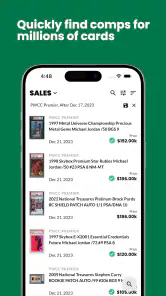
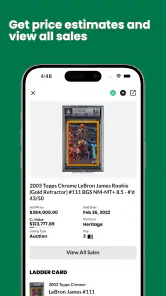
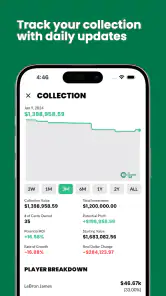
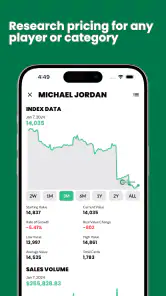
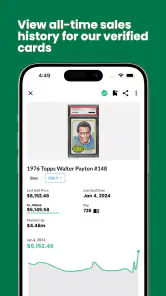
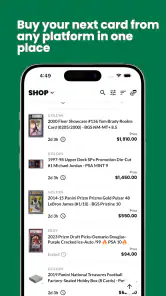
Analysis by Reviewed
Card collecting becomes much harder to manage once a binder turns into several binders, a few boxes, and a growing pile of cards waiting to be checked. I found Card Ladder most useful in that gap between casual collecting and serious record-keeping: it gives sports and Pokémon card collectors a place to follow prices and organize what they own without relying entirely on memory or scattered marketplace searches.
It is a free sports app from Ladder Studios, Inc., available for Everyone and supported on Android devices running version 7.0 or later. The app has reached over one hundred thousand installs, with an average rating of five stars from around one thousand eight hundred ratings. Those figures suggest a focused audience rather than a general-purpose shopping tool, and that is exactly how it feels in use: the experience is built around cards, collections, and valuation rather than broad social networking or entertainment.
I would recommend trying it if you regularly wonder whether a card is worth keeping, selling, grading, or simply recording for insurance and personal reference. I would not treat it as a substitute for inspecting the physical card, checking its exact condition, or learning how different marketplaces handle sales. Its strongest role is as a research and tracking companion, not as an automatic answer to every collecting decision.
What makes Card Ladder worth trusting as a collecting tool
A focused approach instead of a general marketplace search
The first thing I noticed is that the app is easier to understand when I use it for a specific question. If I want to identify a card, estimate its place in my collection, or watch how a card’s price changes, the purpose is clear. A normal web search often mixes active listings, old articles, auction pages, and unrelated versions of the same card. That makes it easy to compare the wrong item. A dedicated card guide gives the task a narrower frame.
That focus matters especially with sports cards, where a player name alone is rarely enough. Year, set, parallel, insert, number, autograph status, and condition can all change the result. Pokémon cards have their own complications, including set names, language, rarity, special treatments, and differing versions of familiar characters. I found that the app is most valuable when I slow down and confirm the card identity before treating a price as meaningful.
This is also where trust begins. A price guide can look authoritative while still being misleading if I select a similar-looking card instead of the exact one in my hand. Card Ladder helps by putting the collection and price-guide workflow in one place, but the final responsibility remains mine. I would always compare the image, set details, and card number before adding an item or making a buying decision.
Useful for a collection that changes over time
A static spreadsheet can record what I own, but it becomes awkward when the collection grows or when I want to review individual cards repeatedly. Writing down a price once also creates a false sense of precision. Card values move, and a note made months ago may no longer reflect the market. The app’s combination of collection tracking and price research is better suited to a living collection.
More From Our News Desk

Clash of Clans Is Won Between the Battles

Android Auto Makes the Case for Quieter Car Software

MobiOffice: Transforming Mobile Productivity with Seamless Integration

EA SPORTS FC™ Mobile Soccer: Redefining Mobile Sports Gaming

How Microsoft OneDrive Became a Mobile Productivity Giant

How Google Translate Breaks Language Barriers Effortlessly
My preferred workflow is to add cards in small batches rather than attempting to catalogue everything during one long session. I start with cards I am most likely to trade, sell, insure, or discuss with another collector. That creates a useful working record quickly. Later, I can add lower-priority cards when I have the time. This approach avoids turning the app into another unfinished organizing project.
There is a practical advantage to separating “I own this” from “I am interested in this.” When researching a card, I may want to remember it without confusing it with something already in my collection. I would keep those purposes mentally distinct and review entries carefully, because a tracker is only as reliable as the habits used to maintain it. The app can reduce clutter, but it cannot correct careless identification or duplicate entries on its own.
Where it compares well with familiar alternatives
The usual alternative is a spreadsheet. A spreadsheet gives excellent control over custom fields and can be exported or reorganized freely, but it demands more manual work. I would need to find card details, enter them consistently, update values, and create my own way to search or group items. Card Ladder is more convenient for collectors who want a ready-made card-centered workflow rather than a blank grid.
Another alternative is searching completed sales on a marketplace. That can be useful when I need to understand what buyers actually paid for a particular copy, especially when condition and grading are central to the sale. The drawback is noise. Listings may represent asking prices rather than completed sales, and visually similar cards can be mixed together. Card Ladder is more comfortable for building an overview, while marketplace research may still be necessary before a high-value transaction.
Printed guides and collector forums have a different strength. They can provide background, opinions, and community knowledge that a tracking app cannot replace. I would use them when I need help understanding a set, spotting a variation, or judging whether a card is authentic. For everyday organization and repeated price checks, though, a digital tracker is less cumbersome than carrying a book or searching old forum threads.
Trust depends on what I verify before relying on a result
I do not think a five-star average should be treated as proof that every valuation will fit every card. It tells me that the app has been well received by its current audience, while the roughly two hundred written reviews offer additional user feedback to examine. Neither replaces checking the details of a card or considering its condition.
The developer is Ladder Studios, Inc., and the app was released on February 2, 2021. Its current version is 4.2.1, which gives me useful context when deciding whether the experience is being maintained. I would still pay attention to the version installed on my device and to any changes shown during updates, particularly if my collection records are important to me.
Trust also includes understanding the commercial model. The app is free to download, but in-app purchases range from $19.99 to $199.99 per item. That is a significant range, so I would not begin by assuming that every useful function is included at no cost. Before committing to a purchase, I would look carefully at the exact screen describing the item, what it unlocks, whether it is recurring, and whether it is necessary for my own collecting routine.
Account choices and information-sensitive moments
Any collection tracker can become sensitive because the records may reveal what a person owns, what they consider valuable, and what they are currently searching for. I would be especially careful when entering expensive cards, a complete collection, or notes that could make the collection easier to identify. A useful habit is to record only what helps with organization and avoid adding personal details that do not serve that purpose.
I would also review the account controls before building a large catalogue. That means checking how sign-in works, what profile information is requested, whether collection entries can be edited or removed, and how to close or manage the account if I stop using the service. These are not glamorous features, but they affect whether I feel comfortable making the app my long-term record.
Permissions deserve the same attention. I would read each permission prompt when it appears instead of approving everything automatically. If a function asks for access that seems unrelated to identifying or managing cards, I would pause and decide whether that function is worth the trade-off. The safest approach is to use only the access I understand and need, then revisit device settings if the app’s behavior changes after an update.
I would not put sensitive financial information, passwords, or private identity documents into collection notes. A card tracker should help me remember cards, not become a storage place for unrelated personal records. This is a simple boundary, but it reduces the consequences if an account is shared, a device is lost, or I later decide to stop using the service.
A realistic routine for a collector
Imagine I buy a small stack of sports cards at a local show. At home, I separate the cards into three groups: cards I want to keep, cards I may trade, and cards that need closer inspection. I use Card Ladder first on the keep group, because those entries will remain useful for future reference. For each card, I confirm the player, year, set, and variation before saving it. I then make a separate mental note of condition rather than treating the guide’s figure as the value of my exact copy.
When I return to the trade group, I use the app to identify which cards deserve more research. That prevents me from spending equal time on every card. A card with a recognizable name may still be a common version, while a less obvious parallel may deserve attention. This is one of the app’s practical strengths: it can help prioritize research, provided I do not confuse discoverability with certainty.
Before meeting a trading partner, I would review the entries again on a stable connection and make sure I am looking at the correct versions. I would not rely on a quick glance at a single number during a negotiation. The app can make the conversation better informed, but condition, centering, surface quality, authenticity, and local demand can still change what a fair trade looks like.
Three habits that make the tracker more reliable
First, I would catalogue by priority instead of by box order. Start with cards likely to be sold, graded, traded, or used for collection planning. This produces useful information sooner and exposes any identification habits that need correction before hundreds of entries are added.
Second, I would keep condition notes consistent. Even a short personal system—such as separating raw cards from graded cards and flagging visible wear—can prevent me from comparing unlike items. The price displayed for a card should be treated as a reference point, not a promise for a damaged or unusually clean copy.
Third, I would use the app before and after a purchase rather than only after it. Before buying, it can help me recognize whether I am paying attention to the right card. After buying, it can help me record the item while the packaging and purchase context are still fresh. That creates a more useful history than trying to reconstruct the collection months later.
A fourth habit is to keep the app from becoming the only record. For a particularly valuable collection, I would maintain a separate backup of essential ownership details and purchase documentation. The tracker may be convenient, but redundancy matters when records have financial or sentimental importance.
Limitations I would want to know before installing
The app is not ideal for someone who wants a completely flexible inventory system. If I need unusual fields, complex formulas, detailed purchase accounting, or a custom export structure, a spreadsheet may offer more freedom. Card Ladder’s advantage is its specialized workflow, and specialization naturally means accepting the structure it provides.
It also cannot remove the hardest part of collecting: identifying the exact card and judging its physical state. Two cards with the same broad title can have very different values. A guide may help me find the right reference, but it cannot inspect corners, scratches, print quality, centering, or authenticity through a basic record. Anyone planning to spend serious money should combine the app with close physical inspection and independent research.
The in-app purchase range is another reason to proceed deliberately. Free access makes it easy to test the basic experience, but collectors should understand the cost of any paid feature before depending on it. I would begin with a modest collection sample, decide whether the workflow genuinely saves time, and only then consider spending money. That is more sensible than paying first and discovering that my collecting style does not match the app.
Finally, the app is aimed at sports and Pokémon cards. That focus is a benefit for people in those collecting areas, but it makes the product a poor choice for someone cataloguing coins, comics, trading cards from unrelated games, or a mixed memorabilia archive. A broad inventory app will be less specialized but may suit a collection that crosses many categories.
Who should use it and who should skip it
I think Card Ladder is a strong fit for an active collector who checks prices often, buys cards from different sources, or wants a more organized view of a sports or Pokémon collection. It is also useful for someone moving beyond casual collecting but not ready to build a complicated database. The free starting point makes experimentation reasonable, while the specialized focus keeps the main task clear.
I would be more cautious if I were only interested in occasional browsing. If I own a handful of cards and rarely research them, a normal search may be enough. I would also skip it as my primary tool if I need a full financial ledger, highly customized fields, or a universal inventory covering many kinds of collectibles.
Parents and younger collectors may appreciate the Everyone rating, but I would still treat account and purchase decisions as an adult responsibility. The age label says the content is broadly suitable; it does not mean every paid option is appropriate for every household. I would review purchase controls on the device before letting someone else use the app.
My cautious verdict
After using Card Ladder as a focused collecting companion, I see its value less in producing one magical number and more in giving the collection a repeatable research routine. It helps me move from “I think this card matters” to “I have identified this version, recorded it, and know what I should verify next.” That is a meaningful improvement over memory, loose notes, and random marketplace searches.
My recommendation comes with boundaries. Confirm every card identity, treat displayed prices as references, inspect physical condition yourself, and read the details of any in-app purchase before paying. Keep sensitive information out of notes, review permissions and account controls, and maintain a separate backup for records that would be difficult to replace.
For sports and Pokémon collectors who want a specialized tracker and price guide, the app is worth testing. Its free availability, broad device support, and focused design make the first step easy, while the paid range means long-term use deserves a deliberate decision. My bottom line is simple: use it to organize research and ownership, not to outsource judgement. That mindset lets Card Ladder do what it does best without asking it to solve the parts of collecting that still require human attention.
Card Ladder Frequently Asked Questions
Can I track Pokémon cards as well as sports cards with Card Ladder?
Yes. Card Ladder describes itself as a price guide and collection tracker for sports and Pokémon cards, so it can be relevant if your collection includes both. Its usefulness still depends on whether the particular card is covered and has enough market information. Before relying on it for a rare or unusual Pokémon card, search for that card and review the available sales history.
What should I know about Card Ladder’s cost before downloading?
Card Ladder is free to download, but it also offers in-app purchases. These purchases range from $19.99 to $199.99 per item, so the full experience may involve costs beyond installing the app. Check the purchase details shown in the app before committing, and consider whether the available features fit your collecting or research needs.
What is Card Ladder, and what can I use it for?
Card Ladder is a sports card market research and collection-tracking platform designed for collectors, investors, and hobby enthusiasts. It provides pricing data, historical sales information, market trends, player and card searches, and tools for monitoring collections. Before downloading, understand that it is primarily a research and analytics service rather than a marketplace where every card can be purchased directly.
Does Card Ladder support all sports cards and trading card brands?
Card Ladder covers a broad range of sports cards, including many popular baseball, basketball, football, hockey, soccer, and other collectible categories. However, coverage can vary by year, manufacturer, set, parallel, grading company, and card rarity. Less common or newly released cards may not have enough recorded sales data, so users should check whether the specific cards they collect are indexed before relying on the platform.
Are Card Ladder prices accurate and updated in real time?
Card Ladder’s pricing information is based on documented market transactions and is intended to help users understand recent values and long-term trends. Prices may differ from the amount a card can actually sell for because of condition, grading, seller reputation, auction timing, fees, and market demand. Data availability and update timing can also vary, so the figures should be treated as useful estimates rather than guaranteed sale prices.
Pros
- Detailed sales history helps track card value changes over time.
- Large database covers many sports
- sets
- players
- and individual cards.
- Custom collections make it easy to organize cards and monitor portfolios.
- Market data can support smarter buying
- selling
- and trading decisions.
- Useful tools for comparing similar cards and identifying price trends.
Cons
- Many advanced features require a paid subscription.
- Some cards may have limited sales data or incomplete pricing history.
- The interface can feel overwhelming for new collectors.
- Prices may vary from other marketplaces and should not be treated as guarantees.
- Frequent market updates may encourage excessive focus on card values.
- Category
- Sports
- Version
- 4.2.1





