Bound
- 278.00
- 4.2
- Installs
- 100.00K
- Price
- Free

Screenshots
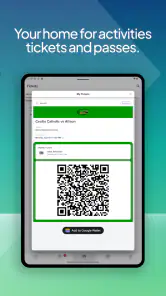
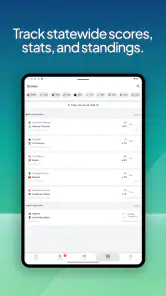
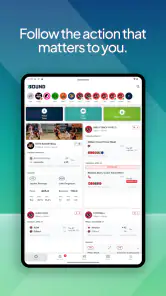
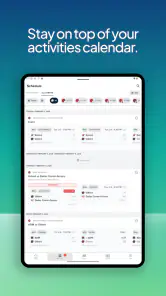
Analysis by Reviewed
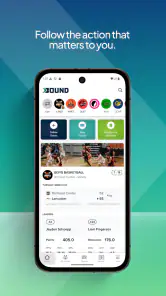
Finding the right way to organize youth sports can be surprisingly difficult. Messages get scattered across group chats, schedules change, and families often need one clear place to follow activities. I tested Bound with that everyday problem in mind, and I found an app that is more useful as a shared sports-activity hub than as a training tool or a replacement for a club’s complete management system. Its focus is simple: helping young athletes, parents, and activity organizers stay connected around participation.
Bound is a free sports app from Bound - Youth Sports & Activities, aimed at users aged ten and over. It has grown beyond a small experiment, with over one hundred thousand installs, and its average of 4.2 from around one thousand ratings suggests that many users find the basic idea worthwhile. I would not treat that score as a guarantee that every family will love it, though. The app’s value depends heavily on whether the teams, activities, or people you need are already using it in a consistent way.
How Bound fits into a normal youth-sports routine
My most practical way to approach Bound is to think of it as the starting point for a repeatable routine. Instead of opening it only when somebody sends an urgent message, I would check it at the same moments each week: when planning transport, before an activity, and after any schedule change. That habit matters because sports information is only useful when everyone looks in the same place.
A parent might use it before leaving work to confirm what the child is attending, then check again before the weekend when several activities compete for attention. A young athlete can use the same routine to stay aware of commitments rather than relying entirely on a parent’s phone. For an organizer, the benefit is a more focused destination for youth-sports communication instead of repeating the same details across several unrelated conversations.
The important distinction is that Bound is not something I would open expecting detailed coaching plans, live match analysis, or a deep fitness program. Its identity is closer to a community and activity companion. That makes it approachable for families who want less confusion, but it also means users looking for advanced athletic tracking may find a dedicated training app more suitable.
The first useful step is to establish one source of truth. If your team still announces some details in Bound, others in text messages, and others verbally after practice, the app cannot solve the underlying confusion. I would agree with the coach or organizer that important updates should appear in the app, then use private conversations only for personal arrangements. This simple rule is more valuable than repeatedly checking every possible channel.
What the first setup should accomplish
During initial use, I would keep the setup deliberately small. Join or follow only the activities that genuinely matter, make sure the account reflects the right participant, and avoid adding every possible sports community just because it appears interesting. A crowded activity list makes the app feel noisy and weakens the reason to use it.
More From Our News Desk

Clash of Clans Is Won Between the Battles

Android Auto Makes the Case for Quieter Car Software

MobiOffice: Transforming Mobile Productivity with Seamless Integration

EA SPORTS FC™ Mobile Soccer: Redefining Mobile Sports Gaming

How Microsoft OneDrive Became a Mobile Productivity Giant

How Google Translate Breaks Language Barriers Effortlessly
Families with more than one child should be especially careful about separating commitments mentally, even when they use the same device. Before acting on an update, check which activity it belongs to and who it affects. That small pause prevents a common mistake in shared sports accounts: assuming that a change for one child applies to another.
I also recommend deciding who checks the app and when. If one parent handles transport, that person may need the most regular routine. If the young athlete is old enough to manage personal commitments, involving them directly can reduce last-minute surprises. Bound works best when it supports responsibility rather than becoming another place where one adult must manually relay every message.
Settings and habits worth checking early
I would review notification behavior before relying on Bound for time-sensitive information. The right balance is important: too many alerts make people ignore them, while too few can cause a missed change. Check the app’s available notification controls and your phone’s system settings together, because an alert can be allowed inside the app but blocked at device level.
There is also a practical privacy habit worth adopting. Since this is a youth-oriented service, I would avoid entering unnecessary personal details into conversations or activity notes. Use the information needed for participation and coordination, and keep sensitive family information out of general group spaces. This is not a criticism of Bound specifically; it is simply sensible behavior whenever children’s activities are being organized digitally.
Another setting-related check is access. If several family members need to stay informed, decide whether each person should use their own account or whether one device will be shared. Separate access is usually easier for accountability, while a shared device may be simpler for younger users. The better choice depends on the child’s age and the family’s routine, but making the decision deliberately avoids confusion later.
The current version is 2.1.17, and the app requires iOS 11 or later. I would therefore check compatibility before asking an older family device to become the main sports phone. A device that technically installs the app but struggles with general performance is not a dependable foundation for schedule coordination. Keeping the operating system and app current is also a sensible maintenance habit.
Faster patterns for busy families
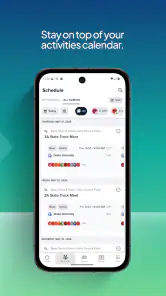
Once the basics are in place, the biggest improvement comes from reducing repeated decisions. I would create a short weekly check: open Bound, review upcoming activities, identify anything that affects transport or equipment, and then close it. This is faster and more reliable than checking randomly throughout the day.
A second useful pattern is to check after every practice or event, not only before it. Updates often matter most when the next activity is approaching, and reviewing at the end of the current session gives you a natural reminder. If an organizer changes something, you are less likely to discover it at the last minute.
For families managing several activities, I would pair Bound with a personal calendar rather than expecting one app to do everything. Bound can remain the place for sports-community information, while the calendar handles the wider family picture: school, appointments, work, and travel. This separation is helpful because it prevents sports updates from disappearing inside a much larger schedule.
There is a trade-off here. Duplicating every detail manually can create extra work and lead to conflicting entries. I would only copy information that affects a broader family plan, such as an important event or a transport commitment. Leave small, changing details in Bound so there is one place to verify them. That approach keeps the calendar useful without turning it into a second, outdated version of the sports feed.
Another efficient habit is to prepare questions before contacting an organizer. If a detail is unclear, first review the relevant activity information in Bound, then ask one concise question containing the participant’s name and the specific point of confusion. This saves time for everyone and avoids sending several messages that could have been answered by one careful check.
Where Bound is particularly useful
I see the strongest use case in youth sports where participation involves more people than just the athlete and coach. Parents need practical information, young players need a clearer sense of their commitments, and organizers need a focused way to keep the group aligned. Bound makes the most sense when those three perspectives overlap.
It can also help a child gradually take ownership. Rather than having an adult announce every activity, the young person can learn to check what is coming up and raise questions early. That does not mean handing over all responsibility immediately. A parent can still supervise while using the app as a training ground for planning and communication.
For a small community activity, the lighter feel may be an advantage. A full club-management platform can seem excessive when the main need is simply keeping participants connected. Bound is easier to justify when the group wants a dedicated sports space without building a complicated administrative process around it.
It is less compelling for a solo athlete who only wants performance metrics. If your main goal is tracking running pace, analyzing workouts, recording strength sessions, or measuring technical progress, a specialized fitness or coaching application will likely provide more relevant tools. Bound’s strength is coordination around youth activities, not replacing those focused systems.
Limits that experienced users should understand
The first limitation is dependency on participation. An app like this becomes valuable when the relevant people actually use it and keep information current. If the coach or organizer rarely updates the activity, Bound may feel no more reliable than an old group chat. Before committing your whole routine to it, confirm that the community you care about treats it as an active channel.
The second limitation is that a shared activity space cannot resolve every disagreement or last-minute problem. Families may still need direct contact for absences, emergencies, transport changes, or sensitive matters. I would use Bound for ordinary coordination and keep a separate, agreed method for urgent communication. That distinction prevents a delayed app check from becoming a serious problem.
There is also a learning curve in deciding how much information belongs in the app. If every minor thought becomes an update, users may stop noticing important messages. If updates are too sparse, people return to private chats. The best results come from consistent, purposeful use, and that is partly a community discipline rather than a feature that the app can enforce.
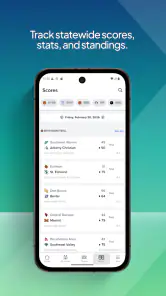
Some users may also want richer customization than a youth-activity platform provides. If you expect elaborate reporting, detailed statistics, or a highly configurable team database, you should compare Bound with a dedicated club-management product. That alternative may be better for large organizations with formal administration, while Bound is more appealing when the priority is keeping participation understandable for families.
Who should choose it, and who should skip it
I would recommend Bound to parents who are tired of searching through messages for sports information, young athletes who are ready to follow their own activities, and organizers who need a central communication point for youth participation. It is also a reasonable choice for families who prefer a free app and want to test a shared workflow before adopting something more complex.
I would be more cautious if your club already has a dependable system that everyone uses. Adding Bound on top of that system can create duplication instead of clarity. In that situation, the app is only worth considering if it solves a specific problem that the current arrangement does not, such as making activity participation easier for young users or giving families a clearer community space.
I would also skip it as a primary tool if your needs are mainly individual training, advanced performance analysis, or professional-level administration. Those jobs call for different software. Bound is at its best when the central question is, “How do we stay connected around this young person’s sports activities?”
The age rating of Everyone 10+ is a useful reminder that the app is designed for a family and youth audience, but parents should still guide how younger users communicate online. Explain which details are appropriate to share, how to recognize a confusing update, and when to ask an adult for help. The app can support independence, but good digital habits remain essential.
My verdict after building a repeatable workflow
Bound is a focused sports app with a clear practical role. I like it most when it replaces scattered youth-activity communication with one routine that families can actually maintain. The free price removes an easy barrier to trying it, and its sports-first identity makes more sense for youth participation than a general messaging app does.
My recommendation comes with one condition: agree on how the group will use it before expecting it to improve coordination. Check it at predictable times, review notifications, keep sensitive information limited, and pair it with a general calendar only when broader family planning requires that. Those habits make the app more useful without forcing it to become something it was not designed to be.
With around two hundred eighty written reviews and a 4.2 average, Bound has earned a generally positive reception, but the real test is local consistency. If your child’s coach, club, or activity community is active there, it can become a convenient part of the weekly routine. If the surrounding group is inactive, a familiar messaging channel or a more comprehensive sports-management platform may serve you better.
After reviewing the app, I would describe it as a practical connector rather than an all-purpose sports solution. Its strongest feature is the repeatable habit it encourages: check the activity, confirm the plan, and keep the right people informed. For families who need exactly that, Bound is worth trying. For users seeking detailed training tools or complex administration, choosing a more specialized alternative will be the better decision.
Bound Frequently Asked Questions
What is Bound, and who is it designed for?
Bound is a youth sports and activities app for people looking to explore or manage activities related to sports. Its focus makes it relevant to young athletes, families, and others involved in youth activities. The app is listed for Everyone 10+, so parents can consider that age guidance when deciding whether it is suitable for a young user.
What is Bound, and what can I use it for?
Bound is an app designed to help users organize, manage, and interact with their personal content in one place. Its usefulness depends on the version and platform you install, but the main experience focuses on making everyday tasks more convenient through a clean mobile interface. Before downloading, review the store description to confirm that its current tools match your needs.
Is Bound free to download and use?
Bound is free to download. The app is focused on youth sports and activities, so you can install it without paying an upfront download price. Check any purchase prompts shown inside the app before confirming a payment, and review the terms presented at the point of purchase so you understand what you are agreeing to.
Does Bound require an account or an internet connection?
Depending on which features you want to use, Bound may ask you to create an account or sign in before providing full access. Some parts of the app may work offline, while synchronization, online content, backups, or connected services generally require an internet connection. If privacy and offline access are important to you, review the permissions and data details before installing.
Is Bound safe and suitable for my device?
Bound should be downloaded only from the official Google Play Store or Apple App Store to reduce the risk of modified or unsafe copies. Before installation, check the developer name, recent reviews, permissions, age rating, and required operating-system version. The app may also need storage space and access to features such as notifications, files, or network connectivity.
Pros
- Clean
- intuitive interface that is easy to navigate
- Useful tools for organizing and tracking personal information
- Smooth performance on most modern Android and iOS devices
- Helpful reminders encourage consistent use
- Privacy-focused design keeps the experience personal and discreet
Cons
- Some useful features may require a paid subscription
- Limited customization compared with more advanced alternatives
- Initial setup can take time if you add lots of information
- Occasional notifications may feel repetitive
- Offline functionality may be restricted for certain features
- Category
- Sports
- Version
- 2.1.17





