Air Strike Force: 1945 WWII
- 3.00
- 3.9
- Installs
- 10.00K
- Price
- Free
Screenshots
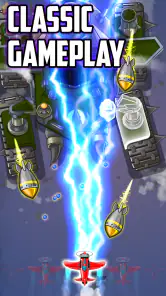
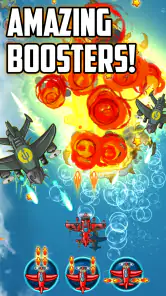
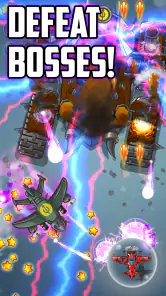
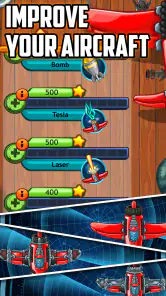
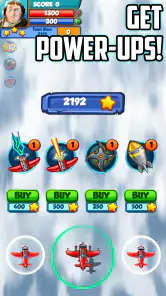
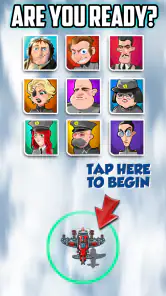
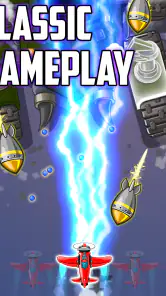
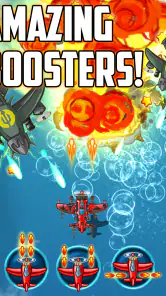
Analysis by Reviewed
Air Strike Force: 1945 WWII is a free comic-style app built around an air-combat theme, but it is best approached as a quick, casual experience rather than a detailed historical simulation. I spent time with it expecting short sessions and simple controls, and that is where it makes the most sense. The presentation aims for the excitement of taking a fighter plane into battle, while the overall structure is approachable enough for someone who does not usually play aviation games.
The app comes from Shooter Games and FPS and is listed in the Comics category. That placement gives a useful clue about its tone: this is not trying to be a technical flight manual or a serious documentary about the Second World War. It leans toward accessible action and familiar wartime imagery. The store summary talks about taking a solo mission and ruling the sky, and in practice I found the appeal strongest when I wanted something direct, easy to understand, and suitable for a few spare minutes.
It is free to download, with optional purchases ranging from $0.99 to $39.99 per item. The age rating is Everyone 10+, so it sits in a fairly accessible space for families and younger players who enjoy aircraft themes. Its average rating is 3.9 from around 95 ratings, while the app has passed 10K+ installs. Those numbers suggest a modest audience rather than a huge community, which matters if you are looking for a widely discussed title with extensive player guides.
How the basic play loop feels in everyday use
My recommended starting point is to treat each session as a short mission rather than committing to a long campaign. Open the app, get comfortable with the aircraft movement, observe how targets approach, and focus on surviving cleanly before trying to play aggressively. That habit is more useful than immediately chasing every target because it gives you time to understand the rhythm of the screen and the timing of incoming threats.
The strongest use case is a brief break during the day. If I had a few minutes while waiting for an appointment or taking a short pause from work, this kind of straightforward air-action format would be easier to pick up than a game with a large map, a complicated inventory, or a long tutorial. You can approach it with a simple goal: complete the current action, learn one thing about enemy movement, then stop. That keeps the experience from feeling like a commitment.
I also think it is a reasonable introduction for someone who likes warplane imagery but does not want to learn a demanding simulator. The WWII setting provides an immediate theme, and the comic-oriented presentation makes the subject less intimidating than a highly technical cockpit game. You do not need prior knowledge of aircraft models or military history to understand what you are being asked to do.
At the same time, I would not confuse the theme with historical depth. Anyone hoping for carefully researched aircraft specifications, a detailed campaign narrative, or realistic flight physics should look toward a dedicated simulation or a more substantial strategy title instead. Air Strike Force: 1945 WWII works better as light entertainment inspired by wartime aviation than as an educational or authentic recreation.
Build a repeatable opening routine
Experienced players will get more from the app by repeating the same opening routine instead of reacting randomly. I suggest beginning near the center of the play area, checking how much room is available around the aircraft, and then making small movements rather than sweeping across the screen. Large movements may feel exciting, but they can also make it harder to judge where the next threat will appear.
My second habit is to watch the route ahead before focusing on a single target. In a simple air-action game, the most tempting object on screen is not always the most important one. A target that is easy to reach may pull the aircraft toward a dangerous edge or into the path of another threat. I found that preserving a safe position often produced a better result than taking every possible attack opportunity.
When a session goes badly, restarting with one specific adjustment is more productive than changing everything at once. For example, I might keep my movement pattern but delay an attack, or maintain the same attack timing while using shorter steering gestures. This turns each attempt into a small experiment and helps reveal which choices are actually improving control.
That approach is especially useful on a phone. Touch input can feel less precise than a physical controller, and the screen is small enough that hurried gestures may create mistakes. Holding the device steadily, keeping fingers away from the visible action, and using deliberate taps or swipes can make the experience feel more controlled without requiring any special accessory.
Settings and device habits worth checking first
Before judging the app, I would check the available in-app settings and make sure the controls feel comfortable on your device. The current version is 1.7 and requires at least iOS 11, so compatibility is an important first step for anyone using an older iPhone or iPad. If your device meets that requirement, the next practical question is whether the control response feels natural in your hands.
Look for options that affect sound, notifications, control behavior, or visual comfort if they are available on your installation. I would not change everything immediately. Start with audio at a level that lets you notice important feedback without becoming distracting, then test the controls during a low-pressure session. Sound can add atmosphere, but it should not make you rush decisions or become annoying when you replay short missions.
Brightness is another small but worthwhile adjustment. Dark wartime visuals can become harder to read in a bright room, while a very bright screen can be tiring during evening play. I prefer setting the phone brightness for the room first and then using the app’s own visual options, if present, to improve comfort rather than relying on maximum brightness.
Because this is a free app with optional purchases, I would also make a deliberate decision about spending before playing regularly. The listed purchase range runs from $0.99 to $39.99 per item. That does not automatically make the app unsuitable, but it means I would avoid tapping through purchase prompts casually, especially if a child is using the device. A clear rule—play the free version first and only consider a purchase after deciding that the core loop is enjoyable—keeps the evaluation fair.
One useful test is to play in two different situations: once with sound and once quietly. If the app remains understandable without audio, it is more practical for public places or shared rooms. If sound provides important cues, headphones may help, but I would still avoid playing at a volume that masks your surroundings. This is a small distinction, yet it tells you whether the app fits your actual routine rather than an idealized gaming setup.
Faster patterns that improve consistency
The quickest improvement is learning to make smaller corrections. New players often move too far because they are trying to escape danger immediately. I had better results when I treated movement as a series of brief adjustments: shift away from the threat, return to a stable line, and wait for the next opening. This is less dramatic than constant swiping, but it reduces accidental overcorrection.
A second pattern is to separate positioning from attacking. If you try to steer and attack in a frantic sequence, it is easy to lose track of the aircraft’s location. I prefer to secure a safe position first, then focus on the target. That pause may cost a moment, but it gives a clearer view of what is happening and makes the next decision intentional.
Another practical technique is to use the edges of the screen as warnings rather than destinations. When the aircraft drifts too close to an edge, the available reaction space becomes limited. Keeping a buffer around the plane leaves more options when an enemy or obstacle appears. This is a general control principle, but it matters particularly on a phone because a small finger movement can cover a large portion of the visible area.
I also recommend stopping after a poor run instead of playing on autopilot. Repeated failures can make anyone use faster, less accurate gestures. A short pause, a change in grip, or a quick settings check can be more valuable than another rushed attempt. The app’s casual format makes this easy: it does not need to become a test of endurance.
For players who enjoy improving their own consistency, keep one simple mental note after each mission. Did you lose control because you moved too early, attacked while out of position, or failed to notice a threat? Naming the mistake prevents vague frustration. It also creates a repeatable habit that is more useful than simply trying to play faster.
Where the experience reaches its limits
The main limitation is depth. Air Strike Force: 1945 WWII can provide a quick aviation-themed diversion, but I would not choose it as my primary game if I wanted a rich progression system, detailed aircraft customization, or a long-form strategic campaign. The basic appeal is immediate action, and that same simplicity may feel thin once the novelty of the theme wears off.
The Comics category also sets expectations differently from a conventional flight simulator. The app’s identity is closer to stylized entertainment than to a careful recreation of WWII aviation. That is a strength for casual players who want an approachable theme, but a weakness for enthusiasts who care about historical accuracy, authentic controls, or realistic mission planning.
The modest audience is another consideration. With 10K+ installs and an average rating of 3.9 from around 95 ratings, there is some evidence that people are using it, but it is not the kind of title I would select for a large competitive community or a deep ecosystem of player-created advice. If discovering a game through an active social scene is important to you, a more established alternative may be a better fit.
I would also be cautious about choosing it for long uninterrupted sessions. The short-session design is convenient, yet it can become repetitive for players who need constant variety. A larger arcade shooter, a flight simulator, or a strategy game may offer more meaningful long-term decisions. In contrast, this app is easier to recommend when the desired experience is a compact burst of aircraft action with a clear theme.
Parents should consider the purchase structure as well as the age rating. Everyone 10+ makes the content broadly approachable, but optional items priced from $0.99 to $39.99 still deserve attention on a shared device. I would use device-level purchase protections and explain the rule before handing the phone over. That is not a criticism of the gameplay itself; it is simply sensible preparation for a free app with paid options.
Who should install it, and who should pass
I would recommend it to someone who enjoys WWII-inspired aircraft, wants a free app to sample, and prefers a simple experience that can be played in short bursts. It is also a decent choice for a casual player who finds full flight simulators overwhelming. The theme is immediately understandable, the entry point is not intimidating, and the solo-mission framing makes it easy to play without coordinating with other people.
I would be less likely to recommend it to a serious aviation fan seeking technical realism. The same accessible style that helps beginners may disappoint players who want authentic aircraft behavior or a detailed historical setting. I would also point frequent competitive players toward a larger alternative if rankings, multiplayer interaction, or a dependable community are central to their enjoyment.
If you are deciding whether to spend money, my advice is simple: use the free experience long enough to decide whether the movement and mission rhythm are genuinely fun for you. Do not buy an item merely because a difficult moment feels frustrating. A purchase makes more sense only when the underlying controls already feel satisfying and you understand what kind of benefit you are receiving.
For an older Apple device, check compatibility before getting invested, since the minimum operating system is iOS 11. For everyone else, the more important test is comfort: can you see the action clearly, do the controls respond as expected, and do you enjoy repeating the mission loop? Those answers will tell you more than the wartime artwork alone.
My final assessment after settling into the routine
After approaching it as a short, stylized air-action app rather than a full simulator, I found a clearer reason to recommend it. Its real strength is the low-friction solo session: you can pick it up, practice a few careful movement habits, and enjoy the WWII-inspired atmosphere without learning a complicated system first.
The app is not a universal choice. It lacks the depth that keeps simulation fans engaged, and its modest rating and audience suggest that expectations should stay realistic. The optional purchases also mean I would play the free version first and keep spending under control. Those limitations become much easier to accept when the app is used for what it does best.
My verdict is favorable for casual players who want an accessible comic-style aviation experience on a compatible Apple device. I would install it for short breaks, use small movements, keep a safe buffer around the aircraft, and judge progress by consistency rather than frantic speed. If that sounds like the kind of session you want, Air Strike Force: 1945 WWII is worth trying for free. If you want a historically detailed simulator, a deep campaign, or a busy competitive community, I would choose a different category of game instead.
Pros
- Fast-paced aerial combat that is easy to pick up and play.
- WWII-inspired aircraft and missions offer a familiar arcade experience.
- Short levels work well for quick gaming sessions.
- Upgrade systems provide a clear sense of progression.
- Simple controls are suitable for touchscreen play.
Cons
- Gameplay can become repetitive after extended sessions.
- Some upgrades and aircraft may require significant grinding.
- Difficulty spikes can make later missions feel frustrating.
- Frequent ads may interrupt the flow for free players.
- Older devices may experience occasional performance issues.
- Category
- Comics
- Version
- 1.7