Words of Wonders: Zen
- 539.00
- 4.9
- Installs
- 500.00K
- Price
- Free

Screenshots

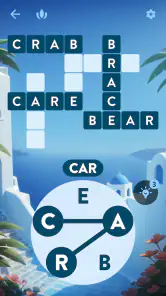
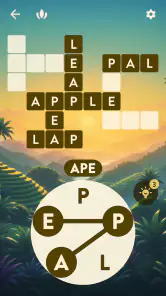
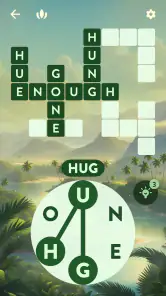
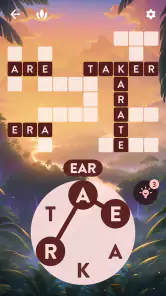

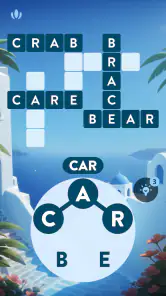
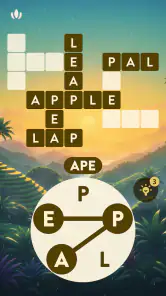
Analysis by Reviewed
I’d approach Words of Wonders: Zen as a gentle word game rather than a test of speed or a serious vocabulary course. Its basic appeal is simple: you connect letters to make words, with a calm presentation that gives the puzzle room to breathe. If you’re new to this style, you can start by looking over the available letters and trying the most obvious combinations; there’s no need to arrive with a strategy or a strong word-game background.
What to expect from the first puzzles
Made by Fugo Games, this free word game is rated for Everyone. It has an average rating of 4.9 from around 43,000 ratings, and more than 500,000 installs. Those figures suggest broad interest, but the more useful question is whether its pace suits you. I’d recommend it to someone who likes rearranging letters and wants a quieter alternative to timed word challenges. If you want competitive play, head-to-head matches, or a demanding language-learning tool, a different kind of game will probably suit you better.
The first meaningful success is completing a word you spotted from the letter set, then seeing how it fits the puzzle. I find it helpful to begin with short, familiar words and then revisit the remaining letters rather than trying to solve everything in one pass. This keeps the task manageable and can reveal combinations that weren’t obvious at first glance. Treat unfamiliar words as a chance to notice something new, not proof that you need to know every answer already.
Getting comfortable without turning it into homework
The peaceful look and sound are part of the experience, but they don’t change the core task: you still need to think through letter combinations. I’d use a short session during a quiet commute or while waiting for an appointment, when a small puzzle is more appealing than scrolling. At home, it can also make a low-key wind-down activity, though I’d keep the volume comfortable and stop when I’m no longer enjoying the mental effort.
One useful habit is to pause before repeatedly trying random combinations. Scan the letters, build a likely word mentally, and then test it; if you get stuck, return to the unused letters with a fresh perspective. This is a better fit for the game’s unhurried mood than treating every puzzle like a race. It also helps distinguish a genuine vocabulary gap from a word you simply overlooked.
Details worth knowing before you settle in
The game is free to download, with optional in-app purchases priced from $0.59 to $11.99 per item. I’d start without buying anything and see whether the ordinary puzzle rhythm works for you before considering a purchase. The current version is 1.0.2, and it requires Android 7.0 or later. It was released on May 24, 2024, and its Everyone age rating makes it suitable for a broad audience.
Compared with a word search, where you scan a fixed grid, this is more about forming words from a supplied set of letters. Compared with a timed anagram game, its appeal is less about speed and more about a relaxed setting. That trade-off matters: if you want a sharp challenge with pressure, this may feel too gentle; if you prefer calm, self-paced wordplay, the presentation is a real part of its charm. I’d also avoid treating it as a substitute for structured vocabulary study, since the main purpose is solving puzzles.
Engaging Gameplay with a Peaceful Twist
When I first downloaded Words of Wonders: Zen, I was expecting just another word puzzle game. However, I was pleasantly surprised by its unique approach. The game challenges you to form words using a set of given letters. While that might sound familiar, the real charm lies in its tranquil setting and beautifully designed levels that make you feel like you’re on a soothing journey.
A Visual and Auditory Delight
One of the standout features of this game is its stunning visuals. The backgrounds are not only picturesque but also help in creating a relaxing environment. Paired with calming music and gentle sound effects, it’s like a spa day for your mind. I found myself completely immersed, losing track of time as I played through each level.
Boosting Your Vocabulary, One Puzzle at a Time
While the game is relaxing, it doesn’t skimp on challenging your brain. Each level is designed to improve your vocabulary by introducing you to new words and meanings. This made the experience not just fun but also educational. I appreciated the subtle way the game enhances your language skills without making it feel like a chore.
Perfect for Quick Breaks or Long Sessions
Whether you have a few minutes to spare or want to unwind after a long day, the game fits into different kinds of free time. I’d treat a brief session as a chance to work through one small stretch of letter solving, then put the phone away rather than assuming every visit needs to become a long run. If I have more time, I can linger over words that take a little thought. That flexibility is useful, but it depends on enjoying the puzzle itself; the calm presentation won’t make letter-based play appealing to someone who dislikes it.
Making a first session feel straightforward
For a first-time player, I’d keep the opening session simple. Start by reading the letters as a group instead of immediately swiping through guesses. Notice which combinations make familiar short words, enter one, and then look again at what remains. That small reset after each answer is surprisingly helpful: a letter that seemed awkward in the full set may become useful once you have fewer possibilities to consider.
If the first puzzle doesn’t click, I wouldn’t take that as a sign that you’re bad at word games. Anagram solving often involves seeing a pattern you already know but haven’t noticed in that particular arrangement. I’d try changing the order in which I inspect the letters, or mentally group likely beginnings and endings. The point is not to invent a complicated system, but to avoid exhausting yourself with random attempts.
A practical rhythm for everyday play
A realistic use case is a short wait at a bus stop or in a lobby: open a puzzle, find a couple of words, and pause when your attention shifts. This kind of stop-and-start play suits a self-paced letter challenge better than a mode that expects you to react quickly. I’d also use it at home when I want a small screen activity that asks for attention without requiring a long story or a complicated setup.
There is a trade-off to that convenience. A quiet puzzle can stretch longer than intended if you keep thinking about the next answer, so I’d decide beforehand whether I’m playing for a brief break or settling in. The relaxing atmosphere is a pleasant backdrop, not a timer or a reason to keep going. If I notice that I’m tapping mechanically rather than enjoying the search, that’s a good moment to stop.
How it differs from other word games
Among mobile word games, the closest comparison is the familiar anagram format: a set of letters becomes the raw material for finding words. What separates this experience for me is the softer mood rather than a focus on racing another player or chasing a clock. A crossword is a better choice when I want clues to guide each answer, and a word search is better when I’d rather spot whole words in a visual grid. Here, I have to generate the words myself from the letters in front of me.
That distinction also defines who should skip it. If your favourite part of word games is competition, a leaderboard-style challenge, or a tightly timed round, this may feel too restrained. If you want a structured course that explains grammar and tracks what you have learned, it is not a replacement for that either. I see it as casual puzzle entertainment with a language angle, not a teaching plan or a competitive arena.
Small choices that make solving easier
One practical tip is to separate “words I can see” from “words that may fit the puzzle.” Finding a valid word is satisfying, but it may not immediately settle every remaining space. I’d make a mental note of the letters used and then return to the full set, rather than assuming the first answer will reveal the whole solution. This keeps the task from turning into a string of guesses and gives each new attempt a clearer purpose.
Another useful adjustment is to take a short pause when the same combinations keep coming to mind. Looking away for a moment and returning with fresh eyes can be more productive than repeating the same swipe pattern. Because the game’s appeal is unhurried, there is no need to force a solution in one sitting. I’d rather leave a stubborn puzzle briefly and come back than turn a calming game into a frustrating chore.
What to know about purchases and expectations
The optional purchases range from $0.59 to $11.99 per item, so I’d treat them as something to consider only after deciding that the core puzzle loop is worth keeping on my phone. The game is free to download, which makes it easy to try without making a spending decision first. For a casual player, the sensible approach is to see how the standard experience feels over a few sessions and only then decide whether any optional purchase has a clear value for them.
The game’s broad age rating makes it an easy one to consider for a shared household, though I’d still judge it by the person’s interest in word puzzles rather than assuming every age will enjoy it. It is a word game, so its best moments come from spotting combinations and staying curious about unfamiliar answers. A player who wants action, vivid competition, or a guided lesson may find the central activity too narrow.
Visual calm and the limits of the mood
The picturesque backgrounds and gentle audio help give the puzzles a distinct atmosphere. I liked having scenery to look at between moments of concentration, especially when I wanted something less intense than a fast-moving game. The presentation supports the mood, but it does not replace the need to enjoy anagrams. If you usually mute mobile games, the letter puzzles remain the main reason to try it; if you value a soothing audiovisual setting, that element adds more to the experience.
I also wouldn’t assume that a peaceful style means every answer will come easily. Some letter combinations can still hold me up, and the quiet setting does not automatically teach me the words I miss. When I meet an unfamiliar answer, I can treat it as a prompt to notice a new word, but I would not rely on a puzzle game alone for systematic vocabulary growth. That balance is important: the game can make language play enjoyable without being a substitute for study.
Who is likely to enjoy it
I’d point a first-time player toward this game if they like untimed word puzzles, want a calmer alternative to competitive mobile play, or enjoy having a small mental task ready for spare moments. It also suits people who prefer learning through trying combinations rather than receiving a formal lesson. Fugo Games has made a straightforward concept feel more inviting through its peaceful presentation, and that is the main reason I would choose it over a bare-bones anagram app.
By contrast, I’d steer a friend elsewhere if they need fast rounds, detailed explanations of every word, or a clear learning curriculum. A crossword or word search may be more satisfying if clues or a visible grid are what make language puzzles fun for them. This game is at its best when the pleasure comes from turning a cluster of letters into a word at your own pace.
Engaging Gameplay with a Peaceful Twist
When I first downloaded the game, I was expecting just another word puzzle game. However, I was pleasantly surprised by its unique approach. The game challenges you to form words using a set of given letters. While that might sound familiar, the real charm lies in its tranquil setting and beautifully designed levels that make you feel like you’re on a soothing journey.
A Visual and Auditory Delight
One of the standout features of this game is its stunning visuals. The backgrounds are not only picturesque but also help in creating a relaxing environment. Paired with calming music and gentle sound effects, it’s like a spa day for your mind. I found myself completely immersed, losing track of time as I played through each level.
Boosting Your Vocabulary, One Puzzle at a Time
While the game is relaxing, it doesn’t skimp on challenging your brain. Each level is designed to improve your vocabulary by introducing you to new words and meanings. This made the experience not just fun but also educational. I appreciated the subtle way the game enhances your language skills without making it feel like a chore.
Perfect for Quick Breaks or Long Sessions
Whether you have a few minutes to spare or want to unwind after a long day, the game fits into different kinds of free time. The levels are just the right length for a quick mental reset, but they also offer enough depth to keep you engaged for longer sessions. I found it refreshing to have a game that adapts to my available time, rather than demanding long, uninterrupted play sessions.
In conclusion, the game is more than just a word puzzle; it’s an experience. With its harmonious blend of challenging puzzles and serene aesthetics, it stands out among mobile word games. So, if you're in the mood for something that entertains while also calming your mind, I think it’s worth trying. Happy puzzling!
Words of Wonders: Zen Frequently Asked Questions
Who developed Words of Wonders: Zen, and what kind of game is it?
Words of Wonders: Zen is a word game developed by Fugo Games. Its main activity is connecting letters to form words, with serene places providing the theme as you play. If you enjoy word puzzles and want a game centered on finding words rather than action or complex controls, this gives you a clear idea of what to expect before downloading.
Does Words of Wonders: Zen need a lot of space on my device?
Words of Wonders: Zen is a word game for Android and iOS, so it may suit players looking for a puzzle experience rather than a graphically intensive game. The amount of storage it uses can depend on your device and the installed version. Before downloading, check the available space shown by your app store and make sure your device meets the game’s operating-system requirements.
Which devices can run Words of Wonders: Zen?
Words of Wonders: Zen is available for Android and iOS devices. On Android, the minimum operating-system requirement is version 7.0, so check your device’s software version before downloading. The game is listed as a free download, and its Everyone content rating makes it suitable for a broad audience. Keeping your device’s software up to date can also help with compatibility.
What is Words of Wonders: Zen?
Words of Wonders: Zen is a captivating word puzzle game available on Android and iOS platforms. It challenges players to connect letters to form words, unlocking new levels and puzzles. The game is designed to enhance vocabulary and stimulate the brain, making it both entertaining and educational for players of all ages. It is developed by Fugo Games and centers on discovering serene places as you play.
How does the gameplay work in Words of Wonders: Zen?
In Words of Wonders: Zen, players are presented with a set of letters and must swipe to connect them in the correct order to form words. Each level has a unique theme and puzzle, increasing in difficulty as players advance. The game also offers hints and rewards for solving puzzles, adding an element of strategy and excitement to the experience. Its central activity is finding words from the available letters, making it easy to understand while still offering a puzzle challenge.
Pros
- Visually stunning graphics and design.
- Engaging puzzles that challenge the mind.
- Regular updates with new content.
- User-friendly interface and controls.
- Encourages vocabulary and spelling skills.
Cons
- In-app purchases can be expensive.
- Some levels may feel repetitive.
- Requires internet for some features.
- Ads can be intrusive during gameplay.
- Limited language options available.

- Category
- Word
- Version
- 1.0.2