Win Words: Crosswords Game
- 301.00
- 4.6
- Installs
- 50.00K
- Price
- Free
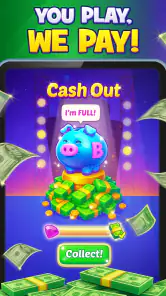
Screenshots

Analysis by Reviewed
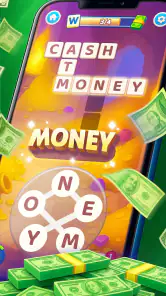
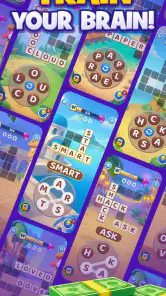
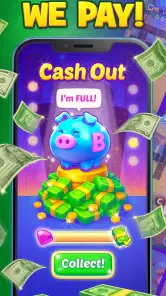
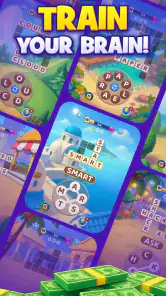
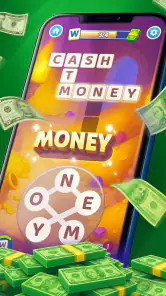
I approached Win Words: Crosswords Game as a decision rather than a quick download: is this the right kind of word game for the way you actually like to play? Its central idea is easy to understand. You collect words, make connections, and work through a classic puzzle format while pursuing real rewards. That combination gives it a different feel from a crossword app designed only for quiet practice.
What stood out to me first was the balance between familiar wordplay and a more goal-driven reason to keep going. The basic appeal is immediate if you enjoy spotting patterns, testing vocabulary, and finding the missing link between letters. At the same time, the reward angle changes how I evaluate each session. I am not only asking whether a puzzle is enjoyable; I am also asking whether the progression feels worth the attention it demands.
The game is free to play, and Bear Hug Entertainment Limited is the developer behind it. It sits in the word category and carries a Mature 17+ age rating, so I would not treat it as a universal family puzzle without first checking whether it suits the intended player. It was released on October 3, 2025, and version 2.1 is the current version I reviewed.
How I Decide Whether This Word Game Fits
My first decision criterion is the kind of satisfaction I want from a puzzle. Traditional crosswords reward patience, general knowledge, and the pleasure of completing a grid. Short word games are usually better when I have only a spare minute and want a quick mental exercise. Win Words: Crosswords Game aims at a middle ground: it uses recognizable word-puzzle thinking, but the collection and connection theme gives each solved entry a sense of forward motion.
That makes it especially appealing when I want more structure than an endless list of disconnected anagrams. I like being able to think in relationships rather than treating every answer as an isolated task. A useful habit is to pause after finding an obvious word and look for the less obvious connections around it. This prevents me from rushing through easy answers and helps me approach the board as a network instead of a sequence of guesses.
My second criterion is tolerance for uncertainty. A reward-focused game can make a wrong move feel more significant than it would in a purely recreational crossword. If you prefer to experiment freely, a standard crossword app may feel calmer. If you enjoy having a reason to return and a stronger sense of purpose behind each solved clue, the reward structure here may be more motivating.
I also consider how much mental variety a game offers during ordinary days. I can imagine using this title during a commute, while waiting for an appointment, or in the evening when I want something more active than scrolling but less demanding than a full game session. The important distinction is that it works best for focused bursts. I would not choose it as background entertainment while watching a show, because word connections need my attention.
The best way to approach the board
My most useful strategy was to separate recognition from commitment. When I saw a likely answer, I treated it as a candidate rather than immediately building my whole approach around it. This matters in connection-based puzzles because one attractive word can pull attention away from a better grouping. I found it more effective to scan for familiar patterns first, then revisit the uncertain spaces with the remaining possibilities in mind.
Another practical tip is to use the game as a vocabulary warm-up rather than trying to force a perfect performance every time. If a session starts with several difficult entries, I would solve the portions that feel clear, note the shape of the remaining problem, and return with a fresh view. That workflow is more comfortable than repeatedly guessing at the same stubborn connection.
This also reveals a trade-off. The more seriously I treated the reward objective, the less relaxed the game felt. The more casually I played, the more enjoyable the word discovery became. I recommend deciding before a session whether the goal is progress or simply a few satisfying solves. Mixing both intentions without noticing can make a good puzzle feel frustrating.
Where the Game Wins Against Familiar Alternatives
The strongest point is its identity. It is not merely a dictionary exercise and not simply a conventional crossword presented on a phone. The act of collecting and connecting words gives the experience a clear loop: observe, test, solve, and continue. That loop is easy to explain to a friend, but it has enough structure to make the game feel more purposeful than a one-off brain teaser.
Compared with a standard crossword alternative, this is a better fit for someone who likes the idea of crossword solving but wants a more compact, game-like rhythm. A newspaper-style crossword can be deeply rewarding, yet it may ask for more uninterrupted time and a broader commitment to one grid. Here, I can approach the experience in smaller portions without losing the sense that I am building toward something.
Compared with fast anagram games, the connection element is the meaningful difference. An anagram game often rewards speed and immediate letter manipulation. Win Words asks me to think about how words relate, which creates a slightly more reflective challenge. I would choose it when I want to exercise vocabulary and association, not just reaction time.
The reward premise is another reason it may win for certain players. It gives a practical hook to people who otherwise abandon word games after the novelty fades. I can see the appeal for someone who enjoys small goals and wants their puzzle sessions to feel connected to a larger outcome. Still, I would keep expectations disciplined: the fun should come from solving first, while the reward objective should be treated as an additional incentive rather than the sole reason to play.
The game also benefits from being free. That lowers the barrier to testing its style without committing money upfront. Its audience appears substantial enough to show ongoing interest, with over fifty thousand installs, an average rating of 4.6, and around five thousand ratings. Those figures suggest a positive reception, but I would still use them as a starting point rather than a substitute for deciding whether this particular puzzle rhythm suits me.
Who is likely to enjoy it most?
I would recommend it first to players who already enjoy crosswords, word associations, and collection-based progression. It is also a good candidate for people who like to keep a small puzzle ready for idle moments but want more direction than a random daily word challenge. The game can suit a player who enjoys learning through context, because unfamiliar words may become easier to remember when they are encountered as part of a connection rather than in isolation.
A realistic everyday scenario would be a short evening break after work. I might open the game intending to play for a few minutes, solve the obvious connections, and then stop before the session turns into a test of patience. The next time I return, I already have a partial understanding of the puzzle structure. That makes it more satisfying than starting a completely unrelated mini-game each time.
I also think it could work for someone who likes discussing word choices with friends. Even without turning it into a competitive event, a difficult connection can become a conversation starter: why does one word fit better than another, and what association did the puzzle expect? That social angle is subtle, but it gives the format more life than silently completing isolated clues.
Where Another Word Game May Be Better
Win Words is not my first choice for every word-game player. If I want a quiet, purely literary crossword experience with no reward-oriented motivation, a conventional crossword alternative may be more suitable. That format usually keeps the focus on clues, grid construction, and personal completion. Here, the extra game objective can make the experience feel less contemplative.
I would also look elsewhere if my priority were rapid sessions built around speed. An anagram or spelling game is often better when I want immediate feedback and a quick reset after every attempt. Win Words asks me to consider connections, so it may feel slower to someone who measures enjoyment by how many words can be produced in a short burst.
Players who dislike uncertainty around rewards should approach carefully. The store summary presents real rewards as part of the appeal, but that promise should not replace common sense about time, attention, and personal expectations. I would not install it solely because of the reward idea. I would install it because I genuinely like word puzzles, then regard any reward as a bonus within that experience.
The Mature 17+ rating is another practical reason to think before recommending it. Parents looking for a simple word game for younger players should choose an option with an age rating that clearly matches their household. Even if the puzzle format itself sounds harmless, the listed rating means I would not casually hand it to a child without checking the surrounding experience.
There is also a difference in emotional pressure. In a traditional crossword, a mistake is usually just a mistake. In a game built around collection and rewards, I may feel more reluctant to waste an opportunity. That can increase motivation, but it can also reduce experimentation. If you enjoy solving by trying possibilities and learning from errors, a less goal-focused alternative may be more comfortable.
Questions I would ask before installing
Is it genuinely free to start? Yes, the listed price is free, which makes trying the core experience straightforward. I would still approach the reward language thoughtfully and read the in-game terms carefully before investing serious time. Free access is a reason to test the game, not a guarantee that every part of the experience will match a player’s expectations.
Will it work on an older device? The minimum operating-system requirement is Android 9, so I would check the phone or tablet before attempting installation. That requirement is neither especially restrictive nor something I would ignore. If the device is older, confirming compatibility first avoids the frustration of planning a puzzle session only to discover that the system is unsupported.
Does it require long sessions? I found the format better suited to short, focused visits than to marathon play. A player can use it as a compact mental break, but someone searching for a large, story-driven game should not expect that kind of scale from a word puzzle. The appeal is in repeated problem-solving, not in exploring a broad world or following a narrative.
Is the reward system the main reason to choose it? In my view, no. It is the feature that separates this game from many ordinary crossword alternatives, but the underlying wordplay still has to carry the experience. If I do not enjoy finding connections, the reward angle will not make the sessions feel satisfying for long.
What should I do when a puzzle stalls? I would avoid repeatedly forcing the same guess. Instead, I would identify the entries I understand, consider what category or relationship the remaining words might share, and return after a short break. This is one of the few word games where stepping away can be genuinely useful because a fresh look often changes which connection seems most natural.
The Real Cost of Changing From Another Puzzle App
Switching from a familiar crossword app is not difficult in terms of learning the basic idea, but it does require changing habits. In a normal grid, I may rely heavily on clue order and crossing letters. Here, I need to pay more attention to relationships between words and to the broader progression. That shift is small, yet it affects how quickly I feel competent.
Switching from a fast word game may take longer emotionally. Players accustomed to instant rounds could initially see the connection process as less direct. My advice is to give it a few sessions while deliberately slowing down. The game becomes more appealing when I stop judging it by an anagram game’s standards and start noticing the satisfaction of grouping ideas.
There is no need to abandon other word games entirely. I would keep a traditional crossword for days when I want a deeper, clue-led challenge, and use Win Words when I want a more guided reward-oriented session. The two formats serve different moods. Treating them as substitutes for every situation would make the comparison unfair.
The bigger switching cost is expectation. If I arrive expecting guaranteed rewards to be the entire experience, I may overlook the puzzle design. If I arrive expecting a standard crossword, I may wonder why the collection layer matters. The most productive mindset is to see this as a word game with a motivational system attached, not as a rewards service with words added around it.
My Recommendation After Playing
I recommend Win Words: Crosswords Game to adults who enjoy word connections and want a free puzzle with a stronger reason to return than simple score chasing. The combination is distinctive enough to deserve a trial, especially for players who find ordinary crossword apps too static and rapid word games too shallow. Its current version is 2.1, and the overall reception gives it a credible starting point for anyone curious about the format.
I would recommend it less strongly to people seeking a completely traditional crossword, a child-friendly title, or a game built around speed alone. Those players may be happier with a focused crossword, an anagram challenge, or another word app whose main objective matches their preferred pace. The Mature 17+ rating should also be part of the decision, not an afterthought.
My practical advice is to begin with short sessions and judge the wordplay independently from the reward promise. Notice whether you enjoy finding connections, whether the progression gives you a useful reason to return, and whether the goal-oriented structure adds motivation or pressure. That test will tell you more than the store summary or the rating by itself.
For me, the game succeeds because it gives familiar word solving a clearer direction without making the basic idea difficult to understand. Its limitation is the same feature that makes it interesting: rewards can change a relaxed puzzle into a more purposeful task. If you want a word game that sits between classic crosswords and quick mobile challenges, this is worth trying; if you want pure crossword calm, choose the simpler alternative.
Bear Hug Entertainment Limited has made a focused choice rather than an all-purpose word app, and that focus helps the game stand out. I would install it for thoughtful, compact sessions, keep my expectations realistic about rewards, and recommend it to a friend who enjoys vocabulary puzzles but wants a little more momentum than a conventional grid provides.
Pros
- Relaxing word puzzles suitable for short daily sessions.
- Large variety of crossword levels for different skill ranges.
- Helpful hints make difficult clues less frustrating.
- Simple interface is easy to learn and navigate.
- Improves vocabulary while providing entertaining gameplay.
Cons
- Some puzzles may feel repetitive after extended play.
- Hints and extra features may require in-app purchases.
- Difficulty can vary noticeably between consecutive levels.
- Requires concentration
- which may not suit casual multitasking.
- Ads may interrupt gameplay for users on the free version.
- Category
- Word
- Version
- 2.1