Stickdance Tuber: Fight Melody
- 40.00
- 4.5
- Installs
- 100.00K
- Price
- Free
Screenshots

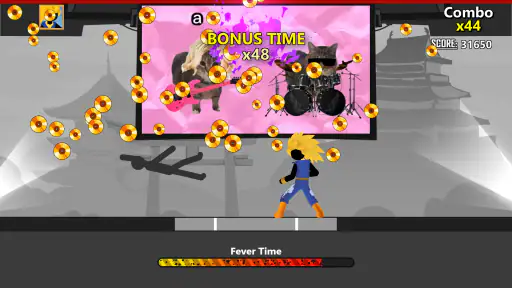
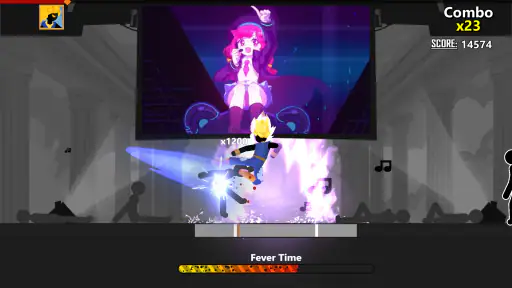
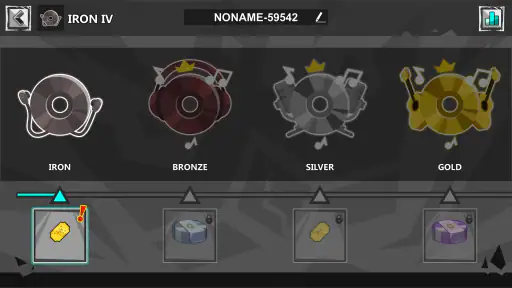
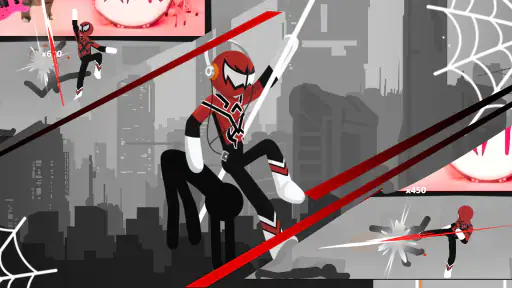
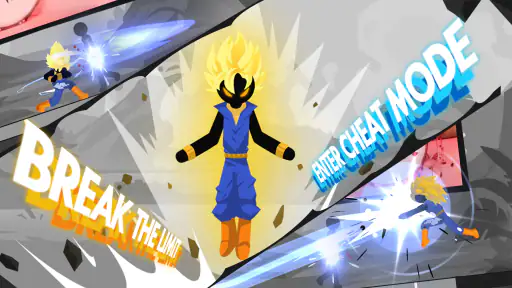
Analysis by Reviewed
Music games usually ask for quick reactions, but Stickdance Tuber: Fight Melody takes that idea into a playful stick-figure setting where timing and movement are closely tied to the soundtrack. I spent time with it as a casual rhythm game rather than treating it like a serious music-training tool, and that distinction matters. Its appeal comes from the simple pleasure of following a beat, watching a character perform, and trying to improve the next attempt without a long setup.
Developed by Cuongbeo Game Studio, this free music game is aimed at players who want something easy to pick up on an Android device. It is available for devices running Android 8.0 or later, carries a Teen content rating, and has reached over one hundred thousand installs. The current version is 1.34, while the overall store response sits at a 4.5 average from around five hundred ratings. Those figures suggest a healthy audience, but they do not replace the more useful question: does the moment-to-moment play feel good enough to keep returning to?
How the basic play loop feels in everyday use
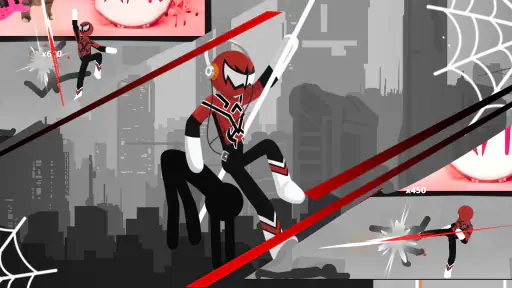
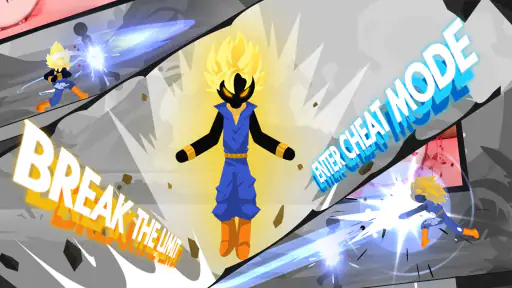
My first recommendation is to approach each session as a short musical challenge, not as a game that demands a large time commitment. Start when you have a few uninterrupted minutes, listen for the rhythm, and concentrate on the visual prompts rather than trying to rush every action. The stick-figure presentation keeps the screen readable, which is helpful when the music becomes busier and several movements arrive close together.
The straightforward presentation is one of the game's strongest qualities. There is less visual clutter than in many larger rhythm titles, so I can focus on the relationship between the beat and the required response. That makes it suitable for a quick break, a commute, or a short wind-down session. It also means that the game depends heavily on whether its timing feels comfortable on a particular phone. A display with noticeable touch delay can make a pattern feel unfair even when the player's timing is reasonable.
I found it useful to play the opening attempts without chasing a perfect result. The first run tells you how the game places its cues, how quickly the action changes, and whether your phone registers taps consistently. After that, repeating the same section becomes more informative than constantly switching between challenges. The music provides a natural memory aid, so an action that felt sudden on the first pass often becomes easier once I recognize the phrase leading into it.
That repeatable loop is where the game earns its place among casual rhythm games. It is not merely about tapping randomly until something works. The better habit is to connect sound, animation, and response: hear the accent, watch the cue, then act. Players who enjoy learning a short sequence through repetition will probably get more from it than people who expect every attempt to feel completely different.
A practical routine for short sessions
For an ordinary evening session, I would begin with the device volume at a comfortable level and keep the phone steady in both hands. I would then play once without worrying about mistakes, identify the part where the timing breaks down, and immediately try that section again while keeping my attention on the music. If the same moment remains difficult, taking a brief pause is more useful than making a dozen frustrated attempts.
This routine also helps answer a common concern: can someone play without being an experienced rhythm-game player? Yes, provided they are willing to accept a learning curve. The game is approachable because its visual language is simple, but approachable does not mean every sequence will be effortless. Beginners should expect to improve through repetition rather than assuming the first run represents their ability.
Another useful habit is to avoid changing your grip between attempts. Small shifts in thumb position can alter how quickly you reach an input, especially when the action moves from one side of the screen to another. I prefer to settle into one comfortable posture and keep it consistent. That turns a vague feeling of “the game is too fast” into a clearer judgment about whether the problem is timing, positioning, or unfamiliarity with the pattern.
Settings and preparation that deserve attention
There is no reason to treat the settings screen as an afterthought. Before judging the game, I would check the available audio and control options, confirm that the device is not muted, and make sure notifications will not interrupt a run. Even when a game looks simple, rhythm play is sensitive to distractions. A message banner or sudden volume change can break concentration at exactly the wrong moment.
Headphones can be useful when the surrounding room is noisy, but they are not automatically the best choice for everyone. Some players find that wired or wireless audio introduces a slight delay, while the phone speaker may feel more immediate. I would test both briefly and use whichever makes the visual cues and music feel synchronized. This is a practical trade-off: headphones improve focus and privacy, but direct device audio may provide a more dependable sense of timing on some setups.
Screen brightness is worth adjusting as well. A very dim display can make quick cues harder to read, while maximum brightness may be uncomfortable during a longer session. I also prefer disabling battery-saving behavior temporarily if it causes the device to reduce performance. I am not claiming that every phone will behave the same way, but rhythm games expose small performance changes more clearly than slower genres do.
Because the game is free to download, it is easy to try without an upfront purchase. It does include optional in-app purchases ranging from $0.99 to $9.49 per item, so I would still review the purchase controls before handing the phone to a younger player. The Teen rating is another reason to consider who will be using it. For an adult, the purchase range is easy to understand; for a family device, parental safeguards and a conversation about spending are sensible preparation.
One setting-related limitation is that configuration cannot solve every timing issue. If the phone has a slow touch response, a damaged screen protector, or audio latency that varies from one connection to another, changing a menu option may not be enough. In that situation, a different rhythm game with stronger calibration tools could be a better fit. I would not choose this title specifically for detailed timing adjustment; I would choose it for its accessible stick-dance presentation and short-session rhythm.
Using repetition instead of frantic tapping
Experienced players will quickly notice that speed alone is not the answer. When a pattern becomes dense, frantic tapping often creates extra mistakes because the player loses the beat and begins reacting to the previous cue. I get better results by dividing the sequence into small musical phrases. I listen for the start of a phrase, keep my movements economical, and use the next recognizable sound as a reset point.
This approach is especially useful when a run starts well and then collapses. Rather than replaying the entire attempt with more force, I focus on the transition where my attention changes from listening to guessing. That transition is often the real weakness. Once I identify it, I can treat the next attempt as a test of one specific habit instead of an emotional rematch against the whole level.
Another non-obvious advantage of a simple visual style is that it makes self-correction easier. In a crowded rhythm game, it can be difficult to tell whether a miss came from the cue, the animation, or background effects. Here, the stick-figure action gives me a clearer connection between what appeared and what I did. That does not make every sequence easy, but it makes practice more deliberate.
I also recommend keeping the volume high enough to hear the beat without making it tiring. Players sometimes raise the sound because they are missing cues, when the real issue is that they are watching too far ahead. The better balance is to use the music as a guide and the screen as confirmation. Once the pattern becomes familiar, the soundtrack should help predict the next action rather than simply accompany a series of visual reactions.
Who gets the most from the game
This is a good match for someone who likes casual music challenges, animated stick figures, and repeatable attempts. It works particularly well for players who enjoy improving a short performance gradually, because the satisfaction comes from recognizing a pattern and responding more cleanly the next time. It is also a reasonable choice for someone who wants a free starting point before investing time in a larger rhythm-game catalog.
I would be more cautious about recommending it to players who want a deep music library, extensive customization, competitive ranking systems, or the precision tools found in specialist rhythm titles. Those expectations can make the experience feel limited. The game is better understood as a focused, accessible music action title than as a full replacement for every kind of rhythm game.
It may also be a poor choice for someone who dislikes repetition. The core pleasure depends on replaying patterns and gradually improving recognition. If you want a game where every session changes dramatically or where exploration is more important than timing practice, another genre will probably suit you better. Likewise, anyone highly sensitive to touch or audio latency should test the game on their own device before deciding whether it deserves regular play.
Where the simple design reaches its limits
The same focus that makes the game approachable can also make it feel narrow after extended sessions. A clean stick-figure style is easy to read, but it does not provide the visual richness of more elaborate music games. If you play for a long time, the central loop may begin to feel familiar rather than expansive. I see that as a trade-off, not a flaw that invalidates the whole experience.
The free entry point is welcome, although the optional purchase range means the overall experience should be judged with spending in mind. I would not make a purchase simply because a difficult pattern is frustrating. First, I would check my audio setup, replay the sequence at a calmer pace, and decide whether the item offers a meaningful improvement for the way I play. That keeps the decision based on enjoyment rather than impatience.
The Teen rating also makes this less suitable as an automatic choice for very young children. Parents should look at the game themselves and decide whether the presentation and purchase options fit their household. The title may look playful, but the rating is part of the practical decision and should not be ignored just because the characters are stick figures.
Its Android requirement is modest enough for many existing phones, yet compatibility alone does not guarantee a smooth rhythm experience. Screen responsiveness, audio behavior, and background activity can matter more than raw availability. I would close demanding apps before playing, keep the device stable, and test the timing with the phone speaker before assuming the game itself is the problem.
My verdict after settling into the rhythm
After using it with a repeat-and-refine mindset, I see Stickdance Tuber: Fight Melody as a friendly entry in the music category rather than an ambitious all-purpose rhythm platform. Cuongbeo Game Studio has built its appeal around a clear idea: match musical timing with animated stick-figure action, then come back and perform the pattern more confidently. That idea works best in short bursts and for players who enjoy learning through repetition.
The strongest recommendation I can give is conditional but sincere: try it if you want a free, easy-to-start rhythm game with a distinctive visual identity and enough challenge to reward attention. Keep your expectations realistic about depth, calibration, and long-session variety. Use the music as your timing anchor, test your audio setup, keep your grip consistent, and treat difficult passages as patterns to understand rather than obstacles to overpower.
For me, the deciding factor is whether the game makes another attempt feel worthwhile. In this case, it often does, especially after a miss reveals exactly where my timing slipped. Players looking for a compact music game on Android may find that satisfying. Players seeking a large competitive ecosystem or highly technical rhythm controls should look elsewhere. Its best quality is the clean connection between beat, cue, and movement, and its main limitation is that the same focused design may eventually feel too small for experts who want more systems around it.
Pros
- Simple rhythm-based controls are easy to learn quickly.
- Short battles make it convenient for quick gaming sessions.
- Distinctive stick-figure visuals give the game a playful style.
- Music-driven combat adds variety beyond standard fighting games.
- Progression encourages players to replay stages and improve scores.
Cons
- Timing-based gameplay may feel repetitive after extended play.
- Difficulty can increase sharply in later fights.
- Some songs or content may require in-app purchases to unlock.
- Small on-screen controls can be challenging on compact displays.
- The game may become less enjoyable without a stable internet connection.
- Category
- Music
- Version
- 1.34