Squishy Magic: ASMR Toy Maker
- 14.08K
- 4.6
- Installs
- 10.00M
- Price
- Free

Screenshots







Analysis by Reviewed
I reach for quick mobile games when I want something to do with my hands and attention without committing to a long session. Squishy Magic: ASMR Toy Maker is built around that kind of play: you create and color soft-looking 3D toys, then squeeze and collect them. Dramaton classifies it as an educational game, though I find its appeal lies less in lessons than in creative, tactile-style interaction. It works best as a casual digital fidget, not as a deep crafting game or a substitute for a real sensory toy.
What the toy-making loop feels like
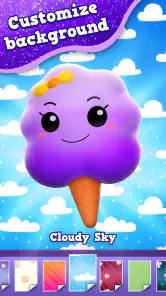
The central idea is easy to understand: shape a toy, add color, and enjoy the visual feedback of pressing or squeezing it. That makes the game approachable even if you have only a few minutes. There is no complicated premise to learn before you can start, and the make-and-play cycle gives each short visit a clear purpose.
The 3D presentation matters here. Coloring is not simply a flat picture to fill in; the toy is presented as an object you handle on screen. That visual shift helps the activity feel closer to playing with a squishy item than to using a standard coloring app. Still, it remains a touch-screen simulation. If you need actual resistance, texture, or pressure from a physical fidget, this cannot provide it.
One useful way to approach the game is to treat each creation as a brief reset rather than a project you must perfect. I would use it between tasks, while waiting for someone, or during a quiet break when I want a low-effort activity. The short creative loop is a better fit for those moments than a game built around long levels, precise timing, or competitive matches.
Creation is the point, not a demanding challenge
The game’s strongest distinction from many casual alternatives is its emphasis on making something and then interacting with it. A typical puzzle game asks you to solve a board; a conventional coloring app is mostly about choosing and applying colors. Here, the toy itself is the focus, so creation and squeezing belong to the same playful idea.
That emphasis also sets expectations. I would not pick it when I want a story, complex strategy, or a skill curve that rewards extended practice. Nor would I choose it as a serious art tool: the appeal is the toy-making fantasy and satisfying presentation, not precise illustration controls. Someone who enjoys digital crafts may like the immediacy, while a player looking for substantial building systems may find the activity lightweight.
Because the game combines coloring with tactile-style interaction, it can suit different moods. When I want a little creative input, I can focus on appearance; when I want to unwind, the squeeze-and-collect idea is the more natural draw. That flexibility is a real strength, although it does not mean every session will feel fresh indefinitely. Players who need constant new objectives may prefer a game with clearer stages or broader progression.
You May Like

Clash of Clans Is Won Between the Battles

Android Auto Makes the Case for Quieter Car Software

MobiOffice: Transforming Mobile Productivity with Seamless Integration

EA SPORTS FC™ Mobile Soccer: Redefining Mobile Sports Gaming

How Microsoft OneDrive Became a Mobile Productivity Giant

How Google Translate Breaks Language Barriers Effortlessly
Small habits that make play more satisfying
A practical tip is to decide what you want from a session before opening it. If you are looking for calm, avoid turning every toy into a task to finish quickly; give yourself room to experiment with color and enjoy the interaction. If you have only a moment, make the simple loop the whole point instead of expecting a longer activity to unfold.
It can also help to use the game as a transition between activities. For example, after finishing a homework page or while waiting for a meal, a short visit offers a clear change of pace without asking you to learn rules or coordinate with other people. For children, that simplicity may be welcome, but I would still treat screen play as one option among hands-on activities rather than assuming a simulated squishy has the same sensory value as a real object.
Another useful distinction is between relaxing interaction and reliable stress relief. The soft-looking toys and squeezing premise may feel soothing to some players, but responses to visual and touch-based effects vary. If repetitive animation or screen play tends to bother you, it is sensible to try a brief session first and stop if it feels irritating rather than calming.
A practical fit for short breaks
One everyday use I can see is opening the game during a quiet wait when I would otherwise scroll without a purpose. I would make one toy, spend a little time choosing its look, and then put the phone away when the wait ends. That gives the session a natural stopping point and keeps a small pastime from turning into an aimless stretch of screen time.
The same approach can work for a child who wants a simple activity while an adult is nearby, but I would set expectations first: the game offers screen interaction, not a physical toy, and the adult should handle any purchase decisions. If a child mainly wants something to squeeze with their hands, a real fidget is the more direct option; if they want to make and interact with a colorful toy on screen, this game is a closer fit.
I would also try it in a calm setting before deciding whether its style suits me. A player who enjoys soft-looking visuals may find the interaction pleasant, while someone who dislikes repetitive touch gestures or animated feedback may lose interest quickly. A short trial is more informative than assuming that an ASMR-style concept will be relaxing for everyone.
Spending, progress, and fairness
The game is free to download and rated for Everyone. It has an average rating of 4.6 from around 131,000 ratings, with over 10 million installs. Those figures suggest that the simple toy-making concept has reached a broad audience, but they do not tell me whether every player enjoys the same parts or how the experience changes over time.
There are in-app purchases, with items priced from $0.99 to $23.99. That is the spending context I would keep in mind before handing the game to a child or letting a purchase decision happen casually. I would check the device’s purchase controls in advance and make sure the player understands that optional digital items can involve real spending.
On fairness, I can make a limited but useful judgment: the game’s central appeal is creative and sensory-style play, rather than a contest against other players. That makes competitive fairness less central than it would be in a ranked multiplayer game. I would not infer from that, however, that purchases have no effect on access to content or progression. The available purchase information gives prices, not a breakdown of what each item does.
The same caution applies to progress. The toy-making premise gives players an immediate activity, but I would not assume a particular unlock structure, collection requirement, or time gate without knowing how those systems work. If you are deciding whether the free version is enough, the sensible approach is to try the basic experience first and only consider spending if you encounter a specific item you genuinely want. The listed range is not a reason to buy; it is a reason to make purchases deliberately.
What the purchase information can—and cannot—tell you
The price range is useful for setting a boundary, but it does not answer the practical question of what an individual purchase changes. I would not treat a higher-priced option as necessary, nor assume a cheaper one unlocks a particular toy or advantage. Before spending, I would look at the item presented in the game and decide whether that specific purchase is worth it to me, rather than buying in the hope that it will make the whole experience more rewarding.
That uncertainty matters most for families and for players who like to know the full cost of a game in advance. If you prefer a fixed-price experience, a one-time-purchase game may be easier to budget for. If you are comfortable trying a free game and declining optional purchases, the starting point here is straightforward: install it, see whether the basic activity holds your attention, and keep spending turned off unless you make a considered choice.
Where expectations should stay modest
The game’s easy entry is also a limitation. A quick, tactile-feeling loop can be pleasant, but it may not satisfy someone who wants a substantial educational curriculum, detailed crafting controls, or a long-term challenge. Although it sits in the educational category, I would describe its learning value cautiously: its clear strengths are making, coloring, and playful interaction, rather than teaching a named subject or skill set.
It is also worth separating “free” from “without spending.” You can download it at no cost, while optional purchases are available. That distinction matters for families and for anyone who prefers apps with a completely fixed cost. If you want no in-app purchase prompts or a known one-time price, a paid game with transparent upfront pricing may be a better match.
For a sensory alternative, a physical squishy or fidget toy is the more direct choice because it provides real touch and pressure. For a creative alternative, a dedicated drawing or coloring app may offer more control over artwork. I would choose this game when the combination of toy-like 3D presentation and quick interaction is the specific appeal, rather than expecting it to replace either alternative in full.
Who I would recommend it to
I would recommend Squishy Magic: ASMR Toy Maker to someone who enjoys cute, low-pressure mobile activities and wants a small creative break. It is also a reasonable option for a child-friendly casual game, especially when an adult is comfortable managing purchases and screen time. Its Everyone age rating supports that broad positioning, but it does not remove the value of parental oversight around spending.
I would skip it if I wanted a demanding game, a detailed art workspace, a structured educational course, or the physical feedback of a real fidget toy. I would also be cautious if I were trying to avoid optional purchases entirely or if repetitive touch interactions do not suit me. Those are not flaws for every player; they are simply important differences between this kind of game and more focused alternatives.
The current version is 7.31, and the game runs on Android 7.0 or later. It was released on December 19, 2019, so it is an established title rather than a brand-new experiment. That can be reassuring if you want something familiar and readily available, though version and device compatibility are worth checking before installing on an older phone.
My trust verdict
My overall view is positive but measured. The concept is clear, the interaction is easy to pick up, and the blend of coloring and toy-like squeezing gives the game a distinct purpose among casual creative apps. Its best use is a short, self-directed break—not a deep learning experience, a serious craft tool, or a competitive game.
For spending, I would keep the decision simple: start free, see whether the core activity holds your interest, and avoid buying anything unless its value is clear to you. The purchase range is known, but the precise effect of individual items on access and progress is not something I would guess at. With that expectation in place, I think it is worth trying if you want a playful digital fidget and understand that the screen can imitate a squishy toy without replacing one.
Squishy Magic: ASMR Toy Maker Frequently Asked Questions
What is Squishy Magic: ASMR Toy Maker?
Squishy Magic: ASMR Toy Maker is a casual creative game centered on designing and decorating virtual squishy toys. Players can choose a toy shape, apply colors and patterns, and add decorative details before interacting with the finished creation. Its appeal comes from combining simple customization with soft, tactile-looking visuals and ASMR-inspired sounds. It is designed for relaxed, pick-up-and-play sessions rather than demanding challenges or a detailed story.
How do you play Squishy Magic: ASMR Toy Maker?
The main activity is to follow the available creation steps: select or prepare a squishy, customize its appearance, and use the tools shown on screen to complete the design. The controls are generally suited to tapping and dragging, so the game is approachable for players who do not often play mobile games. Specific tools and options can vary by level or version, and the experience focuses more on creative interaction than on complex gameplay.
Is Squishy Magic: ASMR Toy Maker free to download, and does it include ads or in-app purchases?
The game may be available to download at no initial cost, but free access does not necessarily mean that every feature is free or that play is uninterrupted. Mobile games of this type can include advertisements, optional purchases, or unlockable content, and the exact setup may differ between platforms and app versions. Check the current Google Play or App Store listing, including its in-app purchase and data disclosures, before downloading.
Can children play Squishy Magic: ASMR Toy Maker?
Its simple controls and toy-making theme may make the game appealing to younger players, but parents should review the store’s age rating and the app’s current content information first. Also consider whether advertisements, external links, or optional purchases are present, and use device-level parental controls where appropriate. The game is intended as casual entertainment; it should not be assumed to be ad-free or suitable for every child without checking its current listing.
Does Squishy Magic: ASMR Toy Maker work offline, and which devices support it?
Offline availability and device compatibility can depend on the specific release, operating system, and app version. Some parts of a game may work without a connection, while advertising, purchases, updates, or certain features may require internet access. Before installing, check the official store page for supported Android or iOS versions and device requirements. If offline play matters to you, verify it on your device rather than relying on assumptions.
Pros
- A wide variety of squishy shapes and decorations encourages experimentation.
- Simple touch controls make crafting easy to pick up.
- Satisfying squeeze animations and sounds suit casual ASMR play.
- Short crafting sessions work well for quick breaks.
- Its playful
- colorful presentation is appealing to younger players.
Cons
- Repetitive crafting may lose its appeal after many creations.
- Some designs and customization options may require in-app purchases.
- Frequent ads can interrupt the relaxing flow.
- The ASMR sounds may become repetitive over time.
- Gameplay offers limited challenge for players seeking deeper mechanics.

- Category
- Educational
- Version
- 7.31