Sprunki Beats Phase 4
- 3.00
- 3.7
- Installs
- 100.00K
- Price
- Free

Screenshots
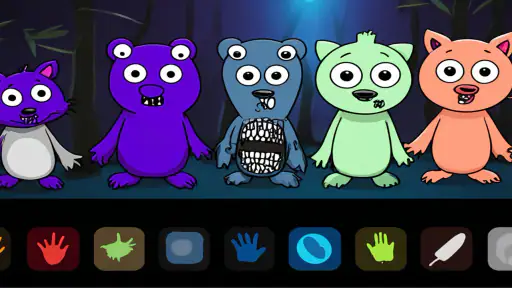
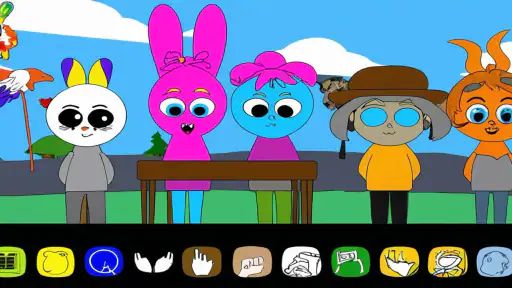
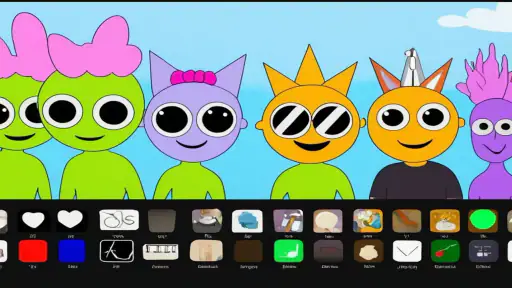
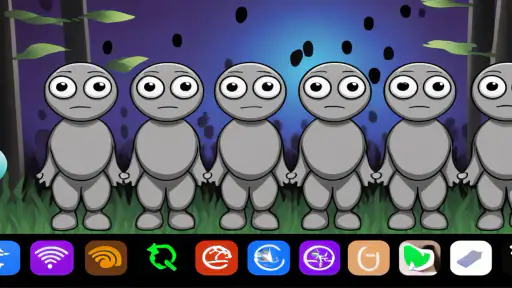
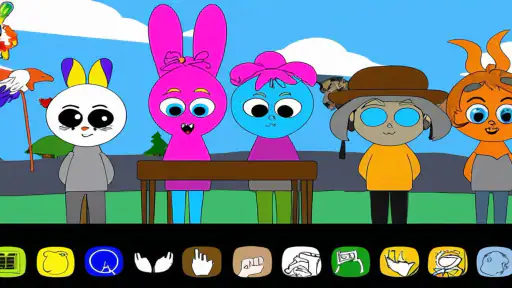
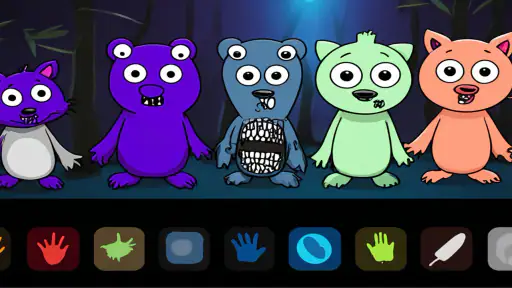
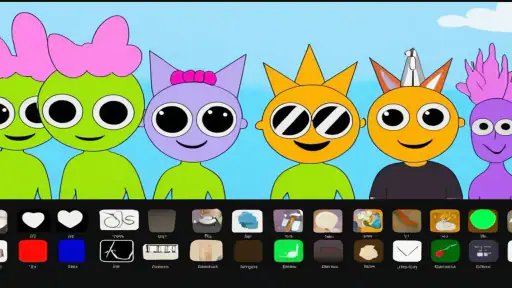
Analysis by Reviewed
Sprunki Beats Phase 4 is a free music game from Novelab LLC that caught my attention because it aims for quick, playful sessions rather than the commitment of a full rhythm campaign. I approached it as something to open for a few minutes, experiment with, and put down again. That is the right way to judge it: not as a replacement for a serious music-making tool, but as a lightweight game built around the pleasure of interacting with beats.
The basic appeal is easy to understand. You launch it, spend time with its musical presentation, and enjoy the simple satisfaction of making progress through a sound-focused experience. The store summary keeps the promise broad, and my impression is that the game works best when you want immediate entertainment without first learning a complicated interface. Its strongest quality is accessibility: it feels aimed at people who want to play with music, not study music production.
How Sprunki Beats Phase 4 feels in everyday use
My first sessions were most enjoyable when I treated the game as a short break. After a long commute or while waiting for an appointment, a music game can be more appealing than opening a large action title that demands concentration and time. This one fits that gap well. The free price also makes trying it a low-risk decision, especially for families or casual players who are curious about the Sprunki style but do not want to buy anything before understanding the experience.
The game belongs firmly in the music category, but that label should not make you expect a full digital audio workstation, a professional beat sequencer, or a structured rhythm-training program. Those alternatives are better when you need precise timing practice, detailed recording controls, or a long-term creative project. Sprunki Beats Phase 4 is more immediate. I would describe it as a playful musical game first, with experimentation and amusement taking priority over technical depth.
That distinction matters when deciding whether it is right for you. If your ideal music app lets you arrange tracks, edit individual sounds, export finished work, or measure your performance in detail, this is probably not where I would start. If you want something approachable that turns musical interaction into a game-like activity, it makes more sense. The experience is easier to recommend to curious newcomers than to experienced musicians looking for control.
Speed expectations on supported phones
Because the game is currently at version 1.0, I approached its speed with realistic expectations. A first release can feel straightforward and responsive on one phone while exposing rough edges on another, particularly when the device is older or already busy with background tasks. I did not treat a quick launch as proof that every handset will behave identically. The practical test is whether your phone can open the game comfortably and keep your attention on the music rather than on delays.
The minimum operating-system requirement is Android 5.1, which gives the game a broad technical doorway compared with titles that require a recent system. That does not automatically mean every older device will deliver the same experience. Operating-system compatibility is only one part of performance; available memory, processor age, screen condition, and the number of other apps running can still affect how pleasant a session feels.
On a reasonably maintained phone, I would expect the short-session format to be more forgiving than a large open-world game. There is less reason to assume that you need a premium handset simply to try it. Still, I would close unused apps before playing if your device is older, especially if you notice audio interruptions or a slow return after switching away. That small habit is more useful than assuming the minimum OS alone guarantees perfect behavior.
One practical advantage of a music game is that you notice responsiveness differently from a text or puzzle app. A slight pause can feel much more obvious when it lands between visual action and sound. For that reason, I paid attention not only to whether screens appeared quickly, but also to whether the interaction felt connected to the audio. Players who are sensitive to timing should judge the game during a quiet test session rather than forming an opinion while the phone is downloading updates or handling several other tasks.
What happens during longer or heavier sessions
The moments most likely to challenge a phone are not necessarily the opening screen. They are the periods when the game is actively presenting several visual and audio elements together, when you repeatedly restart an activity, or when you move back and forth between the game and another app. Those are the situations I would use to evaluate it before deciding whether it belongs on a daily-play device.
For casual use, I prefer a simple routine: begin with a short session, keep the phone’s battery comfortably charged, and avoid judging performance while the device is hot from charging or direct sunlight. Heat can make any game feel less consistent, and a music-focused title gives you fewer distractions from small interruptions. If the sound begins to feel out of step with your actions, restarting the game is a sensible first recovery step rather than repeatedly tapping through a sluggish session.
A useful, non-obvious trade-off is that the same simplicity that makes the game approachable may limit how much there is to investigate during a long sitting. It is easy to enjoy a compact musical game in bursts, but players who expect a deep progression loop may eventually want more variety than a short-form experience provides. I would therefore use it as a companion game, not necessarily as the only game installed on a phone.
Another good use case is sharing the phone with a younger family member. The Everyone age rating makes the game easier to consider in a family setting, but I would still watch the first session and explain basic phone habits: keep the volume comfortable, avoid tapping repeatedly if the screen seems busy, and close the game normally before handing the device to someone else. The age label helps with suitability, yet it does not replace ordinary supervision of screen time.
Reliability, interruptions, and recovery
Reliability for me is not just the absence of a crash. It also means the game recovers sensibly when a notification arrives, the screen locks, or I briefly check another app. Music games are judged harshly by interruptions because a lost beat can break the mood immediately. I would give Sprunki Beats Phase 4 a fair trial across several short sessions instead of relying on one perfect launch.
If the game stops responding, my recovery order would be deliberately simple: leave it, reopen it, and only then restart the phone if the wider device is also acting strangely. That approach avoids turning a small app problem into unnecessary troubleshooting. If the game returns normally after reopening, the issue may have been temporary device pressure rather than a permanent fault. If the same problem repeats, I would check free storage, install the latest available version, and make sure the phone is not running unusually hot.
The current release is version 1.0, so I would keep expectations flexible around polish. Early versions can be perfectly usable while still leaving room for improvements in edge cases, transitions, or device-specific behavior. That is not a reason to dismiss the game; it is a reason to evaluate it on your own handset and avoid assuming that another player’s experience will match yours exactly.
The game has attracted over one hundred thousand installs, which suggests that it has reached a meaningful audience without making popularity a substitute for personal testing. Its average rating is 3.7 from roughly one hundred fifty ratings, so the public response looks mixed rather than universally enthusiastic. I read that as a useful warning to approach it with measured expectations: there is enough interest to make it worth trying, but not enough consensus for me to recommend it blindly to every music-game fan.
Device constraints that can change the experience
The broad Android requirement is helpful, particularly if you keep an older phone as a spare or share devices at home. Even so, older hardware can have practical limits that are not captured by the operating-system number. A phone with limited free memory may reload the game after you switch apps. A worn battery may make a short game feel inconvenient if the device is already struggling with heat. A small or damaged speaker may also make the musical side less enjoyable, even if the game itself runs correctly.
I would test three things before settling into regular play. First, check whether the opening and first interaction feel immediate. Second, switch away briefly and return to see whether the session survives naturally. Third, play with the phone held in the way you normally use it, because accidental touches and uncomfortable grip can matter more in a simple game than in a slower one. These checks take only a few minutes and tell you more than a generic compatibility label.
Headphones can be useful if your surroundings are noisy, but I would not use them to hide a timing problem. Try the game through the phone speaker first, then through headphones, and notice whether the relationship between action and sound still feels natural. If one output method feels delayed, the problem may involve the device or accessory rather than the game alone. That is an important distinction before deciding that the app is unreliable.
Storage management is another practical consideration. I would leave comfortable free space on the phone and avoid installing the game during a large system update or while several other downloads are active. This is not a special requirement unique to the title; it is simply the best way to give a small game a fair chance to launch and recover cleanly on an older device.
Who will enjoy it, and who should choose something else
I think Sprunki Beats Phase 4 suits casual players who like musical themes, younger users who want an approachable game, and anyone looking for a free distraction that does not require a long setup. It is also a reasonable choice for fans of the Sprunki concept who want to see how this phase feels on their own phone. The combination of a free download, an Everyone age rating, and a low learning barrier makes experimentation easy.
I would be more cautious recommending it to someone who wants competitive leaderboards, advanced composition, a carefully measured rhythm curriculum, or a large amount of content for extended daily play. A dedicated rhythm game is likely better for precise timing challenges. A music-production app is better for building and saving detailed arrangements. A conventional puzzle game may be better if you want clear strategic goals rather than a sound-centered experience.
The most realistic scenario is this: you have ten minutes before leaving home, your phone is not overloaded, and you want something more engaging than scrolling. This game can fill that space without requiring a campaign restart or a complicated tutorial. By contrast, if you are planning a long flight and want one title to occupy several hours, I would install a deeper game alongside it rather than relying on this alone.
My advice is to judge it by the quality of its first few sessions, not by the promise of becoming a complete music platform. Keep the volume moderate, test it on the device you actually use, and pay attention to how it behaves after interruptions. Those details reveal whether it fits your routine. For short, low-pressure musical play, it is an appealing free experiment; for depth, precision, or guaranteed long-session variety, look elsewhere.
My performance verdict
After considering speed, heavier moments, recovery, and device limits, I see Sprunki Beats Phase 4 as a modest but approachable music game rather than a technically demanding production. Its free price removes the biggest barrier to trying it, while the Everyone rating broadens its audience. Novelab LLC has positioned the release simply, and the current version feels like something to sample with an open mind rather than a finished replacement for every other music game.
I would install it on a compatible Android phone if I wanted quick musical entertainment and was comfortable with a compact, casual experience. I would not choose it as my main game if I needed deep progression, advanced sound control, or a demanding test of rhythm accuracy. The public rating of 3.7 reflects that middle ground: enough appeal to make the download worthwhile for the right person, but also enough uncertainty that expectations should stay realistic.
My final recommendation is therefore selective. Try it when you want an easygoing music game, especially if you enjoy the Sprunki theme or need something suitable for brief breaks. Give it a fair test on your own device, including a return from the background, before deciding whether it is stable enough for regular use. The best reason to keep it installed is its approachable musical play, not promises of professional tools or marathon depth.
Pros
- Creative beat-making tools encourage experimentation and musical play.
- Distinctive character designs give the app a memorable visual identity.
- Short sessions make it easy to enjoy during quick breaks.
- Layering sounds helps beginners understand basic rhythm and arrangement.
- The unusual atmosphere appeals to fans of quirky music experiences.
Cons
- Some sound combinations may become repetitive after extended play.
- The interface can feel unclear until you learn what each control does.
- Limited guidance may frustrate users expecting a structured tutorial.
- Visual effects could feel distracting during longer music-making sessions.
- Performance may vary on older phones or devices with limited memory.

- Category
- Music
- Version
- 1.0