Second Grade Learning Games SE
- 170.00
- 4.7
- Installs
- 10.00K
- Price
- $9.99
Screenshots
Analysis by Reviewed
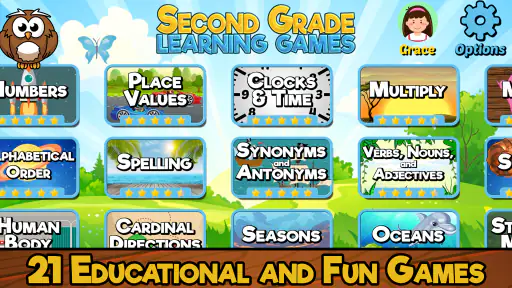
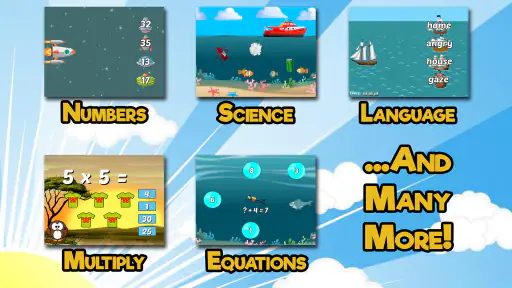
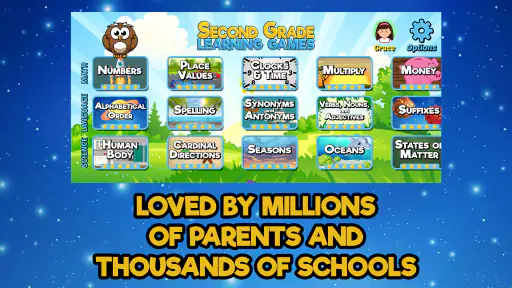
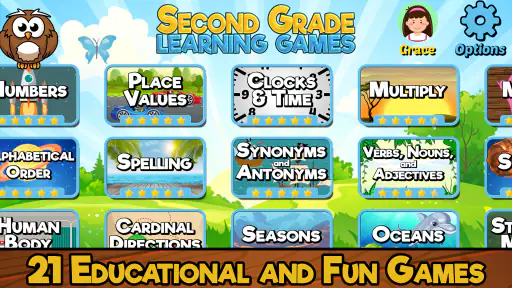
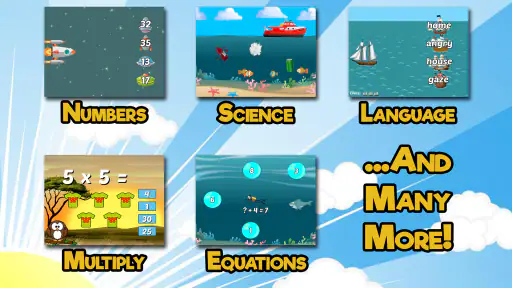
Second Grade Learning Games SE is the kind of educational game I would put in front of a child who needs practice but quickly loses interest in ordinary worksheets. It comes from RosiMosi LLC and focuses on lessons normally associated with second grade, presenting them through a collection of twenty-one activities rather than one long course. In my experience, that variety is the main reason it feels approachable: a child can move from one type of task to another before practice starts to feel repetitive.
I also think it is important to set expectations correctly. This is not a replacement for a teacher, a complete school curriculum, or a creative sandbox. It is a paid learning game for short, guided practice sessions. At $9.99, the question is not whether it offers endless entertainment, but whether its compact format gives your child enough useful repetition to justify the cost. For families looking for a simple way to reinforce second-grade skills at home, it has a clear purpose. For children who need highly customized instruction or more open-ended play, the fit is less convincing.
How the first goals shape the experience
The early goal is easy to understand: complete learning activities and become more comfortable with the kind of material a second-grade student encounters. That clarity matters. A child does not need to learn a complicated game world before reaching the educational content. The activities themselves are the point, so the experience can begin as soon as a parent hands over the device.
I like this direct approach for short sessions. If a child has ten or fifteen minutes before dinner, there is no need to spend that time navigating a large map, collecting virtual objects, or waiting through a long story. The game’s structure is better suited to a quick practice routine: choose an activity, work through it, and then decide whether to continue or stop.
The twenty-one-game format also gives the child an immediate sense that learning is not limited to one exercise. That can be especially useful when one subject creates frustration. A parent can move to another activity and return later, rather than turning the whole session into a struggle over a single worksheet-style task. This is one of the more practical strengths of the package, even though it also means the experience depends on the child finding several activities appealing.
For younger players, the first few sessions work best when an adult explains the purpose in ordinary language. I would say, “Let’s try one activity and see what feels easy,” instead of presenting it as a test. That small change reduces performance pressure and makes it easier to notice whether the child understands the lesson or is simply tapping through it.
Progress is clearest when an adult watches the pattern
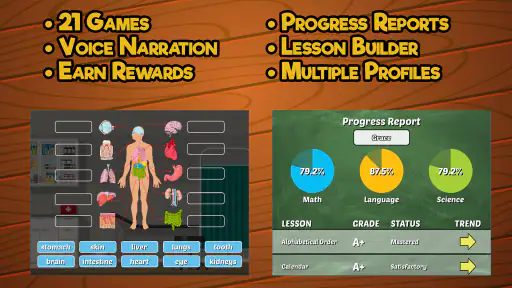
The game’s progress signals are most useful when they are treated as conversation starters rather than final judgments. A completed activity may show that a child reached the end, but it does not automatically prove that the underlying skill is secure. I would sit nearby during the first session, watch where mistakes happen, and ask the child to explain one answer in their own words.
This is a valuable distinction in educational games. A child may perform well on familiar formats while still struggling to transfer the same idea to a new problem. Conversely, a child may understand the lesson but make avoidable errors because the device interaction feels unfamiliar. Watching the process gives parents information that a completion signal alone cannot provide.
A practical routine is to alternate between independent play and a brief review. Let the child work without interruption, then ask which activity felt easiest and which felt confusing. This keeps the game from becoming a constant adult-supervised drill while still turning the results into useful feedback. I found that this approach also helps children develop the habit of describing their own learning, not just chasing the next successful answer.
The app is rated for Everyone, which matches its broad family orientation, but that does not mean every second grader will find every activity equally suitable. Reading confidence, attention span, and prior classroom experience can change the difficulty substantially. A child who is ahead may treat some tasks as warm-ups, while another child may need encouragement and repeated explanations.
Difficulty works better as a gradual routine than a one-time test
The difficulty curve is most effective when the game is used repeatedly in small portions. A single long session can make any educational activity feel tiring, especially when a child starts making mistakes simply because attention has faded. I would rather schedule several brief visits during the week than expect the game to carry an entire afternoon of study.
That pacing also makes it easier to identify the right challenge level. If a child answers everything immediately and seems disengaged, the activity may be functioning as review rather than active learning. If the child becomes upset early, the problem may not be the lesson itself; it may be that the session is too long or that the activity was introduced without enough context.
One useful technique is to stop after a successful stretch instead of waiting for frustration. Ending on a confident moment gives the next session a positive starting point. It also prevents the child from learning an unfortunate association between educational games and exhaustion. The goal is steady practice, not maximum screen time.
Parents should also resist turning every mistake into an immediate correction. I prefer asking the child to try again or explain what they were thinking. That keeps the activity focused on reasoning rather than on pleasing the adult. When a mistake reveals a genuine gap, I would pause the game and use a real-world example, then return to the activity later.
What keeps children returning, and where retention can weaken
The collection of activities provides natural variety, but variety alone does not guarantee long-term interest. Children usually return when they can see a clear reason to continue, feel that the tasks are within reach, and notice some personal improvement. This game is strongest when it becomes part of a predictable routine rather than being presented as a reward that must compete with every other form of entertainment.
I would use it after a snack, before another quiet activity, or during a short homework break. Keeping the routine consistent helps the child understand that the game is a normal part of practice. It also prevents the parent from having to negotiate from scratch every time the device comes out.
There is a trade-off here. A child who enjoys collecting, storytelling, or highly animated worlds may find a lesson-centered game less compelling than a general entertainment title. The educational purpose is visible, and that is a benefit for parents, but it can also limit the sense of discovery that drives longer play sessions. I would not choose this as the only game on a tablet for a child seeking constant novelty.
Another point is the paid model. The $9.99 purchase makes the decision more deliberate than downloading a free activity for a quick experiment. I see that as a reasonable advantage for families who prefer a focused product without building a routine around advertising or repeated purchases, but the value depends heavily on actual use. If the child tries a few activities and then refuses to return, the price will feel high. Before buying, I would consider whether second-grade practice is a current need rather than a distant possibility.
The app has reached over ten thousand installs and carries a 4.7 average from roughly six hundred ratings, with around one hundred seventy written reviews. Those figures suggest that many families have found the format worthwhile, but they should not replace observing your own child’s response. Educational fit is personal: a strong overall reception cannot tell you whether your child prefers short games, needs more explanation, or is already beyond the intended level.
Everyday use: a realistic fifteen-minute session
Imagine a child returning from school with a small amount of homework and a limited attention span. I would begin by letting the child choose between two activities, then set a modest stopping point rather than promising unlimited play. During the first few minutes, I would watch whether the child reads instructions independently, guesses, or asks for help immediately.
After the activity, I would ask for one example of something learned and one part that felt difficult. If the child is still engaged, I would offer another activity with a different rhythm. If concentration is fading, I would stop there and make a note of what to revisit later. This workflow turns the game into a diagnostic aid as well as a practice tool, without pretending that a score or completion screen can replace a teacher’s assessment.
For a child who dislikes writing practice, the game may be a gentler entry point because it changes the presentation of the lesson. For a child who already enjoys textbooks and wants deeper explanations, it may work better as a break between more demanding study rather than as the central resource. I would also use it during travel or waiting periods when a physical workbook is inconvenient, provided the child can concentrate in that environment.
Where it differs from common alternatives
Compared with paper worksheets, the game offers more variation and a lower barrier to starting. A child can move between activities without a parent printing pages, finding pencils, or preparing a new exercise. The screen-based format may also feel less intimidating to a child who associates worksheets with correction.
Worksheets still have advantages. They make handwriting visible, are easy to annotate, and can be tailored by an adult to one exact weakness. They also avoid the temptation to switch activities whenever a task becomes difficult. I would choose paper when the main goal is written output or when a teacher has assigned a specific format that needs practice.
Compared with broad educational platforms, this game appears more focused. That can be a strength for families who do not want a large system with many subjects, accounts, or layers of content. The limitation is that a focused collection may not adapt as precisely to a child’s individual gaps. A broader platform may be better when you want a longer learning pathway, detailed tracking, or material spanning several grade levels.
Compared with ordinary entertainment games, the educational purpose is much clearer here. You are not hoping that a child accidentally practices a useful skill while playing; the activities are built around learning. The trade-off is that the game may not deliver the same emotional pull, narrative momentum, or replay value as a title designed purely for fun.
Device expectations and practical setup
The current version is 9.2.1 and requires at least operating system version 8.0. I would check the device before purchasing, especially if a child uses an older tablet that has been kept for schoolwork. Compatibility is a small detail, but it is frustrating to buy an educational tool and discover that the intended device cannot run it comfortably.
I would also prepare the device as a learning space. Turn off unrelated notifications, place the tablet where an adult can glance over without hovering, and decide in advance how long the session should last. These steps are not features of the game, but they make a noticeable difference to whether the child treats it as focused practice or as another way to wander around a device.
Because the content rating is Everyone, it is suitable for a broad family audience, but younger children may still need help reading instructions or understanding what an activity is asking. The age label describes the general content, not the exact reading level or independence required for every child. I would be especially attentive during the first use and then gradually step back if the child demonstrates genuine understanding.
Who should use it, and who should choose something else
I think this is a good match for parents who want a contained set of second-grade learning activities, prefer a straightforward game format, and can support the child with occasional conversation. It is also useful for children who benefit from switching between task types instead of completing a long sequence of similar workbook exercises.
It is less suitable for a child who needs individualized remediation, formal progress reports, or instruction that changes automatically around a specific learning difficulty. In that situation, a teacher-guided resource or a more adaptive platform would be a better primary choice. I would also skip it if the child is far beyond second-grade material and needs advanced challenges, since repetition of familiar work will not create meaningful progress.
Families looking for a purely entertaining game should also look elsewhere. The learning purpose is the reason to choose this title, not something hidden behind a large entertainment experience. Its best role is as a practical supplement: a short, repeatable way to reinforce school skills, not a universal answer to every educational need.
My progression verdict
Second Grade Learning Games SE succeeds when its progression is understood as gradual skill practice rather than a dramatic game campaign. The early goals are accessible, the group of activities gives children several entry points, and the pacing can work well in short sessions. Its strongest retention tool is not a complicated reward structure; it is the possibility of making practice feel varied and manageable.
That simplicity is also the central limitation. Children who need a strong story, elaborate unlocks, or constant novelty may not stay interested without an adult shaping the routine. Parents must supply some of the structure by choosing sensible session lengths, observing mistakes, and connecting the activities to classroom work. If you expect the app to manage motivation and instruction entirely on its own, it may disappoint.
For my purposes, the purchase makes sense when a second-grade child needs extra practice and responds well to short digital activities. RosiMosi LLC has kept the concept focused enough to be useful without making it feel like a full school replacement. I would recommend it to families who value that focus and are willing to participate lightly. Used with realistic expectations, it can turn a spare quarter hour into meaningful reinforcement; used as an unattended substitute for teaching, it will not be nearly as effective.
Pros
- Covers core second-grade math
- reading
- spelling
- and grammar skills.
- Short activities make practice sessions easy to fit into a child’s routine.
- Bright visuals and simple controls are suitable for young learners.
- Progress tracking helps parents monitor completed learning activities.
- Works well as supplementary practice at home or during travel.
Cons
- Some activities may feel repetitive after extended play sessions.
- Advanced learners could find parts of the content too easy.
- Several features may require an in-app purchase to unlock.
- Limited customization makes it difficult to adjust lesson difficulty.
- The educational approach may not match every school’s curriculum.
- Category
- Educational
- Version
- 9.2.1