Note Rush: Learn to Read Music
- 96.00
- 4.2
- Installs
- 10.00K
- Price
- $8.99

Screenshots
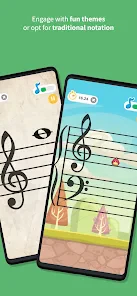
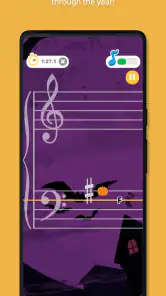
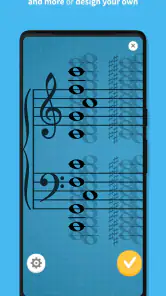
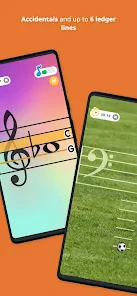
Analysis by Reviewed
I like note-reading practice best when it connects the symbol on the page to a sound I can make straight away. That is the basic appeal of Note Rush: Learn to Read Music: it turns identifying notes into a short, active exercise with an instrument, rather than another round of flashcards. I’d recommend it to someone who already has access to a piano or another suitable instrument and wants a more lively way to build recognition.
A practical baseline routine
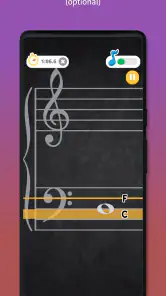
For a useful first session, I’d choose the clef I’m currently studying, keep the instrument and device in a comfortable position, and focus on playing each displayed note cleanly. The microphone-based checking makes the response immediate: I don’t have to decide for myself whether I read the staff correctly before moving on. That quick loop is the game’s strongest learning idea, because it joins seeing, naming and producing a note in one small task.
A realistic use is a five-minute warm-up before a piano lesson or regular practice. I could work through a handful of prompts, notice which notes make me hesitate, then take that observation to the piece I’m learning. The game is not a replacement for practicing music, but it can help expose slow note recognition before it interrupts a melody. Keeping sessions brief also makes it easier to return regularly without turning practice into a long test.
Making Music Reading a Game
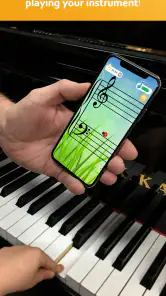
With Note Rush, the concept is simple yet brilliant. It turns the somewhat daunting task of learning musical notes into a playful experience. Imagine a game where notes fly across your screen, and your job is to identify them using your own instrument. It’s like an arcade game but with a musical twist. This interactive approach not only makes learning enjoyable but also effectively reinforces your note-reading skills.
How It Works
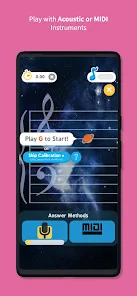
The app leverages your device’s microphone to hear the notes you play on your instrument. Yes, you heard me right! You play the note on your piano, and the app listens and checks if you’ve got it right. It’s almost like having a personal music tutor right in your pocket. This feature is incredibly helpful for both beginners and seasoned musicians who want to sharpen their note-reading abilities.
And don't worry, the setup is a breeze. Just open the app, choose your preferred clef (treble, bass, or alto), and start playing. The app offers various themes and levels, keeping things fresh and challenging. Whether you're practicing for a music exam or just having fun, Note Rush adapts to your pace and style.
Settings and habits that help
I’d treat clef choice as a deliberate practice decision rather than a setting to change casually. If a learner is working on treble clef in lessons, staying with treble for a stretch makes it easier to build reliable recognition; switching among treble, bass and alto is more useful when those clefs are already part of the week’s work. That distinction prevents a mixed session from feeling harder simply because the target keeps changing.
More From Our News Desk

Clash of Clans Is Won Between the Battles

Android Auto Makes the Case for Quieter Car Software

MobiOffice: Transforming Mobile Productivity with Seamless Integration

EA SPORTS FC™ Mobile Soccer: Redefining Mobile Sports Gaming

How Microsoft OneDrive Became a Mobile Productivity Giant

How Google Translate Breaks Language Barriers Effortlessly
Sound conditions matter, too. Since the app listens through the device microphone, practicing beside other instruments or in a noisy room may make the interaction less comfortable. I’d place the device where the screen is easy to see and the instrument can be played naturally, then try a few notes before settling in. If the response seems inconsistent, checking the room and how clearly the instrument sounds to the device is a sensible first step, rather than assuming the note-reading exercise itself is the problem.
Faster patterns, not just faster tapping
Once note names stop feeling unfamiliar, the useful goal is to recognize a position quickly without mentally reciting every letter from a landmark. I’d use the game to spot recurring trouble spots, then pause afterward and review those notes on actual sheet music. That small transfer step matters: speed inside a game is encouraging, but fluent reading also means finding the same notes while following a real phrase.
For a parent or teacher, the game can serve as a focused change of pace between longer activities. A child who resists written drills may be more willing to play a few rounds, while an adult returning to music can use it to refresh basic reading without committing to a full theory course. It is less suitable for someone without an instrument, or for a learner who needs instruction in rhythm, harmony or musical expression; its central job is note recognition through playing, not teaching every part of musicianship.
Making practice easier to repeat
The most useful habit is to give each session one modest purpose. I might choose a clef before sitting down, play until I notice a recurring hesitation, and stop while the exercise still feels manageable. That is more informative than switching targets whenever a prompt feels difficult. It also makes it easier to tell whether a later session feels smoother because I recognize the staff position more readily, rather than because I have simply become comfortable with the game.
For a young student, I’d keep the device and instrument in the same arrangement each time. If the screen is hard to glance at from the playing position, the learner may spend more energy shifting attention than reading notes. A stable setup can make short practice periods feel less fussy, especially when an adult is helping a child get started. The point is not to create a complicated routine, but to remove small obstacles that make an otherwise quick exercise easy to postpone.
Where it fits among music-learning tools
Compared with paper flashcards, Note Rush adds the practical check of hearing a note played, which makes the exercise more connected to an instrument. Compared with a general music-theory lesson or a notation app, it is narrower and more game-like: that focus is helpful for quick repetition, but it should not be mistaken for a complete course. I’d pair it with a method book, lessons or pieces the learner enjoys, rather than expecting one game to explain why notes work together.
There is also a trade-off in the microphone approach. It makes the exercise feel hands-on, yet it means this is not the most convenient choice for silent practice, travel without an instrument, or a shared space where playing would disturb someone. If quiet, untethered drills are the priority, a visual flashcard alternative may fit better. If the aim is to connect notation to a played pitch, the instrument requirement is precisely what gives this game its value.
Who will get the most from it?
Thomas Grayston Software’s music game has an average rating of 4.2 from around 380 ratings, with over 10,000 installs. It costs $8.99, is rated for Everyone, and its current version is 2.01.2; it was released on August 5, 2016, and runs on operating systems from version 7.0 onward. Those details make the purchase decision worth considering before downloading: I’d see it as a specialized practice tool, not a broad music-learning bundle.
The strongest fit is a beginner who can already play single notes, a student who wants extra note-reading repetitions between lessons, or an experienced player who has become slow at reading a less familiar clef. A teacher might also use it as a short independent activity, while still checking that the student can transfer the recognition to printed music. Someone who wants a complete beginner course, silent exercises, or a game that teaches rhythm and theory alongside notes should look elsewhere or use this only as a supplement.
One question I’d ask before buying is whether the learner has a suitable instrument available whenever they want to practice; without that, the microphone-led activity loses its point. Another is whether they need help with one clef or several: choosing a clear target makes a short session easier to evaluate. And if the goal is exam preparation, I’d use the game for quick note recognition but keep working on the actual exam material, since identifying isolated notes is only one part of reading music under pressure.
What the instrument requirement changes
That requirement shapes how I’d plan to use it at home. If a piano is already part of the room where a student practices, opening the game for a short drill is a natural extra step. If the instrument is packed away, shared, or available only during a lesson, the friction is greater: a stack of visual cards is easier to pick up in spare moments. I’d make the purchase decision around the learner’s actual practice setting, not only around whether the idea sounds appealing.
It also helps to distinguish reading practice from pitch training. The game asks the player to connect notation with a played note, which can strengthen that association, but a learner who struggles to find the right key by ear may need guidance from a teacher or method book as well. I would not interpret a missed response automatically as proof that the staff position was read incorrectly. The instrument, the player’s execution, and the listening environment all affect the interaction, so it is worth separating those issues calmly.
Why It's Worth Your Time
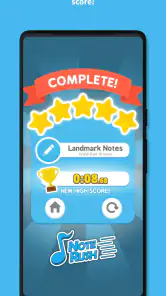
If you’ve ever found yourself struggling to learn music theory or keep up with your practice, this app might just be your saving grace. It transforms mundane practice sessions into exciting challenges. Plus, the instant feedback provided means you can correct mistakes on the fly, leading to faster learning and better retention.
Moreover, the app’s design is intuitive and child-friendly, making it perfect for young learners. The colorful themes and engaging gameplay can capture the attention of kids, helping them learn without the usual grumbling about practice time. It's like tricking them into having a music lesson!
Limits an experienced player should keep in mind
Experienced readers may get less out of it once note identification is already automatic in their main clef. In that situation, I’d use it selectively for a clef that feels rusty, rather than expecting a general increase in musicianship. Repetition can make isolated-note recognition quicker, but it does not recreate the decisions involved in reading a complete score: tracking a phrase, keeping time, noticing accidentals, and coordinating both hands are separate demands.
That is why I’d treat the game as a diagnostic warm-up, not a measure of overall musical ability. A learner can do well on short prompts and still need help reading notes in context. Conversely, someone who is learning a new instrument may know the staff position but need time to locate and produce the note comfortably. Pairing a round with a small passage from current repertoire gives a more honest picture of whether the practice is transferring.
Final Thoughts
In a world where digital learning is becoming more prevalent, Note Rush: Learn to Read Music stands out as a fantastic tool for aspiring musicians of all ages. It's not just an app; it's a doorway to a more engaging, fun, and effective way of learning music. Whether you're a parent looking to aid your child's musical journey or an adult rekindling your passion for music, this app deserves a spot on your device. So, next time you're ready to practice, just remember: with Note Rush, you're not just reading music—you're playing a game!
My mastery verdict
For me, the best measure of progress is not simply clearing prompts more quickly; it is opening a score later and recognizing notes with less hesitation. I’d keep a simple mental record of which positions feel slow, focus the next session on the relevant clef, and then test that recognition in a piece. That repeatable routine makes the game more useful than treating each round as entertainment alone.
Overall, I’d choose it when instrument-based note drills sound more motivating than paper exercises and when a learner can practice somewhere they can play aloud. Its narrow focus is both its advantage and its boundary. Used alongside lessons or real music, it offers a practical way to make note reading more active; used as a substitute for broader musical study, it will leave important skills untouched.
A sensible way to decide
If I were choosing it for a child, I’d first think about whether the child can play single notes without constant help and whether an adult can occasionally check that the skill carries over to printed music. For an adult returning to lessons, I’d ask whether the game addresses a real bottleneck: slow recognition in a particular clef, rather than a broader need to rebuild technique or theory. Those are the situations where a focused tool is most likely to earn its place in a routine.
The price also makes it worth being specific about that purpose. At $8.99, I would want to use it regularly enough to justify choosing a dedicated note-reading game over free paper drills or exercises included in a wider learning resource. Its appeal is the direct, playable feedback, not breadth. If that active loop is what keeps someone practicing, the focused approach may be worthwhile; if the learner prefers quiet reading or needs structured instruction across many topics, another format is likely a better match.
Note Rush: Learn to Read Music Frequently Asked Questions
Who develops Note Rush: Learn to Read Music, and what kind of app is it?
Note Rush: Learn to Read Music is a music-learning game from Thomas Grayston Software. It is designed to turn note-reading practice into an interactive activity rather than a lesson based only on reading explanations. The store describes it as a favorite of music teachers, with a focus on helping players build faster and more accurate note recognition.
What is Note Rush: Learn to Read Music?
Note Rush: Learn to Read Music is an educational app designed to help users of all ages improve their music reading skills. It offers a fun and interactive way to practice recognizing musical notes on a staff, making it ideal for students, music teachers, and anyone looking to enhance their sight-reading abilities.
How does Note Rush work to improve music reading skills?
Note Rush uses a gamified approach to music education, where users are challenged to identify and play notes displayed on the screen as quickly as possible. The app listens to the instrument being played and provides instant feedback, making it a practical tool for reinforcing note recognition and improving sight-reading speed and accuracy.
Is Note Rush suitable for beginners?
Yes, Note Rush is suitable for beginners as well as more advanced musicians. The app includes multiple levels and customizations, allowing users to start with the basics and gradually progress to more complex note-reading challenges. It's a versatile tool that adapts to different skill levels and learning paces.
Can Note Rush be used with any musical instrument?
Note Rush is designed to be used with a variety of musical instruments, including piano, violin, flute, and more. The app’s microphone feature listens to the notes being played, so as long as the instrument can play the notes displayed on the screen, it can be used effectively with Note Rush.
Pros
- Engaging gameplay for music learning
- Visually appealing and user-friendly interface
- Customizable practice levels
- Real-time feedback on performance
- Supports multiple instruments
Cons
- Limited to basic music notes
- Requires microphone access
- No offline mode
- May have a learning curve
- Limited free content

- Category
- Music
- Version
- 2.01.2