MalodyV
- 41.00
- 3.3
- Installs
- 100.00K
- Price
- Free

Screenshots


Analysis by Reviewed
MalodyV caught my attention as a music game that wants to be more than a quick tap-along distraction. Developed by Mugzone, it presents itself as a next-generation take on the Malody idea, but what matters in daily use is whether the rhythm feels satisfying after the first burst of curiosity. I spent time looking at it from that angle: how quickly it becomes enjoyable, how much effort it takes to keep playing, and whether it deserves a permanent place on a phone.
The game is free to install and aimed at Everyone, which makes it easy to try without a large commitment. It belongs to the music category, runs on Android 6.0 and later, and its current version is 6.7.22. Those details make it accessible to people using older devices, although accessibility on paper does not guarantee that every phone will feel equally comfortable during fast rhythm sections.
From an exciting first week to a lasting habit
Why the opening sessions are so appealing
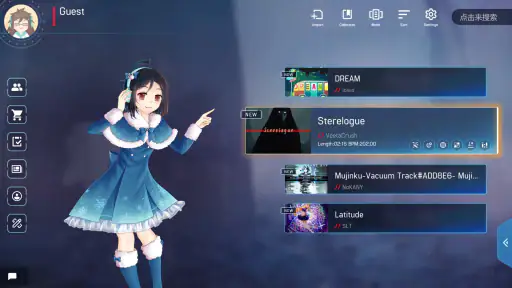
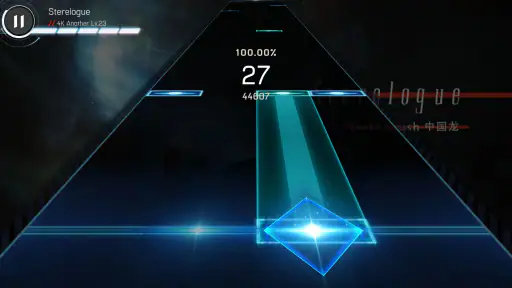
The strongest part of MalodyV is the immediate connection between sound and action. A good music game gives me a clear reason to replay a track: I want to improve my timing, recover from a mistake, or finally complete a difficult pattern without breaking concentration. MalodyV has that familiar pull. Even when a session lasts only a few minutes, it can feel focused rather than empty.
I also like that the game asks for attention in a different way from ordinary casual games. There is no need to build a character, wait for energy, or manage a long chain of unrelated tasks before reaching the main activity. The appeal comes from listening, watching the play area, and responding accurately. That makes it a useful choice when I want something active but do not have time for a longer gaming session.
During the first week, the learning curve is part of the fun. At the beginning, I am mostly reacting to obvious beats. Soon after, I start noticing spacing, rhythm changes, and the difference between rushing and staying calm. That shift is important because it gives the game a skill-based identity. Progress feels more personal than simply unlocking another item.
New players should give themselves time to adjust instead of judging the game after one awkward attempt. Rhythm games can feel unforgiving when the controls, screen size, or timing window are unfamiliar. I found it more useful to play several short sessions, keep my hands relaxed, and focus on consistency rather than chasing a perfect result immediately.
The practical setup before serious play
Touchscreen rhythm games are highly dependent on the device in the player’s hands. A larger display may make patterns easier to read, while a compact phone can make the experience more portable but less comfortable during demanding passages. I would test the game with the phone held in the position I normally use, because a setup that feels fine for a quick trial may become tiring after repeated songs.
Headphones can also change the experience, especially when the surrounding room is noisy. They help me follow the beat and reduce the temptation to rely only on visual movement. At the same time, I would not treat them as mandatory. Someone playing casually in a quiet room can still enjoy the basic loop, while a player trying to improve accuracy will benefit from hearing the rhythm clearly.
One useful habit is to begin with a short warm-up rather than starting with the hardest material available. This helps my hands settle into the timing and reveals whether the device is responding comfortably. If the controls feel inconsistent, I would first check my grip, screen cleanliness, and audio setup before assuming the game itself is the problem.
What makes the first month different
After the novelty fades, the question becomes whether each session still has a purpose. MalodyV works best for me when I give a play session a small target: improve one section, become more reliable on a familiar track, or play for a fixed amount of time without turning the experience into a frustrating endurance test.
That approach also exposes one of the game’s trade-offs. A music game can offer meaningful mastery, but it does not provide the same variety as a broad collection of genres or story-driven games. If I am in the mood for exploration, characters, or a changing narrative, the focused format may feel narrow. If I want to sharpen timing and enjoy music interactively, that narrowness becomes a strength.
The game has reached over one hundred thousand installs, and its average rating is 3.3 from around eight hundred ratings. I read that as a sign to keep expectations measured rather than as a reason to dismiss it. The audience is large enough to show that the concept has appeal, but the rating also suggests that the experience may not suit everyone equally, particularly players sensitive to control feel, content variety, or the effort required to improve.
Keeping it useful from month to month
For recurring value, I would treat MalodyV as a practice-oriented music game rather than a title I must play every day. That distinction matters. Playing constantly can turn the same visual patterns into work, while returning a few times a week can preserve the satisfying feeling of improvement.
A simple rotation helps. I might choose one comfortable track for confidence, one track that exposes a weakness, and one new challenge for variety. This three-part routine gives each session a different role and prevents me from repeatedly selecting only the easiest material. It also makes improvement easier to notice because I have a stable reference point.
Another useful tactic is to stop shortly after a good run instead of continuing until every attempt gets worse. Rhythm games reward concentration, and fatigue often appears as rushed taps, tense fingers, and careless misses. Ending on a controlled session makes it easier to return later with a positive expectation rather than the memory of struggling through an unnecessarily long attempt.
Players who enjoy measurable personal progress will probably get more from the game than people seeking constant novelty. I like the feeling of returning to something familiar and finding that my timing has improved, but I understand why another player might eventually want a larger change of scenery. The long-term value depends less on a single spectacular feature and more on whether the core act of replaying music remains enjoyable.
The maintenance cost of keeping a rhythm game enjoyable
MalodyV is not maintenance-heavy in the same way as a strategy game with daily tasks, but it still asks for a little discipline from the player. I need to manage my own practice goals, choose suitable sessions, and recognize when the game is becoming repetitive. Since the main reward comes from better play, there is no shortcut around learning the timing.
That can be refreshing, but it also means the game is not ideal for someone who wants effortless progress. A player may install it expecting a passive music experience and discover that the most satisfying results require concentration. I would recommend it to anyone comfortable repeating a section several times, but I would steer away from it for someone who prefers games that constantly hand out new rewards.
The free entry point lowers the risk of trying it, while in-app purchases range from ninety-nine cents to two dollars and ninety-nine cents per item. I would approach those purchases carefully and decide whether they add genuine value to my own routine before spending. The important question is not whether a small purchase seems affordable, but whether it changes how often I will actually play after the initial excitement disappears.
Because the game supports Android 6.0 and later, it can be considered by people with older phones. Still, I would judge the experience by responsiveness rather than compatibility alone. Rhythm games are less forgiving of delayed input than many other mobile genres. If a device feels slow, crowded, or uncomfortable, the player may blame their own timing when the real issue is the playing setup.
Where fatigue begins
The main source of fatigue is repetition without a clear goal. Replaying a song makes sense when I am testing a new technique or trying to improve a result. Repeating it simply because I feel I should keep playing quickly turns concentration into a chore. This is why I prefer short, purposeful sessions to an open-ended grind.
Visual concentration can become tiring too. Watching incoming notes requires steady attention, and the effort is easy to underestimate because each individual play may be brief. I would take a break when my reactions begin to feel late, especially if I am making mistakes on patterns that were previously comfortable. Continuing at that point rarely produces useful practice.
There is also a social expectation that can affect enjoyment, even when the game itself is being played alone. Comparing performance with other players or chasing an ideal score can make a personal hobby feel like an obligation. I get more lasting value when I use results as feedback rather than as a judgment of whether I am good enough to continue.
Another limitation is the difference between liking music and liking rhythm gameplay. A person may enjoy listening to songs but dislike tapping along under pressure. MalodyV cannot solve that mismatch. Its music focus is interactive, and the player’s attention is part of the experience. For relaxed listening, a music player is the better alternative; for a more guided arcade challenge, a conventional rhythm game with a clearly curated progression may feel more comfortable.
Who should install it, and who should skip it
I would recommend MalodyV to players who like timing challenges, enjoy practicing a skill, and want a free way to test whether a focused music game fits their routine. It is especially suitable for short breaks, commutes, or quiet evening sessions when I want something more engaging than passive scrolling but less demanding than a long adventure game.
I would be more cautious about recommending it to someone who needs a strong story, character development, or a constant stream of new objectives. It is also not the best match for players who become frustrated by repeated failure or who expect every session to feel different. The game rewards patience, and that is both its identity and its biggest barrier.
For a realistic everyday example, I could play one familiar track during a lunch break, attempt a slightly harder one after work, and stop once my concentration drops. That routine is more sustainable than trying to complete a long marathon session. It turns the game into a small practice habit rather than another app competing for all of my attention.
How it compares with usual alternatives
Compared with a standard music player, MalodyV gives me participation instead of background listening. I am not simply choosing a song and letting it run; I am responding to its rhythm and learning through repetition. That makes it more engaging, but also less relaxing and less suitable when I want music without a performance demand.
Compared with broader arcade games, its appeal is more concentrated. There are fewer distractions from the timing challenge, which helps players who want a direct test of coordination. The trade-off is that someone who depends on story missions, collection systems, or frequent visual changes may find the format limited after the first few weeks.
Compared with a highly structured rhythm title, MalodyV may appeal more to players who enjoy figuring out their own practice pattern. A heavily guided alternative can be easier for beginners because it explains progression step by step. MalodyV is a better fit when I want the core rhythm loop to remain central and am willing to take responsibility for deciding how to improve.
My long-term verdict
MalodyV earns lasting space only when the player enjoys mastery more than novelty. That is the clearest way I can describe it after looking beyond the first exciting sessions. The game is not something I would install merely to fill spare storage and forget about. Its value appears when I return with a specific reason to play and leave before concentration turns into fatigue.
Mugzone has made a free music game that is approachable enough to try, broad enough to attract a substantial audience, and demanding enough to reward practice. Its Everyone rating and older Android support make the entry barrier relatively low, while the modest in-app purchase range means players can decide for themselves whether optional spending belongs in their routine.
My balanced recommendation is to install it if you already enjoy rhythm games or want a focused coordination challenge. Give it several short sessions, test how comfortable your device feels, and judge it by whether you look forward to returning after the first week. If you mainly want passive music, a story-led game, or constant new content, another option will probably serve you better.
For me, the lasting appeal is real but conditional. MalodyV does not need to dominate my phone to justify itself; it only needs to remain a satisfying tool for a few well-chosen sessions each week. When I use it that way, the game’s strongest feature is the honest loop of listening, reacting, and gradually becoming more precise. That is enough for a place in my library, provided I treat it as a focused habit rather than an endless source of novelty.
Pros
- Supports multiple rhythm-game modes
- including keys
- catch
- taiko
- and slide.
- Offers extensive chart customization for players who enjoy creating content.
- Online features make it easy to discover and play community-made beatmaps.
- Precise timing tools help experienced players improve their rhythm and accuracy.
- Works well for competitive players seeking challenging
- skill-based gameplay.
Cons
- The interface can feel overwhelming for newcomers unfamiliar with rhythm games.
- Many advanced features require time and practice to understand properly.
- Chart quality varies because much of the content is community-created.
- Online content and multiplayer features depend on an active internet connection.
- Some songs or charts may involve copyright and availability restrictions.

- Category
- Music
- Version
- 6.7.22