Lyrical Mayhem Twiddle Finger
- 159.00
- 4.4
- Installs
- 100.00K
- Price
- Free

Screenshots

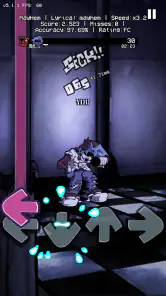
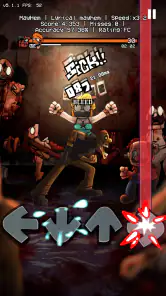
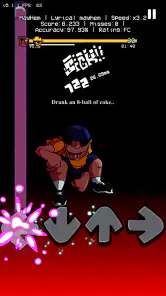



Analysis by Reviewed
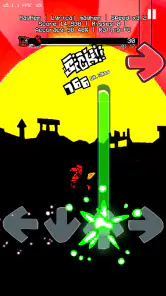
When I tried Lyrical Mayhem Twiddle Finger, I found a compact music game built around the energy of a Friday-night rhythm battle. Its focus is the Lyrical Mayhem mod, where the appeal comes from listening closely, reacting quickly, and keeping your timing steady while the on-screen challenge becomes more intense. It is free to play, aimed at a Teen audience, and developed by Zang96.
The game makes the most sense in a shared household rather than as a quiet background app. One person can play while someone else watches, comments on missed notes, or takes the next turn. That simple handoff gives it a social quality that many ordinary music players do not have. I would not describe it as a full family game for every age, though. The Teen content rating matters, especially when a younger child uses the same phone or tablet.
How Lyrical Mayhem works in a shared-device setting
A quick battle that suits short household sessions
The strongest use case is a brief, informal session. Imagine finishing dinner, passing a phone around, and giving each person a chance to handle the next musical battle. Because the game is centered on rhythm and reaction, a player does not need a long explanation before trying it. A friend or sibling can watch one round, understand the basic idea, and then attempt it without turning the evening into a lengthy setup process.
I especially liked that the concept is easy to demonstrate. Instead of explaining a complicated character build, map, or inventory, I could show the timing challenge directly. That makes it suitable for a shared device where people may only play for a few minutes at a time. It also creates a natural spectator role: someone waiting for a turn can listen to the track and notice where the active player is losing the beat.
That convenience has a trade-off. Short, repeatable rhythm battles can become frustrating when a player keeps missing the same pattern. A person who enjoys gradual exploration may find the format narrower than an adventure game, while someone who likes improving a performance can become absorbed in repeating a difficult section. I see it as a focused music challenge, not a broad game world designed for long-term wandering.
Why the music category matters here
Although the game uses the familiar idea of a Friday musical confrontation, the main test is not simply whether the soundtrack is enjoyable. The player has to connect what they hear with what they see and then respond at the right moment. That makes headphones useful when the room is noisy, but they can make a shared session less social if only the player can hear clearly.
For a household, speakers are often the better starting point because observers can follow the action. If the room is busy, headphones may help the player concentrate. I would switch between those two approaches depending on whether the goal is competition or practice. This is one of the first practical choices worth making, because a player who cannot hear the rhythm comfortably may blame their timing for a problem caused by the environment.
The game also benefits from a stable grip. On a shared phone, people often hold the device differently, and that can affect how confidently they react. I found it more comfortable to keep the device supported rather than trying to play while walking around or balancing it in one hand. That may sound minor, but rhythm games punish hesitation, and an awkward grip can create unnecessary mistakes.
Setting boundaries before passing the device around
There is no need to treat a casual game like a formal tournament, but a few household rules make the experience smoother. I would decide in advance who is playing first, how many attempts each person gets, and whether a failed round means an immediate retry. Without that agreement, the most competitive player can quietly take over while everyone else becomes an audience.
A useful arrangement is to give each person one warm-up attempt and then one serious attempt. The warm-up lets a new player understand the rhythm without feeling judged, while the second round gives everyone a fair comparison. If the group prefers cooperation, players can instead share advice between tries, such as suggesting that the next person focus on the sound rather than staring only at the visual prompts.
These boundaries are not built-in family controls; they are simple agreements between the people using the device. That distinction is important. The game can provide the activity, but the household still has to manage turn-taking, volume, and suitable play times. I would not hand it to a child and assume the Teen rating has been handled automatically. An adult should make the decision about whether the content and competitive tone fit that child.
Coordinating play without creating unnecessary pressure
Rhythm games can expose differences in confidence very quickly. An experienced player may treat a missed sequence as funny, while a newcomer may feel embarrassed after only one attempt. In a shared setting, I recommend keeping the first session focused on learning the beat rather than declaring a winner. The game is more enjoyable when people are allowed to make mistakes without turning every round into a judgment.
One practical tactic is to let the most confident player go first, but ask them to play normally rather than showing off. That gives everyone a visual example of the pace. Afterward, a beginner can try while the others listen for the rhythm and offer one clear suggestion. Too many instructions at once are counterproductive; they split attention at exactly the moment the player needs to react.
Another useful approach is to separate coaching from active play. I would avoid shouting corrections while the sequence is already moving. Instead, discuss what happened after the attempt: whether the player reacted late, lost the beat during a faster passage, or simply needed a quieter room. This turns failure into useful feedback and prevents the game from becoming a noisy argument.
For siblings or friends sharing a device, the game can work as a small coordination exercise. Players can agree on a rotation, keep the volume comfortable, and decide when to stop before frustration takes over. It is not a replacement for a dedicated multiplayer party game with formal turn management, but it can still create a surprisingly engaging group moment when expectations stay modest.
Account boundaries and the limits of a shared device
A shared phone or tablet introduces a different question: whose play session is this? I would treat the game as a casual activity rather than assuming that every person has a separate progression space. If several people use the same device, they should agree on whether progress belongs to one household session or to the person who normally owns the device.
This matters most when one player is practicing seriously. A child may want uninterrupted attempts, while another family member may only want a quick challenge. Mixing those habits can lead to confusion about who changed the current state or why someone else is continuing from a different point. The safest household habit is to announce when a session begins and ends, especially if the device is used by several people.
I would also avoid treating the game as a private account-based space unless the device owner has checked how it behaves in practice. The important point is not to invent a boundary the app may not provide. Instead, use ordinary household coordination: ask before opening it, avoid changing another player’s session without permission, and keep the device available for its primary purpose.
This is a small issue in a casual game, but it becomes noticeable when a shared device is also used for schoolwork, calls, or other personal tasks. A rhythm battle can be exciting, yet it should not interrupt a more important use of the phone. The best experience comes when everyone knows when the game is welcome and when the device needs to be left alone.
Age context and responsible trust
The Teen rating should guide the decision about who plays. I would be comfortable recommending it to teenagers who already enjoy rhythm games and understand that the presentation may not be designed for young children. For younger users, an adult should preview the experience and decide whether the tone is appropriate rather than relying only on the fact that the game is free.
That recommendation is about trust as much as content. A teenager may be able to manage a short competitive session without supervision, while a younger child may need help with device handling, volume, and stopping at a reasonable time. In a household, those rules are usually more important than the game’s basic controls.
The free price makes it easy to try without making a purchase decision first, but “free” does not mean every family member should use it without discussion. I would still establish when it can be played and whether the device can be used with sound on. If the game is installed on a shared tablet, an adult can make the age decision before it becomes part of the regular rotation.
I also think the Teen rating makes the game a better fit for a group of older siblings or friends than for a mixed-age family gathering. A younger child may enjoy the tapping and music, but the household should not assume the same experience is suitable for everyone. If age suitability is the main concern, a deliberately child-focused music game may be a better alternative even if it offers less of the Lyrical Mayhem style.
What the current version offers in practical terms
The current version is 1.5, and the game supports devices running Android 7.1 or later. That gives it a reasonably broad compatibility range for people using an older Android phone or tablet, although the actual comfort of play still depends on the device’s screen, audio behavior, and responsiveness. A device that handles ordinary apps well may still feel less ideal for precise rhythm input if it has a sluggish display or distracting background activity.
Before a shared session, I would close unrelated apps, make sure the device has enough battery, and test the sound at a comfortable level. These are not special game features, but they reduce the kind of friction that can make a rhythm challenge feel unfair. If several people are waiting, a quick sound check is better than discovering halfway through a round that the music is too quiet or distorted.
The game was released on September 27, 2022, so I approach it as an established, focused title rather than expecting the breadth of a constantly expanding platform. That is not necessarily a weakness. Some players prefer a straightforward experience they can open for a few rounds without learning a large system. Others may want frequent new songs, extensive customization, or a deep progression structure and should set their expectations accordingly.
How it compares with ordinary music apps and other rhythm games
Compared with a standard music player, this game asks something from you. You are not just choosing a song and listening; you are participating in a timed challenge. That makes it a better choice when I want an active break, but a worse choice when I simply want background music while cooking, studying, or commuting.
Compared with a larger rhythm game, Lyrical Mayhem Twiddle Finger feels more approachable when the goal is to start quickly and share the device. A major rhythm title may offer more modes, a larger song library, or deeper progression, but that extra structure can also make it less convenient for a spontaneous household session. Here, the Lyrical Mayhem identity is the reason to install it, not a side activity inside a much broader package.
The trade-off is replay value. A player who loves mastering timing can return repeatedly to improve, but someone who needs constant variety may tire of a more concentrated format. I would choose this game for a fan of musical battles and quick attempts, while I would recommend a broader rhythm collection to someone who wants many styles, longer-term progression, or a more extensive competitive system.
Small techniques that improve the experience
My first tip is to listen before trying to react. New players often stare at the screen and tense their hands, which makes them late when the pattern changes. Letting the audio establish the pulse first can make the visual prompts easier to interpret. This is especially helpful when someone is playing in front of an audience and becomes distracted by comments.
My second tip is to use a practice mindset for the first few rounds. Instead of asking whether the result is good, notice where the timing begins to fall apart. Is it at a faster passage, after a missed input, or when the player starts watching the audience? Identifying that trigger gives the next attempt a purpose and prevents random retries.
My third tip is to rotate the device position between sessions only when necessary. Different people may prefer different hand placement, but changing the grip immediately before a serious attempt can make the controls feel unfamiliar. I would let each player settle into a comfortable position during the warm-up, then keep it consistent for the main round.
A fourth insight is that the room itself becomes part of the challenge. A loud family conversation, a television in the background, or someone calling out every move can interfere with timing. If the group wants a fair comparison, lower the background noise for one round. If the group wants entertainment rather than a serious score, keep the conversation and accept that the result is less precise.
Who should install it, and who should skip it
I would recommend this game to teenagers and adults who enjoy rhythm battles, fans of the Lyrical Mayhem mod, and households looking for a free activity that can be passed around for short sessions. It is also a sensible choice for someone with an older compatible Android device who wants a music game without committing to a large, complicated title.
I would be more cautious about recommending it to very young children because of the Teen rating. I would also steer away from it for players who want a relaxed music-listening app, a story-heavy adventure, or a formal multiplayer experience with clearly separated accounts and turn management. Those users may find a conventional music app or a larger rhythm game more suitable.
People who become frustrated by repeated timing mistakes should try it only with modest expectations. The challenge is the point, and the game does not become more enjoyable when every miss turns into an argument. It works best for someone who can treat improvement as part of the fun, especially when playing alongside others.
My household verdict
After using it as a music game rather than expecting it to be a complete entertainment platform, I found Lyrical Mayhem Twiddle Finger easy to place in a household routine. It can fill a short break, give siblings a reason to take turns, or provide a quick challenge when friends are together. Its strongest quality is the direct connection between the music and the player’s response.
The rating, shared-device boundaries, and focused design deserve attention. I would preview it for younger users, agree on turns before passing the device around, and avoid presenting it as a game with unlimited variety. Those small decisions make a noticeable difference to whether the session feels welcoming or competitive in the wrong way.
With an average rating of 4.4 from around 2.3 thousand ratings and more than 100 thousand installs, it has clearly found an audience. I would not use those figures as a substitute for personal taste, but they fit my impression of a niche rhythm title that appeals strongly to the right player. For me, the final recommendation is simple: choose it for quick Lyrical Mayhem rhythm battles and shared older-teen play, not for child-focused gaming, passive listening, or a huge all-purpose music library.
Pros
- Quick
- satisfying rounds that are easy to play in short sessions.
- Simple controls make the game accessible for most players.
- Music-themed gameplay gives the experience a distinctive atmosphere.
- Progression encourages repeated play and improving your timing.
- Lightweight design should run well on many mobile devices.
Cons
- Gameplay may feel repetitive after extended sessions.
- Timing challenges can become frustrating on smaller screens.
- Limited variety may reduce long-term appeal for some players.
- Progress may depend heavily on mastering precise finger movements.
- Ads or in-app purchases may interrupt the overall experience.

- Category
- Music
- Version
- 1.5