L.O.L. Surprise! Disco House
- 1.88K
- 4.0
- Installs
- 10.00M
- Price
- Free

Screenshots
Analysis by Reviewed
I find it easiest to judge a children’s game by what it asks of a family, not just by its bright first impression. L.O.L. Surprise! Disco House is a free educational game from TutoTOONS built around dolls, styling, rooms, and playful activities. It suits children who enjoy make-believe and character play, though parents should keep its in-app purchases in mind before handing over a device.
What the purchase details mean in practice
The game is free to download, while optional in-app purchases range from $1.49 to $159.99 per item. That wide span is worth discussing with a child before play: agree on a no-purchase rule or require an adult to approve any spending. I would not treat the word “free” as a promise that every available item or activity comes without a charge.
It has an Everyone content rating, and the current version is 2.5.393, with Android support starting at version 6.0. Its average rating is 4.0 from around 66,000 ratings, and it has over 10 million installs. Those figures suggest that it has reached a large audience, but they cannot tell me whether a particular child will enjoy its style of play.
Who is likely to enjoy the dollhouse?
The strongest match is a child who already likes inventing stories with dolls, changing outfits, and deciding how a room should look. The game gives those interests a digital setting, so a child can shift from styling a character to arranging a scene without needing to move between unrelated themes. A parent looking for a quiet activity built around imaginative choices may find that more appealing than a game focused on scores or correct answers.
It is a weaker match for children who mainly want action, competition, or a clear sequence of challenges. The appeal here is the dolls and their surroundings, not a demanding test of reflexes or a lesson with a defined endpoint. I would also look elsewhere if the goal is practising reading, counting, or another school skill: the educational label should not be mistaken for a promise of structured instruction.
Step Inside the Disco House
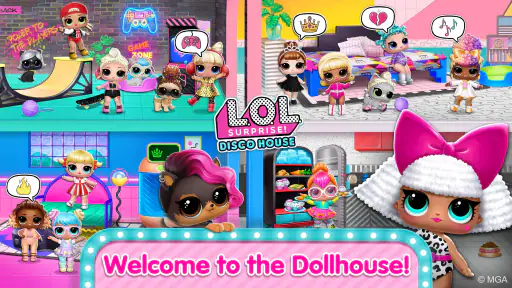
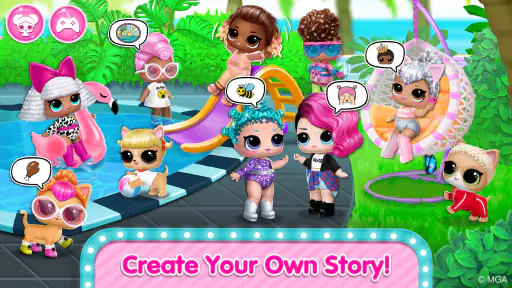
From the moment you launch the app, you're greeted with a burst of colors and lively animations that set the stage for a fun experience. The L.O.L. Surprise! Disco House is designed to be a digital playground where creativity knows no bounds. As you explore the app, you'll find a myriad of mini-games and interactive activities that keep you glued to your screen.
Interactive Features Galore
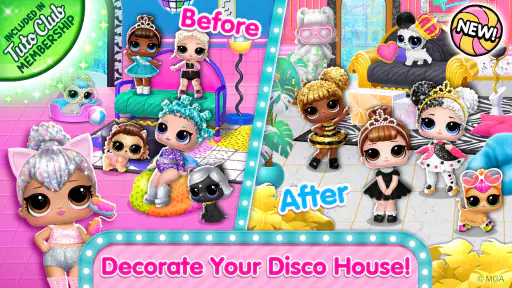
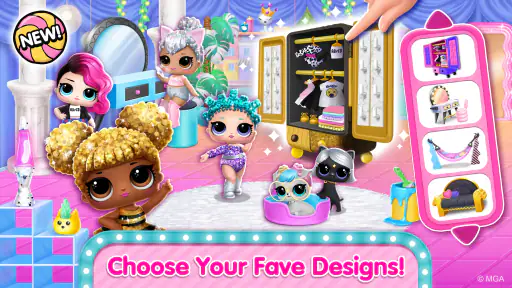
What I absolutely love about this app are the interactive elements that make you feel like you're part of the party. You can dress up your favorite L.O.L. dolls, decorate rooms with a variety of funky accessories, and even throw your own disco party. The app's intuitive design makes it easy for users of all ages to dive right in without needing a tutorial. It's like the developers took the best parts of the L.O.L. world and condensed them into an app.
More From Our News Desk

Weather by Xiaomi Review: Clear at a Glance, Less Clear Up Close

X Under Pressure: Can It Recover When Posting Goes Wrong?

Clash of Clans Is Won Between the Battles

Android Auto Makes the Case for Quieter Car Software

MobiOffice: Transforming Mobile Productivity with Seamless Integration

EA SPORTS FC™ Mobile Soccer: Redefining Mobile Sports Gaming
One of the standout features is the ability to unlock new items as you progress. This feature keeps the game fresh and exciting as there’s always something new to look forward to. Plus, the app regularly updates with new content, ensuring that the fun never stops.
Making progress without turning play into a chore
Unlocks can give a child a reason to return, but they also create a small trade-off: a player who wants a particular item may focus more on earning it than on experimenting. I’d encourage treating the dolls and rooms as open-ended play rather than setting a goal to collect everything. That keeps the emphasis on making a look or scene, instead of measuring a session by how much was unlocked.
A practical routine is to let a child choose one activity before starting, then ask them to show you the outfit or room they created when they finish. It gives the game a natural stopping point and turns screen time into a chance to talk about choices and ideas. If a child gets frustrated because progress feels slow, switching to another available activity is more sensible than buying an item just to move things along.
A small-session routine that works for families
For an everyday example, imagine a child asking to play while dinner is being prepared. I’d first make sure the device is set up with the family’s purchase rules, then invite them to pick one doll or room project rather than promising a long stretch of play. When it is time to stop, asking them to describe the outfit they chose or the party scene they made gives the session a friendly finish instead of making progress or unlocking the only measure of success.
This approach also helps a parent see what the child actually enjoys. If they consistently gravitate toward styling, they can spend their play time there; if arranging a room holds their attention, that can become the focus. The useful point is not to impose a task list, but to give the session a beginning and end so the game remains a short creative break rather than an open-ended request for more screen time.
Graphics and Soundtrack
The graphics are nothing short of spectacular. The vibrant colors and detailed animations bring the L.O.L. universe to life in a way that's both visually appealing and immersive. Pair this with a catchy soundtrack that's bound to get stuck in your head, and you've got an app that truly knows how to keep its users entertained.
Whether you're a young child or just young at heart, the combination of visual and audio elements in this app delivers a delightful experience that’s hard to resist.
What to expect from the presentation
The bright, animated style is part of the game’s appeal, particularly for children who recognize and enjoy the dolls. It also means this is not the choice I’d make for someone who prefers a subdued visual atmosphere. A parent can judge that fit quickly by watching how a child responds to the screen and sound during a first shared session; the same lively presentation that draws one child in may feel busy to another.
For imaginative play, a useful way to guide the experience is to ask the child to make a small theme for a room or outfit, then let them decide what details belong in it. That gives their choices a purpose without turning the game into a lesson. It also makes the result easier to talk about together, whether the child is explaining a colour choice, a party idea, or why a particular doll belongs in the scene.
Choosing it over other children’s games
Compared with educational games built around quizzes, letters, or number practice, this one is better understood as creative pretend play than as a structured lesson. Its appeal is dressing dolls, arranging spaces, and making a party scene, not following a curriculum. If you want a child to practise a specific academic skill, a focused learning game is a better fit; if they already enjoy dolls and styling, this offers a more hands-on digital version of that play.
For a short everyday session, it can work well while a parent prepares dinner or during a quiet break, provided an adult has already handled purchase settings and the child knows the agreed limits. It is less suitable when you need a game that can be left entirely unsupervised around spending, or one with a clear learning target and measurable lessons. The main useful tip is to explore together once, identify the activities the child likes, and set expectations before they play alone.
How it compares with other pretend-play options
Against a physical dollhouse, the advantage is convenience: a child can try outfits and room arrangements on a screen without needing real accessories or a cleared space. The trade-off is that screen play does not replace the tactile choices and open-ended object play of toys at home. I see the app as a companion for a child who enjoys dollhouse play, not a reason to put away physical dolls.
Compared with other children’s apps, the deciding question is what kind of engagement you want. A puzzle or quiz game may offer clearer right-or-wrong feedback, while this experience is more about taste and personal choices. A drawing app may provide even more freedom to create from scratch; this one is more appealing when the child wants to work within a familiar doll world and style its characters and spaces.
Graphics and Soundtrack
The graphics are nothing short of spectacular. The vibrant colors and detailed animations bring the L.O.L. universe to life in a way that's both visually appealing and immersive. Pair this with a catchy soundtrack that's bound to get stuck in your head, and you've got an app that truly knows how to keep its users entertained.
Whether you're a young child or just young at heart, the combination of visual and audio elements in this app delivers a delightful experience that’s hard to resist.
How I’d handle the spending question
There is a real distinction between enjoying the free download and choosing to buy optional items. The listed purchase range stretches from $1.49 to $159.99 per item, so I would not let a young player make purchase decisions alone. I’d check the device’s purchase controls, explain that some things may cost money, and agree on a simple rule before the first session. That advice is about keeping spending deliberate; it does not assume that purchases are necessary to enjoy the game.
Fairness, choice, and family boundaries
For a single-player creative game, fairness is less about competing on equal terms and more about whether every child can enjoy the activities without feeling pushed to spend. I would not frame purchases as a shortcut to being better than another player; the attraction is personal styling and room-making, not a contest. Still, optional items can matter to a child who has a specific look in mind, so clear expectations help prevent a disappointing surprise at the point of purchase.
A practical safeguard is to let the adult handle any buying decision and to explain that an item’s price is a family choice, not a reward the child has earned by asking. If the child is too young to understand that distinction, keeping purchases behind adult approval is especially sensible. I would also avoid using an in-game purchase as the solution to impatience with unlocking: changing activities preserves the idea that play can be enjoyable without paying to speed it up.
Why You'll Love It
At the heart of L.O.L. Surprise! Disco House is its commitment to fun and creativity. The app encourages users to express themselves through play, making it a hit among fans and newcomers alike. It's not just an app; it's a gateway to a world where imagination reigns supreme.
To sum it up, if you're looking for a digital escape that's both entertaining and engaging, look no further than L.O.L. Surprise! Disco House. It's a dazzling blend of fun, creativity, and endless possibilities. So, what are you waiting for? Step into the disco house and let the adventure begin!
Questions worth settling before a child plays
Parents often want to know whether the game can stand on its own as a free activity, whether a child needs to be a franchise fan, and whether it teaches a specific subject. The free download gives families a way to try its doll-and-room play before deciding whether optional purchases matter to them. Familiarity with the dolls may make the world more immediately appealing, but the central activities—styling and decorating—are understandable without treating the game as a lesson.
I’d also think about the device and the child’s habits. Android support begins at version 6.0, so that is a useful compatibility check before installing on an older device. For a child who tends to tap through purchase prompts or becomes fixated on a locked item, an adult should stay involved; a child who is content to experiment with available activities may need less guidance after the boundaries have been explained.
My trust verdict
I’d recommend it to a child who likes doll styling and decorating, with an adult setting purchase boundaries first. The game’s audience figures—about 1.9 thousand written reviews alongside its 4.0 average—are useful context, not a substitute for trying its particular mix of activities. If your priority is a structured educational tool, a calmer game, or a play experience without optional spending to manage, I’d choose something else. For a fan who wants to create outfits and rooms in a familiar doll world, it can be an enjoyable free starting point, as long as the family stays clear about what is and isn’t being bought.
L.O.L. Surprise! Disco House Frequently Asked Questions
Can children play L.O.L. Surprise! Disco House without making purchases?
Yes. L.O.L. Surprise! Disco House is free to download, and purchases within the game are optional, so children can play without paying. Since optional purchases are available, parents may want to review device purchase controls before letting a child play. This can help prevent accidental spending while still allowing children to explore the game’s dollhouse activities.
Is L.O.L. Surprise! Disco House an educational game?
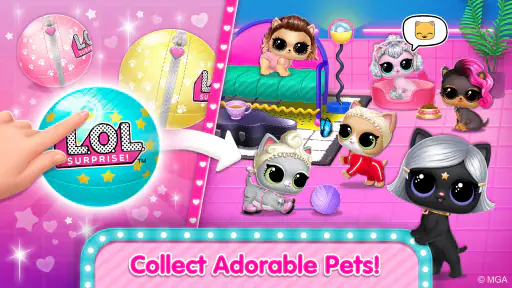
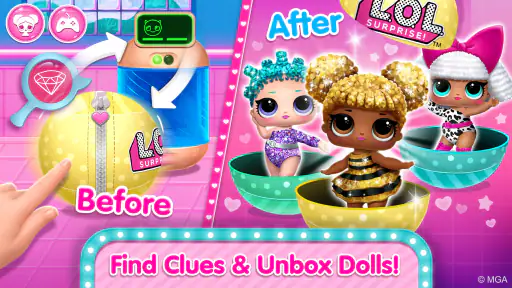
L.O.L. Surprise! Disco House is categorized as an educational game, while its activities focus on imaginative play with dolls, dress-up, unboxing, pets, and the disco house. It is best approached as a playful experience rather than a formal learning course. Children who enjoy creative role-play may find its activities engaging, and parents can decide whether the style suits their child.
Does L.O.L. Surprise! Disco House include in-app purchases?
Yes. The game includes optional in-app purchases, with prices ranging from $1.49 to $159.99 per item. The game can still be downloaded and played without buying anything, but families may wish to check purchase settings before handing over a device. Reviewing those controls can help children enjoy the free activities without making an unintended purchase.
What devices can run L.O.L. Surprise! Disco House?
L.O.L. Surprise! Disco House is available for Android devices running Android 6.0 or later. Before downloading, check that your device meets this minimum requirement and has enough free space for the game. The game is free to download, so you can try it without an upfront purchase, while optional in-app purchases are available.
What is L.O.L. Surprise! Disco House about?
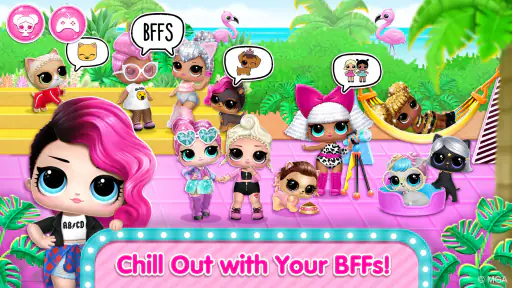
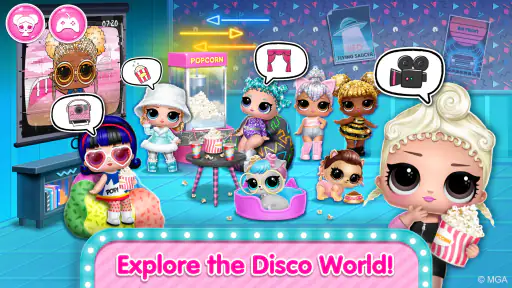
L.O.L. Surprise! Disco House is a vibrant mobile game where players can dive into the exciting world of L.O.L. Surprise! dolls. The game allows users to customize their own disco house, interact with their favorite L.O.L. characters, and host virtual parties. It's designed to offer a fun, creative, and engaging social experience for fans of the L.O.L. Surprise! franchise.
Pros
- Colorful and engaging graphics
- Suitable for children of all ages
- Interactive and fun mini-games
- Regular updates with new content
- Encourages creativity and imagination
Cons
- In-app purchases can be expensive
- Requires internet connection
- May have frequent ads
- Limited features in free version
- Some games can be repetitive
- Category
- Educational
- Version
- 2.5.393