Just 2 Words
- 1.78K
- 4.6
- Installs
- 50.00K
- Price
- Free
Screenshots


Analysis by Reviewed
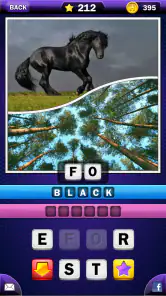
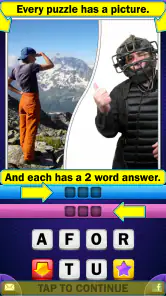
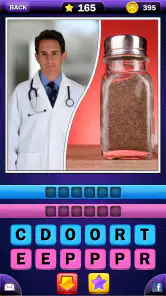
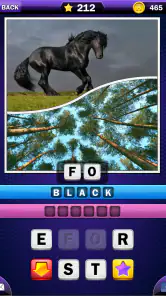
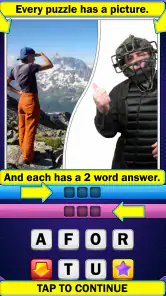
I usually know within a week whether a word game is going to become a regular habit or disappear into a crowded app folder. Just 2 Words made a good first impression because it keeps its central idea narrow: solve short word puzzles without turning the experience into a complicated lesson, a competitive social feed, or a timer-driven challenge. It is a free word game from Just 2 Fun, aimed at Everyone, and its appeal is easy to understand even before you have learned its rhythm.
The store summary presents it as a large collection from puzzle creator David L. Hoyt, with over 2,500 puzzles. That scale matters, but it is not the only reason I found the game interesting. The real question is whether the puzzles remain pleasant after the initial novelty fades. In my experience, this is best viewed as a casual thinking companion: something to open for a few minutes while waiting, during a quiet coffee break, or when I want a mental change of pace without committing to a full game session.
Why the first week feels so inviting
The opening appeal comes from restraint. Many word games surround a basic puzzle with streaks, lives, coins, animated rewards, and several modes competing for attention. Here, the name itself points toward a compact verbal task. That makes the game approachable for someone who enjoys wordplay but does not want to study a rulebook before starting.
I also like the way a short puzzle can fit into an ordinary day. If I have only a few minutes, I do not feel as though I am abandoning a long match halfway through. If I have more time, the broad puzzle collection gives me a reason to continue. That flexibility is more valuable than it sounds. A game that requires a fixed session length is easy to neglect; a game that accepts both a quick visit and a longer sitting has a better chance of becoming part of a routine.
The word-game category is already crowded with familiar alternatives. Crossword apps reward patient clue solving, anagrams emphasize rearranging letters, and daily guessing games often build their identity around a single repeatable challenge. Just 2 Words sits closer to a lightweight puzzle book than to a competitive platform. That makes it less stressful, but it also means the pleasure depends heavily on whether you enjoy the particular style of clue and answer rather than on a constant stream of new mechanics.
During an initial session, I would recommend resisting the urge to rush through the puzzle library. The large collection can create a tempting “just one more” loop, but solving too quickly may blur the distinction between clever answers and routine ones. Taking a moment to explain the answer to myself, even silently, made the better puzzles more memorable and helped me notice which kinds of wordplay I actually enjoyed.
A useful first-week habit is to treat difficult puzzles as prompts rather than tests of intelligence. If an answer does not arrive quickly, I put the game down and return later instead of repeatedly forcing the same association. That approach suits this kind of word play particularly well: a clue that feels opaque at lunch may seem obvious in the evening because the mind has had time to make a different connection.
Who gets the most from the opening experience
This is a strong starting point for people who like language, compact challenges, and relaxed solo play. It can also work well for families because the Everyone rating makes it broadly accessible, although individual puzzle difficulty and vocabulary familiarity will still affect younger players. I would not treat the age rating as a guarantee that every clue will be equally easy for every person; word games naturally reward reading experience and cultural knowledge.
It is also a reasonable choice for someone returning to puzzle games after a long break. There is no need to learn a complex control scheme, and the basic activity is familiar enough to understand quickly. On the other hand, players who need constant visual variety, action, competition, or elaborate progression may feel that the first-week charm is too modest. The game’s simplicity is its invitation, but it can also be its boundary.
One realistic use case is a commute with unpredictable interruptions. I can open a puzzle while waiting, solve one, and stop without losing the thread of a campaign. That is more convenient than a traditional crossword that I may want to preserve for a longer sitting, and less demanding than a timed word challenge that punishes every interruption. For short gaps in the day, this format makes practical sense.
What remains after the novelty wears off
The long-term value comes mainly from quantity and repeatability rather than from a changing set of systems. With over 2,500 puzzles associated with the game, there is enough material to support a substantial routine for many casual players. I would not assume that every puzzle will feel equally fresh, though. A large archive can contain memorable discoveries alongside entries that feel easier, more familiar, or less satisfying.
That unevenness is normal for a collection of this size, but it changes how I judge the app. I do not expect every visit to produce a brilliant “aha” moment. Instead, I look for a dependable baseline: can I open it after a busy day and find a puzzle that gives my attention somewhere useful to go? For me, the answer is often yes, provided I approach it as a relaxed vocabulary break rather than as a source of endless excitement.
The game’s average rating is 4.6 from around 5.1 thousand ratings, and there are roughly 1.8 thousand written reviews. Those figures suggest that many players find the format satisfying, but they should not replace personal fit. A highly regarded word game can still be wrong for someone who wants daily novelty, deep strategy, or a competitive ladder. Ratings are most useful here as reassurance that the basic concept has connected with a sizeable audience, not as proof that every puzzle style will suit me.
For month-to-month use, I found it better to create a personal rhythm than to demand constant progress. One option is to play a few puzzles on selected evenings. Another is to keep it available for waiting rooms and travel. The second approach may be more sustainable because it lets the game fill spare moments instead of competing with every other form of entertainment in my schedule.
There is also a small learning benefit in returning over time. Word puzzles can expose gaps in vocabulary, idioms, or associations without feeling like formal study. When I encounter an unfamiliar answer, I can pause and consider why it fits rather than immediately treating the puzzle as something to defeat. That turns the game into a gentle language exercise, although anyone seeking a structured vocabulary course should choose a dedicated learning app instead.
How it compares with familiar word-game habits
Compared with a daily-only guessing game, this offers more freedom because I am not limited to one puzzle before the next reset. That is helpful when I want a longer session, but it removes some of the anticipation created by scarcity. Compared with a crossword, the experience is less like filling a broad grid and more like focusing on a compact verbal idea. Players who love cross-referencing several clues at once may find this less layered.
Compared with anagram games, the attraction is not simply rapid letter manipulation. The enjoyment depends more on interpretation and recognizing the intended relationship between words. That can feel more rewarding when the clue lands, but also more subjective when an answer seems technically possible yet not obvious. I consider that a genuine trade-off: the game can produce stronger moments of insight, while a more mechanical word game may feel clearer and easier to judge.
Compared with competitive word apps, Just 2 Words is calmer. There is no need to compare my speed with another player in the same moment, so it works better when I want concentration without pressure. The downside is that players motivated by rankings, head-to-head matches, or visible progression may run out of reasons to return once the puzzle-solving itself stops feeling new.
The maintenance cost of keeping it installed
Maintenance is pleasantly simple from a habit perspective. The game is free to install, and its current version is 6.2. It supports devices running Android 6.0 or later, which gives it a fairly broad compatibility range for Android users with older phones. I would still check the store page on the device before installing, particularly if I am using an older handset or managing storage carefully.
The free entry point makes experimenting easy, but there are in-app purchases ranging from $0.99 to $19.99 per item. That is worth remembering before treating the game as completely cost-free. I would begin with the free experience and decide only later whether any optional purchase genuinely improves my use. A purchase can make sense for a regular player who wants to support the developer or remove a particular frustration, but I would not buy anything simply because I felt pressured to keep pace.
For me, the bigger maintenance burden is not storage or setup; it is attention. A puzzle archive this large can become background clutter if I install it with no plan to use it. The best way to keep it earning its place is to give it a specific job, such as a short evening wind-down or a waiting-time activity. Without that job, it may be replaced by whichever app happens to offer a louder notification or a more immediate reward.
I also recommend keeping expectations realistic about updates. A current version number tells me which release I am using, but it does not change the fundamental nature of the experience. If I enjoy the core puzzles, the app can remain useful without needing a dramatic redesign. If I dislike the basic format, a newer version alone is unlikely to transform it into a crossword suite, a learning course, or a multiplayer game.
Small routines that improve its staying power
My most useful tactic is to separate “stuck” from “finished.” If I cannot solve a puzzle, I leave it for later rather than immediately searching for an answer. This preserves the satisfaction of returning with a fresh perspective. It also prevents a long session from turning into a sequence of guesses that I barely remember.
A second tactic is to notice patterns in my own misses. If I repeatedly struggle with a certain type of association, I can slow down and read the wording more carefully instead of blaming the puzzle. That turns mistakes into feedback about how I approach language. It is a subtle benefit, but it gives the game more lasting value than simply counting completed screens.
A third tactic is to use it socially without converting it into a competition. I can read a clue aloud to a friend or family member and compare interpretations, especially when the answer depends on a phrase or a playful connection. This makes the collection more flexible: it works alone, but a single puzzle can also become a brief conversation. I would not expect a built-in social experience from that; the value comes from how I choose to use the prompt.
Where fatigue begins
The most obvious source of fatigue is repetition in the broadest sense. Even with a substantial library, the basic interaction remains a word puzzle. If I need new mechanics every few minutes, the collection cannot solve that problem by itself. The game is designed for depth within a narrow idea, not for constant reinvention.
Difficulty can also affect the mood of a session. A puzzle that feels clever to one player may feel vague to another, especially when vocabulary, idioms, or cultural references are involved. When an answer seems under-signposted, the experience can shift from satisfying deduction to guessing what the creator intended. That does not make the puzzle invalid, but it is a reason not to use the game when I am already tired or impatient.
Another limitation is the lack of a strong external reason to return. A daily schedule, competitive ranking, or visible long-term challenge can create momentum in other word games. Here, the motivation is more personal: I return because I want another puzzle, not because the app is demanding a streak. I appreciate that freedom, but players who rely on structured goals may find the habit harder to maintain.
The purchase model can introduce a little friction as well. The game is free, yet optional items can cost from less than a dollar to nearly twenty dollars. That range makes it important to pause before buying and ask what problem the purchase solves. If I am only curious, the free starting point is enough to judge the central activity. If I am already a committed player, I can make a more informed decision after seeing whether the game has become part of my routine.
I would skip this game if my priority is a formal vocabulary curriculum, a large crossword grid, fast competitive play, or elaborate visual progression. A dedicated educational tool is better for systematic learning, while a multiplayer word game is better for social pressure and rivalry. Just 2 Words is at its best when I want a quiet, focused puzzle and do not need the app to be more than that.
Does it earn a permanent place?
After the first-week novelty fades, I think it can earn lasting space for the right player. Its strongest case is not that every puzzle will be unforgettable. Its case is that the format is easy to revisit, the collection is extensive, and the game can fit naturally into small gaps without demanding a major commitment. That combination gives it recurring value when I use it deliberately.
The developer, Just 2 Fun, has kept the identity focused around wordplay rather than trying to make this one title serve every kind of player. I see that focus as a strength. It makes the recommendation straightforward: if you enjoy compact language puzzles and want a large supply of them, this is worth trying. If you need constant novelty or a strong progression system, the same focus may feel limiting.
My final advice is to judge it over several short sessions rather than one marathon. Try it during a quiet break, return when you are tired, and notice whether the puzzles still feel like a welcome change of pace. Pay attention to how often you want to solve another one without being pushed by reminders or rewards. The best sign of lasting value is whether you reach for it voluntarily after the first impression has passed.
For me, Just 2 Words is a dependable casual word game rather than an all-purpose puzzle destination. It is free to begin, broadly accessible, and substantial enough to support a recurring habit. Its limitations are equally clear: the core format can become repetitive, some clues may not land equally well for everyone, and optional purchases mean “free” does not describe every possible path through the app. Still, for a reader looking for calm, portable wordplay with enough material to revisit, I would recommend giving it a fair trial.
Pros
- Simple rules make it easy to start playing immediately.
- Short rounds are ideal for quick breaks or casual sessions.
- Word challenges help exercise vocabulary and creative thinking.
- The clean interface keeps attention focused on the puzzle.
- Suitable for playing alone without requiring a large time commitment.
Cons
- Some puzzles may feel subjective and allow several possible answers.
- Difficulty can vary noticeably between consecutive challenges.
- Players wanting deep strategy may find the gameplay too lightweight.
- Repeated word patterns may reduce the sense of discovery over time.
- Progress can feel limited if you prefer extensive game modes.
- Category
- Word
- Version
- 6.2