Horry.EXE Digital Music Battle
- 493.00
- 4.4
- Installs
- 1.00M
- Price
- Free

Screenshots
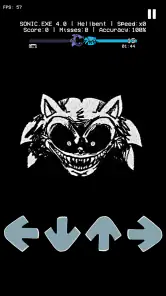
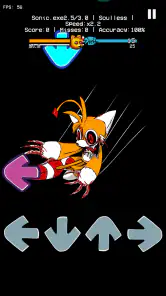
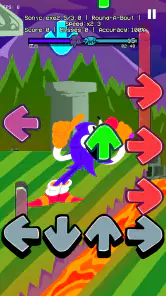

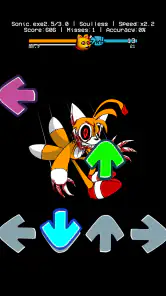

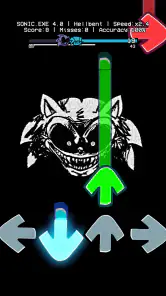
Analysis by Reviewed
I approached Horry.EXE Digital Music Battle expecting a small rhythm game built around quick musical exchanges, and that is exactly where its appeal begins. The premise is easy to understand: you take part in a Friday-night-style music battle while trying to help a girlfriend in danger. That setup gives the tapping and timing a little more purpose than a collection of disconnected songs, even though the game keeps its focus on immediate play rather than a complicated narrative.
This is a free music game from Lan Pham, aimed at players who enjoy the familiar rhythm-game idea of responding to notes as they arrive. Its Teen content rating is worth keeping in mind because the danger-focused story and spooky “EXE” presentation are not designed as a gentle preschool experience. I found the game most enjoyable in short bursts, especially when I wanted something more active than simply listening to music but less demanding than a large adventure game.
The store description presents it as a battle to save someone in trouble, while the short store label is simply Horry.EXE. In practice, the important question is not whether the premise is elaborate. It is whether the central cycle of action, musical feedback, progress, and another attempt stays satisfying. For me, that cycle works best when I treat each song as a focused challenge rather than expecting a deep rhythm-game campaign.
How the first action sets up the whole experience
The first useful thing to understand is that this is not a passive music app with a few interactive touches added on top. The music is the instruction. I have to watch the incoming prompts, connect what I see with the beat, and respond at the right moment. That makes the opening seconds important: I am not just waiting for a tune to become interesting; I am learning its pace and trying to settle my hands into it.
That immediate demand is also why the game can feel more involving than ordinary background entertainment. A playlist lets me look away, but a rhythm battle asks me to stay present. If I am distracted by a notification or trying to play while doing something else, the experience loses its shape quickly. I recommend starting with both hands free and the phone held in a stable position. That small habit makes the timing feel less awkward and reduces the chance of reacting late because the device moved in my hand.
The danger scenario gives the first action a clear emotional frame. I am not simply chasing a score in an abstract menu; I am responding to a musical confrontation connected to a rescue situation. The story is not the reason I would choose this game over every other rhythm title, but it does help the first tap feel like the beginning of an event rather than a random exercise.
Players familiar with music battles will recognize the basic appeal quickly. The challenge comes from translating a moving visual pattern into physical responses without losing the beat. Newcomers may need a few attempts before the screen stops feeling busy. My advice is not to chase perfection immediately. I get more from identifying the song’s pulse first, then improving accuracy once my hands understand the pattern.
One practical use case is a short break when I want a game that starts quickly and does not require a long planning session. I can play a round, notice where my timing fell apart, and try again with a specific adjustment. That is more satisfying than restarting without knowing what went wrong. If I am commuting or playing in a noisy place, however, the musical side becomes less helpful, so I prefer a quieter setting when I want to learn a track rather than merely pass time.
Turning visual prompts into a playable rhythm
The most important skill is separating the visual movement from the emotional pressure of the battle. When I see several prompts arriving close together, my first instinct is to rush. That usually makes the next response worse. I have better results when I keep a steady internal count and let the pattern come toward me. The game rewards controlled attention more than frantic tapping.
This is also where the phone screen matters. A smaller display can make incoming prompts feel crowded, while a larger one gives my eyes more room to track what is happening. I would not call that a reason to avoid the game on a compact phone, but it is a real trade-off. Players with limited screen space should expect to spend more time building familiarity with patterns before the action feels comfortable.
Another useful approach is to treat the opening of a song as a calibration period. I use the first sequence to judge whether the track feels slow, quick, repetitive, or more changeable than expected. Instead of spending all my attention on the outcome, I use those early moments to decide how lightly or firmly I should interact with the screen. That makes later attempts more deliberate and turns a failed round into information.
The feedback rhythm: why another attempt feels possible
A rhythm game lives or dies by feedback. Every successful response needs to feel connected to what I just did, while a mistake needs to tell me enough to change my next move. Horry.EXE Digital Music Battle is most engaging when the music, visual movement, and battle presentation line up into one stream. I can feel that I am participating in the track rather than simply pressing buttons beside it.
The feedback also creates the game’s tension. A clean sequence builds confidence, but one missed response can make me overthink the next few beats. That is a familiar rhythm-game problem, and it is especially noticeable in a battle setting because the pressure feels more immediate than in a relaxed practice tool. I have learned to treat one mistake as a single mistake. If I mentally replay it while the next prompts are arriving, I create a second error that was avoidable.
This makes the game a decent exercise in attention, but I would not describe it as a calm mindfulness experience. The music and rescue framing push in the opposite direction. The fun comes from staying alert, reading the sequence, and recovering when the pattern catches me off guard. Anyone looking for a quiet audio player or a low-effort way to relax should choose a different kind of app.
The game’s presentation also gives the feedback a recognizable character. The “EXE” identity suggests a darker, more unsettling flavor than a bright children’s sing-along game. That does not automatically make the experience frightening, but it does affect who I would recommend it to. The Teen rating fits better than a universal family label, particularly for younger players who may be sensitive to danger themes or distorted character presentation.
One of the less obvious trade-offs is that the same atmosphere that makes the battle memorable can make mistakes feel more frustrating. A neutral training interface might be easier for someone who wants to study timing with no pressure. Here, the presentation encourages me to stay emotionally involved, which is good for immersion but not always ideal for learning. When I am struggling, I focus on the musical pattern and temporarily ignore the story tension. That keeps the challenge useful instead of letting the mood take over.
How I use mistakes instead of simply repeating them
A restart is only worthwhile if I change something. After a weak attempt, I ask myself whether I lost the beat, reacted to the wrong visual cue, or became too tense during a dense sequence. Those are different problems, and each needs a different response. For a timing issue, I listen for the pulse. For a visual-reading issue, I watch the next pattern rather than the result of the previous one. For tension, I loosen my grip and stop trying to force every response.
This approach is particularly helpful for players who normally quit rhythm games after one poor round. The game becomes less about proving that I can play perfectly and more about narrowing down one problem at a time. I still have to accept that some sessions will feel rough, but the next attempt has a reason behind it. That is the point where the feedback loop becomes personally useful rather than merely repetitive.
The reward: progress measured by a better performance
The strongest reward here is the feeling of improving during a song or across repeated attempts. Rhythm games do not need elaborate equipment systems to be satisfying; a cleaner run can be enough. When I finally handle a section that previously broke my concentration, the reward is immediate because I know exactly what changed. The music continues, the battle feels more under control, and I am already curious whether I can carry that improvement farther.
That kind of reward suits players who enjoy mastery. It is less suitable for someone who needs a constant stream of new unlocks, elaborate character development, or a large collection of side activities. The appeal is concentrated in the performance itself. I come back because I want a better run, not because I am managing a broad role-playing system.
The rescue premise adds a second layer to that motivation. Helping the endangered girlfriend gives the session a simple goal that is easier to remember than a score alone. I like having that context, but I would not buy into it as a substitute for deep storytelling. The narrative frame supports the music battles; it does not turn the game into a story-heavy adventure.
Because the game is free, it is easy to try without making the decision feel significant. That matters for this type of title. Rhythm games are personal: a song style or visual approach that works for one player may feel irritating to another. A free entry point lets me test the timing and atmosphere directly rather than relying on a description. The sensible expectation is to evaluate the feel of the first sessions, not to assume that a free game will offer the same breadth as a large premium music release.
The audience size suggests that the game has reached more than a niche circle. It has over a million installs, and its average rating is 4.4 from roughly twenty-five thousand ratings. Those figures make it easier for me to take the game seriously as an established casual choice, but they are not a guarantee that it will match every player’s taste. Rhythm titles receive very personal reactions because comfort with speed, music, and screen layout varies so much.
Who benefits most from the reward loop
I would recommend it to someone who enjoys quick music battles, likes retrying a difficult sequence, and wants a free game that can be understood without a long tutorial. It is also a reasonable pick for fans of darker rhythm-game presentation who want a rescue-themed setup instead of a purely colorful music show. The game is especially useful for short sessions: I can play when I have a few minutes, identify a weak point, and stop without feeling that I abandoned a huge open world.
I would skip it if my main goal were to discover new music as a listener. The interactive demands mean that I cannot give the soundtrack my full attention in the same way I could with a streaming app. I would also look elsewhere if I wanted a realistic instrument simulator, a social music-making tool, or a slow narrative game. This is about responding to a battle, not producing music or exploring a detailed world.
For parents, the Teen rating should guide the decision. The danger theme and darker presentation may be fine for one teenager and uncomfortable for another. I would preview the atmosphere personally before handing it to a younger child, especially if that child prefers gentle music games. The fact that the game is free does not change the content fit.
Session reset: when restarting helps and when it becomes a chore
The reset is central to the experience. A failed run is not a long-term disaster; it is an invitation to try the sequence again with a better plan. That makes the game approachable because I do not need to protect a complicated save or spend a large amount of time rebuilding progress after a mistake. I can return to the same musical challenge while the error is still fresh in my mind.
There is a fine line, though, between a useful retry and a repetitive one. If I restart automatically without changing my technique, the game can begin to feel like a test I am taking over and over. The best sessions are the ones where I set a small target: hold the beat through a difficult passage, stop rushing, or keep my eyes on the next prompt. A narrow goal gives the reset meaning.
This is where I notice the difference between Horry.EXE Digital Music Battle and broader alternatives in the music-game category. A large rhythm platform may offer more modes, a wider music library, customization, or a stronger long-term collection system. A conventional casual game may be easier to play without sound. This title’s advantage is its directness: the musical battle is the point, and the restart loop gets me back into that point quickly.
On the other hand, a more polished specialist rhythm game may be better for players who care deeply about precision, extensive song variety, or advanced long-term progression. I would choose Horry.EXE Digital Music Battle when I want an accessible, story-framed battle and do not need a massive ecosystem around it. I would choose a larger alternative when I want the game to become a serious hobby rather than a compact challenge.
The current version is 2.9, and the game supports Android seven point zero or later. That makes it available to people using a range of older Android devices, although the actual comfort of play still depends on screen size, responsiveness, and how well the device handles the action. I would check those practical conditions before judging the game solely on its concept. A rhythm title can be perfectly understandable and still feel difficult if touch responses or visual tracking are uncomfortable on a particular phone.
A realistic everyday session
Imagine finishing a short break and having enough time for one focused attempt. I would open the game, choose the battle, and use the first moments to settle into the musical timing instead of tapping aggressively. If I miss a cluster, I would note whether I was early, late, or distracted. Then I would restart with one adjustment, such as watching the next incoming prompt rather than staring at the character reaction.
If the second run improves, that is a satisfying stopping point even if it is not perfect. I have converted a few spare minutes into a clear piece of progress. If it does not improve, I would stop before frustration takes over and return later. That matters because rhythm practice becomes counterproductive when tired hands and impatience create a loop of identical mistakes.
For a longer session, I would vary the way I play rather than forcing endless retries. A first attempt can be about learning the pattern, a second about maintaining the beat, and a later one about consistency. This simple structure prevents the battle from becoming mindless tapping. It also helps me decide whether the game’s core loop genuinely suits me or whether I am only replaying because I expect the next attempt to feel different.
The loop verdict: a focused free music game with a clear audience
After spending time with it, I see Horry.EXE Digital Music Battle as a straightforward rhythm challenge wrapped in a danger-and-rescue scenario. Its best quality is the clarity of its loop: I act on the beat, receive immediate musical and visual feedback, earn the satisfaction of a cleaner performance, reset after a mistake, and start again because the next run feels achievable. That structure is simple, but it is also the reason the game can work well in short sessions.
I appreciate that the game does not require me to understand a complicated system before I can play. The first action is obvious, the feedback is tied to timing, and the reward comes from improving my own response. The free price makes experimentation easy, while the broad Android compatibility means it is not limited to only the newest phones. Lan Pham has shaped the experience around a familiar idea rather than burying the music under unnecessary complexity.
Its limitations are just as clear. Players wanting a deep story, a large music catalog, realistic music creation, or a highly competitive specialist platform may outgrow it. The darker Teen-rated presentation will not suit every household, and the game is less enjoyable when I cannot pay attention to the audio-visual rhythm. Repetition can also become tiring if I retry without changing my approach.
Still, I would recommend it to a friend who likes music battles and wants a quick game with enough story context to make each challenge feel purposeful. I would tell that friend to play with a stable grip, listen for the beat before chasing speed, and use each restart to correct one specific habit. The real attraction is not simply tapping along; it is the small, repeatable sense that the next performance can be better.
In my view, that makes Horry.EXE Digital Music Battle a worthwhile free download for the right player: someone who enjoys focused retries, darker musical presentation, and compact sessions built around timing. It is not the universal answer for music-game fans, but when I want a direct battle loop with a clear reason to try again, it knows exactly what it wants to be.
Pros
- Creative rhythm battles with a distinctive horror-themed presentation.
- Short matches make it easy to play during quick breaks.
- Memorable electronic soundtrack supports the game’s tense atmosphere.
- Simple controls are approachable for newcomers to rhythm games.
- Unusual characters and visuals give the game a recognizable identity.
Cons
- Difficulty can rise quickly
- especially during later music battles.
- The dark theme may not appeal to players seeking a cheerful rhythm game.
- Limited gameplay variety may reduce replay value over time.
- Fast note patterns can feel challenging on smaller phone screens.
- Performance may vary depending on the device and background processes.

- Category
- Music
- Version
- 2.9