Hearts: Card Game
- 4.58K
- 4.6
- Installs
- 1.00M
- Price
- Free

Screenshots
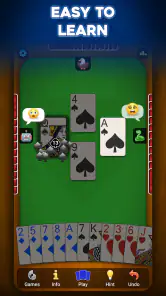

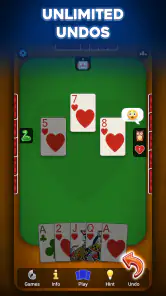

Analysis by Reviewed
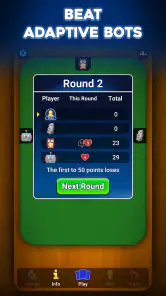
I spent time with Hearts: Card Game as a straightforward way to play the classic trick-taking card game on a phone. It comes from MobilityWare, and its biggest appeal is easy to understand: I can sit down for a quick round without needing a physical deck, a table, or three other people ready to play. It is free to download, aimed at Everyone, and supports both online and offline play, which makes it useful in very different situations.
That simplicity is also the key to deciding whether it belongs on your device. This is not a broad collection of card games or a social platform built around constant conversation. It is focused on Hearts, so the experience rises or falls on the quality of the card play, the clarity of the interface, and how comfortable you are with the game’s deliberate rhythm. After using it, I see it as a good fit for casual players, returning Hearts fans, and anyone who wants a dependable offline card game, while more competitive users may want to examine its long-term depth before committing.
How the current version feels in everyday play
The current release is version 2.5.0.2775, and the overall presentation feels designed for quick access rather than ceremony. I can open a round, make a decision, and continue without learning a complicated menu system. That matters with Hearts because the rules are familiar to many people, but the consequences of a single careless card can unfold over several tricks. A clean layout helps me concentrate on the table instead of searching for controls.
In practice, the game works especially well in short breaks. I could imagine playing a hand while waiting for an appointment, taking a few rounds during a commute when conditions allow, or using it as a quiet evening activity when I do not want the pressure of a real-time multiplayer game. The offline option is particularly valuable here. It means the game is not dependent on a stable connection for its basic purpose, so it can remain available in places where online alternatives are inconvenient.
The store presents it as a classic cards game that works online or offline, and that description matches the central experience without needing exaggerated promises. I would not install it expecting a large adventure, a story campaign, or a constantly changing collection of modes. I would install it because I want Hearts itself, presented in a convenient mobile format.
Its reception also suggests that it has reached a substantial audience: it has more than a million installs, an average score of 4.6 from about 59 thousand ratings, and roughly 4.6 thousand written reviews. Those figures do not replace personal testing, but they do indicate that the app has found a stable place among mobile card games. I read that popularity as a sign of accessibility rather than proof that every experienced player will find unlimited challenge.
The first decisions matter more than the first impression
Hearts can look simple because each turn asks me to play one card, but the real decisions are about risk management. I have to think beyond the current trick: which suits I may be forced to follow later, whether I am exposing myself to unwanted hearts, and whether taking a particular trick helps or harms my position. The app gives those decisions room to breathe instead of turning every hand into a frantic reaction test.
One useful habit is to treat the opening of a round as information gathering. I pay attention to which high cards have already appeared and which suits other players seem unable to follow. That is more useful than simply trying to win or lose every trick on instinct. A mobile interface can tempt me to tap quickly, but Hearts rewards pausing for a moment and considering the remaining shape of the hand.
Another practical tip is to use offline rounds as a training space rather than judging them only by the final score. I can test more conservative play, learn when holding a dangerous high card is worse than releasing it, and notice how other players respond to different leads. This makes the app more valuable for someone returning to Hearts after years away. It is not just a way to fill time; it can also rebuild the mental rhythm needed for the game.
Where it fits among other card-game choices
Compared with a physical deck, the app removes setup and cleanup. I do not need to deal cards, track points manually, or find opponents in the same room. That convenience is its clearest advantage. A physical game is still better when the social interaction around the table is the main reason for playing, but this mobile version is much easier to start when I am alone.
Compared with solitaire, Hearts gives me a stronger sense of reading opponents and managing uncertainty. Solitaire is often better for a completely private, low-pressure puzzle, while Hearts creates a more competitive flow even when the other players are digital. If I want a game that depends mainly on my own planning, solitaire may be the calmer choice. If I want to anticipate other hands and adjust my tactics, Hearts is more satisfying.
Compared with broad card-game collections, this app’s narrow focus is both a strength and a limitation. I do not have to navigate several unrelated rulesets before reaching the game I wanted. On the other hand, someone who wants poker, rummy, freecell, or a rotating selection of casual games will probably get more value from a collection app. I would choose this one specifically for Hearts, not as a replacement for every card game on a phone.
What has changed, and what that means for players
The release date is December 9, 2019, and the current version shows that the app has continued to exist as a maintained product rather than disappearing after launch. I am careful not to treat a version number as evidence of a particular feature or redesign, because a number alone does not explain every internal change. What I can say is that the present build is the one users should evaluate today, especially if they are returning after a long break.
For an existing player, the practical benefit of a current release is less about chasing novelty and more about having a version that remains available for modern use. I found the appeal in its continuity: the central card game remains recognizable, so a player who already understands Hearts can get back into a round quickly. That is useful for people who dislike relearning a radically altered interface every time they revisit a favorite.
At the same time, I would not assume that a newer version automatically transforms the experience into a deeper competitive product. The core attraction is still the classic rules and the convenience of playing them on a mobile device. If you are hoping for a major progression system, extensive customization, or a tournament environment, you should base that decision on what you personally see in the current app rather than expecting the version label to promise it.
The free price makes trying it relatively easy. That is important because Hearts preferences vary widely: some players enjoy a quiet digital opponent, while others quickly miss the conversation and unpredictability of people at a real table. The app also includes in-app purchases priced from $4.99 to $29.99 per item. I would therefore approach it as a free starting point and decide later whether any optional purchase feels worthwhile, instead of assuming that spending is necessary to understand the basic game.
How new and returning users should approach it
If you have never played Hearts, begin by focusing on suit-following and the reason certain tricks are dangerous before worrying about advanced tactics. The most common beginner mistake is treating every high card as an opportunity to win. In Hearts, winning a trick can be exactly what you do not want, particularly when it carries unwanted penalty cards. I found that thinking in terms of avoiding future problems makes the rules click faster than memorizing isolated tips.
Returning players can use a different workflow. I recommend playing a few hands without trying to force an ambitious strategy, then reviewing the moments where a single lead left you exposed. Ask yourself whether you were trying to control the table without enough information, or whether you held a card simply because it looked safe at that moment. This kind of self-review is where the app becomes more than a passive time-killer.
A realistic everyday scenario is a lunch break with only a few minutes available. I can start a round, play at a comfortable pace, and stop when the break ends without needing to coordinate with friends. Another scenario is a flight or an area with unreliable connectivity, where the offline capability gives the game a clear advantage over online-only competitors. For those uses, the app’s focused design is more important than having a long list of extra modes.
Parents and younger players may also appreciate the Everyone rating, especially when looking for a card game without an adult-oriented theme. Still, the rating does not tell me whether every child will understand the strategy immediately. Hearts requires patience, reading, and acceptance that a good decision can still lead to an awkward hand. I would introduce it as a thinking game rather than something designed to deliver instant rewards every few seconds.
The friction I noticed during longer sessions
The first limitation is repetition. A focused Hearts app can be pleasantly uncluttered, but after many consecutive rounds I may want more variety than the same basic activity provides. That is not a flaw in the card game itself; it is a question of how much content an individual player needs. If you prefer short sessions, the focus feels efficient. If you want a large progression journey, the experience may begin to feel narrow.
The second limitation is the difference between playing against digital opponents and playing against people you know. Offline play is convenient, but it cannot reproduce the small surprises of a friend’s habits, the conversation around a risky move, or the satisfaction of beating someone who knows your style. Online play can address some of that desire, but players who want a deeply social environment should compare it with a dedicated multiplayer community before settling here.
There is also a strategic trade-off in mobile convenience. Because cards are presented clearly and actions are reduced to taps, the physical handling of a deck disappears. Some players will see that as a benefit; I do too when I want speed. Others may find that the tactile pause between tricks is part of the charm of Hearts. The app is best when convenience matters more than recreating every sensory detail of a tabletop session.
Purchases are another point worth considering. The game is free, but optional items in the stated price range mean that the full experience may include opportunities to spend. I would not make a purchase simply because I had played for a while. I would first decide whether the app has become a regular part of my routine and whether the specific item solves a real annoyance or adds a meaningful convenience. That approach keeps the free entry point from turning into an automatic commitment.
Small strategic habits that improve the experience
My most useful tip is to stop evaluating a move only by whether it wins the current trick. Before tapping, I consider what suits may be left in my hand and whether the move could force me to accept a worse trick later. This is especially important when I have several cards in one suit, because being able to shed that suit at the right time can change the entire round.
A second insight is to watch for the moment when another player cannot follow a suit. That event changes the information available to everyone. It may reveal an opportunity to pass pressure elsewhere, but it can also warn me that a future lead will be dangerous. I try to remember who showed that weakness instead of treating each trick as an isolated exchange.
A third is to use the offline mode deliberately when learning, not only when disconnected. Without the pressure of a live opponent waiting for a move, I can slow down and compare two possible plays. That makes it easier to understand why a seemingly defensive card may create a problem several tricks later. Once those patterns become familiar, online rounds feel less hurried because I am recognizing situations rather than inventing a plan from scratch.
Finally, I avoid chasing a dramatic turnaround every time a hand starts badly. Hearts often rewards damage control. If I cannot avoid every penalty, I look for the move that limits the next risk instead of gambling on a spectacular recovery. That mindset makes the game less frustrating and gives the app a more thoughtful character than its simple controls might suggest.
Who should install it, and who should look elsewhere
I recommend it to someone who already likes Hearts and wants immediate access on Android or iOS. It is also a sensible pick for a casual card player who values offline availability, short sessions, and a familiar ruleset over a large catalog of modes. The free entry point makes it easy to test, and the Everyone rating keeps its presentation broadly accessible.
I would be more cautious if your priority is a highly social experience. The app can support online play, but that alone does not guarantee the kind of community, conversation, or organized competition you may want. A physical deck is better for family gatherings, while a multiplayer-focused card platform may be better for players who care most about meeting regular opponents.
I would also skip it if you need constant novelty. The focused design is exactly why I can recommend it for quick, familiar rounds, but it is not the right answer for someone who wants a new game every evening. In that case, a larger card collection may offer better value, even if reaching a particular favorite game takes more menu browsing.
What I would watch as the app continues
For future releases, I would pay attention to how MobilityWare balances the classic identity of Hearts with the needs of long-term players. The best evolution would preserve the quick offline experience while giving regular users reasons to return without making the interface crowded. Clear improvements to usability or meaningful ways to deepen practice would matter more to me than cosmetic change for its own sake.
I would also watch how the online side develops in the current version and beyond. Players who are satisfied with solitary rounds already have a practical reason to stay, but stronger social tools could make the app more compelling for groups and experienced competitors. At the same time, keeping the basic game comfortable for a first-time player is essential; adding complexity should not make a simple round feel like work.
My final view is positive but specific. This is a dependable Hearts companion, not an all-purpose card-game universe. Its strongest qualities are focus, convenience, free access, and the ability to play offline or online. Its weaker side is the natural narrowness of a single-game app and the gap between digital opponents and the social energy of a real table.
If that description matches what you want, I think it is worth trying. I would start with free offline rounds, use them to sharpen basic decision-making, and then decide whether online play or an optional purchase adds enough value to your routine. For me, the app succeeds because it makes a thoughtful classic easy to reach without pretending that mobile convenience can replace every reason people enjoy playing cards together.
Pros
- Simple rules make it easy for beginners to start playing.
- Offline mode lets you play without an internet connection.
- Short rounds are convenient for quick gaming sessions.
- Multiple difficulty levels provide a gradual challenge.
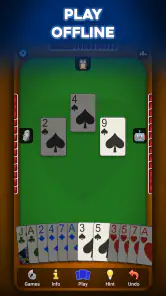
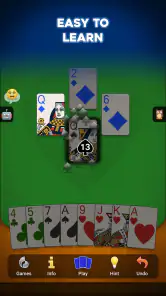
- Clean card visuals keep the gameplay easy to follow.
Cons
- Limited variety may make matches feel repetitive over time.
- Higher difficulty can rely heavily on unpredictable card deals.
- Some versions include frequent ads between games.
- Few customization options may disappoint experienced players.
- No real-time multiplayer can reduce long-term appeal.

- Category
- Card
- Version
- 2.5.0.2775