Glitched Legends Battle Finn
- 100.00
- 4.5
- Installs
- 500.00K
- Price
- Free
Screenshots
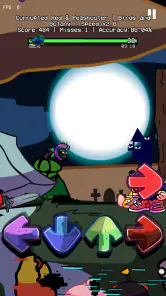
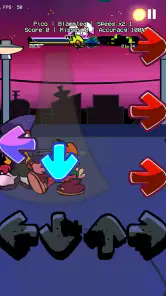
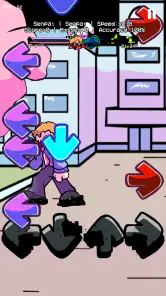
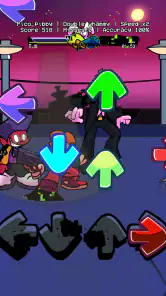
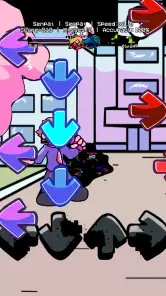
Analysis by Reviewed
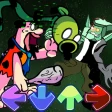
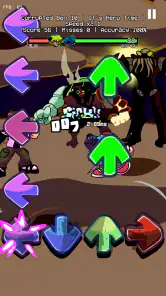
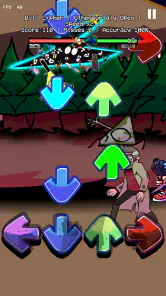
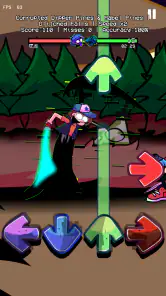
When I first tried Glitched Legends Battle Finn, I expected a quick music game with a familiar rhythm-game feel, but its corrupted-world setting gives it a more unusual personality. You guide Finn through a strange mission where timing matters, mistakes feel costly, and the presentation leans into glitches rather than polished fantasy scenery. I found it easiest to enjoy in short sessions, especially when I wanted something more active than simply listening to music but less demanding than a large adventure game.
This is a free game in the music category, developed by Phampham. It has reached over 500 thousand installs and holds a 4.5 average from around 5.5 thousand ratings, which suggests that its straightforward concept has found a solid audience. The store description frames the experience around completing BF’s mission in a corrupted world, and that idea is a useful guide to the tone: this is not a conventional music player or a relaxed background game. It asks you to pay attention and react.
How it feels in a shared household
The most practical way I see this game fitting into a household is as a turn-taking title. One person can play a section while another watches, comments on the timing, or takes over when a difficult part becomes frustrating. It does not need to become a full family activity to work well in that setting. A short attempt before dinner, during a break, or while sharing one phone can be enough to create a small challenge without requiring a long commitment.
That shared-device use also exposes one of the game’s main strengths: the basic idea is easy to explain. I would not need to give a new player a long tutorial about a complicated inventory, a large map, or a deep set of character statistics. The musical focus makes the objective understandable quickly. You listen, watch, react, and try to improve your next attempt. For a household where people have different gaming experience, that simplicity helps.
At the same time, I would not treat it as a quiet game for every situation. Rhythm-focused play needs concentration, and repeated attempts can become noisy or distracting if several people are using the same room. It is better suited to a short, deliberate session than to leaving the game running while someone else is studying or watching television. The corrupted visual style may also appeal strongly to one player and feel visually busy to another.
A realistic use case is a parent and teenager sharing a device after school. The teenager may already understand the timing quickly, while the parent can still join without learning a complex control system first. The useful boundary is to agree on a few attempts rather than letting the session become an open-ended competition. That keeps the game’s retry-driven nature enjoyable instead of turning every miss into an argument over who gets another turn.
What the first sessions communicate
My first impression was that the game’s appeal depends less on collecting a huge amount of content and more on the satisfaction of improving a performance. That distinction matters. If you enjoy rhythm games because you like gradually making cleaner inputs, this structure can be rewarding. If you usually play music games only for instant variety, the repeated focus on a mission and its corrupted setting may feel narrower than a broad song library.
I also noticed that the visual theme does useful work. The glitch concept is not just a label placed on an ordinary rhythm game; it creates a slightly unstable atmosphere around the mission. That makes the presentation more memorable than a plain sequence of notes. However, visual novelty cannot replace comfortable timing. If the action becomes hard to read on a smaller phone, the same style that makes the game distinctive can make a difficult section feel more tiring.
Setting boundaries before someone else plays
Because this is a game that may be passed between people, I recommend deciding who is playing before starting a serious attempt. That sounds obvious, but rhythm games punish interruptions more than many casual titles. A notification, a handoff, or a sudden change in grip can break concentration at exactly the wrong moment. On a shared phone, I would avoid beginning a challenging run when another person may need the device immediately.
The game is free, which lowers the barrier to trying it together. Still, “free” does not automatically mean that every household member will enjoy it. The important question is whether the player likes timing-based repetition. I would let a child or younger player sample the opening experience with an adult nearby, then decide whether the game’s pace and visual intensity feel comfortable. That is more useful than assuming that a music label makes it suitable for everyone.
Its content rating is Teen, so I would keep that context in mind before handing it to a younger child. The rating itself is the clearest age signal available here, and it should guide the household decision rather than the game’s simple controls. A teenager can usually judge whether the atmosphere works for them, while a younger player may need an adult to make that call. I would also remember that shared-device use can expose progress or preferences to the next person who plays.
There is a practical account boundary to think about even without inventing features that are not documented. If several people use one device, I would not assume that each player has a separate profile or isolated progress. Instead, I would treat the game as a common installation unless the app itself clearly presents a way to separate users. That means household members should agree before resetting anything, changing settings, or taking over an existing run.
This is one of the less obvious trade-offs of a small, focused game. A simple game can be easier to share because there is less to explain, but it can also offer fewer ways to distinguish one player’s progress from another’s. For a single-player phone, that is rarely a concern. For siblings or roommates passing one device around, it is worth making a basic rule: do not alter another person’s progress without asking.
Keeping the challenge cooperative
I found that coordination works best when players discuss timing rather than blame. A useful spectator can point out whether a section feels rushed, whether the phone is being held awkwardly, or whether the player is reacting to the visual effect instead of the musical cue. That kind of feedback is more helpful than simply saying “try harder.” It turns a failed attempt into information for the next one.
For a shared session, I would give each player a defined role. One person plays, one watches for patterns, and then they switch. This is especially useful when someone is learning the game, because the observer can notice a repeated mistake without interrupting the attempt. It also prevents the most experienced player from taking every turn simply because they are more likely to succeed.
Another useful approach is to separate practice from competition. If one player is still learning, comparing scores immediately can make the game feel unfair. I would first allow a few uninterrupted attempts, then compare results only if everyone understands that the goal is improvement. The game’s music-based design naturally invites competition, but a household session is usually more enjoyable when the competition remains optional.
There is also a good case for using it as a short reset between more demanding activities. A teenager might play a few attempts after homework, or two friends might use it as a quick challenge while waiting for something else. The key is not to promise a long shared campaign. Its strongest household role is a compact, repeatable activity that can be paused when the device needs to return to its owner.
Where the game may frustrate people
The biggest limitation for me is the possibility of repetition becoming the whole experience. Improving timing can be satisfying, but it is not the same as exploring a large world or discovering a constantly changing set of systems. Someone who prefers open-ended adventure, simulation, or story-heavy games may find the mission structure too focused. I would skip this one if my priority were a game that can occupy a household for long, varied sessions.
It may also be a poor choice for players who dislike failure loops. Music games often ask you to repeat a section until your reactions become more consistent, and this title’s corrupted-world presentation does not remove that demand. If a missed input feels irritating rather than motivating, the game can become stressful quickly. In that case, a slower puzzle game or a more forgiving casual title would probably be a better alternative.
Screen size and attention are practical considerations too. On a phone, a player may need to hold the device steadily while also watching the action closely. That can be awkward when playing in a crowded room or while sharing the device with someone who keeps commenting from the side. I would use both hands, avoid playing while walking, and give the player a stable seat. Those small choices make a bigger difference than trying to rush through a difficult sequence.
The game is not the best replacement for a music streaming app, either. Its purpose is interactive timing, not passive listening or building a personal library. If I want music in the background while doing chores, I would choose a music service. If I want a game that makes me respond to music and visual cues, this is where Glitched Legends Battle Finn makes sense. The two uses may sound related, but they satisfy completely different needs.
Version, access, and everyday practicality
The current version is 1.6, and the game was released on August 5, 2022. It supports devices running Android 7.0 or later, so anyone considering it for an older household phone should check the operating system before planning a shared session. That requirement is modest by current standards, but an old spare device can still fall outside it.
Since the game is free, trying it does not require a purchase decision. That makes it easy to test with a teenager or another family member before deciding whether it deserves a permanent place on a shared phone. I would still judge it by attention cost rather than price: a free game is not useful if nobody enjoys repeating its challenges, and a short trial can answer that question quickly.
Phampham keeps the identity of the project clear through its focused theme and compact premise. I would approach it as a specific music game rather than expecting the breadth of a major franchise. That expectation is important when comparing it with usual alternatives. A larger rhythm title may offer more songs, modes, or customization, while a conventional action game may provide more exploration. This one’s advantage is that its corrupted mission gives the timing challenge a distinct setting without asking the player to learn a huge system.
One tip I would give a new player is to avoid judging the game after a single missed attempt. The first run often tells you more about the rhythm and visual language than about your actual ability. Give yourself several focused tries, then stop if your concentration drops. In my experience, continuing while frustrated makes the controls feel worse and teaches bad timing habits.
Age, trust, and choosing the right player
The Teen rating means I would not casually recommend it to every child simply because the controls are approachable. The atmosphere is built around corruption and glitches, and some younger players may find that tone uncomfortable even if they understand the objective. I would watch the first session, ask how the presentation feels, and let the player decide whether they want to continue.
For teenagers and adults, the game is easier to recommend when they already enjoy rhythm challenges or stylized action. It can be a good fit for someone who wants a focused break and likes measuring personal improvement. It is less suitable for a player who needs a calm, low-pressure experience, or for someone who expects every attempt to reveal new story content.
Trust matters on a shared device because the game may become part of a wider routine. I would not use it as a reward system that depends on winning, particularly with younger household members. The better arrangement is to agree on when the device can be used and to treat success as a personal goal. This keeps the game from becoming a source of pressure and makes it easier for less experienced players to participate.
It is also wise to agree on volume and turn length. Music games invite players to increase the sound, but shared rooms often require the opposite. Headphones may help if the player uses them safely and the household rules allow it; otherwise, a lower volume and shorter turns are enough. These are simple boundaries, yet they prevent the game from disrupting the people who are not playing.
My household verdict
I recommend Glitched Legends Battle Finn to players who enjoy rhythm-based challenges, unusual visual themes, and the satisfaction of improving through repeated attempts. Its free access and clear premise make it easy to test, while its corrupted-world presentation gives the experience a recognizable identity. In a household, I think it works best as a shared, turn-based challenge rather than a game everyone plays simultaneously.
I would be more cautious with younger children because of the Teen rating and the darker corrupted setting. I would also skip it for anyone looking for a broad adventure, a relaxed background activity, or a replacement for a music-listening app. A larger rhythm game may be better for players who want extensive variety, while a gentler casual game may suit people who dislike performance pressure.
My final advice is to set expectations before installing it on a shared phone: decide who owns the current progress, agree on short turns, and let new players try the timing without immediate score comparisons. Those small rules address the main friction points without taking away the fun. The best reason to try it is not its size or price, but the way a focused musical challenge becomes memorable when the glitchy world and the timing finally click together.
Pros
- Fast-paced battles are easy to learn but still reward good timing.
- Distinct character abilities make team choices feel meaningful.
- Colorful visuals give matches a lively
- cartoon-inspired presentation.
- Short rounds work well for quick sessions on mobile devices.
- Unlockable content provides extra goals beyond the initial matches.
Cons
- Matchmaking may feel uneven when experienced players face newcomers.
- Some upgrades can make progression feel slower without regular play.
- The interface can become crowded during intense combat moments.
- Limited variety may make repeated battles feel familiar over time.
- Online features depend heavily on a stable internet connection.
- Category
- Music
- Version
- 1.6