Duck Life: Retro Pack
- 161.00
- 4.1
- Installs
- 10.00K
- Price
- $1.49

Screenshots




Analysis by Reviewed
The appealing idea behind Duck Life: Retro Pack is that getting ready to race is part of the fun, not just a menu before the main event. I like that the game asks you to build a duck’s abilities through training, then gives that practice a clear purpose when you enter a competition. It makes small sessions feel connected: a few attempts at a skill can matter later, even if you are only playing for a short break.
A training loop with a clear payoff
That focus gives the game a different rhythm from sports titles built around direct control of every moment in a match. Here, the pleasure is in improving your duck and seeing how that preparation carries into racing. The training mini-games ask for attention and timing, so they are more engaging than simply waiting for a progress bar. My practical tip is to treat them as short practice rounds: concentrate on one attempt at a time rather than rushing through, because the point is to build the skills that make the race more satisfying.
On an ordinary day, I can imagine opening it while waiting for a friend or taking a break between tasks. A brief training session has a natural stopping point, while a race gives that session a small payoff. That makes the game easier to dip into than a sports game that expects a long match, though anyone looking for a deep competitive simulation may find this lighter approach too simple.
Where the retro approach works—and where it doesn’t
The three classic games gathered in one package are the reason this version has a particular appeal: it leans on an established, compact style rather than trying to compete with modern sports games on realism or elaborate presentation. The pixel-era look and straightforward premise suit the training-and-racing loop. At the same time, players who want detailed team management, realistic athletics, or complex controls should choose a different kind of sports game. This is best approached as a playful progression game, not a simulation.
There is also a trade-off in the repetition. Training is central, so doing it repeatedly is part of the route to better race results. If you enjoy visible improvement, that repetition can be motivating; if you want every session to introduce a new challenge, it may start to feel routine. I would alternate a little training with racing rather than grind one skill for too long, which keeps the goal in view and makes each competition feel earned.
The Retro Charm of Duck Life
Duck Life: Retro Pack brings back the nostalgia of the original Duck Life games, all packed into one delightful app. It's like taking a trip down memory lane, but with a modern twist. The graphics might remind you of simpler times, but don't be fooled; the gameplay is just as engaging as ever.
Training Your Feathered Friend
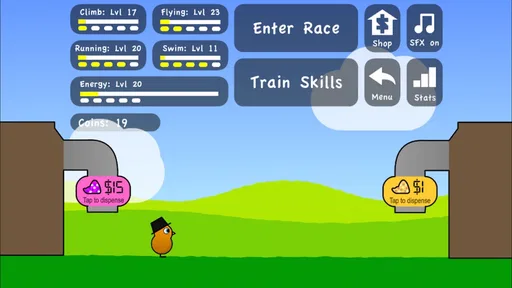
The core of the game revolves around training your duck. You start with a cute little duckling, and it's your job to train it for various competitions. Whether it's running, swimming, or flying, each skill requires dedicated training. And let me tell you, watching your duck grow and improve is surprisingly satisfying.
More From Our News Desk

Weather by Xiaomi Review: Clear at a Glance, Less Clear Up Close

X Under Pressure: Can It Recover When Posting Goes Wrong?

Clash of Clans Is Won Between the Battles

Android Auto Makes the Case for Quieter Car Software

MobiOffice: Transforming Mobile Productivity with Seamless Integration

EA SPORTS FC™ Mobile Soccer: Redefining Mobile Sports Gaming
The training mini-games are both fun and challenging. They test your reflexes and timing, making each session feel rewarding. Plus, the more you train, the better your duck performs in races. It's a cycle of improvement that keeps you hooked.
Racing to Victory
Once your duck is adequately trained, it's time to hit the races. The thrill of watching your duck compete against others is exhilarating. You can't help but cheer for your little champion as it quacks its way to victory.
Winning races earns you coins, which you can use to buy food and accessories to further enhance your duck's abilities. It's a well-thought-out progression system that adds depth to the gameplay.
Why You'll Love It
One of the standout features of Duck Life: Retro Pack is its simplicity. The game doesn't bombard you with complex mechanics or overwhelming graphics. Instead, it focuses on what makes gaming fun: a simple yet engaging concept executed brilliantly.
The retro graphics and charming music create an atmosphere that's both relaxing and entertaining. It's the perfect game to unwind with after a long day. Plus, it's suitable for all ages, making it a great choice for family gaming sessions.
For parents considering a game to share with children, its Everyone age rating and simple premise make it an approachable choice. I would still expect younger players to need a little patience with the timing-based training: encouragement to retry a mini-game can be more useful than taking over the controls. For older players, the appeal is less about a demanding sports challenge and more about the satisfying connection between practice and race results.
Developed by MAD.com, this paid sports game costs $1.49, so it makes more sense for someone who expects to return to its training-and-racing loop than for a player who only wants a quick novelty. Its average rating is 4.1 from around 600 ratings, and it has over 10,000 installs. The current version is 2024.3.26, and it runs on Android 5.1 or later. I’d check those device requirements before buying, especially if you are installing it on an older phone.
What should you expect after installing it? The central appeal is the combination of three classic Duck Life games, rather than a single new sports simulation. If you already enjoy the series’ simple training premise, the collection is an easy fit; if you have never played one, the basic loop is straightforward enough to understand without needing sports-game experience. Its 161 reviews give prospective players more opinions to weigh, but I would still judge it by whether training and gradual improvement sound enjoyable to you.
One useful way to approach the collection is to let each race tell you what to practice next. Rather than treating training as a checklist to clear before moving on, notice which parts of the competition seem to demand more from your duck and give that area attention. This keeps each practice session purposeful and helps avoid the dull feeling of repeating mini-games without a clear reason. It also makes a short play session easier to plan: train toward one specific improvement, then decide whether you have time for a race.
Making short sessions count
The compact structure is especially handy when I have a few spare minutes but do not want to start a match that needs uninterrupted attention. I can use a small gap in the day to work on one training activity and save the race for a moment when I can watch the result. That split gives the game a natural rhythm without requiring a long block of free time. It is a better fit for waiting rooms, quiet breaks, or a relaxed commute as a passenger than for playing while distracted by something that needs constant attention.
There is a small but important difference between playing for a quick laugh and playing for steady progress. If I am only trying it out, I would sample the training and race loop without worrying about optimizing every attempt. If I want to see improvement over time, I would keep the practice focused and avoid spending too long on one activity in a single sitting. The first approach makes the collection easy to share casually; the second gives returning players a personal goal beyond simply reaching the next race.
What the collection offers compared with other sports games
Many sports games put the match itself at the center, asking players to control athletes, teams, or tactical choices in real time. This one shifts the emphasis toward preparation: the mini-games are the hands-on part, and races show the consequence of that practice. That makes it a more approachable option for someone who finds conventional sports controls intimidating, but it also means players who want to steer every move during a competition may prefer a direct-control game. The appeal is in watching preparation pay off, not in mastering a detailed playbook.
It also occupies a different space from endless arcade games that offer quick action but little sense of development. The duck’s training gives repeated sessions a simple through-line, while the retro presentation keeps the experience light rather than realistic. That combination is appealing if I want a small progression goal without committing to a full career mode. On the other hand, it will not replace a sports simulation for someone who wants leagues, realistic athletes, or strategic depth; the charm depends on being happy with a simpler, more playful scale.
Small choices that help avoid the grind
Because repetition is built into the premise, the best way to keep it enjoyable is to vary what you do rather than chasing improvement in a single skill until it becomes a chore. I would switch from training to racing when practice starts to feel automatic, then return to the activity with a clearer sense of why it matters. The race can serve as a checkpoint: it gives you a reason to pause, see the outcome, and choose what to focus on next. This is more satisfying than treating every session as a long training grind.
The progression also rewards patience more than frantic tapping. Since the mini-games depend on timing and attention, a calm attempt can be more useful than trying to rush through several repetitions. If a young player is struggling, I would suggest watching one attempt together and talking through the timing, then letting them try again independently. That keeps the game’s challenge intact and turns a retry into part of the fun rather than a reason for an adult to take over.
Who is likely to enjoy it
I would recommend the pack to players who like light progression, short skill challenges, and the satisfaction of seeing practice influence a competition. It can work for someone revisiting the series’ retro style, a casual player who wants a sports-flavored game without complicated controls, or a parent looking for an approachable title to play alongside a child. The broad Everyone age rating supports that family-friendly use, while the simple loop gives new players a clear starting point.
I would skip it if my priority were realistic sports, online competition, deep customization, or a fresh challenge in every session. The game’s strengths are tied to its repeated training-and-racing pattern, so anyone who quickly tires of revisiting familiar mini-games may not get enough variety from it. It is also a paid purchase, so I would consider whether I genuinely enjoy gradual progression before spending money rather than buying it solely for a moment of nostalgia.
For someone deciding whether the price is worthwhile, the key question is not how long a single session lasts but whether the loop is one you will want to return to. The pack combines three classic games, which gives the purchase a broader basis than a one-off race, but its value still depends on your tolerance for repeating training activities. A player who enjoys small goals and gradual improvement is more likely to feel the purchase earns its place; someone who prefers a constantly changing sports challenge should look elsewhere.
It is also worth thinking about who will be holding the device. The controls and premise are approachable, but the timing element means that very young players may enjoy the spectacle more than the challenge at first. Sharing a few attempts can help them understand what the training asks of them, while older children can take ownership of improving their duck. For adults, the appeal is less about high-pressure competition and more about a gentle, tidy loop that fits around other things.
A purchase best matched to the right expectations
Would I choose it over a free-to-play sports game? Only if I wanted this particular retro training-and-racing experience. A free alternative may offer more current presentation or a broader stream of new content, while this collection’s draw is its compact, familiar structure. The paid format makes the decision straightforward: buy it for the focused loop and the three classic entries, not because you expect a modern simulation or a constantly expanding service.
As an Android game, it supports devices running version 5.1 or later, and the current release is 2024.3.26. I would check compatibility before purchasing on an older handset, then think about whether the small-screen training challenges suit how I plan to play. The short-session format is convenient, but timing-based play still deserves enough attention to be enjoyable. That distinction matters if you expect to play while multitasking rather than giving it a few focused minutes.
In conclusion, if you're looking for a game that's both nostalgic and fun, Duck Life: Retro Pack is a must-try. It's a charming blend of training, racing, and delightful graphics that will keep you entertained for hours. So go ahead, train that duck, and let the races begin!
Duck Life: Retro Pack Frequently Asked Questions
How much does Duck Life: Retro Pack cost, and what am I buying?
Duck Life: Retro Pack is a paid game priced at $1.49. Buying it gives you access to a collection of three classic games in the Duck Life series: Duck Life, Duck Life 2: World Champion, and Duck Life 3: Evolution. The experience combines training mini-games with duck racing, giving you several related adventures to explore in one purchase.
What kind of game is Duck Life: Retro Pack, and who developed it?
Duck Life: Retro Pack is a sports game developed by MAD.com. Its appeal comes from the mix of skill-building mini-games and races: you improve your duck’s abilities, then put those skills to use in competition. The collection presents three classic Duck Life games together, so it is a natural fit for players who enjoy lighthearted, progression-focused gameplay.
What is Duck Life: Retro Pack and what does it include?
Duck Life: Retro Pack is a collection of the first three games in the Duck Life series, offering classic gameplay where players train their ducks to compete in races. The pack includes Duck Life, Duck Life 2: World Champion, and Duck Life 3: Evolution. Players can enjoy a blend of racing and strategy elements that have been updated for modern devices.
How do I train my duck in Duck Life: Retro Pack?
In Duck Life: Retro Pack, training your duck involves participating in various mini-games that focus on improving specific skills such as running, swimming, flying, and climbing. Each skill is essential for competing in races. The training games are designed to be fun and engaging, allowing players to see tangible improvements in their duck's abilities as they progress.
Is Duck Life: Retro Pack suitable for children?
Yes, Duck Life: Retro Pack is suitable for children and offers family-friendly content. The game is designed to be easy to understand and play, making it accessible for younger audiences. It encourages strategic thinking and enhances hand-eye coordination through its training mini-games. Parents can feel confident that the game provides a safe and educational experience for their kids. It carries an Everyone content rating, which supports its family-friendly appeal.
Pros
- Nostalgic graphics appeal to retro game fans.
- Simple controls make it easy to play.
- Variety of challenges keeps gameplay interesting.
- Great for quick
- casual gaming sessions.
- Engaging mini-games enhance replayability.
Cons
- Limited progression may bore advanced gamers.
- Graphics might feel outdated to some users.
- Repetitive gameplay can be monotonous.
- Lacks multiplayer or social features.
- In-app purchases could be intrusive.