Duck Life 6: Space
- 119.00
- 4.0
- Installs
- 10.00K
- Price
- $1.99
Screenshots
Analysis by Reviewed
My first few sessions with Duck Life 6: Space were easy to settle into: I could train a duck, try short skill challenges, then return to the larger goal of winning back its crown. That loop gives the game an immediate purpose without asking me to learn a complicated set of rules. The space setting adds a playful frame, but the appeal is really the steady change from practice to racing and exploration. For a light sports game with an adventure streak, that makes a friendly first impression.
A gentle fit for everyday play
I can picture this working well in the small gaps that are awkward for longer games: a few minutes after lunch, a quiet wait, or a short break before moving on to something else. The training challenges give each visit a clear task, so I do not need to remember a complicated plot or plan a long session. That makes it approachable for younger players and for adults who want a low-pressure game rather than another demanding commitment.
There is also a simple way to make those short sessions feel more purposeful. Instead of training only the skill I find easiest, I would alternate disciplines and pay attention to where a race feels difficult. That turns a loss or a disappointing result into a practical next step: practise the relevant skill, then see whether the next attempt feels better. It is a more satisfying routine than repeating the same comfortable challenge without a goal.
What Keeps the Duck’s Journey Moving
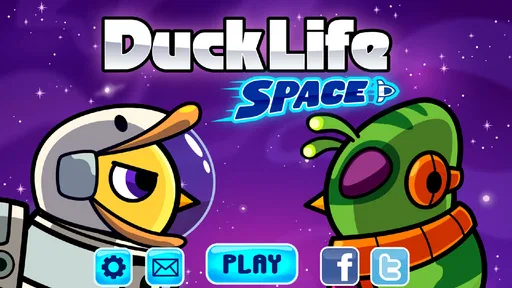
First things first, if you're new to the Duck Life series, you're in for a treat. The game kicks off with a delightful backstory where your duck’s champion crown gets stolen by aliens. Yep, you read that right, aliens! It's your job to train your duck, travel through space, and reclaim your glory. The premise is simple yet engaging, which is perfect if you’re looking for something light-hearted and fun.
Training Your Feathered Athlete
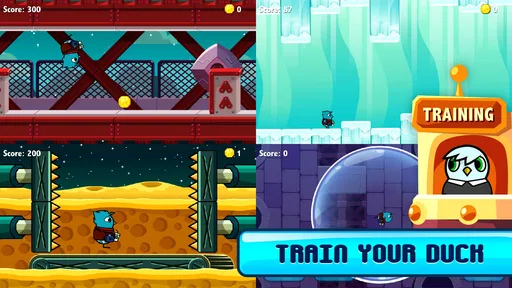
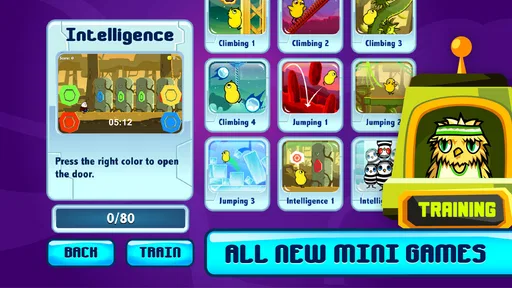
Training is at the heart of Duck Life 6: Space. Your goal is to boost your duck's abilities in running, flying, swimming, and climbing. Each skill has its own mini-game, which is as entertaining as it is challenging. I found myself getting pleasantly lost in these mini-games, trying to shave off seconds and improve my duck’s performance. It’s addictive in a way that doesn’t feel overwhelming.
Short Sessions, Useful Choices
The training loop suits small pockets of free time: I can focus on one skill rather than needing to commit to a long play session. A practical approach is to rotate between the disciplines instead of repeating whichever mini-game feels easiest. That keeps practice from becoming monotonous and helps avoid concentrating all your effort in one area while neglecting the others. When a race exposes a weakness, I’d treat it as a cue to return to that skill and practise deliberately, rather than assuming more general play will solve it.
This makes the game a reasonable fit for a quick break or a casual shared activity where someone can take turns trying a challenge. It is less suited to players who want a deep sports simulation, precise team tactics, or the complexity of a full racing game. The duck-training structure is deliberately approachable; its satisfaction comes from gradual improvement, not from mastering a large set of controls or managing a realistic athlete.
More From Our News Desk

Weather by Xiaomi Review: Clear at a Glance, Less Clear Up Close

X Under Pressure: Can It Recover When Posting Goes Wrong?

Clash of Clans Is Won Between the Battles

Android Auto Makes the Case for Quieter Car Software

MobiOffice: Transforming Mobile Productivity with Seamless Integration

EA SPORTS FC™ Mobile Soccer: Redefining Mobile Sports Gaming
Space – The Final Frontier
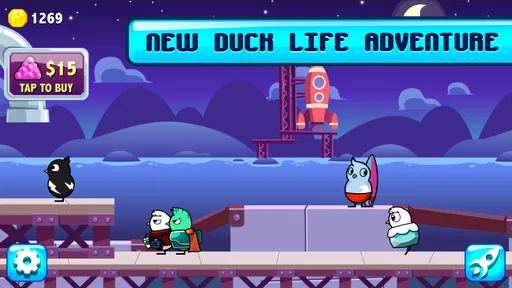
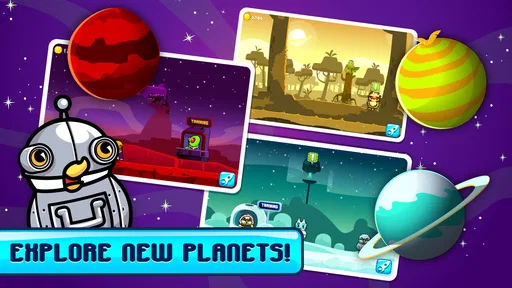
The space theme is a fresh twist that adds a whole new dimension to the game. With different planets to explore, each with unique challenges and environments, it keeps the gameplay feeling fresh and exciting. The graphics here are colorful and quirky, perfectly capturing the whimsical essence of the game.
Let the setting guide your expectations
The space adventure gives the training a destination, which matters more than it might seem in a game built around short challenges. I find that a clear reason to keep improving makes practice easier to return to: instead of treating each mini-game as an isolated score attempt, I can connect it to the next part of the journey. Still, the theme is a frame for the core routine, not a promise that every visit will feel like a new genre. I would come for the duck’s progress and treat the planets as context and variety.
That distinction can help when deciding whether to buy it. If you enjoy a cute setting but mainly want quick, varied action, a straightforward arcade game may be a better match. If you like building a character’s abilities before seeing how they perform, the journey has a more satisfying through-line. The game sits between those expectations rather than replacing either a full adventure or a pure racer.
Where the Novelty Can Wear Thin
The same repeatable training that makes progress easy to understand can also become the main source of fatigue. If you dislike practising a skill through its own mini-game, the route to a stronger racer may feel like work rather than a satisfying warm-up. The planetary variety gives the journey a sense of movement, but it does not change the basic appeal of training and improving. I would skip this one if I need every session to introduce a substantially different activity.
There is a small but useful distinction between repetition that feels purposeful and repetition that feels like a chore. When I know which ability I want to improve, a training round has a clear reason to exist. When I keep practising without noticing a goal or enjoying the mini-game itself, the loop loses much of its pull. I would set a modest target for a session—work on one weak area, then stop—rather than trying to squeeze progress from every spare minute.
How it differs from other sports games
Compared with many sports games built around realistic matches, leagues, or direct competition, this is a lighter, more personal progression game: the focus is on raising one duck and seeing its abilities develop. Compared with a simple arcade racer, it asks for preparation between races rather than offering only quick runs. That middle ground is its strength for players who enjoy nurturing progress, but it is a trade-off for anyone who would rather jump straight into racing without practice.
That makes it a more natural choice for someone who likes training loops than for someone looking for the social energy of a team match or the precision of a conventional racing simulator. It is also different from a purely collectible pet game: the duck is not only there to look after or dress up, since its skills are central to the sports progression. I would choose it when the appeal is a small, personal improvement arc, not when I want a broad roster, deep tactics, or constant new modes.
Customization and a Small Reward Loop
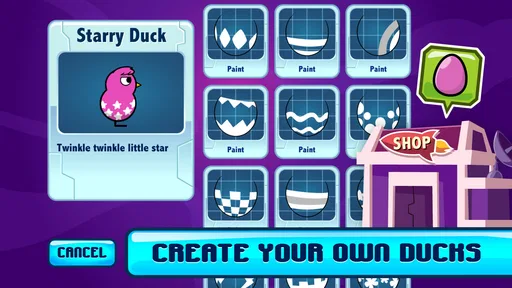
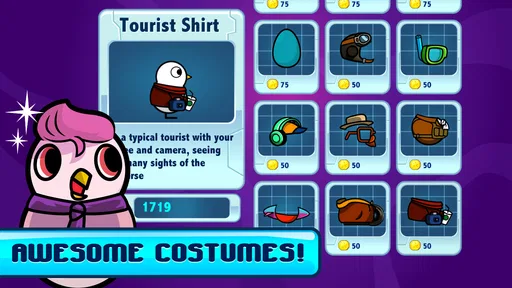
One of my favorite aspects of the game is the customization options. As you progress, you earn coins that can be used to buy hats, hairstyles, and even different colors for your duck. It adds a personal touch to your space-faring avian and makes the game feel more engaging. Plus, who doesn’t love a duck sporting a funky hat?
Those cosmetic rewards are a pleasant reason to keep going, but I see them as a bonus rather than the main long-term goal. If I were playing over several weeks, I’d focus first on training and races, then spend coins when I wanted a change of look. That keeps customization enjoyable without turning it into a checklist. It also means players who care little about appearance should judge the game by its skill challenges and progression instead.
Keeping the routine enjoyable
For a returning player, the practical question is not only whether there is more to do, but whether the basic activity remains pleasant after the first burst of novelty. I would use the cosmetics as a light milestone rather than a reason to grind: play because I want to improve or explore, and spend coins when a new look sounds fun. That approach keeps the reward loop from taking over the experience, especially for anyone who does not normally care about collecting outfits.
A shared session can also work without turning the game into a competition between players. One person can choose a challenge, another can try it, and both can compare how the duck handles it. The appeal is in watching a small improvement rather than needing a complicated set of rules or a long match. For a family looking for an easy game to pass around, that is a useful kind of flexibility; for players who want robust multiplayer competition, it is not a substitute.
Who It Suits Over Time
Made by MAD.com, this sports game is a good match for younger players and anyone who likes cute, low-pressure progression. It carries an Everyone age rating, so it is broadly approachable, though its simple premise may not hold the attention of someone seeking a demanding competitive game. The rating is 4.0 from 516 ratings, and it has passed 10K installs. Those figures suggest a modest audience, but I would still choose it for its particular mix of training and adventure rather than popularity alone.
It costs $1.99, so the useful question is whether the training loop sounds enjoyable before paying. I’d expect the strongest value from someone who returns in short bursts, enjoys seeing a character improve, and likes the charm of dressing up a duck. Someone who tends to tire quickly of repeated mini-games may get more from a sports title with varied match formats. The game was released on April 21, 2016, and its current version is 2023.10.10; it requires Android 5.1 or later.
The purchase is easiest to justify if the idea of practising several distinct skills already sounds appealing. The price is small, but it still makes sense to be honest about your habits: someone who buys games for brief novelty and rarely returns may not get much lasting use from a progression loop. I would also steer players who want realistic sports rules or frequent changes of pace toward another option. Here, the lasting value depends on enjoying the act of training, not merely liking the premise.
For an everyday example, I might open it while waiting for a meal, pick one skill that has been holding my duck back, and play a short challenge or two. If I have more time, I can continue into the larger journey; if not, the session still has a clear endpoint. That makes it easier to fit around a routine than a game whose enjoyment depends on completing a long match in one sitting. The best use is a deliberate little break, not an obligation to check in every day.
Questions worth considering before you start
A common decision is whether this works for someone who has never played another game in the series. I think the simple goal and skill-by-skill training make it approachable as a starting point; the appeal does not depend on already knowing the characters. If you are buying for a younger player, its Everyone rating is reassuring as an age classification, while the actual fit still depends on whether that player enjoys repeated mini-games and gradual development.
Another practical question is whether it can replace a conventional racing game. I would not treat it as a direct substitute: races are part of a broader routine of training and exploration, rather than the sole attraction. Likewise, it can be a casual shared game, but I would not choose it for players who specifically want head-to-head depth. Its best audience is comfortable with a personal progress arc and the occasional return to familiar challenges.
On the technical side, the Android requirement is version 5.1 or later, so that is the first compatibility detail I would check before purchasing. For everyone else, the more important question is appetite: will training the same set of abilities remain satisfying after the opening sessions? If the answer is yes, the game has a clear reason to stay installed; if the mini-games already sound repetitive, the initial space theme probably will not change that for long.
Final Thoughts
All in all, Duck Life 6: Space is a delightful addition to the series. It's perfect for those looking for a casual gaming experience that’s both fun and slightly challenging. Whether you’re a long-time fan or a newcomer, there's something here for everyone. So, if you’re ready to train your duck and take on the universe, this game should definitely be on your radar. Trust me, it’s a quacking good time!
For lasting value, I’d call it a pleasant repeat-play game rather than an endless one. The compact training sessions and visible improvement give me a reason to return, while repeated practice is the point where patience matters. If that rhythm sounds relaxing, the purchase is easy to understand; if you want constant novelty, a different kind of sports game will likely suit you better.
My long-term verdict
What I would keep coming back for is the combination of an easy-to-understand goal and a low-friction way to make progress. The duck’s development gives a short session some meaning, and the adventure gives the training a destination. What I would not expect is a constant stream of new experiences that makes repetition disappear. This is a game to revisit when its particular routine sounds appealing, not one I would force into a daily habit.
My recommendation is therefore specific: try it if you like compact skill challenges, gradual improvement, and a playful sports-adventure tone, especially if you are happy to return to familiar activities. Skip it if you need every session to feel radically different, want competitive depth, or would rather race without preparing. At $1.99, the decision comes down less to the theme than to whether training itself sounds like a good use of your spare minutes.
Duck Life 6: Space Frequently Asked Questions
How much does Duck Life 6: Space cost, and what should I know before downloading?
Duck Life 6: Space is a paid sports game from MAD.com, priced at $1.99. It is designed around raising and training a duckling for races, so expect a progression-focused game rather than a free-to-start experience. Before downloading, check that your device meets the supported operating system requirement and consider whether training mini-games and racing challenges sound like the kind of play you enjoy.
What is Duck Life 6: Space and what is its main objective?
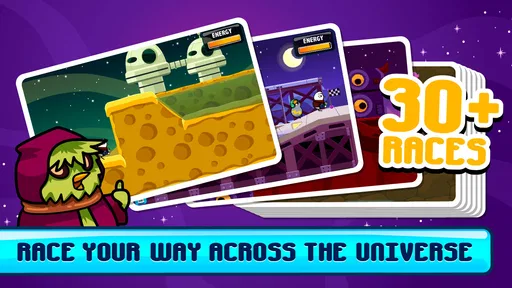
Duck Life 6: Space is an engaging adventure game where players train their duck characters to explore and conquer various planets in space. The main objective is to enhance the skills of your duck, such as running, flying, and swimming, to win races across different extraterrestrial terrains, ultimately aiming to become the champion of the universe.
How do the training mechanics work in Duck Life 6: Space?
In Duck Life 6: Space, players engage in a series of mini-games designed to improve their duck’s abilities. Each skill area—running, swimming, flying, and climbing—has its unique training challenges. Success in these mini-games improves your duck’s performance in races, making strategic training crucial for progressing through different levels and unlocking new planets to explore.
Are there any in-game purchases in Duck Life 6: Space?
Yes, Duck Life 6: Space offers in-game purchases that enhance the gaming experience. Players can buy special items, costumes, and upgrades to customize their ducks and boost their abilities faster. While the game can be played and enjoyed without purchases, these options provide additional benefits and personalization for those who choose to invest.
What are the system requirements for Duck Life 6: Space on mobile devices?
For Android devices, Duck Life 6: Space requires Android 5.1 or later. Check your device’s Android version before downloading so you can confirm it meets the minimum requirement. The game is also available for iOS, and its listed age rating is Everyone. As with any mobile game, leaving enough storage available can help ensure a smoother installation and play experience.
Pros
- Engaging space-themed adventure.
- Simple controls
- easy to learn.
- Variety of mini-games included.
- Customizable characters.
- Suitable for all ages.
Cons
- Repetitive gameplay over time.
- Limited in-game currency.
- Ads can be intrusive.
- Graphics are basic and simple.
- Not challenging for advanced gamers.