Demon Tiles Geometry Songs 2.2
- 23.00
- 3.3
- Installs
- 100.00K
- Price
- Free

Screenshots
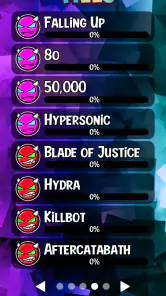
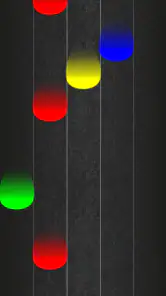
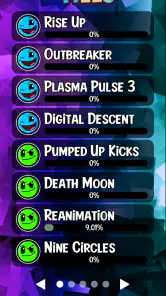
Analysis by Reviewed
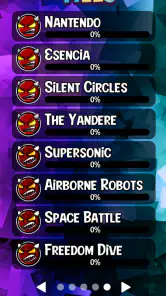
I approached Demon Tiles Geometry Songs 2.2 as a quick music game rather than a long-form adventure. Its basic appeal is easy to understand: choose a level, follow the visual rhythm, and enjoy the song while trying to improve your timing. That simplicity makes it approachable, especially when I want something I can play in short bursts without learning a complicated control system.
The game comes from BOOT-DARK and sits in the music category for Android. It is free to install, rated for Everyone, and supports devices running Android 5.0 or later. Those details make it accessible to a broad audience, but accessibility should not be confused with depth. My experience is that this is best viewed as a focused reflex game built around levels and songs, not as a full music-production tool or a replacement for a large rhythm-game collection.
How the level-and-song format feels in everyday play
The most natural way to use it is in small sessions. Imagine having a few minutes before leaving home or waiting for a friend: you open a level, concentrate on the moving pattern, and try to stay with the music until the end. That short-session design is one of its strongest qualities because it does not demand a large time commitment before you can enjoy it.
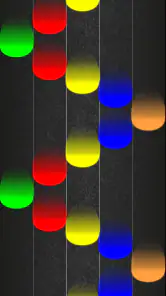
The central challenge is keeping your visual attention and musical awareness working together. I found that casually tapping is not enough once a level becomes demanding. The useful habit is to watch the geometry slightly ahead of the immediate action rather than staring at the exact point where a mistake is about to happen. That small change helps turn frantic reactions into a more controlled rhythm.
The store summary focuses on enjoying favorite levels and their songs, and that description matches the main reason to return. The attraction is not a large narrative or a complicated character system. It is the satisfaction of recognizing a level, remembering its rhythm, and handling it more cleanly on another attempt. Players who like repetition with a musical payoff will understand the appeal quickly.
At the same time, the experience depends heavily on whether the available songs and level patterns suit your taste. A rhythm game can have clear controls and still lose its appeal if its music does not keep you interested. I would therefore treat the song selection as the deciding factor, not merely a background detail. If the tracks do not connect with you, the replay loop may feel thinner than it does for someone who enjoys the available material.
What I would do before judging the difficulty
I would not make a final decision after one failed attempt. Music games often feel harder during the first session because the player is learning two things at once: the timing language of the game and the visual behavior of a particular level. A better test is to replay the same stage several times and notice whether mistakes become understandable. If you can identify that you entered too early, reacted late, or lost focus during a pattern change, the challenge is probably giving you useful feedback.
For comfortable play, I recommend using headphones when possible and keeping the device steady. These are practical habits rather than special requirements: headphones can make the beat easier to follow, while a stable grip reduces accidental movement during concentrated sections. I also prefer lowering distractions around me, because a notification or conversation can break the connection between the song and the visual cues.
One less obvious trade-off is that playing in a noisy place may make the game feel less fair than it really is. When the music is difficult to hear, I naturally rely more on the screen, which can make a sequence seem abrupt. Before deciding that a level is poorly tuned, I would retry it in a quieter setting. That simple comparison can separate a genuine timing problem from an environmental one.
Progress feels personal rather than social
The satisfying form of progress here is improvement in your own execution. You learn a song, remember a transition, and gradually reduce the number of mistakes. That makes the game a good fit for players who enjoy practicing privately and seeing their hands become more reliable over time.
It is less suitable if your main motivation is a deep progression system, a story campaign, or a large collection of unlockable content. I would not choose it expecting the broader structure of a major rhythm franchise. Its appeal is narrower and more direct: the level itself is the activity, and the song gives the activity its identity.
Pressure can build naturally even without treating every run like a competition. Once I know a pattern, I become more aware of small errors, and that awareness can either encourage another attempt or make the session tense. My advice is to alternate focused runs with relaxed ones. Trying to perfect every attempt can make a short music game feel like work, while accepting occasional imperfect runs keeps the experience enjoyable.
Fairness is easier to judge through practice than through assumptions
For a rhythm game, fairness comes from the relationship between what I hear, what I see, and when the game expects a response. I pay attention to whether a missed action feels connected to my timing or whether it appears to happen without a readable cue. The most useful test is consistency: if I make the same mistake in the same part of a level, I can adjust; if the result changes unpredictably, confidence drops.
My impression is that players should evaluate each level on its own terms rather than assuming that every song will feel identical. Different musical phrasing can make one stage seem smooth and another more demanding, even when the underlying idea is the same. A level that feels unfair during a first attempt may simply require learning its visual rhythm, but repeated confusion is a reasonable sign that the stage is not a good match for your playing style.
There is also a fairness question around spending. The game is free, so the initial barrier is low. Beyond that, I would avoid making assumptions about purchases or paid advantages. The responsible way to approach it is to use the free experience as the basis for your decision and check any purchase prompt carefully before confirming anything. Do not spend money merely to solve frustration that may come from unfamiliar timing.
This matters because music games can create a strong urge to retry immediately after a mistake. That emotional moment is not the best time to decide whether an optional expense is worthwhile. I prefer to pause, replay the level without rushing, and decide whether I actually enjoy the core loop. If the basic play is not satisfying, spending would not fix the underlying mismatch.
How it compares with other music games
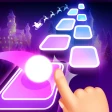
Compared with a simple tap-to-the-beat game, Demon Tiles Geometry Songs 2.2 places more emphasis on the connection between geometric visuals and musical timing. That can make it feel more distinctive than a bare sequence of buttons, particularly for players who enjoy watching a pattern develop while listening to the track.
Compared with larger rhythm games, it is more modest in scope. A bigger alternative may offer a wider music library, more elaborate presentation, stronger social systems, or a more extensive progression structure. Those options are better for someone who wants a long-term hobby with many layers around the songs. I would choose this game instead when I want a lighter, more immediately focused experience and do not need a huge surrounding ecosystem.
There is a practical advantage to that narrower design. I can concentrate on the level in front of me instead of managing a large collection of modes and menus. The disadvantage is equally clear: if I finish exploring the patterns that interest me, there may be less variety to keep me engaged than in a larger alternative. This is not a flaw for every player, but it is an important expectation to set before installing it.
Who will enjoy it and who should skip it
I would recommend it to someone who likes music games, visual rhythm challenges, and repeat attempts that gradually become cleaner. It also suits casual players who want a free game for short sessions and do not need a story or complex character progression. The Everyone rating makes it a broadly approachable choice for households looking for a straightforward music-themed game.
I would be more cautious about recommending it to players who want precise competitive ranking, extensive customization, or a guaranteed supply of new content. Those expectations belong more naturally to larger, more feature-heavy rhythm games. I would also suggest skipping it if you dislike replaying the same level after a mistake, because repetition is central to learning this kind of challenge rather than an occasional side activity.
Another group that may not enjoy it is anyone looking for a relaxing background game that can be played without concentration. The songs may be pleasant, but the interaction still asks for attention. If you are trying to play while watching a video, talking with friends, or doing another task, the experience will probably be less rewarding and may feel unnecessarily frustrating.
What I can say about the app’s maturity and unknowns
The game was released on April 18, 2021, and the current version is 2.1.3. It has passed the point of being a brand-new experiment, but that does not automatically tell me how actively its content changes or how frequently it receives meaningful improvements. I would judge it by the version available on my device and by how well that version performs during actual play.
Its public audience is sizeable enough to show that the concept has attracted attention: it has more than one hundred thousand installs. The average rating is 3.3 from roughly nine hundred ratings, with a couple dozen written reviews. I read that combination as a signal to keep expectations balanced. The game clearly works for some players, but it is not a universally loved experience, so personal taste and device experience matter.
I would not treat the rating as a substitute for trying the main loop. A music game can receive mixed reactions for reasons that are highly personal, including song preference, timing sensitivity, device handling, and tolerance for repetition. The rating tells me to approach with curiosity rather than assuming either excellence or failure.
There are also practical questions I would answer through a cautious first session. Does the timing feel comfortable on your particular screen? Do the songs hold your attention after several attempts? Is the visual style easy for you to read? These are more useful questions than simply asking whether the game is popular, because rhythm performance depends on the relationship between the software and the player’s habits.
When I test a game like this, I also avoid confusing a difficult level with a technical problem. I close unrelated apps, make sure the device is not being handled awkwardly, and retry before forming a conclusion. If the same issue remains across calm, repeated attempts, then it becomes a legitimate part of my evaluation. That approach gives the game a fair chance without ignoring genuine friction.
My trust verdict for a free download
The strongest reason to try it is the low commitment. It is free, easy to understand, and aimed at a familiar but enjoyable type of play: matching attention and timing to songs through visual levels. I can imagine keeping it installed for occasional sessions, especially when I want something more active than a passive music app but less demanding than a large competitive game.
The main caution is not about the basic idea; it is about fit. The modest rating, limited public written feedback, and focused structure suggest that this will not satisfy everyone. I would install it with realistic expectations, spend time learning a few levels, and decide based on whether the timing feels consistent and the songs make me want to return.
As for spending, my recommendation is simple: begin with the free experience and make no purchase decision while annoyed by a failed run. Consider any optional transaction only after you know that the core game is enjoyable on your device and that the value is clear to you. That keeps the decision grounded in actual use rather than pressure created by repetition.
Overall, I see Demon Tiles Geometry Songs 2.2 as a compact music game with a clear purpose. It is not the choice I would make for a deep rhythm-game ecosystem, but it can be a pleasant fit for someone who enjoys geometric visual cues, song-based levels, and the small satisfaction of improving through practice. My trust verdict is to try it freely, judge the timing for yourself, and keep your expectations focused on the level-and-song experience.
Pros
- Simple tap-based controls are easy for beginners to learn.
- Short song sessions make it suitable for quick breaks.
- Bright geometric visuals give the game a distinctive style.
- Unlockable content adds motivation beyond the initial levels.
- Works well for players who enjoy rhythm and reflex challenges.
Cons
- Timing can feel unforgiving when song speed increases.
- Repetitive patterns may become monotonous during longer sessions.
- Frequent visual effects can be distracting for some players.
- Progress may feel slow without consistent practice.
- The experience offers limited variety outside its core rhythm gameplay.

- Category
- Music
- Version
- 2.1.3