Dancing Cats: Duet Meow
- 189.00
- 4.3
- Installs
- 5.00M
- Price
- Free

Screenshots
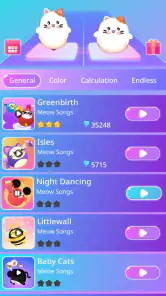

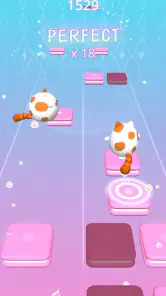
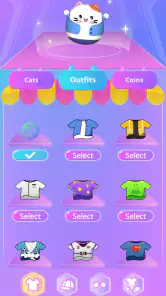


Analysis by Reviewed
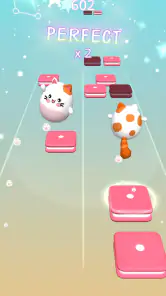
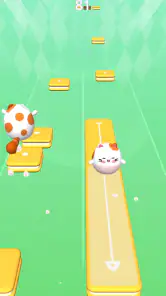
I first approached Dancing Cats: Duet Meow expecting a light rhythm game built around a funny cat theme, and that is exactly where its appeal lies. It turns music timing into a playful activity rather than a serious practice session. The basic idea is easy to understand: follow the beat, react to what appears on screen, and keep the musical flow going while the dancing cats provide the personality.
This is a free music game from Sensor Notes Global, available for players rated Everyone. It has been around since November 14, 2018, and its current version is 9.2. The game runs on Android 7.0 or newer, so it is accessible on many older devices as well as more recent phones. Its average rating is 4.3 from around 73 thousand ratings, with more than 5 million installs, which suggests that the simple cat-and-rhythm combination has found a substantial audience.
How the cat rhythm formula feels in everyday play
The strongest part of the experience is how quickly it gets started. I do not need to learn a complicated control system or spend a long time preparing a character. The music provides the focus, while the cats make the presentation feel casual and cheerful. That makes it a good choice for short sessions when I want something interactive but do not want to commit to a large adventure, competitive match, or story-heavy game.
In practice, I find the game works best when I treat it as a concentration exercise with a humorous wrapper. The screen asks for attention, the soundtrack establishes a rhythm, and my job is to respond at the right moment. Missing a beat is not just a visual mistake; it breaks the feeling of keeping pace with the song. That small connection between sound and action is what gives the game more staying power than a simple animated cat app.
The “duet” idea also gives the presentation a social flavor, even when I am playing alone. The cats are not merely decoration placed behind a standard rhythm interface. Their movement helps communicate the mood of the game and makes successful timing feel more entertaining. I would not describe the presentation as a substitute for a full music-production tool or a serious rhythm-training program, but it gives the game a clear identity that many ordinary tap-based alternatives lack.
A useful game for short breaks
One realistic use case is a short break between tasks. If I have a few minutes before leaving home, during a lunch pause, or while waiting for an appointment, I can open the game and play without needing to remember a complicated storyline. The music gives the session a natural beginning and end, and the cat theme keeps the mood lighter than many intense arcade games.
That convenience comes with an important condition: rhythm games are sensitive to distractions. I get more from it when I use headphones or play somewhere reasonably quiet, because background noise can make the beat harder to follow. I also prefer holding the phone securely with both hands when the action becomes faster. That small adjustment reduces accidental movement and helps me concentrate on timing instead of fighting the device.
A less obvious benefit is that the game can suit people who enjoy music but do not necessarily want to learn an instrument. It offers a modest sense of participation: I am not composing a track, but I am responding to one. For younger players, the Everyone rating makes the concept approachable, while adults may enjoy it as a deliberately silly alternative to more serious rhythm titles.
What the free price actually means
The game is free to download and play, which makes trying it straightforward. I can decide whether the cat presentation and rhythm timing suit me without paying an entry fee. That is important in this category because the main question is not whether the initial download is affordable; it is whether the free experience remains enjoyable enough before optional purchases become relevant.
In-app purchases range from $0.49 to $3.49 per item. I see that as a relatively approachable purchase range, but I would still judge each item by how it affects my play rather than assuming every optional purchase is necessary. Free access delivers the core reason to install the game: music-based interaction with a distinctive cat theme. Paid value only makes sense if an optional item adds something I personally want, such as convenience or extra customization, rather than simply being bought out of habit.
My advice is to play enough free sessions to understand the normal rhythm and progression before spending anything. That gives a clearer idea of whether I enjoy the timing itself or only like the novelty of the cats. If the basic loop already feels repetitive after a short trial, a purchase is unlikely to solve the underlying problem. If I keep returning because the music and reactions are satisfying, a small optional purchase may feel more reasonable.
This distinction matters because the game’s value is primarily experiential. It is not a productivity tool, a music-learning course, or a long-form role-playing game. I am paying, if I choose to pay, for more enjoyment inside a compact rhythm experience. That can be worthwhile for a fan of the style, but it is not the right kind of value for someone looking for a deep catalogue of lessons, detailed composition controls, or a large narrative campaign.
Where it is stronger than ordinary music games
Compared with a plain rhythm game that uses abstract notes and generic backgrounds, this title has a more memorable personality. The cats make the visual feedback easier to recognize and give the game a warmer tone. I am more likely to show it to a friend who enjoys cute animals than I would be to recommend a visually anonymous timing game.
It also feels less intimidating than music games built around demanding precision from the first minute. The theme lowers the barrier to entry, especially for someone who wants to experiment with the genre. A player can approach it as a playful cat game first and discover the rhythm challenge gradually.
However, that comparison changes when I look at dedicated rhythm alternatives. A more serious rhythm title may be preferable for someone who wants demanding charts, a competitive environment, deeper progression, or a broader sense of mastery. Dancing Cats: Duet Meow is better at being approachable and charming than at presenting itself as an expert-level musical challenge. I would not choose it as my main game if my priority were advanced technique or a highly structured competitive ladder.
It also differs from music-streaming apps because I am actively responding to the beat instead of passively listening. That makes it more engaging, but it also means I cannot use it as background entertainment while doing another task. The game asks for attention. If I want music to accompany cleaning, studying, or commuting without interruption, a conventional audio app is a better fit.
Small habits that improve the experience
My first practical tip is to adjust my expectations before playing. I do not judge every session by whether I achieved perfect timing. Early attempts are more useful for learning how the game communicates its rhythm and how quickly I can react. Once I stop treating every mistake as a failure, the playful presentation becomes much more enjoyable.
My second tip is to use the soundtrack as the primary guide rather than staring only at the graphics. The dancing cats attract attention, but rhythm games are easier when I listen for the pulse and let the visual cues confirm what I hear. This is especially helpful when the screen becomes busy or when a scene is more animated than expected.
A third useful approach is to keep sessions short when concentration starts to drop. Rhythm accuracy tends to suffer when I continue playing mechanically after losing focus. A brief pause can be more valuable than repeatedly replaying the same section while frustrated. This also helps preserve the game’s casual character instead of turning a quick diversion into a tiring chore.
Finally, I would test the game on the device I plan to use most often before considering purchases. The minimum operating-system requirement is Android 7.0, but compatibility on paper is not the same as personal comfort. Screen size, speaker quality, touch response, and the way I hold the phone all affect a timing game. A device that feels fine for reading may be less comfortable when quick reactions matter.
The trade-offs behind the cute presentation
The cat theme is a genuine strength, but it can also narrow the audience. Players who dislike novelty mascots or prefer a clean, serious musical interface may find the presentation distracting. The same visual style that makes the game approachable for one person may make it feel shallow to another.
The compact format is another trade-off. Short, accessible sessions are convenient, yet players seeking a long-term challenge may eventually want more depth than this style provides. I would be careful not to confuse a pleasant loop with unlimited variety. The game is successful when I want a focused, cheerful rhythm activity; it is less convincing when I expect a constantly expanding music platform.
There is also a difference between liking the concept and liking the repeated action. Cute characters can make the first sessions memorable, but the timing mechanic has to carry the experience after the novelty fades. Before spending money, I would ask myself whether I enjoy repeating music-based challenges even when the cat animations are no longer surprising. That is the most honest test of its lasting value.
Because the game is free with optional purchases, I would also keep an eye on my own spending habits. The listed purchase range is modest, but several small decisions can still add up for someone who buys impulsively. I prefer deciding in advance what kind of optional content would improve my experience and ignoring everything else. That keeps the free-to-try model aligned with the actual value I receive.
Who should install it, and who should skip it
I think it is a good match for players who enjoy cute character design, electronic music, and quick reaction games. It is especially suitable for someone new to rhythm games because the theme feels welcoming rather than demanding. Families looking for an Everyone-rated music game may also find the concept appealing, although I would still let each player decide whether the timing challenge feels comfortable.
It is also a sensible choice for a person who wants a free game to keep on a phone for occasional breaks. The low commitment makes it easy to sample, and the combination of cats and music gives it a clear reason to exist beyond another generic arcade download. If I wanted to introduce a friend to rhythm games without beginning with an intimidating specialist title, this is one I would consider.
I would skip it if my main goal were to develop real instrumental skills, compose music, listen passively to a large music library, or compete in a demanding rhythm-game community. Those needs call for different kinds of apps. I would also skip it if I know that cute visual themes quickly annoy me or if I need a game that remains satisfying during long uninterrupted sessions.
For younger users, the Everyone rating is reassuring as a broad content classification, but the purchase model still deserves adult attention. A free game can be harmlessly sampled while purchases are kept under control. In my view, the sensible family approach is to enjoy the free portion first and treat optional items as deliberate extras, not as an automatic part of playing.
My final recommendation on value
After spending time with it, I see Dancing Cats: Duet Meow as a cheerful entry point into rhythm games rather than a replacement for every other music app. Its best qualities are immediate accessibility, an unmistakable cat-centered identity, and a format that fits naturally into short breaks. The free starting point makes the decision easy: install it, listen closely, and see whether the timing loop keeps your attention.
The game is not the right purchase for someone searching for advanced musical training or a deep, serious rhythm challenge. Its optional items should be judged carefully, because the free experience is the real test of whether the game belongs on your phone. I would not spend simply because the cats are charming; I would spend only after deciding that the underlying rhythm play has earned more of my time.
My recommendation is to try it free, use headphones when possible, and decide based on the rhythm loop rather than the novelty alone. For casual players, cat fans, and anyone wanting a friendly music game for short sessions, it offers a pleasant amount of value without an upfront cost. For expert rhythm players or people seeking a full music utility, another category of app will serve them better.
Pros
- Simple controls make the rhythm gameplay easy to pick up.
- Cute cat animations give each performance plenty of personality.
- Short songs work well for quick gaming sessions.
- Duet mechanics add variety beyond standard tap-to-the-beat play.
- Bright visuals and playful sounds suit younger players.
Cons
- Timing can feel unforgiving when songs become more difficult.
- Repeated tracks may reduce long-term variety for frequent players.
- Some content may require watching ads or making in-app purchases.
- Fast visual effects could be distracting on smaller screens.
- Progress may feel limited if you prefer deeper rhythm-game systems.

- Category
- Music
- Version
- 9.2