Cribbage - Classic Card Games
- 95.00
- 4.4
- Installs
- 100.00K
- Price
- Free
Screenshots
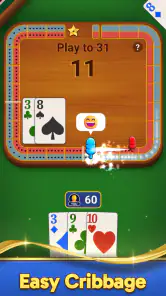
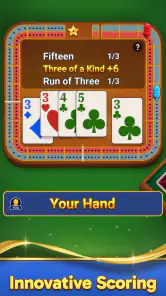

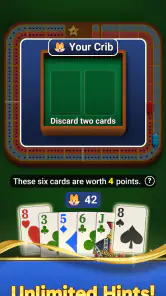

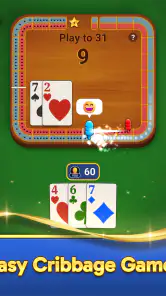
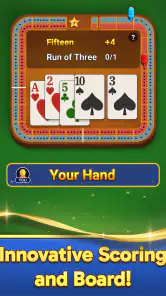

Analysis by Reviewed
I approached Cribbage - Classic Card Games as a quick, thoughtful card game rather than something designed to fill an entire evening. That distinction matters. Cribbage rewards planning, memory, arithmetic, and a willingness to make small decisions whose value becomes clear several turns later. It is easy to start, but it is not mindless. After spending time with it, I see a focused mobile version of a traditional game that works especially well when I want a short mental break with more substance than a simple matching game.
MobilityWare has made this free card game for players who already know cribbage and for curious newcomers who want to learn the basic rhythm without committing to a large strategy game. It sits in the card category, carries an Everyone age rating, and runs on Android 8.0 or later. Its current version is 1.1.5.444, while the release date was September 16, 2024. Those details are useful if you are checking compatibility, but the more important question is whether cribbage itself suits the way you like to play.
What to consider before choosing this cribbage game
The first decision is whether you enjoy games built around incremental advantage. Cribbage is not about collecting the biggest-looking cards or reacting to dramatic effects. You are constantly weighing combinations, counting possible points, and deciding what to keep while giving away cards that may help the other side. A strong hand can still require careful play, and an ordinary hand can become valuable if you read the possibilities correctly.
I would also consider how much learning you are willing to do. Someone familiar with poker-style combinations may recognize pairs, runs, and fifteens quickly, but cribbage has its own scoring habits. The crib changes the value of discards, and the order of play affects what can be scored during the pegging phase. The game becomes much more satisfying once those two parts stop feeling like separate chores.
That makes this a different choice from a casual solitaire app. Solitaire is usually about arranging cards under a familiar set of restrictions, often with a calmer and more solitary flow. Here, even when you are playing against an automated opponent, every discard carries an element of risk. If you want something you can play almost automatically while watching television, this may demand more attention than you expect.
My practical test is simple: can you imagine enjoying a game that lasts only a few minutes but still gives you something to analyze afterward? If yes, this format is a good match. If you mainly want fast rewards, flashy effects, or a large collection of modes, you may be happier with a broader card-game app.
Why the rules create more depth than the simple interface suggests
Cribbage has two linked decisions that beginners often underestimate. During the hand, I am not only trying to keep cards that score well immediately; I am also thinking about how those cards interact during pegging. A pair may be tempting, but a sequence of ranks can create more opportunities in play. At the same time, the cards placed into the crib are not simply leftovers. They are part of the opponent’s potential score, so a discard that improves my own hand may be a poor trade overall.
This is one of the most useful ways to approach the game: stop asking only, “How many points does this hand have?” and ask, “What does this choice allow on the next stage?” That habit makes the app a surprisingly good exercise in short-term probability and risk management. It also gives experienced players a reason to return, because the same-looking situation can call for a different decision depending on the score and the cards already visible.
The pegging sequence adds another layer. Playing a card that looks harmless can create a run or pair for the opponent, while holding back a useful rank may prevent an easy response. I found that the game becomes more interesting when I deliberately slow down before each play instead of treating the phase as a race to empty my hand.
Where MobilityWare’s version works best
The strongest part of this release is its focused identity. It does not need to compete with every kind of card game at once. The experience is built around cribbage, so a player who wants that specific ruleset can open it and get into the decision-making quickly. The store summary describes it as a classic strategy card game for playing on the go, and that is a fair description of the role it fills in my routine: a compact game for a queue, a commute, or a short pause between tasks.
Its free price also lowers the barrier to trying the format. You do not have to buy a physical board, find a partner immediately, or learn through a long campaign before deciding whether cribbage suits you. I especially appreciate that for people who have heard of the game but never had a comfortable opportunity to sit down with someone who knows it.
The app’s public response is encouraging without being a reason to ignore personal fit. It has a 4.4 average from around 1.3 thousand ratings, with roughly 95 written reviews and more than 100 thousand installs. I read those figures as evidence that the game has found an audience, not as proof that every player will enjoy it. Cribbage remains a particular kind of card game, and no rating can remove that basic fact.
Three habits that make the game more rewarding
My first tip is to separate hand value from crib value. When I am the dealer, I can think more aggressively about creating a strong crib because it belongs to me. When the opponent receives the crib, I become more conservative with combinations that could easily produce pairs, fifteens, or runs. This does not mean discarding blindly; it means judging a card by both its benefit to me and its possible benefit to the other side.
Second, I pay closer attention to cards that have already appeared. Memory is useful here, but it does not need to be perfect. Remembering a few key ranks can help me judge whether a run is still plausible or whether holding a particular card is mostly wishful thinking. This turns each round into a small information puzzle rather than a series of isolated hands.
Third, I avoid chasing a beautiful combination when the safer hand is better for the match situation. If I am ahead, I may prefer a dependable scoring line over a fragile attempt at a spectacular one. If I am behind, a higher-risk choice can make sense. That is a subtle advantage of cribbage on mobile: a short session can still teach you to make decisions according to context rather than habit.
A realistic everyday session
Imagine having ten minutes before an appointment. A large strategy game would be inconvenient because it may require setup, a long tutorial, or a commitment to a campaign. A traditional multiplayer card game may also be impossible if nobody else is available. This is where I find the app most useful. I can play a focused round, think through the discard, and stop without feeling that I have abandoned a larger story.
The same situation works during a quiet lunch break, although I would not recommend playing while walking or doing anything that needs your full attention. The game is compact, but it still asks you to count and remember. Its best use is as an intentional pause, not as background noise.
For a family member who already owns a physical cribbage board, the app can serve as a convenient practice partner. For a complete beginner, it can provide a low-pressure way to become familiar with the vocabulary and flow before playing face to face. The trade-off is that digital practice cannot fully replace the social feel of sitting across from another person and handling the board together.
Where other card-game categories may fit better
If you want a relaxing solo puzzle with a more visual sense of progress, solitaire is probably the better alternative. Its appeal comes from arranging cards and solving the layout, whereas cribbage asks you to evaluate choices against an opponent. Neither approach is superior; they simply use different kinds of attention.
If you prefer collectible card games, this may feel too restrained. Collectible games usually build excitement through deck construction, changing card pools, and combinations that can produce dramatic turns. Cribbage offers depth through the interaction of ordinary cards and careful counting. That makes it easier to understand, but less suitable if customization and constant novelty are your main reasons for playing.
Traditional board-and-card play is also a meaningful alternative. A physical cribbage board is better when your priority is conversation, teaching someone in person, or maintaining a shared ritual. This mobile version wins on availability and convenience, not on atmosphere. I would choose the app for practice and solo access, then choose the physical game when the social setting is the point.
Finally, players who want online competition should check their expectations before switching from another multiplayer card title. The core appeal here is the cribbage decision process, not the promise of a broad competitive ecosystem. If your enjoyment depends on live opponents, chat, rankings, or a busy tournament structure, a dedicated multiplayer platform may fit you better. I would not choose this app solely because I want a general online card community.
The cost of switching from a physical board or another app
Moving from a physical board to a phone changes the practical rhythm. You gain portability and avoid setting up cards and pegs, which is valuable when you are alone or have only a short break. You lose some of the tactile satisfaction and the natural conversation that comes from playing across a table. For me, that is not a reason to reject the app; it is a reason to use it for a different purpose.
Switching from solitaire requires a mental adjustment rather than a technical one. You will need to learn why discarding matters and why pegging can change the outcome of a hand. I recommend treating the first few sessions as practice instead of judging the game by how quickly you score. Once the relationships between cards become familiar, the decisions feel less like rule memorization and more like reading a small tactical situation.
Switching from a more elaborate card game may feel like giving up variety. There are fewer distractions because cribbage is the whole point. That focus is a strength when you want to improve at one ruleset, but a weakness when you rely on new content to stay interested. Before installing, decide whether repetition with increasing understanding sounds satisfying. If it does, the narrower design is likely to feel purposeful rather than limited.
There is also a human cost to learning without a physical teacher. A beginner may understand the broad idea of scoring but still make poor discards for a while. I found that the best approach is to make a decision first, then review the result and ask what the opponent gained from it. That small self-review is more valuable than rushing through several games without noticing patterns.
Who should play it and who should skip it
I recommend it to people who enjoy classic card rules, small strategic choices, and sessions that fit into spare moments. It is particularly suitable for someone who wants to learn cribbage privately before playing with friends or relatives. The free entry point makes experimentation easy, and the Everyone rating means it can be considered for a broad audience, provided the player is interested in learning the rules and counting.
I would also suggest it to experienced cribbage players who want an accessible practice option on an Android device. The game’s value is not in replacing every form of play; it is in keeping the central decisions close at hand. If you already know the game, you can focus on improving discard judgment, pegging discipline, and score-aware risk-taking.
I would skip it if you want an action-heavy card game, a large deck-building system, or a purely automatic time-killer. I would also hesitate to recommend it to someone who dislikes arithmetic or gets frustrated by outcomes that depend on making the best decision rather than guaranteeing a win. Cribbage can reward good play without making every hand feel predictable, and that uncertainty is part of its character.
My recommendation after weighing the trade-offs
Cribbage - Classic Card Games is a good choice when you want one traditional card game presented as a portable, repeatable mental challenge. MobilityWare’s version is most convincing as a companion for short sessions and gradual improvement. It gives beginners a practical entry into cribbage and gives experienced players a convenient way to keep their instincts sharp.
I would not present it as a universal replacement for solitaire, collectible card games, or a physical board. Those alternatives serve different moods: quiet arrangement, constant customization, or face-to-face play. This app wins when the thing you want is cribbage itself, without needing a table, a partner, or a lengthy commitment.
Because it is free and supports Android 8.0 and later, trying it is a fairly low-risk decision for compatible users. Give it several rounds rather than judging the first hand, keep an eye on what your discards offer the crib, and slow down during pegging. If those choices start to feel satisfying, you have found a strong mobile card game. If they feel like work, another category will probably serve you better.
My final view is positive but specific: this is not a flashy all-purpose card collection, and it does not need to be. It is a focused cribbage experience for players who enjoy thinking one or two moves ahead. The real reason to install it is the quality of its small decisions—the kind that turn an ordinary spare moment into a compact lesson in judgment.
Pros
- Clear scoring system helps new players learn cribbage quickly.
- Offline play makes it useful during travel or without an internet connection.
- Short matches fit well into quick gaming sessions.
- Multiple difficulty levels offer a challenge for different skill levels.
- Simple card-focused design keeps attention on the gameplay.
Cons
- Ads may interrupt the experience
- especially between matches.
- Advanced players may find the computer’s strategy predictable.
- Limited customization can make long-term play feel repetitive.
- Scoring mistakes may be frustrating when cards are counted quickly.
- Some features may require in-app purchases or premium access.
- Category
- Card
- Version
- 1.1.5.444