Colorever: Gem Art Puzzle
- 163.00
- 4.7
- Installs
- 500.00K
- Price
- Free
Screenshots
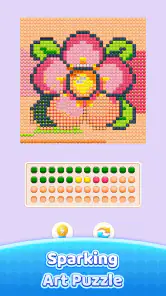
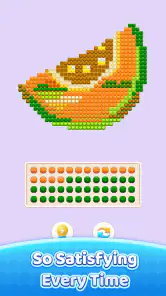
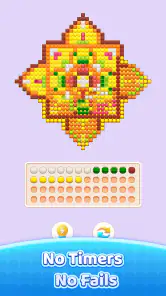
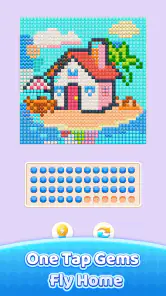
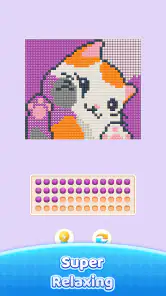
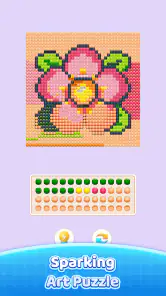
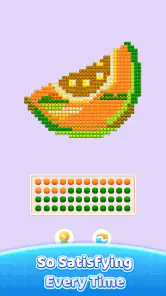
Analysis by Reviewed
I spent time with Colorever: Gem Art Puzzle as a quiet, low-pressure puzzle game, and its appeal became clear within the first few sessions: it gives me a small creative task, removes the usual fear of failure, and lets me stop whenever I want. This is not a game built around racing a clock or surviving increasingly stressful rounds. It is closer to a digital coloring routine shaped around gems, where the satisfaction comes from gradually turning an unfinished image into something complete.
That calm approach makes it easy to recommend to people who want a gentle game for a commute, a short break, or a few minutes before bed. At the same time, it will not satisfy everyone. Players who need sharp competition, strategic depth, or a constant stream of demanding puzzles may find the experience too soft. My overall impression is that Oakever Games has focused on accessibility and relaxation rather than complexity, and that choice defines nearly every strength and weakness of the game.
How the early goals shape the first sessions
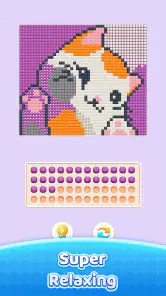
The opening appeal is simple: I see an image that is not finished, identify the matching areas, and fill them with the appropriate gems. The goal is immediately understandable, so there is very little learning overhead. I do not need to memorize a complicated rule set or study a tutorial before enjoying the first puzzle. That matters for a game aimed at Everyone, especially when the intended mood is relaxed rather than competitive.
The first few pictures work because they provide visible short-term goals. Instead of asking me to think several moves ahead, the game encourages me to focus on the next small section. Completing a color group or clearing a noticeable part of the image gives the session a natural rhythm. I can play for a few minutes and still feel that I have made meaningful progress, even if the whole artwork is not finished.
One useful habit is to treat each puzzle as a series of small stopping points. I often work through a recognizable object or a concentrated patch of color, then pause before the task begins to feel repetitive. This is more effective than trying to finish everything in one sitting. Because there are no timers and no fails, the game does not punish that stop-and-start routine.
The lack of failure is particularly important here. In many puzzle games, an early mistake creates pressure, and a player starts replaying a level simply to improve a score. Colorever: Gem Art Puzzle takes a different route. The goal is completion, not rescue. That makes it suitable for children, older players, and anyone who prefers a screen activity that does not turn a tired moment into another test of concentration.
There is also a practical benefit for casual players who are unsure whether they enjoy gem-art puzzles. The basic interaction is easy to understand without a long commitment. I can try a picture, decide whether the visual routine suits me, and leave without losing a life or damaging a streak. That low entry cost is one of the strongest reasons to try it.
What counts as progress when there is no score chase
Without a conventional win-or-lose structure, progress is mostly visual and personal. An incomplete image becomes more recognizable as I work, and that transformation acts as the main reward. The game’s progress signals are therefore quieter than those in match-three games or level-based brain teasers. I am not watching a competitive number rise; I am watching a picture become orderly.
That design can be surprisingly effective when I want a predictable activity. Filling a few areas gives me a sense of completion without demanding a large block of free time. The finished artwork is the clearest endpoint, while the growing amount of color provides smaller signals along the way. For me, this makes the game feel more like a collection of manageable creative chores than a traditional puzzle campaign.
The trade-off is that visual progress may not be enough for every player. If you need stars, rankings, timed targets, or a strong sense of unlocking one challenge after another, the motivation here can feel understated. The pleasure depends on appreciating the act of filling the image, not just reaching an external reward.
I also found that the best way to judge progress is by session length rather than by asking whether the game has challenged me. A short session can still be successful if I completed a section and felt calmer afterward. That is a different standard from the one I would use for a logic game, and it is worth recognizing before downloading.
The difficulty curve favors comfort over mastery
Colorever sits in the gentler end of the puzzle game category. Its central task is approachable because the player is matching visual areas rather than solving a chain of difficult deductions. The absence of timers and failed attempts keeps the difficulty curve from becoming threatening. Even when an image takes longer than expected, I never feel that the game is trying to catch me out.
That is a benefit for relaxed play, but it also limits the sense of mastery. A player looking for progressively tougher reasoning problems may finish a picture without feeling that their skills have improved. The challenge comes more from patience, attention, and completing detailed areas than from discovering a clever solution.
My advice is to choose this game for concentration at a comfortable level, not for mental competition. It can help occupy the hands and eyes while giving the mind a simple focus, but I would not use it as a replacement for a demanding number puzzle, word puzzle, or strategy title. Those alternatives are better when I want to test memory, planning, or deduction.
There is a useful distinction between “easy” and “effortless.” The rules are easy, yet detailed artwork can still require steady attention. Tiny sections may slow me down, especially when several nearby areas look similar. That friction is not the same as a hard puzzle, but it prevents the experience from becoming completely automatic.
When I play on a small phone screen, I prefer to work slowly rather than tapping rapidly. A rushed approach makes the image harder to read and reduces the relaxing quality. Taking a moment to inspect the current area is a better workflow than trying to clear the screen as quickly as possible.
Where the pacing works, and where it starts to flatten
The pacing is built around gradual completion. A picture begins as a collection of unfinished spaces, then becomes more coherent as I continue. This creates a gentle arc inside each session, even though the broader game does not push me through a dramatic story or an urgent campaign. I can enter, make visible progress, and leave with very little friction.
That pacing works especially well in everyday situations. Imagine waiting for an appointment with ten quiet minutes available. I can open the game, complete a small portion, and put the phone away without worrying about a timer expiring or a multiplayer match letting someone down. The same applies to a short evening break when I want something more engaging than scrolling but less demanding than a competitive game.
The downside is that the rhythm can become repetitive during longer sessions. The same basic action remains the center of play, and the lack of failure means there is little dramatic variation. I would not plan a long gaming night around it. Its natural use is in short or moderate bursts, where the steady pace feels soothing rather than monotonous.
This is also where the game differs from familiar alternatives. Match-three titles usually create excitement through combos, obstacles, limited moves, and escalating objectives. Traditional coloring apps may offer a broader sense of freehand creativity. Logic puzzles ask me to solve a problem before I can see the answer. Colorever occupies a middle space: it has the orderly task structure of a puzzle, but the emotional payoff is closer to completing a coloring page.
That comparison helps clarify who should choose it. If I want a clean, guided visual activity with a clear finish, this is a better fit than an open-ended coloring tool. If I want tactical decisions or a high score, a conventional puzzle game is likely the better choice. The game is not trying to win every category; it is deliberately narrow.
Retention without heavy pressure
The game’s ability to keep me coming back depends on the satisfaction of unfinished and finished artwork rather than on stress. A partially completed image gives me an obvious reason to return, while a completed one provides a small sense of accomplishment. That loop is gentle: I continue because I want to see the picture develop, not because I am afraid of losing progress.
This approach is healthier for some players than systems built around constant urgency. There is no need to protect a streak or react before a countdown ends. I can play when the mood suits me, which makes the app easy to fit into a daily routine without letting it dictate the routine.
Still, gentle retention is not the same as endless motivation. Once the novelty of the artwork style fades, some players may want more variety in the underlying activity. The game is strongest when the act of filling spaces is itself enjoyable. Anyone who needs frequent mechanical surprises should approach it with more modest expectations.
In-app purchases are listed at $5.99 per item, so I would pay attention before confirming any optional purchase. The game is free to start, which makes trying the core experience straightforward, but players who want to keep spending tightly controlled should review each purchase prompt carefully. For me, the right attitude is to treat paid items as optional conveniences rather than as part of the reason to download.
The current version is 1.17.0, and the game requires Android 7.1 or later. That makes device compatibility worth checking before installation, particularly if I am using an older phone or tablet. On supported hardware, the simple format should be easy to understand, but screen size still affects comfort when artwork contains very small spaces.
Who will enjoy it most
I would recommend Colorever to people who like visual organization, repetitive creative tasks, and games that let them relax without a penalty screen. It is also a sensible choice for families because the content rating is Everyone and the basic objective is so easy to explain. A parent looking for a calm activity can understand the appeal quickly, although I would still keep an eye on optional purchases when a child is using the device.
It may also work well for players who normally avoid games because they feel too competitive. There is no need to learn a complicated control scheme, develop a winning strategy, or compare performance with anyone else. The experience asks for attention but not ambition.
I would skip it if my main reason for playing is challenge. Players who enjoy difficult Sudoku, wordplay, tactical board games, or fast match-three levels will probably get more satisfaction elsewhere. I would also skip it if I want unrestricted artistic control, because a guided gem-art format is more structured than drawing or coloring freely.
The game has already attracted over 500 thousand installs and holds a 4.7 average from around 5.1 thousand ratings, which suggests that its calm formula has found a receptive audience. Those figures do not change my personal limitation: popularity cannot turn a deliberately simple activity into a complex one. They do, however, reinforce the impression that the straightforward format is not an accident; it is the central product choice.
My practical way to play
I get the most from the game when I decide in advance how long I want to play. For a short break, I focus on one visible cluster rather than opening a new picture and leaving several unfinished. For a longer session, I alternate between areas with larger spaces and areas with finer details. That keeps the visual work from feeling like one uninterrupted block of tiny taps.
Brightness and posture matter more than I expected. Because the task depends on distinguishing small spaces and colors, a dim screen or awkward angle can make the experience tiring. I prefer a comfortable brightness level and a stable grip, especially when using a smaller phone. These are simple adjustments, but they preserve the relaxed mood better than rushing through the artwork.
I also recommend judging the game after several short sessions rather than one long test. Its value appears in the repeatable routine: opening it when I want a quiet focus, making progress, and leaving without consequences. A single extended session may exaggerate the repetition, while several brief sessions show why the no-pressure format can be useful.
One less obvious trade-off is that the absence of failure changes how carefully I pay attention. In a conventional puzzle, mistakes can force me to slow down. Here, the relaxed rules mean I need to supply my own focus. If I become distracted, the activity can turn into mindless tapping. Setting a small goal, such as finishing one section cleanly, gives the session more shape.
Final verdict on the progression
As a progression experience, Colorever is modest but coherent. Its early goals are clear, its progress is visible in the artwork, and its difficulty stays friendly instead of escalating into pressure. The retention loop comes from returning to unfinished images and enjoying completed ones, not from aggressive competition or punishment. That makes the game consistent with its relaxing identity.
The same consistency creates its main weakness. There is limited room for players who want increasingly demanding puzzles, complex unlock decisions, or a strong sense of mechanical growth. The game sustains play through calm repetition, so whether that feels satisfying depends almost entirely on what I want from a mobile game.
With Oakever Games behind it, a free entry point, an Everyone rating, and a current version of 1.17.0, it is easy to approach on a compatible device. I would recommend giving it a try if gem art, guided coloring, and quiet visual progress sound appealing. Choose it for a peaceful completion loop, not for high-stakes puzzle mastery.
My final view is positive but specific: this is a good companion for small pockets of downtime, a gentle option for players who dislike failure, and a pleasant alternative to more frantic puzzle games. I would keep it installed for short relaxing sessions, while reaching for a logic or match-three game whenever I want sharper decisions and a more demanding challenge.
Pros
- Relaxing gem-by-number gameplay suitable for short sessions.
- Bright visual effects make completed artwork feel rewarding.
- Simple controls are easy for beginners of all ages.
- Large variety of pictures helps keep the experience fresh.
- Works well as a calming activity during commutes or breaks.
Cons
- Some artwork and features may require watching ads or spending gems.
- Repeated tapping can become monotonous after extended play.
- Small gem areas may be difficult to select on compact screens.
- Progression may feel limited for players seeking deeper puzzles.
- Frequent promotional prompts can interrupt the coloring experience.
- Category
- Puzzle
- Version
- 1.17.0