Climb & Jump: Obby 3D Tower
- 7.00
- 3.3
- Installs
- 5.00M
- Price
- Free

Screenshots




Analysis by Reviewed
I enjoy obstacle-climbing games most when a short attempt feels worthwhile, even if I do not reach the top. Climb & Jump: Obby 3D Tower is built around that simple appeal: move upward through a three-dimensional obstacle course, judge each jump, and try to make more progress next time. It is an adventure game from Metagame.Ltd, and its focus is easy to understand without a long tutorial or a complicated premise.
My first impression is that this is best approached as a quick, skill-focused diversion rather than a substantial adventure with a story to follow. The tower gives the game a clear goal, while the climbing and jumping provide the moment-to-moment challenge. If you want something you can pick up between other tasks, that straightforward loop is a strength. If you expect a carefully told story, deep exploration, or a broad range of activities, this is probably not the game to choose.
A straightforward tower challenge in its current form
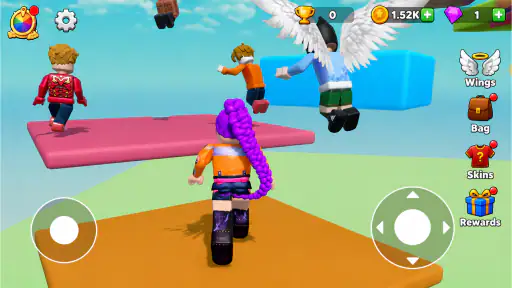
The appeal lies in the basic tension of an obstacle course: a jump that looks easy can still demand patience, and a small mistake can interrupt a good run. I like this kind of design when I want to concentrate on timing instead of keeping track of quests, equipment, or a large map. The tower supplies a visible direction, so the objective remains clear even when the immediate challenge is simply getting past the next obstacle.
That clarity also sets expectations. The store summary describes a climb toward an Obby 3D Tower, and the short description reduces the idea to climbing and jumping. Those are useful signals for anyone deciding whether to install it: the central attraction is traversal, not combat or narrative. I would come to it ready to practise movement and recover from errors, rather than looking for a sprawling adventure that changes dramatically from one session to another.
On a phone, this kind of game can fit a spare moment particularly well. I can imagine opening it while waiting for a ride or taking a short break, making a few attempts, and stopping when I am ready to return to whatever I was doing. The important trade-off is that an interruption can arrive in the middle of a run. If you dislike losing momentum when you have to put your phone away, a puzzle game with discrete stages may suit your routine better.
The game is free and rated Everyone, which makes it easy to consider for casual play and family devices. That rating is a useful age-appropriateness signal, though it does not tell me whether every player will enjoy the challenge. Someone who likes retries and careful movement may find the simple premise inviting; someone who gets irritated by missed jumps may find the same design tiring.
Why the controls and pacing matter more than the premise
In an obstacle tower, control feel is the real test. The idea of jumping upward is familiar, so the game needs to make each movement legible enough that a player can learn from a mistake. When I miss a landing, I want to understand whether I jumped too early, aimed poorly, or misjudged the distance. That kind of feedback is what turns repetition into practice rather than a string of frustrating guesses.
A practical tip for anyone trying it is to treat the first few attempts as a way to learn the rhythm, not as a race to the top. Look at the next landing before committing, and avoid making a jump simply because there is room to move. In vertical courses, rushing often turns a manageable obstacle into a fall. This cautious approach is especially helpful when playing with touch controls, where a thumb can cover part of the screen or make small corrections feel less precise.
I would also recommend holding the phone comfortably and keeping your hands clear of the edges before a demanding section. That sounds basic, but it matters in a game where a small movement can decide whether a jump lands. If you play in short bursts, pausing between attempts to reset your grip can be more useful than immediately repeating the same input. It gives you a moment to notice what went wrong and change one thing at a time.
Who is likely to enjoy the climb
This is a natural fit for players who enjoy compact platform challenges, especially those who like testing their timing and improving through repetition. It may also work for younger players who want an uncomplicated objective and a game that does not ask them to understand a complex world before they can begin. I would recommend trying it if the prospect of slowly getting better at a jump sounds satisfying in itself.
It is less suitable for players who want a steady stream of new mechanics, a rich story, or a forgiving experience with little risk of falling behind. A traditional platform adventure with distinct levels may be a better choice if you want frequent changes of scenery and a clear sense of chapter-by-chapter progress. Likewise, if you mainly want to relax without concentrating, a gentle exploration game is likely to be a more comfortable match than a tower built around precise movement.
Compared with the usual alternatives in the adventure category, this game’s strength is its narrow focus. Larger platformers often offer more variety and a stronger sense of place, but they can take longer to learn and may demand a longer session. A simple obby-style challenge is easier to understand at a glance, though that simplicity can leave less room for surprise. The choice comes down to whether you value an immediate, repeatable climbing objective or a broader adventure with more types of play.
What the version and player response tell me
The current version is 1.1.7, and the game was released on Jul 15, 2026. Those facts establish the version a new player is encountering and when the title entered the market, but they do not by themselves show what has changed between releases. I would not assume that a particular feature, control adjustment, or new obstacle arrived in this version without clear release notes confirming it.
For someone who already plays, a version number is still a practical checkpoint. It helps you identify whether your installation is current when comparing notes with another player or troubleshooting a difference in behaviour. But a higher number alone is not evidence of a major redesign. My advice is to judge the game you can actually play today on how reliably its movement responds and whether the tower challenge keeps you engaged, rather than expecting a certain kind of update.
The game has an average rating of 3.3 from around 1.7 thousand ratings. I read that as a mixed signal rather than a verdict: enough people have tried it to make the overall response worth noticing, but the score suggests it will not land equally well for everyone. The small number of written reviews—seven—offers less detailed public explanation than the rating count might imply, so I would not treat a handful of comments as a complete picture.
It has passed five million installs, which indicates that the basic premise has attracted a sizeable audience. That does not guarantee that the controls will feel right on your device or that the challenge suits your patience. The most useful way to decide is to think about your own habits: if you like repeating a short section until you can clear it, the game’s central loop may click; if you prefer a steady reward for every few minutes of play, the mixed rating is a good reason to keep expectations measured.
What existing players should watch for
For returning players, the most meaningful sign of improvement would be clear, practical changes that affect the climb: more dependable movement, better feedback after a fall, or a noticeable refinement to how obstacles are presented. Those are the kinds of updates that would make repeated attempts feel fairer. I am describing what would matter to me as a player, not claiming that any of those changes are already part of version 1.1.7.
For new players, the same principle applies in reverse. Give the game enough time to show whether its movement feels understandable, but do not force yourself through repeated attempts if the basic interaction feels awkward. A tower challenge depends heavily on trust: you need to believe that a missed landing was a mistake you can correct, not a result of controls you cannot read. That distinction is more important than a long feature list for this particular style of game.
It is also worth deciding in advance how you feel about interrupted progress. In everyday use, a notification, a conversation, or a change of plans can cut into a phone session. If losing the flow of a climb would bother you, play when you have a few uninterrupted minutes rather than opening the game in the middle of a rushed task. That small choice can make a retry-based game feel more enjoyable without requiring a different play style.
Where it may fall short, and what I would wait to see
The clearest limitation is also part of the game’s identity: climbing and jumping are the main attraction, so the experience may feel repetitive to anyone who wants several distinct activities. A focused design can be satisfying, but it has to keep the obstacles and movement engaging enough to support repeated attempts. If you find yourself making the same jump without learning anything, that is a sign this is not the right kind of challenge for you.
I would also be cautious about treating the title as a deep long-term adventure. Its central goal is easy to grasp, but that alone does not tell you how much variety or progression you will personally find over time. Players who need a narrative reason to continue may be better served by a story-driven platform game. Players who enjoy mastering a single style of movement may be more willing to stay with this focused format.
What I would watch as the game evolves is whether future versions make the core climb feel clearer and more rewarding, rather than simply adding complexity. For a game built around a tower, refinements that help players understand timing and recover from mistakes would be more valuable to me than extra features that distract from the central challenge. That is an expectation for what could improve the experience, not a claim about changes already made.
Overall, I would recommend Climb & Jump: Obby 3D Tower to someone who wants a simple mobile adventure centred on vertical movement and is comfortable learning through retries. Metagame.Ltd has made the game free to try, and its Everyone rating makes the premise approachable, while the average player response is a reminder to keep expectations realistic. I would skip it if I wanted a varied story campaign or a reliably calm game for distracted moments. If the idea of studying a jump, adjusting your timing, and making another attempt sounds fun, this tower challenge is worth a look.
Climb & Jump: Obby 3D Tower Frequently Asked Questions
What is Climb & Jump: Obby 3D Tower?
Climb & Jump: Obby 3D Tower is a 3D obstacle-course game built around reaching the top of a tall tower. You guide a character across platforms, make timed jumps, and avoid hazards along the way. Its appeal comes from simple, familiar controls paired with courses that reward patience and careful movement. The exact stages and features can vary by version, so check the store listing for the latest details.
How do you play Climb & Jump: Obby 3D Tower?
The core gameplay is about moving through an obstacle course and jumping from platform to platform without falling. Before a difficult leap, take a moment to judge the distance and line up your character; rushing can send you back to an earlier point. Controls and checkpoint behavior may differ between releases or devices, so it is worth trying the opening section to see how movement and jumping feel.
Is Climb & Jump: Obby 3D Tower suitable for children?
The game’s obstacle-course premise is generally easy to understand, which may make it approachable for younger players. However, suitability also depends on the child’s tolerance for repeated attempts, in-game advertising, and any social or purchase features included in the current version. Parents should review the age rating, permissions, and store-page disclosures before installing, and consider supervising play if the app offers ads, purchases, or links to external services.
Can you play Climb & Jump: Obby 3D Tower offline, and does it include ads or purchases?
Offline access, advertising, and in-app purchases can depend on the app version, platform, and region. Some mobile games can launch without an internet connection but still need connectivity for ads, rewards, or other online features. Check the current Google Play or App Store listing for its connectivity notes and purchase disclosures, then test the game in your intended setting. If playing offline matters, do not assume every feature will remain available.
What should I check before downloading Climb & Jump: Obby 3D Tower?
Check that the app is compatible with your device and operating-system version, and review its recent update date, age rating, permissions, and storage requirements on the official store. Looking at recent player reviews can also help you spot reports about performance, controls, or intrusive ads. Download from Google Play or the Apple App Store rather than an unfamiliar site, and confirm the developer name so you install the intended game.
Pros
- Simple controls make it easy to start playing.
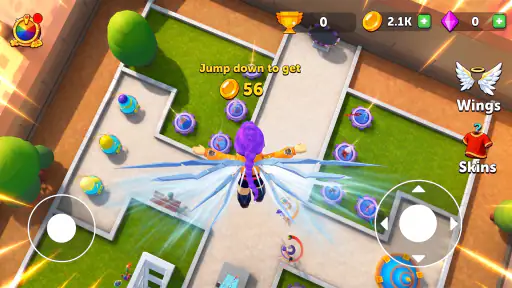
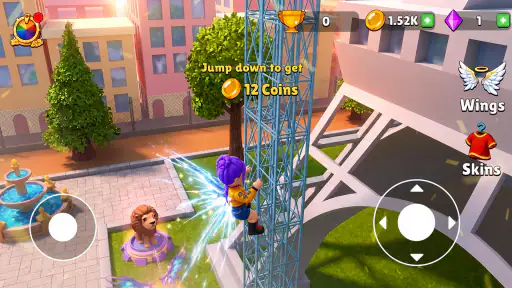
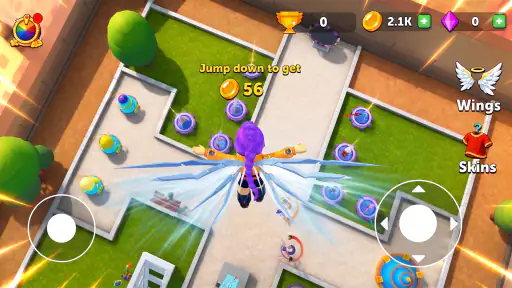
- 3D obstacle courses offer a clear sense of height and progress.
- Short stages suit quick play sessions.
- Jumping challenges reward timing and careful movement.
- Bright visuals make platforms and obstacles easy to spot.
Cons
- Precision jumps can feel frustrating on a touchscreen.
- Repeated falls may require replaying sections.
- Progress can depend on a stable internet connection.
- Some players may find the obstacle designs repetitive.
- Ads may interrupt the flow between attempts or levels.

- Category
- Adventure
- Version
- 1.1.7