Bubble Associations: Word Game
- 26.00
- 4.8
- Installs
- 10.00K
- Price
- Free
Screenshots
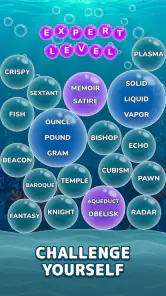
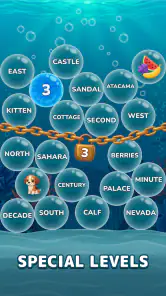
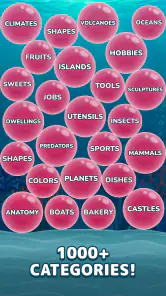
Analysis by Reviewed
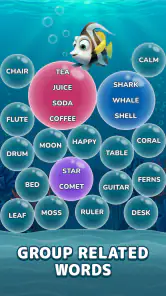
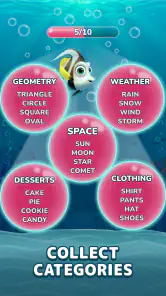
Bubble Associations: Word Game is the kind of word puzzle I can open without preparing for a long session. The idea is simple: connect and merge word bubbles until a category begins to reveal itself. That sounds easy at first, but the real challenge comes from deciding which words belong together, which bubble should be combined next, and when a tempting connection is actually leading me away from the answer.
I found the game most appealing when I wanted something quieter than a fast arcade title but more active than passive scrolling. It gives me a small mental task, asks me to notice relationships between words, and lets me stop when I have had enough. NewPubCo has placed it in the word-game category, and that description fits better than calling it a traditional crossword or a pure vocabulary quiz. The focus is on association and discovery rather than filling a fixed grid.
The game is free to start and suitable for Everyone, which makes it approachable for casual players and families. It has reached over 10 thousand installs and holds a 4.8 average from around 331 ratings, so there is already a small but positive audience around it. I would still treat those numbers as a sign of early interest rather than proof that it will suit every puzzle fan. The experience depends heavily on whether you enjoy flexible word relationships instead of precise clues with one obvious answer.
Getting unstuck before blaming the game
Why the first few puzzles can feel less clear than expected
The main point where I can imagine users getting stuck is not the tapping itself. It is the interpretation of the words on screen. In a conventional word game, a clue usually tells me what kind of answer to seek. Here, I have to work backward from the available bubbles and look for a shared idea. That may be a topic, a familiar phrase, a type of object, or another relationship that only becomes convincing after several words are considered together.
My first useful adjustment was to stop treating every bubble as an isolated clue. I looked for pairs that could naturally sit in the same mental group, then checked whether that connection helped explain the remaining choices. A word that seems to fit one category may be a deliberate distraction from a broader or more specific group. The game becomes easier to read when I ask, “What would these words have in common?” rather than “What does this word mean by itself?”
That distinction also explains why a move can feel wrong even when it is linguistically reasonable. Word association is more open-ended than spelling a word or answering a definition. If I expect every possible connection to be accepted, I am likely to find the game frustrating. Its appeal comes from narrowing possibilities and discovering the intended grouping, not from allowing every clever interpretation.
A practical way to examine the board
When I reach a puzzle that seems blocked, I scan the bubbles in three passes. First, I identify words that clearly share a concrete subject. Second, I look for less literal links, such as words that commonly appear together in speech. Finally, I consider whether one apparently obvious word might belong elsewhere. This prevents me from committing too early to the first category that comes to mind.
More From Our News Desk

Clash of Clans Is Won Between the Battles

Android Auto Makes the Case for Quieter Car Software

MobiOffice: Transforming Mobile Productivity with Seamless Integration

EA SPORTS FC™ Mobile Soccer: Redefining Mobile Sports Gaming

How Microsoft OneDrive Became a Mobile Productivity Giant

How Google Translate Breaks Language Barriers Effortlessly
I also try to preserve flexibility. If the game allows several possible combinations on the current screen, I do not immediately build my whole approach around one uncertain pair. I test the most convincing relationship first and use the result to reassess the rest of the board. That is a better workflow than repeatedly making random combinations, because each move should give me information about the category I am uncovering.
A useful everyday example is a short session during a commute or while waiting for an appointment. I may recognize two related words quickly, but the third or fourth word can change the intended direction. Rather than rushing because the puzzle looks small, I pause for a few seconds and read all the bubbles again. That small habit reduces careless choices and makes the game feel more like solving a pattern than guessing.
What to check before assuming a setup problem
Because this is a lightweight word game, I would begin with simple checks if something does not behave as expected. I would close and reopen the app, make sure the device has enough free space for normal operation, and confirm that the installed version is current. The listed version is 1.06.00, and the game supports devices running at least OS 7.1, so compatibility is worth checking before spending time troubleshooting a puzzle.
I would also distinguish between a puzzle decision and a technical response. If a bubble does not combine after a tap, I would first make sure I selected the intended items in the correct order and that the touch registered where I expected. A quick restart is sensible if the screen appears unresponsive, but repeatedly tapping the same area is unlikely to solve a misunderstanding about the word relationship.
The game is free, but it includes in-app purchases ranging from $1.99 to $99.99 per item. I would review the purchase controls on the device before handing it to a child, even though the content rating is Everyone. That is not a criticism of the puzzle design; it is simply a practical setup step whenever a free game offers optional paid items. A player who wants a completely purchase-free environment should configure that before starting rather than relying on willpower during a difficult level.
Recovering a session without losing the thread
If I leave a puzzle halfway through, I prefer to reconstruct my reasoning instead of starting with random taps. I look at the remaining bubbles and write down, mentally or on paper, the possible categories I had already considered. Then I separate strong matches from guesses. This is especially helpful when I return after a break and no longer remember why a particular pair seemed promising.
Another recovery technique is to reset my assumptions. If several attempts have failed, I stop looking for a category based on the first pair I noticed. I examine the full set again and ask which word is least comfortable in my current theory. Often that awkward word is the clue that the intended group is different. In this kind of game, the stubborn outlier can be more useful than the obvious match.
I would avoid using a hint, purchase, or other assistance immediately if one is available. The valuable part of Bubble Associations is the reasoning process, and giving up at the first pause removes much of that. I would first try a timed break, then return with a fresh view. If I am playing specifically to relax, however, there is no shame in moving on when a puzzle stops being enjoyable. A casual word game should not turn a five-minute break into an argument with the phone.
For players who like to improve, I recommend noticing the type of mistake rather than only the final answer. Did I group words by broad meaning when the intended link was a phrase? Did I focus on a familiar word and ignore the rest? Did I make a move before checking every bubble? Recognizing that pattern helps on later puzzles and gives the game more lasting value than simply clearing one board.
When the phone, connection, or touch layer is the real issue
Not every interruption comes from the game. If taps feel delayed across several apps, the device may be busy or the screen may need attention. If only this game appears affected, restarting it is a reasonable first step. I would also test the same screen with deliberate, single taps rather than rapid gestures. Word puzzles reward accuracy, and hurried input can look like a gameplay error.
A poor connection can also complicate any app that needs to load or save information, although I would not assume that every pause is network-related. I would check whether other apps are working normally, switch between available connections if appropriate, and try again later before repeatedly reinstalling anything. Reinstallation is a more disruptive step because it can affect local progress, so I would reserve it for persistent problems after simpler checks.
Device age matters as well. The minimum operating-system requirement is 7.1, but meeting a minimum does not guarantee that every older phone will feel equally comfortable. A small display, inaccurate touch input, or aggressive battery management can make bubble selection harder even when the game itself is functioning normally. If the app seems to respond inconsistently, I would compare its behavior with another touch-based app before concluding that a particular puzzle is broken.
I also keep the distinction between an unclear category and a malfunction in mind. A valid move that does not produce the result I expected may simply reveal that my interpretation was not the intended one. That is the central trade-off of association games: they can be satisfying because the answer is not spelled out, but that same openness can make an unsuccessful attempt feel like a technical fault.
How it compares with other word-game choices
Compared with a crossword, Bubble Associations asks less of me in terms of spelling and more in terms of grouping. There is no need to work through a long clue list or maintain a large grid in my head. That makes it friendlier for short sessions, but players who enjoy detailed clues, word length constraints, and a strong sense of completion may find it less demanding.
Compared with a daily guessing game built around one hidden word, this title appears to spread the challenge across several related terms. I enjoy that because one difficult word does not necessarily stop the entire session; the surrounding bubbles can provide context. On the other hand, anyone who prefers a strict deduction system with a single answer path may consider the category discovery less exact.
It also differs from a standard anagram game. Rearranging letters rewards vocabulary and pattern recognition at the character level, while this game asks me to connect meanings. Someone who wants to practice spelling should choose an anagram or spelling-focused alternative. Someone who likes making conceptual links, especially without a timer dominating the experience, is more likely to appreciate this format.
The strongest use case is a player who wants a compact brain exercise that can fit into spare moments. I can imagine using it after lunch, during a short wait, or before bed when I want engagement without the intensity of a competitive game. It is less suitable for a player looking for a story, multiplayer interaction, deep progression systems, or a large strategic layer beyond the word relationships on the screen.
Who should try it and who should skip it
I would recommend it to casual puzzle players who enjoy spotting links between ideas and are comfortable with a little ambiguity. It is also a reasonable choice for families because the age rating is Everyone and the basic premise is easy to explain. Younger players may need help with unfamiliar vocabulary or categories, while adults may enjoy the game as a quick way to shift attention away from routine tasks.
I would be more cautious recommending it to someone who becomes annoyed when a clue can have several plausible interpretations. The game’s central pleasure depends on finding the intended relationship, so a player who wants every answer to be mechanically provable may prefer crosswords, spelling games, or tightly defined trivia. I would also skip it if I specifically want a long-form game with levels that build a story or a competitive leaderboard experience.
The purchase model is another personal decision. Since the game is free to access, I can test the basic experience without committing money. Optional items may be useful to players who want convenience, but I would not buy anything simply because I was stuck on one association. First I would take a break, reconsider the category, and decide whether the puzzle is genuinely challenging or whether I am forcing an unhelpful interpretation.
My practical verdict after using the game
Bubble Associations: Word Game succeeds because it keeps the interaction easy while making the thinking less predictable. Merging word bubbles is straightforward; understanding why certain words belong together is where the game earns its place. I like that it can be played in short bursts and that the activity feels mentally active without demanding the commitment of a full crossword session.
Its main limitation is also its identity. Association puzzles can feel subjective, especially when I see a connection that seems perfectly sensible but does not lead toward the intended category. The best way to enjoy it is to treat each move as evidence, not as a declaration that my first idea must be correct. That mindset turns confusion into part of the puzzle instead of a reason to quit immediately.
NewPubCo’s game is free, rated Everyone, and currently listed at version 1.06.00, with support beginning at OS 7.1. Those details make it easy to consider for a broad range of casual players, while the optional in-app purchases mean I would still set sensible purchase controls in advance. Its 4.8 average and over 10 thousand installs suggest encouraging early reception, but my recommendation ultimately rests on the style of play rather than the figures.
My bottom line is simple: choose it for thoughtful, bite-sized word association, not for a traditional crossword, a spelling drill, or a competitive action game. If you enjoy testing several possible categories, learning from wrong turns, and solving a puzzle during a spare moment, it is worth trying at no upfront cost. If you need perfectly explicit clues or dislike ambiguity, another word-game format will probably feel more satisfying.
Bubble Associations: Word Game Frequently Asked Questions
What devices can run Bubble Associations: Word Game?
Bubble Associations: Word Game is available for Android devices that run Android 7.1 or later. Before downloading, check your device’s operating system in its settings to make sure it meets that requirement. The game is a word-puzzle title, so a compatible phone or tablet should let you focus on reading the bubbles and spotting the connections without needing specialized gaming hardware.
Who developed Bubble Associations: Word Game, and how is it received by players?
The game is developed by NewPubCo and has an average rating of 4.8 from 331 ratings, alongside 26 written reviews. It has also reached over 10,000 installs. These figures can offer a quick sense of its reception, but individual preferences vary: players who enjoy word puzzles and finding links between concepts are likely to get the most from its central idea.
What is Bubble Associations: Word Game?
Bubble Associations: Word Game is a relaxing word puzzle in which you connect related words and concepts to solve association-based challenges. Instead of simply finding letters in a grid, you need to recognize how words fit together logically. The game is designed for short sessions, making it suitable for casual play while still offering enough mental challenge to keep experienced puzzle fans interested.
How do you play Bubble Associations: Word Game?
Each puzzle presents bubbles containing words, and your task is to identify the correct relationships between them. You generally tap or connect words that belong to the same category, idea, or association. Some levels are immediately obvious, while others require you to think about synonyms, themes, objects, or common expressions. Careful reading is important because several words may appear related at first.
Is Bubble Associations: Word Game free to download?
The game is free to download, though it offers optional in-app purchases priced from $1.99 to $99.99 per item. Before installing, consider whether you are comfortable with optional spending and review your device’s purchase controls, especially if children may use it. The core appeal is its association-based word gameplay, so take a moment to check the purchase options and decide what suits your play habits.
Pros
- Simple rules make it easy to start playing immediately.
- Short levels are ideal for quick breaks or casual sessions.
- Word associations help exercise vocabulary and creative thinking.
- Clean visuals keep the focus on solving each puzzle.
- Offline play is useful when you have no internet connection.
Cons
- Some clues may feel subjective and have more than one answer.
- Difficulty can vary noticeably between consecutive puzzles.
- Hints may be limited or require watching advertisements.
- Frequent players may find the core gameplay repetitive over time.
- The game may offer less appeal to users seeking competitive features.
- Category
- Word
- Version
- 1.06.00