Block Crush: Block Puzzle Game
- 1.31K
- 4.9
- Installs
- 1.00M
- Price
- Free
Screenshots
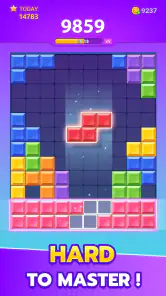
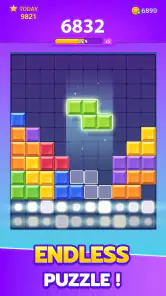
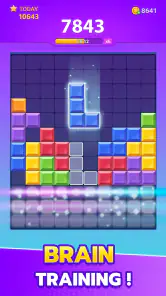
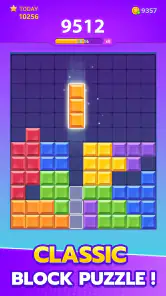

Analysis by Reviewed
When I have a few minutes to fill but don’t want to get pulled into a long game, I’m drawn to puzzles that let me think at my own pace. Block Crush: Block Puzzle Game is built around that kind of quick, self-contained session: fit shapes onto a grid, clear lines, and try to keep the board usable. I like the clear goal, though its appeal depends on enjoying repeated spatial decisions rather than looking for a story or a stream of new modes.
What a short session feels like
I find this puzzle most useful when I have a few spare minutes but don’t want to start a story or a level-based adventure that demands a long commitment. A quiet wait, a coffee break, or a pause between chores gives me enough time to place a few pieces and decide whether to continue. Since there’s no time limit, I can think through a move rather than race a clock. That makes it a better match for relaxed attention than for someone looking for quick reflexes or constant stimulation.
One practical habit helps me avoid wasting promising boards: before dropping a piece, I look at the gaps that would be awkward to fill later, especially narrow spaces around the edges. Clearing a line is satisfying, but keeping the grid flexible can matter more than grabbing an immediate clear. When several pieces are waiting, I consider how each placement changes the options for the others. It’s a small planning exercise, not a complicated strategy system, and it gives the familiar format more staying power.
Gameplay and Features
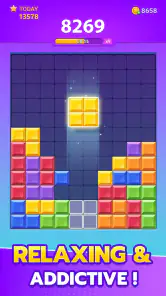
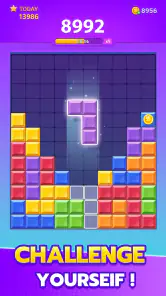
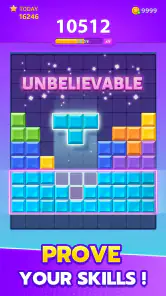
At its core, Block Crush: Block Puzzle Game is about fitting differently shaped blocks into a grid, a concept that’s refreshingly simple yet captivating. The game doesn’t overwhelm you with complicated rules; instead, it invites you to dive right in and start placing blocks. As you progress, the challenge intensifies, demanding more strategic thinking and careful planning. The more lines you clear, the higher your score, turning each session into a pursuit of personal bests.
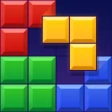
One aspect I particularly enjoyed is the game’s vibrant and colorful interface. The blocks pop with color, creating a visually pleasing experience that’s easy on the eyes. The controls are intuitive too – just drag and drop the blocks where you want them. It’s all about finding that perfect spot!
What Keeps You Hooked
Now, you might wonder what makes this game so addictive. Well, it’s the combination of its simplicity and the satisfaction of clearing lines. Each time you manage to fit a tricky piece or clear multiple lines at once, there’s a rush of accomplishment. Plus, the absence of a time limit means you can take your time and think through your moves, making it a perfect companion for unwinding after a hectic day.
Another cool feature is the game’s leaderboard. It stirs up a bit of friendly competition, encouraging you to outscore your friends and climb up the ranks. It’s always exciting to see your name rise higher and higher!
More From Our News Desk

Clash of Clans Is Won Between the Battles

Android Auto Makes the Case for Quieter Car Software

MobiOffice: Transforming Mobile Productivity with Seamless Integration

EA SPORTS FC™ Mobile Soccer: Redefining Mobile Sports Gaming

How Microsoft OneDrive Became a Mobile Productivity Giant

How Google Translate Breaks Language Barriers Effortlessly
Choosing it over other puzzle styles
Compared with match-three puzzles, where I’m usually reacting to cascades or objectives, this is a slower spatial task: I’m judging shape, space, and future room on the board. It also asks less of me than a sudoku or a logic puzzle that requires sustained concentration and a sequence of deductions. That middle ground is its appeal, though it may not satisfy players who want varied stages, a story, or a steadily unfolding set of mechanics. If you want a simple grid challenge, it makes sense; if you want puzzles that continually change their rules, I’d choose something else.
The score chase is most enjoyable when I treat each run as practice rather than proof that I must beat a personal best. I try to leave open a broad area for awkward shapes and avoid filling every tempting pocket just because it completes a line now. The trade-off is that a cautious board can still become crowded, so there’s no guaranteed way to rescue a poor layout. That uncertainty keeps decisions interesting, but it can also make a long run end abruptly when the available space no longer suits the pieces.
Thinking ahead without turning it into homework
A useful way to play is to scan the whole board before making a placement, not just the line that looks easiest to clear. I pay particular attention to whether a move leaves a continuous space for larger shapes, since a board full of small holes can look open while offering fewer practical choices. This is not a guarantee of a long run, but it makes each decision feel less like guesswork. When I’m tired, I loosen that habit and play for the satisfying clears instead of treating every turn as a puzzle to solve perfectly.
The game’s score focus also changes how I’d use its leaderboard. I see it as a reason to replay and compare a result, rather than as the main event; chasing a friend’s score can make a familiar round feel purposeful, but it can also encourage overly cautious play. If competition makes a relaxing break stressful, I’d ignore the ranking and use the game as a private score challenge. The same simple loop works either way, but the mood I bring to it matters.
Speed, reliability, and everyday use
For this kind of drag-and-drop puzzle, I expect the basic interaction to feel immediate, and the straightforward controls help keep attention on placement rather than learning a complicated interface. I would use it during a commute only when I can keep the phone steady enough to drag pieces accurately; if I’m walking or juggling bags, the same simple action can become fiddly. The lack of a timer is welcome in those moments because I can pause to regain focus instead of making a rushed move.
Heavy use mostly means playing several rounds back to back and chasing a better score. That can be relaxing, but the same board-and-piece routine may start to feel repetitive if I’m looking for a lot of variety. I’d switch to a different puzzle when I want new objectives or more distinct challenges. For a quick reset after work, though, the modest mental task is easier to dip into than a game that expects me to remember a plot or manage several systems at once.
I can’t infer a particular battery, memory, or recovery profile from the game’s simple format alone, so I’d judge those on the device in hand rather than promise that it is especially light or flawless. It is a puzzle game from EasyFun Puzzle Game Studio, free to play, rated for Everyone, and its current version is 1.2.5. It has an average rating of 4.9 from around 55,000 ratings, with over one million installs. Those figures suggest that plenty of players have tried it, but they don’t tell me whether every device will behave identically.
Practical expectations on different phones
The game is listed for Android devices running version 5.0 or later, which gives older Android users a clear compatibility point to check before installing. Meeting that minimum does not tell me how smoothly it will behave on every handset, especially one with limited free space or several apps active at once. I’d close anything I don’t need if the phone already feels sluggish, then judge the puzzle on the device rather than assume that a simple-looking game will perform the same everywhere.
If the app closes unexpectedly or I need to switch away mid-session, I would avoid assuming that an unfinished round will always be restored exactly as I left it. For that reason, I treat a run as disposable when I’m about to answer a call, change apps, or reach my stop. That small expectation makes the game easier to fit into an interrupted day: I can enjoy a round without relying on it as a session that must be preserved.
Who gets the most from it
I’d recommend it to someone who enjoys fitting shapes, prefers an unhurried pace, and wants a small score-based challenge without committing to a campaign. It can also suit a shared living room or a short break because the rules are easy to explain: place pieces, clear lines, and try to keep room for what comes next. The game is free, which makes trying that style of puzzle a low-friction choice. The age rating is Everyone, while the actual appeal depends more on enjoying spatial decisions than on age.
A realistic use for me is a short wait before an appointment: I can start a round, focus on arranging a few shapes, and stop when it is time to go without having to remember where I was in a plot. It also works when I want a gentle mental warm-up, because I can start with obvious placements and become more deliberate as the board fills. For a child or an adult sharing a phone, the basic objective is straightforward to explain, but the fun still depends on liking this particular kind of grid puzzle.
When another puzzle is a better choice
I’d skip it if my main priority were a deep progression system, a wide range of puzzle modes, or a game that constantly introduces new goals. The score-and-grid loop is the point, not a doorway into a larger adventure. For players who like that clean focus, its simplicity is a strength; for those who tire quickly of repeating a core routine, it is a reason to look elsewhere.
It is also not my first choice when I want a puzzle with a definite solution, a sequence of authored stages, or a sense of completion beyond improving a run. A traditional logic puzzle gives me more structured deduction, while a match-three game is a better fit when I want objectives and more visual action. Block placement sits between those styles: it is more spatial than a casual matching round but less involved than a carefully worked logic problem. That difference is useful to know before downloading, because a high score loop is not the same as a collection of varied puzzles.
Final Thoughts
In a world where games often try to do too much, Block Crush: Block Puzzle Game offers a refreshing retreat. It’s simple enough for anyone to pick up yet challenging enough to keep you coming back for more. Whether you’re a casual gamer or someone who enjoys a bit of a puzzle challenge, this game is a great addition to your mobile gaming collection.
If you’re looking for a game that’s both engaging and relaxing, try Block Crush: Block Puzzle Game from your app store. Trust me, those blocks will have you hooked in no time!
Block Crush: Block Puzzle Game Frequently Asked Questions
What kind of puzzle is Block Crush, and is it easy to learn?
Block Crush: Block Puzzle Game is a classic block-placement puzzle. You place shapes on a grid and aim to complete full lines, which clears space and helps keep the board from filling up. The basic idea is simple to understand, so new players can get started without a complicated introduction, while choosing where each block fits provides the ongoing challenge.
Can I play Block Crush at my own pace, or does it require quick reactions?
The central activity is arranging blocks on a grid and planning how to complete lines, rather than learning a complicated set of controls. That makes the game approachable for players who prefer to think through placements at their own pace. The puzzle still asks you to manage the available space carefully, so each decision can affect how much room remains for later blocks.
Is Block Crush: Block Puzzle Game suitable for casual players who want short puzzle sessions?
Block Crush is a puzzle game built around placing blocks and clearing complete lines, so it is easy to pick up without needing a long introduction. Its straightforward goal makes it suitable for casual play, whether you want to focus on a few moves or spend longer planning placements. The challenge comes from managing the available grid space as you play.
Who developed Block Crush, and how popular is it with players?
Block Crush: Block Puzzle Game is developed by EasyFun Puzzle Game Studio. It has an average rating of 4.9 from around 55,000 ratings, with about 1,300 written reviews and over 1 million installs. Those figures suggest that many players have tried the game, though individual enjoyment will depend on whether you like classic block-placement puzzles and their gradually demanding decisions.
What is Block Crush: Block Puzzle Game and how does it work?
Block Crush: Block Puzzle Game is a highly engaging puzzle game where players must strategically place blocks on a grid to clear full lines both vertically and horizontally. The aim is to prevent the blocks from stacking up to the top of the grid, as this will end the game. The game enhances problem-solving skills and provides endless entertainment with its simple yet challenging gameplay.
Pros
- Addictive gameplay with increasing difficulty.
- Colorful graphics enhance user experience.
- Simple controls make it easy to play.
- Offline mode available
- no internet needed.
- Suitable for all ages.
Cons
- Contains in-app purchases and ads.
- May consume significant battery power.
- Lacks multiplayer mode.
- Limited game modes available.
- No option for custom themes.
- Category
- Puzzle
- Version
- 1.2.5