Bid Whist Plus
- 4.95K
- 4.3
- Installs
- 500.00K
- Price
- Free

Screenshots


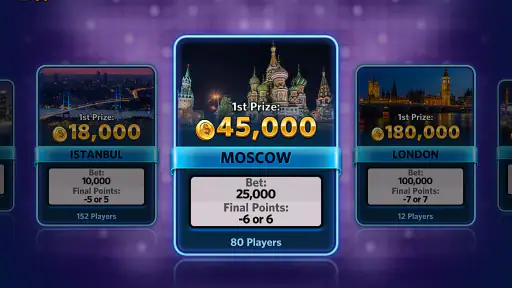

Analysis by Reviewed
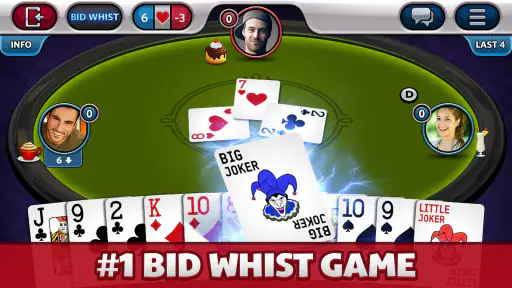
I approached Bid Whist Plus as a card player looking for a focused way to play bid whist online rather than as a broad collection of casual games. That distinction matters. This is a free card game from Zynga built around the appeal of joining an online bid whist community, and its best quality is that it keeps attention on the decisions that make the game interesting: reading the table, judging the strength of a hand, and deciding how much confidence to show during bidding.
My overall impression is positive, with an important qualification. The game is most rewarding when you already understand bid whist or genuinely want to learn its rhythm. It is less convincing if you want a fast, highly varied card-game app with many unrelated modes. The experience feels specialized, and that specialization is both its main strength and its clearest limitation.
Why the focused bid whist format works
The first thing I noticed is how different this feels from playing a generic solitaire or rummy app. Those games often let me play entirely at my own pace, while bid whist depends on interpreting other players and responding to changing information. A good hand is not automatically a good bid, and a weak-looking hand can become useful if the table develops in the right direction. That gives each round a layer of judgment that simple card matching does not provide.
The online format also changes how I think about every move. I am not only asking which card is strongest in isolation. I am considering what my partner may be holding, what an opponent’s bid suggests, and whether taking control early could create pressure later. Even when a round does not go my way, I usually have something concrete to review afterward: I bid too aggressively, failed to protect a suit, or misread the likely plan of the other side.
That makes the game a good fit for short sessions that still feel mentally active. I can play when I have enough time for a round or two, but I do not need to commit to a long campaign or manage a large collection of characters and upgrades. The appeal comes from the cards on the table, not from a separate progression system competing for attention.
The community angle is important as well. Bid whist is more enjoyable when I can face people who understand why a cautious bid may be better than a flashy one. The presence of a substantial player base helps the app feel like a place for the game itself, rather than a lonely digital deck. The listing shows over 500 thousand installs, a 4.3 average rating from around 16 thousand ratings, and close to 5 thousand written reviews, which gives me reasonable confidence that newcomers are not entering an empty room.
I would not treat those figures as a guarantee that every match will suit my preferred pace or skill level. Online communities naturally vary, and a player may encounter experienced opponents before feeling comfortable. Still, the scale suggests that the central idea has found an audience. For a niche card game, that matters more than a long feature list.
Learning to bid without wasting good hands
New players often focus on the trick-taking portion and overlook the bidding decision that shapes the whole round. My advice is to treat the first sessions as observation practice. Do not judge a bid only by whether it succeeds. Ask what information it communicated, how it affected the opponent’s choices, and whether the contract left enough room for your partner to contribute.
A useful habit is to separate confidence from excitement. A hand may contain attractive cards but still lack the structure needed to support an ambitious plan. Conversely, a hand with fewer obvious highlights may become valuable if it supports the right suit or complements a partner’s likely strength. This is where the app can teach something that automated opponents in offline card games often fail to teach: decisions have social and strategic consequences.
I also found it helpful to review the moment immediately before a failed round rather than blaming the final trick. The last card may only reveal a problem that began with the opening bid. If I repeatedly lose after taking on too much responsibility, the correction is not necessarily to play more boldly. It may be to bid more selectively and allow the table to reveal more information.
That approach makes the game accessible without pretending it is effortless. Someone unfamiliar with bid whist can learn, but the learning curve is part of the product. Players who want instant success may find the early experience frustrating, particularly when the outcome depends on decisions they do not yet know how to evaluate.
Where it fits among other card games
Compared with solitaire, Bid Whist Plus offers far more interaction but less control. Solitaire is ideal when I want a quiet puzzle with no waiting for another person and no concern about table etiquette. Here, the reward comes from competition and partnership, so the experience is more unpredictable. If I only have a few seconds to fill, solitaire remains the better choice.
Compared with rummy-style games, the emphasis is also different. Rummy usually encourages me to build combinations in my own hand, while bid whist asks me to interpret a shared contest and manage risk through bidding. Players who enjoy planning around opponents may prefer this structure. Players who dislike uncertainty or partner-dependent outcomes may find a more self-contained card game easier to enjoy.
Traditional play with physical cards still has advantages. Sitting with friends makes conversation natural, and nobody has to worry about a digital match feeling impersonal. The app’s advantage is convenience: it makes it easier to find a game when the people around me are unavailable. I see it as a practical substitute for the missing table, not a complete replacement for the social atmosphere of playing face to face.
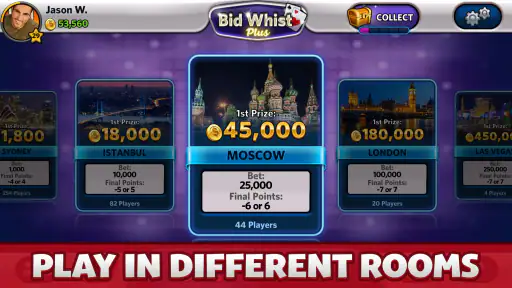
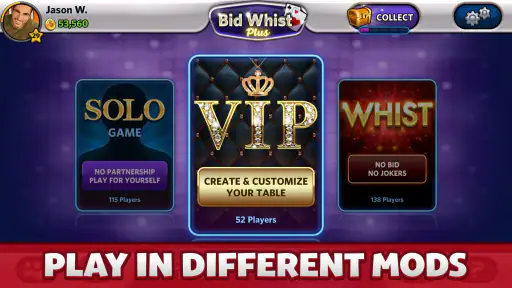
It is also worth separating this game from card apps that rely heavily on collecting, decorating, or unlocking content. Bid Whist Plus presents itself as a place to play bid whist, and that narrow purpose is refreshing. At the same time, anyone expecting a large menu of card variants may consider the focus restrictive. I would choose this app for the particular game, not for variety.
The friction I noticed during regular play
The biggest weakness is the possibility of uneven enjoyment between rounds. In a strategy card game, a poor hand or a partner mismatch can make a session feel less satisfying even when I played sensibly. That is not necessarily a design failure, but it does mean the app asks for more patience than a purely solo game. I have to accept that good decisions do not always produce immediate wins.
The online nature can also be a disadvantage for people who want complete control over timing. A player who prefers to pause freely, restart without consequence, or think through every possibility may be more comfortable with an offline alternative. Bid whist gains its energy from live interaction, but that same interaction makes the experience less flexible.
There is another practical consideration: the game is free to download, yet it includes optional purchases priced from 99 cents to $199.99 per item. I would approach those purchases carefully. They may be relevant to players who want to spend inside the app, but they are not a reason for me to recommend spending. I would first decide whether the core card experience holds my attention, then set a personal limit rather than making impulse purchases during a losing streak.
That payment range also reinforces a useful rule for parents and shared devices: the Teen content rating should be taken seriously when deciding who uses the app and whether purchase controls are appropriate. The rating does not tell me that every session is unsuitable for younger players, but it does make this less of an automatic choice for children than a simple offline card puzzle.
Device compatibility is relatively broad for an older mobile title. The current version is 4.26.864 and requires at least iOS or Android 7.1, depending on the platform. I would still keep the app updated where possible, especially for an online game, because current software is generally the sensible starting point when matchmaking and account-related functions matter.
Who will get the most from it
I recommend this game most strongly to people who already know bid whist, remember playing it with family, or enjoy learning traditional card games through repeated practice. It is particularly suitable for a player who wants competition with more depth than a quick matching game but does not want a sprawling strategy title. The rules may be familiar, yet the decisions remain interesting because the value of a hand depends on context.
It can also work for a patient beginner. I would not advise jumping in with the expectation of understanding every bid immediately. Instead, play conservatively, observe how successful rounds unfold, and use losses as information. The best beginner mindset is not “How do I win this hand?” but “What did the winning side recognize before I did?” That question turns confusion into a learning routine.
A realistic everyday use case would be a quiet evening after work. I might have enough time for a few focused rounds but not enough energy for a complex role-playing game. Bid Whist Plus gives me a compact mental challenge: I can settle into the bidding, follow the tricks, and stop when I am done without carrying a long narrative or inventory through the session. It is also a reasonable option when friends who play cards are not nearby, although it cannot reproduce every part of an in-person gathering.
I would be more cautious about recommending it to someone who dislikes competitive uncertainty. If losing because of a partner’s decision feels unbearable, the online partnership structure may create more irritation than enjoyment. The same applies to players who want immediate variety, elaborate solo content, or a game that never asks them to study unfamiliar conventions. A simpler card app would be a better starting point for those needs.
The developer, Zynga, gives the title the benefit of familiarity, but the name alone should not decide whether it belongs on a phone. The important question is whether bid whist itself appeals to you. This is not a case where a famous developer transforms an ordinary card game into something everyone will enjoy. The underlying format remains the deciding factor.
Small habits that improve the experience
My first practical tip is to slow down before committing to a bid. The temptation is to treat a promising hand as permission to claim control, but a bid also creates expectations for the rest of the round. I get better results when I consider the hand’s weaknesses as carefully as its strengths. That single change reduces the number of rounds where I create a difficult contract for myself.
Second, I try to remember patterns in opponents’ choices without turning the session into a stressful memory test. A cautious player may reveal useful information by passing or by waiting for a particular opportunity. An aggressive player may be trying to control the pace. Neither style is automatically correct, so I use those observations as clues rather than fixed labels.
Third, I treat partner coordination as a separate skill from individual card strength. The strongest move for me may be the one that leaves room for my partner’s plan instead of forcing every decision through my own hand. This is one of the less obvious reasons the game can remain interesting after the rules become familiar: improvement involves communication through play, not just better card selection.
Finally, I recommend setting a stopping point after an especially frustrating run. Because the game is competitive and purchases are available, continuing purely to recover a loss can make the experience worse. Taking a break protects the strategic side of the game and keeps spending decisions separate from emotion. For me, that is a better way to enjoy a free card app than chasing a result that may depend partly on the next deal.
My verdict after weighing the trade-offs
Bid Whist Plus succeeds because it understands that bid whist does not need decorative distractions to be engaging. The combination of bidding, trick-taking, partnership judgment, and online competition gives it a distinct identity among mobile card games. I appreciate that the game can turn a short break into a real thinking exercise rather than another reflex-based distraction.
Its limitations are equally clear. The focused format will feel narrow to players seeking many card modes, and online play is less forgiving than a solo puzzle. The Teen rating and optional purchases also mean I would not install it casually on a child’s device without considering supervision and spending controls. Those are not reasons to reject it, but they are part of making an informed choice.
Released on January 9, 2017, the game has had time to establish its place, and its current version shows that it remains an active option for this style of play. I would recommend it to a friend who enjoys traditional card strategy, wants access to an online community, and is willing to learn from imperfect rounds. I would point that friend toward solitaire or another offline card game if they want complete control and instant relaxation.
My final view is straightforward: choose it for bid whist, not merely because it is a free card game. When that specific interest is there, the app offers meaningful decisions and a convenient way to find competition. When it is not, its narrow focus becomes hard to overlook. For the right player, that focus is exactly what makes the experience worth keeping.
Pros
- Smooth gameplay with clear card layouts and responsive controls.
- Online multiplayer lets you challenge friends or other players.
- Helpful tutorials make the rules easier for new players to understand.
- Different bidding and scoring options add variety to each match.
- Regular events and challenges can keep experienced players engaged.
Cons
- Some features may require an internet connection to work properly.
- Random matchmaking can result in unevenly matched opponents.
- Ads may interrupt play unless you choose an ad-free option.
- The bidding system may feel confusing until you learn its terminology.
- In-app purchases can provide advantages or speed up progression.

- Category
- Card
- Version
- 4.26.864