Bible Trivia and Word Games
- 362.00
- 4.9
- Installs
- 100.00K
- Price
- Free

Screenshots






Analysis by Reviewed
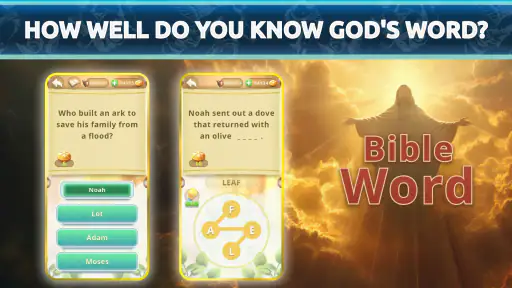
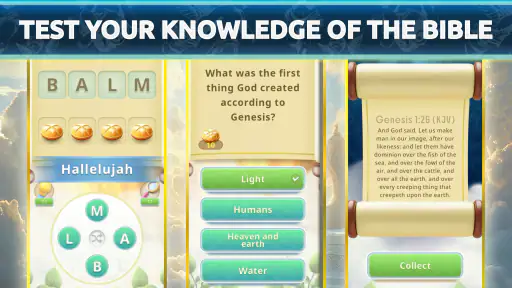
I found Bible Trivia most interesting as a small shared-device game rather than as a replacement for a full Bible study tool. Appgeneration presents it as a word and quiz game built around learning more about the Bible, and that combination gives it a natural place in a household where people want a short activity they can pick up together. I can imagine leaving a tablet on the kitchen table, letting one person answer a question, and passing it to someone else without turning the moment into a formal lesson.
That casual setting is important. The game is free to start, rated for Everyone, and available for devices running Android or iOS version ten or later. Its store summary is brief, but the practical appeal is clear: it brings Bible-related questions into a familiar game format instead of asking the player to open a long reading plan. I would recommend it most readily to families, church groups, and individual players who enjoy word challenges and want a gentle way to revisit religious knowledge.
Bible Trivia works best when the goal is shared curiosity, not a complete study curriculum. That distinction shapes nearly every part of my recommendation. It can encourage conversation and recall, but anyone looking for detailed commentary, structured reading, or a substitute for a trusted teacher will need something else alongside it.
How it feels when several people share one device
A shared-device scenario suits this type of game unusually well. One person can read a prompt aloud, another can suggest an answer, and a third can explain why a choice seems right. Even when the player is alone, the short quiz format makes it easy to pause when dinner is ready or hand the device to somebody nearby. I prefer this kind of use to treating every question as a private score chase, because the Bible subject naturally invites discussion.
There is also a useful difference between playing with children and playing with adults. Younger players may enjoy the word-game side first and only gradually become interested in the biblical context. Adults may approach it as a memory test or as a way to refresh knowledge they learned years ago. A mixed group should avoid assuming that the fastest answer is automatically the most thoughtful one; the better household experience comes from explaining an answer after the round.
For a realistic evening routine, I would use it after a family reading session rather than before one. A short round can act as a recall exercise: everyone remembers a name, event, or idea, then checks whether the group understood it in the same way. That workflow gives the game a clear role without asking it to carry the whole educational experience.
The word-game format may also help people who find conventional study intimidating. A player does not have to announce that they are beginning a serious religious program. They can simply try a few questions. That low-pressure entry point is one of the strongest reasons I would put it on a shared tablet, especially for relatives with different levels of familiarity.
What to decide before handing over the device
Shared use becomes smoother when the household agrees on what counts as a turn. If everyone is using one device, decide whether players answer individually, discuss each question together, or alternate between those approaches. This is not a built-in family system; it is a simple household routine that prevents one confident player from taking over.
I would also separate learning from competition. A child who misses an answer should not feel that the game has judged their faith or intelligence. The quiz is a game, and its result should remain a prompt for conversation. In my view, that is especially important when adults and children play together, because an adult’s prior knowledge can make the score comparison uneven.
Another practical boundary concerns purchases. The game is free, but it includes optional in-app purchases priced from $0.99 to $22.99 per item. On a shared device, the person who installs the game should check the device’s purchase settings before allowing children or guests to play. I would not hand over a payment-enabled tablet casually, even with an Everyone rating. The age label describes the content context; it does not remove the need for ordinary household supervision around spending.
For a device used by several people, I would keep the game’s role clear: it is a Bible-themed word and quiz game, not a private account space for recording each family member’s religious progress. If different people care about separate results, they should agree on a simple external method, such as taking turns and noting scores themselves. I would avoid promising children that the game will maintain individual profiles or household controls unless those options are visibly available on their device.
Account boundaries matter more than the score
Before installing, I would ask who owns the device and who will be responsible for the app-store account. That sounds obvious, but shared tablets often move between parents, children, grandparents, and visitors. The person managing the account should be the one who understands that free installation and optional purchases are separate issues.
The same principle applies to expectations about progress. If a family member plays on a parent’s phone, the resulting activity belongs to that device’s use rather than automatically representing a child’s personal achievement. I would not build a household reward system around a score unless everyone understands how the game handles turns and saved progress in practice.
This approach also makes the game easier to lend. A grandparent can try a round without needing to create a new household ritual, while a child can participate without being asked to manage account details. The boundaries stay simple: one device, agreed turns, no unsupervised purchasing, and no assumption that a quiz score is a complete measure of knowledge.
For individual use, the decision is simpler. A player who wants a quiet five-minute activity can open it whenever convenient. A player who expects a long-term personal study record should first decide whether a quiz game is really the right tool. I see this title as strongest for immediate engagement and conversation, not for organizing a detailed learning history.
Coordinating different ages and levels of knowledge
The Everyone rating makes the game approachable for a broad household audience, but “appropriate for everyone” should not be confused with “equally easy for everyone.” Children may recognize familiar stories while struggling with names or wording. Adults may remember facts but answer too quickly. A useful family rule is to let the player explain their reasoning before another person supplies the answer.
I would also encourage adults to translate unfamiliar terms instead of correcting abruptly. A quiz can expose gaps in vocabulary as much as gaps in Bible knowledge. When a younger player asks why an answer is correct, that question is more valuable than rushing to the next round. The game provides the spark; the household supplies the explanation.
For a church youth group or classroom-style gathering, I would use it in small teams rather than as a direct ranking of individuals. Teams make it easier for quieter players to contribute and reduce the pressure on someone who has not encountered the same material. That is a recommendation about how to use the game, not a claim that it includes dedicated group-management tools.
Adults with different traditions should be equally thoughtful. A quiz question may lead to a discussion about interpretation, translation, or what someone was taught at home. I would treat those moments respectfully and avoid presenting a game response as the final word on a complex subject. If a question opens a genuine disagreement, pause the game and consult a trusted Bible or teacher rather than turning the disagreement into a competition.
This is where Bible Trivia differs from ordinary word games. In a standard vocabulary app, an incorrect answer is usually just an error to correct. Here, an answer can touch personal belief and family background. The best experience comes from keeping the tone curious and welcoming, especially when a household includes people who are exploring Christianity, returning to it, or simply interested in biblical history.
Where it fits beside familiar alternatives
Compared with a traditional Bible reading app, this game offers a quicker entry point and more immediate participation. Reading tools are better when I want a passage, commentary, bookmarks, or a planned sequence. Bible Trivia is better when I want to test recall, break the ice, or give a child a playful reason to revisit something recently discussed.
Compared with a general trivia game, it has a narrower subject and therefore a more focused purpose. A broad trivia app may offer more variety and a wider challenge range, while this one is more relevant to a household already interested in biblical material. The trade-off is obvious: players who want science, history, sport, and entertainment in the same session will probably prefer a general alternative.
Compared with a crossword or spelling game, the appeal here is not only finding words. The subject gives each question a possible conversation behind it. That can make the game more meaningful, but it can also make a wrong answer feel more personal. I would choose a conventional word game for purely language-focused practice and choose this one when the biblical theme is part of the reason for playing.
A printed quiz book still has one advantage: it can be passed around without a battery, app-store account, or screen. For a group that wants a completely offline gathering, paper may be the better choice. The digital version is more convenient for spontaneous play, but convenience does not automatically make it the best fit for every household.
What I would watch during everyday use
The current version is 1.8.0, and the game has reached over one hundred thousand installs. Its average rating is 4.9 from around six thousand six hundred ratings, with roughly three hundred sixty written reviews. Those figures suggest that the concept is connecting with many players, and I can understand why: the subject is specific, the format is approachable, and the free starting point lowers the barrier to trying it.
Still, a high average rating should not replace personal testing. A player who dislikes religious trivia will not be converted by the score, and someone seeking deep study may find the experience too light. I would pay attention to how the questions feel for the intended age group and whether the household enjoys discussing them. The game’s value depends heavily on that fit.
The optional purchases are another point to consider over time. A free game can be ideal for trying the basic experience, but a family should decide in advance whether paid items are part of the plan. I would start without spending, see whether the household actually returns to it, and only then consider a purchase. That keeps the decision based on real use rather than on the excitement of a first session.
Because the game is designed around questions and words, repetition may matter more to some players than to others. A child who likes mastering familiar material may enjoy revisiting it, while an adult looking for constant novelty may prefer a larger trivia library or a broader app. I would use it in short sessions and stop while the conversation is still enjoyable instead of forcing a long play period.
One subtle strength is that it can serve as a bridge between generations. Grandparents may bring biblical memories, parents may guide the discussion, and children may contribute the willingness to experiment. The device becomes a meeting point rather than a solitary screen. That benefit will not appear in a score, but it is one of the more convincing reasons to install this particular game in a shared home.
Who should install it, and who should skip it
I would recommend Bible Trivia to a family that wants an accessible Bible-themed activity, to an adult who enjoys quizzes and wants a focused subject, or to a group looking for a simple conversation starter. It is also a sensible option for someone who feels more comfortable beginning with questions than with a formal reading plan.
I would be more cautious for anyone expecting scholarly explanations, a complete lesson structure, or a personalized study program. A quiz can reinforce memory, but it does not automatically provide context, nuance, or spiritual guidance. Those needs are better served by a reading app, a study Bible, a course, or discussion with a knowledgeable person.
I would also skip it as a household installation if nobody actually wants the religious theme. The game’s focus is its identity, not a minor decoration. Likewise, homes that cannot manage shared-device purchasing responsibly should sort out those boundaries first, even though the content rating is Everyone.
For a child using it alone, I would introduce it as a game and remain available for questions. That keeps the experience positive and avoids placing too much authority on an answer screen. For an adult using it privately, the same principle applies in a different way: enjoy the challenge, but use a reliable source when a question deserves more than a quick response.
My household verdict
After looking at Bible Trivia as both a game and a shared household activity, I see a clear but limited role for it. Appgeneration has made a free word-and-quiz experience that can turn biblical recall into a short, approachable session. The Everyone rating and low entry cost make it easy to try, while the strong average rating and growing install base show that the format has found an audience.
My recommendation is to install it when the household agrees on how to share the device, who handles purchases, and how seriously to treat the score. Those small decisions make a noticeable difference. Used as a prompt for conversation, it can be warm, accessible, and surprisingly useful. Used as a substitute for study or as a test of personal faith, it becomes the wrong tool.
My final view: choose Bible Trivia for shared curiosity and quick Bible-themed play, not for comprehensive instruction. I would keep sessions short, let different ages contribute, and follow interesting questions with a trusted source or a real conversation. That is where this game offers its best value: not in pretending to replace everything else, but in giving a household an easy reason to learn, remember, and talk together.
Pros
- Fun way to test Bible knowledge through quick trivia rounds.
- Word puzzles add variety beyond standard multiple-choice questions.
- Suitable for casual play during short breaks or quiet moments.
- Helpful for families
- church groups
- or Bible study activities.
- Simple gameplay makes it accessible to players of different ages.
Cons
- Some questions may feel too easy for experienced Bible readers.
- Repeated topics can make longer sessions feel less varied.
- Certain answers may depend on a specific Bible translation.
- Ads may interrupt gameplay
- depending on the version installed.
- Limited depth for users seeking detailed biblical explanations.

- Category
- Word
- Version
- 1.8.0