Beat Tiles: Music Game
- 149.00
- 4.6
- Installs
- 100.00K
- Price
- Free

Screenshots




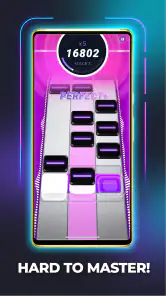

Analysis by Reviewed
I spent time with Beat Tiles: Music Game as a quick, touch-focused music game, and my first impression was easy to understand: it is built around reacting to tiles in time with a track rather than asking you to learn a complicated ruleset. That makes it approachable within a few seconds, but the simplicity also means your enjoyment depends heavily on whether you like repeating short rhythm challenges and improving through practice.
Cadenverse presents it as a free game in the music category, with an Everyone age rating. It has reached over 100 thousand installs and holds a 4.6 average from around 1.6 thousand ratings, so there is already a meaningful audience trying the same basic idea. I would not treat those figures as a guarantee that it will suit every player, but they do suggest that the central tile-and-beat format is easy for many people to pick up.
The current version is 1.4.2, and the game runs on Android 7.0 or later. That relatively broad system requirement is useful if you are using an older phone or tablet and do not want a music game that demands recent hardware. I tested it with the mindset of someone looking for a short break rather than a full-length console-style rhythm experience, and that is where its appeal is clearest.
How the free model affects the experience
The important starting point is that the game itself is free to download. That gives you a low-risk way to find out whether tapping along with falling or moving beat tiles is enjoyable for you before spending anything. The in-app purchase range is $5.99 to $39.99 per item, so there are optional purchases at both a relatively modest level and a much higher level. I would make the decision only after playing enough to understand what the free experience offers you.
That distinction matters because a free rhythm game can be valuable even when you never buy anything. If you want a few minutes of timing practice while waiting for an appointment, the absence of an upfront price makes experimentation simple. If you are searching for a deep music library, long-term progression, or a one-time purchase that removes every possible interruption, you should examine your own tolerance for optional spending before committing to it as a main game.
I like the fact that the entry barrier is low, but I would not call the purchase range automatically good value for everyone. The higher end is significant enough that it should be considered a deliberate entertainment purchase, not an impulse tap after one enjoyable session. My approach would be to keep the game free at first, learn the controls, and decide whether the beat challenges remain interesting after the novelty fades.
There is also a practical advantage to this model for families. Because the content rating is Everyone, the concept is suitable for a broad age range, but an adult should still handle purchase settings on a shared device. The age rating describes the intended content level; it does not mean every optional purchase is appropriate for every player. For a child using a family phone, I would establish the spending rule before handing over the device.
The moment-to-moment loop
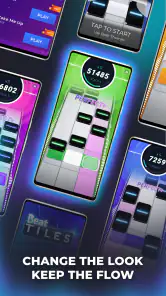
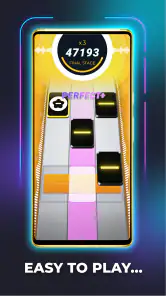
The core pleasure comes from matching your actions to the musical timing. At first, I found myself concentrating more on the visual movement of the tiles than on the sound. After a few attempts, the better approach was to let the rhythm guide my hands and use the tiles as confirmation. That small change made the game feel less like random tapping and more like a coordination exercise.
This is one of the first useful tips I would give a new player: do not stare only at the nearest tile. Watch the path ahead and listen for the recurring beat. Looking slightly forward gives you more time to prepare, especially when the pace becomes less forgiving. It also reduces the frantic feeling that comes from reacting to each tile at the last possible moment.
The format is easy to explain to a friend because there is no long tutorial needed. You see the playfield, recognize the beat pattern, and try to stay accurate. That immediacy is a genuine strength for mobile gaming. I could open it during a short break without needing to remember a complicated inventory, map, quest chain, or control layout.
At the same time, quick understanding is not the same as endless variety. A player who needs a narrative, exploration, or a large collection of different mechanics may find the central action narrow. Beat Tiles works best when the act of improving timing is itself the reason to return. If you do not enjoy repeating a pattern to make your next attempt cleaner, the free download may have limited staying power.
Small habits that make the game feel better
I found three habits particularly useful. First, I would play with the device held steadily rather than shifting it between hands. Small changes in grip can make a simple touch action feel less consistent. Second, I would lower distractions around me when attempting a difficult section, because rhythm depends on both visual attention and hearing. Third, I would stop after a few frustrating misses instead of immediately replaying in anger; a short reset often works better than forcing another attempt with tense hands.
Another practical trade-off is sound. A rhythm game is easier to understand when you can hear its timing, but playing in a quiet public place may require headphones or a lower volume. If you cannot use audio comfortably, you may still follow the visual cues, but you lose part of what makes the experience feel musical rather than purely mechanical. I would therefore choose it for a commute or waiting room only when I can play without disturbing anyone.
Touchscreen rhythm games also expose the limits of the phone itself. A small display can make moving tiles harder to read, while a larger tablet may give your eyes more room to anticipate what is coming. I would not buy a new device for this game, but if you already have both a phone and a tablet, the larger screen is worth trying for practice. The phone remains more convenient for short sessions; the tablet can feel calmer when accuracy matters.
Where it earns its place among music games
Compared with a traditional music player, this is obviously more interactive: you are not simply listening, you are responding. Compared with a complex rhythm title, its attraction is the lighter commitment. You can start quickly and focus on timing without first learning a large set of systems. That makes it a better fit for casual players than for someone seeking a highly layered competitive rhythm experience.
Its strongest comparison point is convenience. Many mobile games ask you to manage energy, characters, missions, or upgrades before you reach the part you actually wanted to play. This one is more direct in spirit: the beat is the activity. That clarity is refreshing when I want a small challenge rather than another digital obligation.
The downside of that same focus is that it may feel repetitive sooner than a game with several modes or a stronger progression structure. I would choose it over a more elaborate alternative when I want immediate tapping practice, but I would choose the elaborate alternative if my priority were collecting content, customizing a character, or having a long-term campaign. The right choice depends less on the label “music game” and more on whether you want rhythm itself to be the whole point.
One non-obvious use is as a brief attention reset. I would not describe it as a formal training tool, but a short session can pull my focus away from scrolling because it demands active timing. The benefit is strongest when I set a clear stopping point. Without one, a sequence of “one more try” attempts can turn a two-minute break into a longer session than intended.
Who will get real value from it
I think the best audience is someone who enjoys music-based reflex games, wants a free starting point, and appreciates controls that can be understood immediately. It also suits players who like measurable personal improvement: the satisfaction comes from noticing that a pattern which felt chaotic at first becomes manageable after focused practice.
A realistic everyday scenario would be a ten-minute wait before a train or an appointment. I could open the game, play a few attempts, and close it without needing to remember a story or protect a long-running session. The same quality works for a student taking a short break, an adult looking for a compact distraction, or a casual player who does not normally spend time with larger games.
It may also work for friends comparing their sense of rhythm informally. The appeal is not necessarily social features or a formal competition; it is the simple conversation that follows when one person says a section looked easy and then struggles with it. That kind of shared challenge can make a minimal game more memorable than its feature list suggests.
I would be more cautious about recommending it to someone who becomes annoyed by repeated failure, plays almost exclusively for story, or expects every free game to provide a large amount of content without optional spending. I would also skip it if your main goal is to listen to complete songs passively. This is an active game, and its value comes from interacting with the beat.
Friction points worth considering
The main limitation is not a technical complaint so much as the narrowness of the concept. Once you understand the tile timing, the question becomes whether the available challenges continue to hold your attention. Players who need constant novelty may feel that the basic action does not change enough, even if their accuracy improves.
There is also a difference between being free to start and being completely free as a long-term hobby. Since optional items range from $5.99 to $39.99, I would not assume that every desirable addition or convenience is included without payment. The sensible approach is to enjoy the free access first, then judge each purchase by how often you actually return to the game. If you play once a week, the higher-priced option is difficult for me to justify; if it becomes a regular favorite, you can make that decision with more context.
Another point is patience. Rhythm games can make a missed input feel personal because the mistake is immediate and visible. I had better results when I treated misses as information: was I tapping early, watching too close to the bottom, or losing the beat after a change in pace? That mindset turns frustration into a specific adjustment. If you prefer games where failure has little consequence, this may feel more demanding than its simple presentation suggests.
The broad Android compatibility is helpful, but experience can still vary with screen size, touch responsiveness, and audio setup. I would test the game on the device where I expect to use it most before considering an in-app purchase. A game that feels precise on one screen may feel less comfortable on another, and timing-based play leaves little room for hardware discomfort.
My recommendation after playing
For me, Beat Tiles: Music Game is worth trying because the free entry makes the decision straightforward. It delivers a clean, immediate rhythm activity for short sessions, and the beat-tile format is easier to approach than many larger music games. I especially like it when I want something interactive but do not want to invest in a story, a collection system, or a lengthy match.
I would keep my expectations focused. This is not the right recommendation for someone searching for a complete music platform, a deep rhythm simulator, or a guaranteed replacement for every other mobile game. Its value depends on enjoying repetition, timing, and gradual improvement. The free version gives you the opportunity to test those qualities without paying first, which is the most important part of its proposition.
My buy-or-skip verdict is simple: download it free if you want a compact beat challenge, but delay optional spending until the basic loop has genuinely earned repeat visits. I would recommend it to casual rhythm fans, people who like quick skill tests, and anyone curious about tile-based music play. I would skip the purchases, and possibly the game itself, if you need extensive variety immediately or dislike retrying a section to improve your timing.
With its Everyone rating, support for Android 7.0 and later, current version 1.4.2, and free starting point, it is easy to sample. Cadenverse has chosen a focused idea rather than an overloaded one. That focus is exactly why it can be satisfying in a spare moment—and exactly why players seeking a broader game should look elsewhere.
Pros
- Simple one-touch controls are easy to learn and play anywhere.
- Large song library offers variety for different musical tastes.
- Short rounds make it convenient for quick gaming sessions.
- Bright visual effects make successful combos feel rewarding.
- Works well for casual players seeking a relaxing rhythm challenge.
Cons
- Some songs and features may require in-app purchases to unlock.
- Gameplay can become repetitive after extended sessions.
- Timing may feel inconsistent on certain devices or with Bluetooth audio.
- Frequent ads can interrupt the experience for free players.
- Requires steady concentration
- which may frustrate younger players.

- Category
- Music
- Version
- 1.4.2