67 vs 61 Kids Beats Battle
- 28.00
- 4.1
- Installs
- 100.00K
- Price
- Free

Screenshots







Analysis by Reviewed
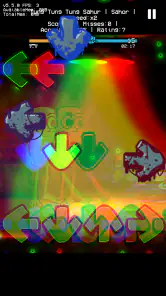
I tried 67 vs 61 Kids Beats Battle as a quick rhythm game for a shared device, and its appeal became clear almost immediately: it turns a familiar music-game format into a playful face-off built around Boyfriend and Girlfriend. The central idea is simple, with wild kids challenging the pair in rhythm duels, but the number of characters gives the experience a deliberately busy, energetic feel. It is the sort of game that can attract attention when a phone or tablet is passed around a room, especially when someone wants a short activity rather than a long story-driven game.
This is a free music game from developer Vũ Hà, released on May 21, 2025. It has reached over 100 thousand installs and holds a 4.1 average from roughly a thousand ratings, with 28 written reviews. Those figures suggest that it has found a real audience without making it seem like a polished mainstream production. I would approach it as a focused, lightweight rhythm experience rather than as a complete replacement for a larger rhythm-game collection.
How it works when several people share one device
The most natural use case is a short household session. One person plays while another watches, comments, and takes the next turn. Because the premise is based on music duels, it creates an easy reason to compare attempts without requiring a complicated explanation. A child can understand the basic goal quickly, while an older player can treat the timing as a small challenge instead of dismissing it as a passive cartoon game.
I especially like this format for brief moments when a family is waiting somewhere or relaxing after dinner. It does not need the commitment of a long adventure, and the music-focused structure gives each turn a clear beginning and end. That makes handoffs less awkward than in a game where someone might lose progress after only a few minutes. Still, I would not assume that every session will feel equally social. The game is fundamentally centered on the person holding the device, so the shared experience depends on players agreeing to rotate rather than expecting built-in cooperation.
A useful household routine is to let each player choose a small number of attempts, then swap. This avoids the common problem where the most confident player keeps the device and everyone else becomes an audience. It also makes the game easier to fit into a busy day. If a younger player is still learning the rhythm, a short turn gives them room to improve without turning the activity into a public test of skill.
The “67 vs 61” framing gives the game a memorable identity, but I would not read that wording as a promise of a deep competitive system between two human teams. The store short description presents those figures as the matchup concept, while the main experience is still a rhythm duel involving Boyfriend and Girlfriend. That distinction matters for families: this is better understood as a character-driven music challenge than as a genuine multiplayer battle with separate accounts or team management.
What the shared-device experience gets right
For a household, the strongest quality is its low social barrier. Nobody needs to learn a large inventory system, understand a complex map, or wait through an extended tutorial before seeing the point. The music-duel presentation gives spectators something to follow, and the unusual cast of wild kids helps the game feel more distinctive than a plain tapping exercise.
There is also a small but important benefit in watching someone else play first. A parent, older sibling, or friend can demonstrate the timing before handing over the device. That is more useful than simply explaining controls, because rhythm games are often easier to understand visually. If the player misses notes, the observer can identify whether the problem is late reactions, rushing, or difficulty keeping attention on the action.
My practical tip is to use the first shared session as a calibration period. Let the least experienced player try before anyone starts comparing scores or accuracy. This changes the mood from competition to discovery and gives you a better sense of whether the game suits the person using it. It is a simple adjustment, but it prevents a music game from becoming frustrating within the first few minutes.
The limitation is that a shared screen can become crowded with opinions. One player may want to concentrate on the beat, while another keeps giving instructions. Since rhythm depends on timing and focus, too much commentary can make an otherwise manageable challenge feel harder. For that reason, I would keep the first attempts quiet and save discussion for between rounds.
Setting expectations before handing over the phone
The game is free, which makes trying it with a household device straightforward. That does not automatically make it suitable for every child or every family routine. Its content rating is Teen, so I would check the screen personally before giving it to a younger child and decide whether the visual style and tone fit your household. The presence of cartoon characters does not by itself make a game appropriate for all ages.
That age context is especially important when a phone is shared between adults and children. A child may see the bright characters and assume the game is made for them, while the official rating asks for more careful judgment. I would treat the rating as a prompt for supervision rather than as a complete description of the experience. If you are comfortable with the presentation, a short supervised session is a sensible way to evaluate it.
There is no need to turn installation into a complicated family project, but I would establish a few boundaries in advance. Decide whether the game is used only on one household device, whether headphones are appropriate, and how turns are shared. These are not settings inside the game; they are practical rules that prevent a free download from becoming a source of arguments or unexpected noise.
Account boundaries deserve similar attention. I would not assume that a shared device means shared progress, shared preferences, or separate personal spaces. If several people use the same phone or tablet, keep expectations modest and avoid promising that each player will have an independent profile unless the app clearly offers one. The safest approach is to treat the device as a common play space and agree on how people will use it.
This matters most when an adult and a child have very different goals. An adult may want to test the game for a few minutes, while a child may want repeated attempts with the same characters. If the device is also used for work, school, or communication, set a time boundary before beginning. The game is easy to start, which is convenient, but that same convenience can make it easy to continue longer than intended.
Why the age rating changes the recommendation
I would recommend it most confidently to teenagers and to families who are willing to review the content together. The Teen rating makes it a poor automatic choice for a younger child simply because the art looks playful. Adults should also remember that rhythm-game excitement can encourage repeated attempts, so supervision is useful not only for content but also for keeping the session balanced.
For an older player, the rating is less of a concern than the game’s level of depth. Someone searching for a serious music-training tool, a large song library, or a highly structured competitive platform may find this too narrow. It is designed around its own character matchup and presentation, not around teaching musical notation or building a professional practice routine.
That is one of the clearest ways to decide whether it belongs on your device. If you want a colorful, accessible rhythm diversion with a recognizable battle setup, it is worth trying. If you want a child-focused educational product with carefully explained musical concepts, this is not the right substitute. The game may help with attention and timing in a casual sense, but I would not present it as formal music education.
Coordinating turns, sound, and expectations
Coordination is where a shared-device review becomes more useful than a simple description of the gameplay. A rhythm game can affect the whole room because sound and concentration are part of the experience. Before starting, I would decide whether the player can use the device’s speaker or should use headphones. This is particularly helpful in a household where someone is reading, working, sleeping, or watching another program.
Headphones can improve concentration, but they also remove the audience from the musical feedback. Speakers make the session more social, yet they can expose everyone nearby to repeated attempts. Neither choice is universally better. For a first try, speakers are useful because others can understand what is happening; for focused practice, headphones may be the better option if the device and household setting allow them.
Another practical tip is to rotate based on attempts rather than on success. If turns change only after a player wins, the strongest person may dominate the session. A fixed rotation gives less experienced players a fair chance to learn the timing and keeps the activity from becoming a one-person performance. It also makes the game easier to stop because everyone knows when their turn ends.
I would also avoid coaching every input. Rhythm games reward a player’s own internal timing, and constant instructions from the side can interfere with that. A better approach is to discuss one observation after a round: perhaps the player reacted late, watched the wrong part of the screen, or became distracted by the character animation. Keeping feedback specific makes improvement feel achievable rather than overwhelming.
The game’s unusual cast can help with this coordination because it gives each attempt a visual identity. Players can talk about which opponent appeared or which matchup felt memorable instead of reducing the session to a score comparison. That is a small social advantage, particularly for children who enjoy characters more than abstract performance measurements.
Where it differs from familiar rhythm-game alternatives
Compared with a conventional music player, this game offers a clear reason to interact. You are not simply listening in the background; you are responding to a visual and rhythmic challenge. That makes it more engaging for a short break, but it also means it demands attention. If you want music while doing homework or household tasks, a normal player is the better choice.
Compared with a dedicated rhythm-training app, it appears more focused on entertainment and character encounters than on explaining timing, notation, or technique. Someone trying to improve at an instrument would be better served by an app built for practice. The advantage here is immediacy: you can approach it as a game without needing a musical goal.
Compared with a large commercial rhythm title, the appeal is its straightforward premise and free entry. The trade-off is that I would not expect the same breadth, refinement, or long-term progression from a smaller game centered on this specific matchup. That does not make it a bad choice; it simply places it in the category of a casual challenge rather than a complete rhythm platform.
This comparison also explains who should skip it. Players who need online competition, detailed personal profiles, extensive customization, or a substantial campaign should look elsewhere. Families seeking a quick shared activity may be happier with its compact concept, provided they are comfortable with the Teen rating and do not mistake it for a cooperative game.
Performance, version, and everyday practicality
The current version is 1.4, and the minimum operating-system requirement is Android 7.1. That makes the compatibility threshold relatively approachable for people using an older Android device, although compatibility alone does not guarantee a smooth experience on every phone or tablet. Rhythm games are sensitive to delayed input, so the device’s age, background activity, and audio setup can matter more than the minimum requirement suggests.
My advice is to close unnecessary apps before a serious session and test the timing in the exact environment where the game will be played. A device that feels fine for browsing may still feel less responsive when someone is trying to match beats. If the sound seems delayed, try a different listening arrangement and avoid judging the game after only one difficult attempt. The goal is to separate a timing problem caused by the setup from a challenge caused by the game itself.
This is another reason the shared-device scenario needs a little planning. A tablet placed on a table may be easier for two people to watch, but a phone held close may be easier for one player to control. Younger users may also press with more force or shift the device while playing, so an adult should choose a stable surface for the first session. A simple setup can make the experience feel much fairer.
I would not install it on a device that someone urgently needs for work or school without discussing storage and access first. The game is free, but “free” does not mean it should automatically take priority on a shared phone. Agreeing on when it can be opened is a small household decision that avoids conflict later, especially when several people want the same device.
Because the game is rated Teen, I would also keep the first launch within an adult’s view if the intended player is younger. That lets you make a direct decision based on what appears on screen rather than relying on the cheerful premise alone. If the content does not suit your household, the right answer is simply not to use it, even if the rhythm format sounds appealing.
Three less obvious ways to get more from it
First, use observation as part of the learning process. Let one person play while another watches only the timing, then switch roles. The observer can notice patterns that the player misses, such as looking away during a busy moment or tapping in response to animation instead of rhythm. This turns a basic turn-taking session into a useful exercise in attention without pretending that the game is a formal lesson.
Second, separate discovery sessions from challenge sessions. During discovery, allow players to explore the characters and presentation without judging performance. During challenge sessions, keep the rotation consistent and compare improvement only with the player’s own earlier attempts. This trade-off is valuable because family competition can be entertaining, but it can also discourage the person who needs more time to find the beat.
Third, treat sound as a household resource. If the room is busy, use a short session with a clear stopping point rather than letting repeated attempts continue in the background. If the room is quiet and everyone is interested, make the audio part of the shared experience. The same game can feel either social or disruptive depending on how it is introduced, so coordination is not a minor detail here.
These approaches also reveal the game’s limits. Its character premise can start conversations and make turns feel distinct, but it does not remove the basic pressure of rhythm play. Someone with poor timing, limited patience, or sensitivity to fast visual action may still find it frustrating. In that situation, a slower puzzle game or a calmer music app would be a better household choice.
My household verdict
I see this as a free, character-led rhythm diversion that works best in short, supervised sessions on a shared device. Its strongest feature is not complexity; it is the ease with which a person can understand the idea and invite someone else to watch or take a turn. The wild-kid matchup gives the game a specific personality, while Boyfriend and Girlfriend provide a familiar center for the duels.
The 4.1 average and over 100 thousand installs make it a reasonable candidate to try, but I would keep expectations realistic. This is not the choice I would make for formal music practice, deep multiplayer competition, or a large progression system. I would also not hand it to a young child automatically, because the Teen rating calls for an adult decision about the content and the way the shared device is used.
For a household, my recommendation is conditional but positive: install it if you want a quick music challenge that can be passed between people, and set the turn, sound, and age boundaries before the first round. If you need separate accounts, guaranteed cooperation, or a carefully educational music experience, choose a different category of app. If those needs do not apply, this game can fill a useful space between watching something and committing to a longer game.
In my experience, the best way to approach it is as a small event rather than an always-on family game. Give each player a fair turn, keep feedback friendly, and stop when the room becomes more distracted than entertained. Used that way, 67 vs 61 Kids Beats Battle has enough personality to make a shared device feel lively without demanding a large time investment.
Pros
- Simple controls make it accessible for younger players.
- Short battles fit well into quick play sessions.
- Bright visuals and music create an appealing atmosphere.
- Competitive matches can encourage timing and concentration.
- Suitable for children who enjoy rhythm-based challenges.
Cons
- May become repetitive after extended play.
- Some children may find the timing challenges frustrating.
- Requires audio for the best gameplay experience.
- Competitive elements may not appeal to every child.
- Parental guidance is advisable for in-app purchases or ads.

- Category
- Music
- Version
- 1.4