The Realm by Minelab
- 15.00
- 4.5
- Installs
- 10.00K
- Price
- Free

Screenshots

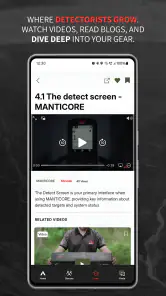
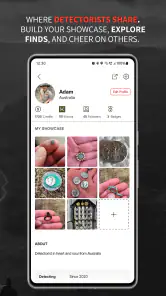
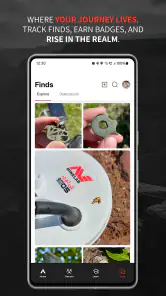
Analysis by Reviewed
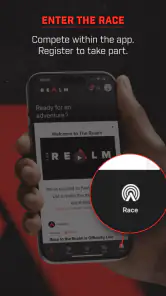
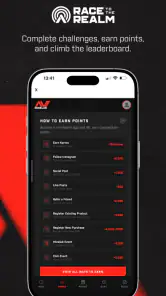
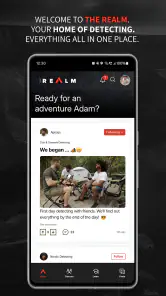
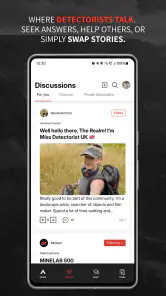
For detectorists, the best discoveries are often only half the story. The other half is knowing where you were, what you found, and who might appreciate the moment. The Realm, developed by Minelab Electronics Pty Ltd, approaches the hobby as a social sports app rather than simply another tool for recording a search. I found its central idea appealing: it gives detectorists a shared digital space where the activity can feel less solitary.
The app is free, carries a Teen content rating, and has reached over ten thousand installs. Its average rating is 4.5 from around sixty ratings, with roughly fifteen written reviews, so there is enough early feedback to suggest interest without making the product feel fully established yet. It was released on November 24, 2025, and the current version is 0.78.1, which matters because an app this young can still feel like a work in progress.
My overall impression is that The Realm is most useful when I treat it as a companion to detecting, not as a replacement for the detector itself. The value comes from staying connected to the people and activity around the hobby. That also creates the app’s main limitation: its usefulness depends heavily on having a reliable connection and on there being enough relevant activity to make the shared space feel alive.
How connection changes a detectorist’s routine
The usual alternative is surprisingly simple: take a detector into the field, save photos in the phone’s gallery, and discuss finds later in a local group, chat, or forum. That approach still works, especially for people who prefer privacy or who spend time in places with weak reception. The Realm’s appeal is that it brings the social layer closer to the moment of detecting.
That distinction changes the rhythm of a session. Instead of waiting until I get home to show an interesting find, I can think of the app as part of the wider outing. A discovery becomes something that can belong to a conversation, not just to my personal camera roll. The app’s store summary, “Where detectorists connect,” is brief, but it points toward this exact difference: the product is built around the community surrounding the hobby.
Connectivity is therefore not a minor convenience here. It shapes when the app feels useful. In a busy area with a stable mobile signal, the social side can make a short detecting trip feel more engaging. I can check in with the community before going out, use the app during pauses, and return to it after the search while the experience is still fresh. In a remote field, on a beach with inconsistent reception, or underground, that same promise becomes less dependable.
I would not approach this as a navigation instrument, a detector-control app, or a technical identification system. Those jobs belong to dedicated equipment and specialist tools. The Realm occupies a different place in the workflow: it is about people, shared interest, and the sense that a solo activity has an audience. That makes it particularly attractive to newcomers who want to learn the culture of detecting and to experienced users who enjoy comparing stories.
What happens before leaving home
The most practical use begins before I pick up the detector. A connected app can help turn an unplanned outing into a more intentional one, even if the actual detecting still depends on the location, equipment, permissions, and conditions. I can use the social space to decide whether I want a quick local session or a longer trip where sharing the experience matters more.
There is also a useful psychological benefit. Detecting alone can become repetitive when every outing produces ordinary signals and very little worth showing. Knowing that other enthusiasts are present can provide motivation without turning the hobby into a competition. I see that as one of the app’s stronger ideas: it supports the part of the hobby that happens between finds.
At the same time, I would avoid assuming that community activity automatically equals expert guidance. A social app can expose me to helpful perspectives, but I still need to judge advice carefully, especially around permissions, historical claims, safety, and responsible detecting. The Realm may help me meet people with similar interests, but it does not remove the need for common sense or local knowledge.
Using it in the middle of a mobile session
Phones are awkward tools in the field. My hands may be dirty, the screen may be hard to read in bright sunlight, and stopping to interact with an app can break concentration. That makes short, deliberate check-ins more sensible than trying to keep the app open constantly.
A realistic routine would be to begin the outing with the phone safely stored, carry out a focused search, and use The Realm during a planned pause. If I uncover something interesting, I can clean up enough to handle the phone carefully, capture the moment when appropriate, and then return to detecting. This approach avoids turning every signal into a reason to reach for the screen.
That workflow is more important than it sounds. A community app can add enjoyment, but it can also distract from the physical activity that brought me outside. I prefer using it as a checkpoint: before the search, during a break, and after packing up. People who want continuous updates or constant interaction may enjoy a more connected style, while those who value uninterrupted concentration may find the phone-based layer unnecessary.
Battery planning is another practical consideration. Detecting sessions can already involve a phone camera, location services, brightness, and mobile data, depending on how I use the device. Adding a connected community app to that routine makes a charged phone and sensible screen habits worthwhile. I would carry a power bank on a long trip, not because the app is necessarily demanding, but because field conditions are less forgiving than a normal day indoors.
When the signal disappears
The biggest question for a connectivity-focused app is what happens when the connection becomes unreliable. Here I would plan conservatively. The Realm should be treated as an online companion, not as something I depend on for the core safety or logistics of an outing. I would not rely on it as my only way to remember a meeting point, contact someone in an emergency, or preserve important field notes.
That does not make the app useless outside strong coverage. It simply changes the order of operations. I can carry out the detecting first and return to the app when the connection is available again. Photos, notes, and personal observations can be handled with the phone’s ordinary tools, then used to support a later community interaction. This separation keeps a weak signal from ruining the entire session.
There is a trade-off here compared with a traditional notebook or a basic gallery. A notebook works in almost any environment and never asks me to wait for a network. A gallery also keeps the record under my direct control. The Realm offers a more social experience, but that experience is naturally more fragile when reception, battery, or attention is limited.
I also think recovery matters after an interruption. If I lose the connection while trying to share something, I would rather wait until I am back in coverage than repeatedly retry while standing in the field. Repeated attempts waste battery and can pull focus away from the search. A good habit is to finish the physical outing, check the phone later, and then continue the conversation from a stable connection.
This is one of the app’s less obvious lessons: connectivity should support the hobby, not control it. The detector, the location, and responsible access come first. The Realm works best when I can accept a pause without feeling that I have lost the entire value of the session.
Keeping mobile use under control
Because The Realm is free, the barrier to trying it is low. That makes it easy to install and explore without committing money, but free access does not mean that mobile use has no cost. Data consumption, battery usage, and time spent checking the phone all matter in real situations.
I would begin by using it on Wi-Fi at home to understand the community side before relying on it outdoors. That lets me decide what I actually need from the app instead of opening it repeatedly in the field. On mobile data, I would avoid unnecessary browsing during a long search and reserve active participation for moments when I have something meaningful to contribute.
Photos deserve special attention. A detectorist’s phone can quickly fill with similar images: the hole, the object, the surrounding ground, and several close-ups. Sharing every step may create clutter for both me and the people following along. A better approach is to select one clear image and add useful context, such as where in the outing it appeared or why it was interesting. That creates a stronger contribution while using less time and data.
There is also a privacy angle to consider. Detecting locations can be sensitive, and not every find should be tied to an exact place in a public conversation. I would be cautious about showing recognizable landmarks, private property, or details that could encourage a rush to a site. The social value of the app is strongest when participation is responsible. Sharing the story of a discovery does not require revealing every detail of the location.
The Teen rating is another reason I would encourage thoughtful interaction rather than assuming the community is suitable for every age or every type of conversation. Parents should make their own judgement about how a younger user participates, particularly when location and public sharing are involved. For adult detectorists, the rating is a reminder to use normal online-community awareness.
Who gets the most from the app
The Realm is a good fit for someone who sees detecting as a social hobby. Beginners may appreciate having a place connected to the activity rather than trying to locate scattered groups across unrelated platforms. The app can also suit people who travel between local areas and want their interest to follow them without maintaining several separate conversations.
It is especially appealing to users who enjoy the story around a find. If the satisfaction comes not only from uncovering an object but also from showing the process, comparing experiences, and feeling part of a wider group, the app’s focus makes sense. The free price also makes experimentation easy for a newcomer who is not yet sure how deeply they want to become involved.
On the other hand, I would skip it if I want a purely private logbook, an advanced metal-detecting utility, or a tool that remains dependable in areas with little reception. A simple notes app may be better for personal records. A camera and gallery may be better for quick documentation. A dedicated local club may be better when I need face-to-face guidance, organized outings, or advice tied to a specific region.
The app may also feel less rewarding if the community activity does not match my interests or schedule. Social products depend on participation. If I prefer complete control over my information, dislike public discussion, or rarely want to use a phone while outdoors, the central benefit becomes less important. In that situation, the app is not necessarily poor; it is simply aimed at a different kind of detectorist.
What the early version suggests
At version 0.78.1, I approach The Realm with the expectations I would have for a developing product rather than a finished, all-purpose platform. The current rating is encouraging, but the install base is still modest enough that the experience may vary depending on how active the relevant community feels. A connected space becomes more valuable as more people use it, so early adopters should be comfortable with gradual growth.
That early-stage character can be positive. Smaller communities sometimes feel easier to approach than enormous networks where a new post disappears immediately. It can be simpler to recognize familiar names and build genuine conversations. The downside is that quiet periods may feel very quiet, especially for users who expect a constant stream of updates.
I would also judge the app by how well it fits my personal routine rather than by the rating alone. If I go detecting every weekend and enjoy sharing the experience, a smaller but relevant community may be enough. If I only search occasionally and want a technical reference tool, the social focus may not justify another app on my phone.
Minelab Electronics Pty Ltd gives the product a clear connection to the detecting world through its identity, but that does not mean every user needs to own the same equipment or follow the same style of detecting. I see the app as useful across different levels of experience, provided the user is interested in the community aspect rather than expecting equipment-specific control.
My connectivity verdict
After looking at the way it fits into real outings, I see The Realm as a companion for the spaces around detecting: planning, pausing, sharing, and returning to the conversation afterward. Its strongest quality is not a technical trick but a change in emphasis. It reminds me that a solitary search can become part of a wider interest group without requiring me to abandon the hands-on nature of the hobby.
The connection requirement is also the boundary of that strength. In a place with poor reception, I would not let the app determine whether the trip succeeds. I would prepare as though the community layer might be unavailable, keep essential information elsewhere, and use the app when the phone and network cooperate. That approach makes the occasional interruption manageable rather than disappointing.
My recommendation is simple: try it if you want detectorists to be part of the experience, not merely the audience after it. The free download makes testing that idea straightforward, while the Teen rating and social nature call for sensible sharing and attention to privacy. I would recommend it to curious beginners, sociable hobbyists, and experienced users who enjoy discussing finds. I would point privacy-focused users, offline-first explorers, and people seeking advanced detector controls toward more specialized alternatives.
In the end, the app succeeds when connectivity adds companionship without taking over the outing. Used that way, it has a clear place on an enthusiast’s phone. Used as a substitute for field preparation, personal records, or reliable communication in remote locations, it is the wrong tool. That balance is why I would keep The Realm as an optional part of my detecting routine rather than the foundation of it.
Pros
- Works offline
- making it useful in areas with limited mobile coverage.
- Clear target-identification tools help organize and compare detected objects.
- Customizable settings let users adjust the experience to their detecting style.
- Regular updates can improve stability and add useful functionality over time.
- Designed for Minelab users
- with practical tools that complement compatible detectors.
Cons
- Some features may only work with supported Minelab detector models.
- Bluetooth pairing can occasionally require reconnecting after leaving the app.
- The interface may feel overwhelming for first-time metal detector users.
- Location and activity features can consume battery during extended detecting sessions.
- Not all functions are equally useful without an active Minelab detecting setup.

- Category
- Sports
- Version
- 0.78.1