Stitch Fix: Style made easy
- 938.00
- 4.8
- Installs
- 1.00M
- Price
- Free

Screenshots





Analysis by Reviewed
I approached Stitch Fix: Style made easy as someone who enjoys wearing clothes that feel considered but does not always enjoy spending an evening searching through online stores. My overall impression is that it turns shopping into a guided styling process rather than a simple catalogue hunt. That distinction matters: you are not just scrolling through endless products and hoping an outfit comes together. You are giving the service a sense of your preferences and letting its styling approach narrow the field.
That makes it an appealing shopping app for people who want help with women’s, men’s, or kids’ clothing without needing to become experts in brands, cuts, or seasonal combinations. It is free to install, aimed at Everyone, and developed by Stitch Fix, Inc. The app has built a strong audience, with over a million installs and an average rating of 4.8 from around 2.7 thousand ratings. Those figures suggest that the basic idea works for many users, although they do not remove the need to think carefully about whether a styling service suits the way you like to shop.
What using Stitch Fix feels like in practice
The central appeal is convenience with a personal element. Traditional online shopping gives me maximum control, but it also gives me maximum responsibility. I have to decide what to search for, identify trustworthy sizing, compare similar items, and imagine how separate pieces might look together. Stitch Fix takes a different route by making personal styling the starting point.
That approach is especially useful when I know the result I want but not the exact path to get there. For example, I might need clothing for a new job, a child’s changing wardrobe, a holiday, or a season when my existing clothes no longer feel right. Instead of beginning with a vague search such as “smart casual,” I can use the app as a way to translate that vague need into a more focused shopping experience.
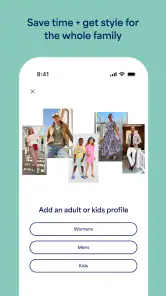
I also like that the service is not limited to one type of customer. The inclusion of women’s, men’s, and kids’ clothing gives it a broader household role than many styling apps that focus on only one audience. A parent could use it for a child’s wardrobe refresh, while another member of the household uses it to find everyday pieces. That does not mean every person will want the same level of assistance, but it does make the app more relevant to real shopping routines.
The strongest part of the concept is the reduction of decision fatigue. A large marketplace can make me feel as though I am doing research rather than shopping. Stitch Fix is more attractive when I want a smaller, more manageable set of possibilities. The real benefit is not simply finding clothes; it is reducing the mental work between “I need something” and “this could work for me.”
A useful option for uncertain shoppers
I think the app is at its best for people who have a general sense of their style but struggle to express it through search terms. Someone may know they prefer relaxed silhouettes, neutral colours, practical layers, or outfits that can move from work to weekends, yet still find conventional shopping frustrating. A styling-led service can make that kind of preference more usable than a blank search box.
More From Our News Desk

Clash of Clans Is Won Between the Battles

Android Auto Makes the Case for Quieter Car Software

MobiOffice: Transforming Mobile Productivity with Seamless Integration

EA SPORTS FC™ Mobile Soccer: Redefining Mobile Sports Gaming

How Microsoft OneDrive Became a Mobile Productivity Giant

How Google Translate Breaks Language Barriers Effortlessly
It can also help when a shopper wants a gentle push outside a familiar routine. If I always buy the same shirt shape or choose the safest colour available, a curated approach may introduce alternatives without forcing me to browse the entire internet. That can be valuable for someone trying to update a wardrobe gradually rather than replacing everything at once.
There is a trade-off, though. The more I value discovery and guidance, the more comfortable I need to be with giving up some control over the first selection. People who enjoy examining every fabric detail, comparing dozens of sellers, and building a basket item by item may find the process less satisfying. Stitch Fix is designed around assistance, not around unlimited manual choice.
Where the app saves time in everyday life
Consider a realistic weekday situation. I have an early meeting, my current clothes feel repetitive, and I do not have the energy to visit several shops after work. A conventional marketplace might leave me with too many tabs and no confidence that the pieces belong together. Using a personal styling service gives me a more focused starting point, which is useful when time and attention are more limited than money.
The same logic applies to parents. Shopping for children can become a repeated task because sizes and needs change quickly. A service that covers kids’ clothing may be more convenient than manually rebuilding a search every time. The benefit is not that it eliminates all decisions; rather, it can make the first stage less exhausting and help a parent approach the wardrobe as a planned refresh instead of an emergency search.
For adults, I see a similar advantage when life changes faster than personal style. Starting a new role, returning to an office, attending more social events, or simply wanting clothes that fit a different routine can create uncertainty. The app is useful when the problem is not a lack of places to shop but a lack of confidence about what to choose.
The details that determine whether it works for you
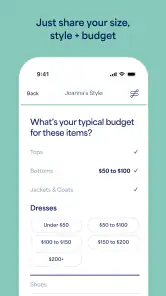
My first practical tip is to treat the initial style information as an important part of the experience, not as a form to rush through. If the service is going to help narrow clothing choices, the quality of that guidance depends on how clearly I communicate what I actually wear. I would think about comfort, preferred fit, colours I genuinely use, and the occasions I am dressing for before starting.
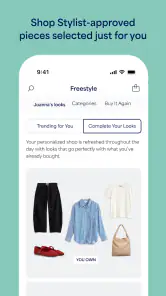
A second tip is to judge suggestions as wardrobe decisions rather than isolated items. A piece can look appealing on its own and still be a poor purchase if it does not work with anything already in my closet. I would mentally pair each suggestion with at least two existing outfits. This is a simple way to avoid accumulating attractive but impractical clothing.
A third insight is that the app is more valuable when I use it to solve a defined problem. “Improve my style” is too broad to guide a useful decision. “Find comfortable clothes for a smart-casual workweek” or “refresh everyday options for a growing child” gives the styling process a clearer purpose. That makes it easier for me to evaluate the result fairly.
I would also recommend keeping expectations realistic about personalisation. A styling service can make more informed suggestions than a random product feed, but it cannot know every detail of my body, routine, wardrobe, or emotional reaction to a garment. The experience should feel like useful assistance, not a guarantee that every recommendation will be perfect.
The main weakness: convenience can reduce control
The biggest limitation is built into the concept. Stitch Fix makes shopping easier by filtering and guiding, but that same filtering can feel restrictive to shoppers who want to browse broadly. If I already know the exact brand, colour, material, or cut I want, I may be better served by a retailer with a powerful search system and a large visible catalogue.
There is also a possible mismatch between what sounds good in a style preference and what works in daily life. A recommendation may suit a general description of my taste while missing practical details such as how often I wash an item, whether I need pockets, how formal my workplace is, or whether I prefer clothes that can tolerate a busy routine. Those are not failures unique to this app, but they are reasons to remain an active decision-maker.
Another point is that convenience does not automatically mean the best value. Since the app is free, the important question is not the installation cost but whether the resulting shopping choices make sense for my budget and wardrobe. A curated experience can encourage me to consider pieces I would not have searched for, which may be positive when I need inspiration but less helpful when I am trying to spend as little as possible.
I would skip this app if my priority is finding the lowest possible price across many retailers, inspecting every available option, or buying a very specific item immediately. I would also hesitate if I dislike the idea of receiving style guidance or prefer to make every clothing decision independently. In those cases, a standard retailer app, marketplace, or local shop may offer a better match.
How it compares with ordinary clothing apps
Most clothing shopping apps are built around inventory. I search, filter, compare, and add items to a basket. That model is excellent when I know what I want and enjoy the process of finding it. It is less effective when I am unsure what would suit me or when the number of choices becomes tiring.
Stitch Fix sits closer to a stylist than to a conventional digital department store. Its strength is the interpretation of personal preferences and the attempt to make clothing discovery feel more directed. The compromise is that I should not expect the same sense of complete, immediate control that I get from a conventional catalogue.
Compared with visiting a physical store, the app is more convenient for someone who dislikes travel, crowded fitting rooms, or the pressure of making decisions in person. A physical shop still has an important advantage: I can see, touch, and try on clothing before committing to it. That sensory certainty is difficult for any mobile styling experience to reproduce.
Compared with hiring a personal stylist directly, Stitch Fix is the more accessible option for an ordinary wardrobe problem. I would not expect the same depth of conversation or highly specialised advice, but I also do not need a formal styling appointment to get started. That balance is why the service makes sense for everyday shoppers rather than only for fashion-focused users.
Who will get the most from it
I would recommend Stitch Fix to busy adults who want clothing help without turning shopping into a major project. It is also a strong candidate for people rebuilding a wardrobe after a lifestyle change, shoppers who feel overwhelmed by online choice, and households looking for a broader clothing service that includes kids’ options.
It may suit someone who wants to experiment carefully. The app can provide a structured way to move beyond familiar choices while still keeping the experience centred on personal preferences. I find that more approachable than opening a huge marketplace and trying to invent a new style from thousands of unrelated listings.
People who should think twice are highly price-driven shoppers, exact-item hunters, and fashion enthusiasts who enjoy controlling every step. The app’s value comes from guidance and convenience, so it is less compelling when those are not the problems I need solved.
It is also worth remembering that a high average rating does not mean the experience will suit every wardrobe or body type equally. The app has around 938 written reviews, which is enough to show meaningful user engagement, but I would still make my decision based on my own shopping habits rather than treating popularity as a promise.
My final verdict
Stitch Fix: Style made easy succeeds because it addresses a problem that ordinary shopping apps often ignore: many people do not need more products, they need better direction. I appreciate the way it can turn an uncertain clothing search into a more manageable styling task, especially for busy shoppers, parents, and anyone facing a wardrobe change.
Its limitations are equally clear. The experience is not ideal for someone who wants exhaustive browsing, precise item-by-item control, or the cheapest possible purchase. Personalised guidance can narrow the search, but it cannot replace my judgement about fit, comfort, practicality, and whether a piece belongs in my existing wardrobe.
After weighing both sides, I see it as a worthwhile free shopping app for people who want help making clothing choices rather than another enormous catalogue. I would recommend trying it with a specific wardrobe goal and a realistic budget. If your main shopping problem is uncertainty, not lack of choice, Stitch Fix is a thoughtful place to start.
Stitch Fix: Style made easy Frequently Asked Questions
Is Stitch Fix free to download, and what could I pay for?
Stitch Fix is free to download, but using the app does not mean every styling service or clothing item is free. Costs may apply to styling services, scheduled Fix deliveries, or products you decide to keep, depending on the current terms and your account settings. Review the order summary and applicable conditions before confirming a shipment so you understand any charges.
Who is Stitch Fix designed for?
Stitch Fix is an online personal styling app for people shopping for women's, men's, and kids' clothing. Its personalized approach is intended to help users explore fashion selections suited to their stated preferences, sizes, lifestyle, and budget. You can use the style profile to explain what you like and what you need, making the recommendations more relevant to your household and everyday wardrobe.
What is Stitch Fix: Style made easy?
Stitch Fix is a personalized styling service that helps you discover clothing, accessories, and sometimes other fashion items selected according to your preferences. After completing a style profile, you receive recommendations chosen by a stylist and supported by your stated sizes, budget, lifestyle, and preferred looks. It is designed for people who want convenient fashion guidance without spending hours browsing stores or online catalogs.
How does the Stitch Fix app work?
The app begins with a style quiz and profile setup, where you provide information such as your measurements, clothing sizes, favorite colors, lifestyle, fit preferences, and spending range. Stitch Fix then uses this information to suggest items or prepare a personalized Fix, depending on the available service in your region. You can review recommendations, provide feedback, manage deliveries, and decide which products to keep or return.
Does Stitch Fix charge a subscription or styling fee?
Stitch Fix is not necessarily a traditional subscription that requires regular monthly payments. However, charges may apply for styling services, scheduled Fix deliveries, or items you choose to purchase, depending on the current terms and your account settings. Prices, fees, promotions, and return policies can change, so it is important to check the order summary and the latest conditions before confirming a shipment.
Pros
- Personalized clothing selections based on your style profile and preferences.
- Convenient home try-on experience before deciding what to keep.
- Style cards explain how to combine pieces with your existing wardrobe.
- Easy access to stylist feedback and outfit recommendations.
- Useful filters help manage sizes
- brands
- colors
- and preferred price ranges.
Cons
- Styling fees may apply even when you do not keep any items.
- Prices can be higher than typical discount or fast-fashion retailers.
- Fit and style accuracy may vary between different shipments.
- Returns require attention to deadlines and the app’s return process.
- Availability and service options depend on your location and account eligibility.

- Category
- Shopping
- Version
- Varies with device