Salotto
- 39.00
- 3.6
- Installs
- 10.00K
- Price
- Free

Screenshots
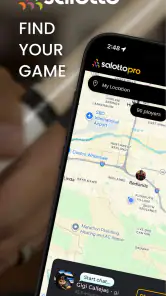
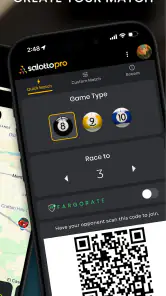
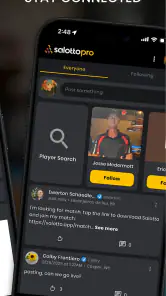
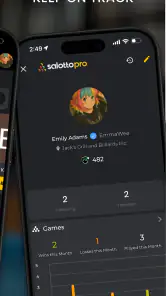
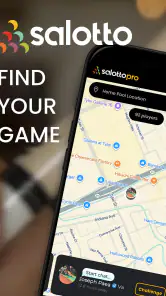
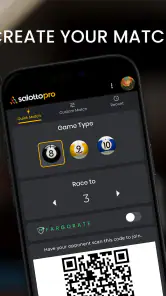
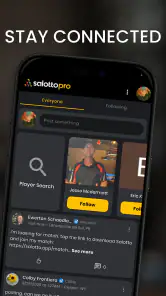
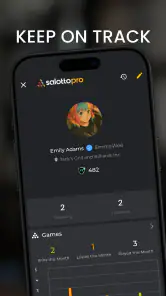
Analysis by Reviewed
Finding a pool game is easy when your regular friends are already available. The harder part is finding the right people when everyone’s schedule is different, or when you have access to a table but no opponent. That is the problem I kept coming back to while using Salotto, a sports app from Salotto LLC built around connecting pool players so they can find, play, and host games.
My impression is that Salotto works best as a local meeting point rather than as a replacement for a full pool-training app or a digital billiards game. Its central value is social and practical: it gives pool players a place to look for real games and potentially make better use of tables, time, and existing connections. That focus makes it appealing to players who want to get away from solo practice, but it also means the app is only as useful as the activity of the community around you.
It is free to install, carries a Teen content rating, and has reached over ten thousand installs. The current release is version 3.16.0, and the app runs on Android devices using Android 7.0 or later. Those details make it accessible to people using older phones, although the experience can still depend heavily on whether enough nearby players are active.
Turning an empty pool table into a real opportunity
The capability that matters most
The most important thing Salotto offers is not a complicated scoring system or a library of lessons. It is the ability to connect the supply and demand of pool games: players looking for opponents, and players who may be able to host or arrange a session. That sounds simple, but it changes the way I think about an evening at a pool hall or a community table.
Without an app like this, the usual alternatives are informal group chats, social media posts, calling a venue, or simply showing up and hoping someone wants to play. Those methods can work, but they scatter the conversation across different places. Salotto gives the search a more focused home, which is especially useful when you do not want to invite your entire contact list or make a public post that reaches people who are not interested in pool.
The distinction between finding and hosting is important. A player who needs a game is not necessarily looking for the same thing as someone who has a table or knows a venue. By bringing those possibilities into one pool-focused community, Salotto can reduce the awkward first step of asking around. In my view, that is the app’s clearest practical advantage.
Salotto is most valuable when it helps turn “I want to play” into a specific conversation. That conversation still needs people to respond, agree on details, and show up, but the app can make the initial connection more direct than a general-purpose social network.
More From Our News Desk

Clash of Clans Is Won Between the Battles

Android Auto Makes the Case for Quieter Car Software

MobiOffice: Transforming Mobile Productivity with Seamless Integration

EA SPORTS FC™ Mobile Soccer: Redefining Mobile Sports Gaming

How Microsoft OneDrive Became a Mobile Productivity Giant

How Google Translate Breaks Language Barriers Effortlessly
Why a focused community can beat a general social app
A general messaging app is better once you already know your opponent. It is faster to send a message to a friend than to open a separate sports community. The advantage here appears earlier in the process, when you are trying to discover players or make your availability visible to people who already understand the activity.
That focus also changes the quality of a potential match. Someone browsing a pool-centered community is more likely to understand why you want to play, whether you are looking for practice, and why a table location matters. You do not have to explain the entire context before suggesting a game. For casual players, that can make arranging a match feel less uncomfortable.
Still, I would not treat Salotto as a guaranteed matchmaking service. A community app cannot create an active local pool scene where one does not exist. If you live far from venues or other players, the app may feel quiet. That is not a flaw unique to Salotto, but it is the main reality to consider before making it part of your routine.
How I would use it before leaving home
I would begin by deciding what I actually need instead of posting a vague request. For example, I might be free after work, have access to a table, and want a relaxed practice game rather than a serious competition. Sharing that kind of context gives another player a clearer reason to respond.
I would also use the app as a planning tool rather than waiting until I was already standing beside a table. The earlier I start the conversation, the more time there is to settle the location and timing. This is one of the less obvious benefits of a community app: it can move the decision from a last-minute impulse to a simple appointment.
For someone hosting, the same principle works in reverse. A table is more useful when potential players know it is available, but a host should communicate enough information to avoid unnecessary back-and-forth. The app is not a substitute for confirming the practical details directly. It is the place where the opportunity begins.
What the experience feels like in practice
Salotto’s usefulness depends on participation, so the first experience may be different for a newcomer than for an established local player. A person entering an active community can quickly see the point of the app. A person entering a quiet area may need patience and may have to initiate conversations instead of waiting for invitations.
That makes the app more suitable for proactive users. I would not install it expecting an automatic opponent to appear immediately. I would install it if I were willing to check the community, make a clear request, and return when my schedule changes. The app rewards consistency more than passive browsing.
There is also a social trade-off. The focused setting may feel more comfortable than approaching strangers at a pool hall, but it does not remove the need for judgment. Before meeting someone, I would keep the first arrangement in a public venue, confirm the plan in writing, and avoid sharing more personal information than necessary. The Teen rating is a reminder that the community should be approached with ordinary online-safety awareness, particularly when arranging in-person games.
A realistic evening use case
Imagine that I finish work on a weekday and discover that my usual pool partner is busy. I have two hours available and know that a nearby venue has tables, but going alone feels less appealing than playing a proper game. Instead of sending several individual messages, I can use Salotto to look for someone interested in meeting around that time.
The useful outcome is not merely finding a name. It is narrowing the arrangement: a suitable player, a workable location, and a shared expectation about the session. If the conversation leads to a confirmed meeting, Salotto has done its job even though the actual game happens outside the app.
If nobody responds, I have learned something equally practical: that this particular time or area may not have enough activity for an immediate match. I can then try a different time, offer to host when possible, or use my existing contacts instead. That is a healthier way to judge the app than expecting every search to succeed.
Where it fits beside the usual alternatives
Compared with a pool video game, Salotto serves an entirely different purpose. A digital billiards game gives instant action, predictable opponents, and no travel. Salotto is slower and less certain, but it can lead to a real table, real practice, and a social connection that a simulated match cannot provide.
Compared with a dedicated training app, it also has a different strength. Training software is usually the better choice when I want drills, technique guidance, shot analysis, or structured solo improvement. Salotto is better when my main obstacle is not knowing what to practice, but not having another person to play with.
Compared with a general social network, its narrower focus is useful but its audience is smaller. A broad platform may offer more people and better messaging tools, while Salotto offers a more relevant context. I would choose Salotto first when the goal is specifically to arrange pool, and a general messenger afterward for final coordination.
Small workflow changes that make it more useful
One practical tip is to separate the search for a game from the search for a long-term playing partner. A single session can be useful even if the personalities or playing styles do not match perfectly. Treating every first meeting as a permanent partnership can make the process unnecessarily demanding.
Another is to be honest about the kind of session I want. A casual player, a learner, and a highly competitive player may all enjoy pool, but they are not always looking for the same evening. Clear expectations can prevent disappointment and make it easier for the right person to answer.
A third is to use hosting as a way to contribute rather than only request. If I have reliable access to a suitable table, mentioning that can make my invitation more useful to someone who has enthusiasm but no convenient place to play. In a community app, participation improves the experience for everyone; simply checking for offers gives less back to the network.
The friction points I noticed
The biggest limitation is the dependence on local momentum. Salotto cannot promise that a player will be available nearby, and the app becomes less compelling if the community in my area is inactive. This is the central trade-off of its concept: the focused network is valuable when populated, but it cannot be judged like an on-demand service with guaranteed availability.
There is also a time cost. Arranging a real game involves messages, timing, travel, venue decisions, and the possibility of cancellation. Someone who wants immediate entertainment may find a mobile pool game much more convenient. Salotto asks for a little planning because the reward is meant to happen in person.
Another point is that the app does not remove the need to assess compatibility. Skill level, preferred rules, pace, and attitude can all affect whether a match is enjoyable. I would ask about those details before traveling, especially if the session involves a longer journey or a hosting arrangement.
The free price makes trying it low-risk, but optional in-app purchases range from less than a dollar to nearly fifty dollars per item. I would approach those purchases carefully and first decide whether the free experience already supports my purpose. For an app whose main value depends on community activity, paying does not automatically solve the local availability problem.
Who gets the most from it
Salotto is a strong fit for independent pool players who often have time to play but struggle to find an opponent. It also makes sense for people who have recently moved, are trying to meet other players, or want to make better use of access to a table. A regular player who is comfortable initiating conversations will probably gain more from it than someone who only wants to accept ready-made invitations.
It can also help hosts. If I know of a table that is underused, a pool-specific community gives me a more relevant audience than a general neighborhood post. The benefit is not just filling one session; it is gradually becoming known as someone who can help make games happen.
Newer players may find the social route less intimidating than walking into a venue alone, but they should still be clear about their experience level. A beginner looking for patient practice can have a better outcome by saying so from the start. The same applies to advanced players who want serious competition and may become frustrated by casual matches.
Who should choose something else
I would skip Salotto if my only goal were solo skill development. A training-focused app, a coach, or deliberate table practice would be more directly useful. I would also choose a digital pool game if I needed instant play without coordinating with another person.
It may not suit someone who dislikes meeting new people, has very limited scheduling flexibility, or lives in an area with few accessible pool venues. In those cases, the planning effort may outweigh the benefit. Existing friends, a local club, or a venue’s own community can be more reliable when those options are already available.
Finally, I would not use it as a substitute for basic safety and courtesy. A promising profile or friendly conversation is not enough reason to ignore sensible meeting practices. The app can open the door to a game, but the quality and safety of that meeting still depend on the people involved.
My final take after using it
Salotto has a clear purpose, and I appreciate that it does not try to turn pool into something it is not. Its best contribution is helping players move from wanting a game to finding a person and a place where one can happen. That is more valuable than a long feature list when the real problem is an empty schedule or an unused table.
At the same time, I would keep expectations realistic. The app’s average rating is 3.6 from around seventy ratings, with several dozen written reviews, which suggests a modest community rather than a universally seamless experience. I read that as a reason to test it in my own area, not as a verdict that applies equally to every player.
My recommendation is straightforward: try Salotto if you want real-world pool connections and are willing to take an active role in making them happen. Give it a clear request, consider hosting when you can, and use direct communication to confirm the details. If you need instant games, structured instruction, or a guaranteed opponent, another type of app will serve you better. For the player who mainly needs a bridge between an available table and an available opponent, however, this focused community approach is genuinely useful.
Salotto Frequently Asked Questions
What devices can I install Salotto on?
Salotto is a sports app for Android and iOS. On Android, it requires version 7.0 or later, so check your device’s software version before downloading. If your device meets that requirement, you can install the app and explore its pool-player community. Salotto is free to download, though optional in-app purchases are available.
What is Salotto, and what can I use it for?
Salotto is a social communication app designed to help people connect through conversations, shared interests, and online interactions. Depending on the features available in your region, you may be able to discover other users, participate in chats or communities, and build new connections. Its main appeal is creating a more personal social experience than simply browsing a traditional social network. Salotto also connects pool players within a community to find, play, and host games.
Is Salotto free to download and use?
Salotto can generally be downloaded without an upfront charge, but some features may require in-app purchases, subscriptions, or other paid options. The free version may provide access to basic communication and discovery tools, while premium functions can offer additional visibility, enhanced controls, or extra content. Check the app’s current store listing and payment terms before subscribing. In-app purchases range from $0.99 to $49.99 per item, so review the price shown in the app before confirming a purchase.
Do I need to create an account to use Salotto?
Most of Salotto’s social and communication features require an account so the app can manage your profile, conversations, preferences, and connections. Registration may involve an email address, phone number, or an existing sign-in provider. Before creating a profile, review the information requested and adjust privacy settings carefully, especially if you plan to share photos or personal details.
Is Salotto safe for meeting and chatting with other people?
Salotto may include standard tools such as blocking, reporting, and privacy controls, but users should still take responsibility for their own safety. Avoid sharing passwords, financial information, home addresses, or sensitive personal details. Be cautious with profiles that request money or pressure you to move conversations elsewhere. If you meet someone offline, choose a public place and tell a trusted person. Salotto is rated Teen, so younger users and their families should consider whether its social features are appropriate for them.
Pros
- Simple interface makes joining conversations quick and easy.
- Supports casual social interaction without requiring advanced technical skills.
- Useful for discovering people with similar interests.
- Conversation-based format can feel more personal than traditional social feeds.
- Available on mobile
- making chats accessible while you are on the go.
Cons
- The quality of conversations may vary depending on the active community.
- Privacy settings should be reviewed carefully before sharing personal details.
- Some features may depend on having enough active users online.
- Public discussions can expose users to unwanted messages or opinions.
- The app may consume noticeable battery and mobile data during extended use.
- Category
- Sports
- Version
- 3.16.0





