RV Trader
- 1.93K
- 4.7
- Installs
- 500.00K
- Price
- Free

Screenshots
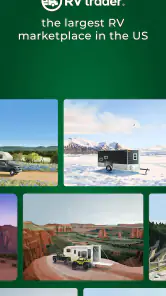
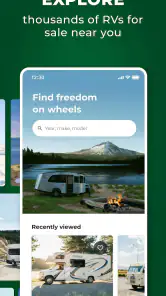
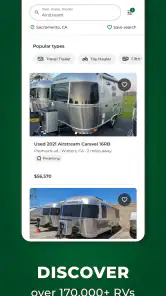
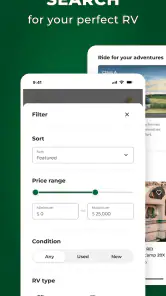
Analysis by Reviewed
Shopping for an RV is very different from browsing for an ordinary car. Size, sleeping space, towing ability, storage, maintenance history, and distance all change the decision, so a general classifieds app can quickly become noisy. I found RV Trader most useful when I treated it as a focused search workspace rather than a complete buying service. It brings recreational vehicles into one place, helps narrow a large market, and gives me a practical way to compare listings before contacting a seller.
That focus matters. The app is made for the Auto & Vehicles category, and its developer is Trader Interactive, LLC. It is free to install, carries an Everyone age rating, and has built a strong audience with a 4.7 average from around 5.8 thousand ratings and more than 500 thousand installs. Those figures suggest that it is not an obscure experiment, but popularity alone is not proof that every listing or interaction will suit every buyer. My experience is that its value depends on how carefully I use the search tools and how much independent checking I do afterward.
How RV Trader feels when I use it to shop
A focused starting point for a complicated purchase
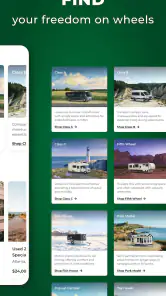
The first advantage is simple: the app keeps the search centered on RVs. Instead of sorting through unrelated vehicle types, I can begin with the kind of recreational vehicle I actually want and then refine the results around practical constraints. That makes a difference when I am only interested in a motorhome, travel trailer, fifth wheel, toy hauler, or another specific style.
I would not use the first screen as a reason to buy anything immediately. I use it to understand the local market, see how sellers describe similar vehicles, and identify which details deserve closer attention. A listing can look attractive because of its photographs or headline, yet the important question is whether its layout, weight, condition, and location match my own situation.
For a first-time buyer, this browsing stage is especially helpful. It can reveal terminology that is easy to misunderstand, show the difference between compact and full-size options, and make it easier to form a realistic shortlist. For an experienced owner, the benefit is less about learning what an RV is and more about reducing the time spent checking scattered sources.
Latest News
Search discipline is more important than endless browsing
My best workflow is to set the basic boundaries before I become attached to a listing. I think about the maximum distance I am willing to travel, the type of RV that fits my vehicle and camping plans, and the features that are genuinely essential. I then compare several candidates rather than judging one listing in isolation.
A useful trick is to search in stages. First, I look broadly enough to understand availability. Next, I narrow by the details that affect ownership, such as size or configuration. Finally, I inspect individual listings for condition clues and seller information. This prevents a common mistake: filtering so aggressively that I miss reasonable alternatives, or leaving the search too broad and confusing abundance with choice.
The app is also useful for planning a viewing trip. If several promising RVs are in the same region, I can compare them before spending time and fuel traveling. That does not remove the need for an inspection, but it makes the first stage of shopping more organized than calling random sellers from general classified ads.
What I pay attention to inside a listing
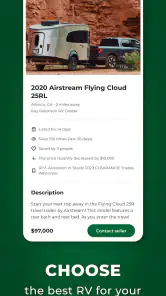
I read the description slowly rather than relying on the first few lines. I look for information about condition, use, ownership, repairs, and equipment, then compare those claims with the photographs. Missing detail is not automatically a sign of a bad vehicle, but it is a reason to ask a direct question before arranging a long trip.
Photographs are helpful for spotting obvious mismatches, but they cannot confirm mechanical condition, water intrusion, tire age, appliance operation, or the accuracy of every specification. I treat images as a screening tool, not an inspection report. If I were seriously considering an RV, I would prepare a checklist and ask the seller to address each important point in writing.
One non-obvious benefit of a specialized marketplace is that it helps me compare like with like. A general vehicle app may show recreational vehicles among cars, trucks, and commercial listings, while RV Trader keeps the context clearer. The trade-off is that I am working within a narrower marketplace, so I would still check other sources when I want the widest possible view of a particular model or local deal.
Trust starts with separating the app from the seller
This distinction is central to using the service responsibly. The app provides a way to discover and evaluate listings, but the presence of an advertisement does not, by itself, guarantee the vehicle’s condition or the seller’s reliability. I do not treat a polished listing as a substitute for a title check, service records, an in-person inspection, or a professional evaluation.
When I contact a seller, I keep the conversation focused on verifiable details. I ask whether the listed specifications are accurate, whether the vehicle is available, what documentation can be shown, and whether the seller will allow an inspection. I am cautious about pressure to make a quick payment or move a conversation into a channel where I cannot keep a clear record.
The app’s established presence makes it a more credible place to begin than an unknown website, but it does not change the normal risks of marketplace shopping. I would never send money simply because a listing appears in a familiar app. A buyer still needs to verify the person, the vehicle, and the transaction independently.
Privacy and account choices deserve attention
Because this is a marketplace, I think about privacy at two separate moments: using the app to browse and communicating with a seller. Browsing can feel casual, but searches involving location or specific vehicle preferences may reveal more about my plans than I intend. I avoid sharing unnecessary personal details while I am still comparing listings.
Before creating an account or responding to advertisements, I review the choices shown by the app and the platform’s current privacy information. I look for clear explanations of what information is requested, why it is used, and which controls are available. I do not assume that a free download means that every part of the service is private or that no information is retained.
I also prefer to keep my contact details limited until a seller has demonstrated that the listing is relevant. A separate email address can make marketplace communication easier to manage, especially when I am contacting several sellers. I would not provide identity documents, financial information, or sensitive travel details during the early browsing stage.
These habits are not criticisms of a specific permission or data practice. They are sensible precautions because the app connects buyers with vehicle advertisements and conversations. The visible choices presented during installation, account setup, and contact actions should guide the decision. If those choices do not feel clear enough for me, I pause instead of granting access automatically.
When location and notifications are useful
Location-related convenience can be valuable for a buyer who wants nearby inventory, but I prefer to use the least revealing option that still supports my search. If I can enter an area manually, that may be preferable to sharing precise location continuously. The right choice depends on how much convenience I gain and how comfortable I am with the requested access.
Notifications can also help when I am actively searching, but they can become distracting once I have a shortlist. I review the notification controls rather than leaving every alert enabled. Turning off unnecessary messages does not mean abandoning the search; it means keeping the app from shaping my attention when I am not ready to act.
For me, user agency means being able to browse without feeling pushed into an account, a conversation, or a purchase before I have enough information. I want to decide when to save a search, when to contact someone, and when to stop receiving updates. Those choices are more important than a flashy interface because RV shopping often takes weeks rather than one quick session.
A realistic weekend shopping scenario
Imagine that I am looking for an RV for occasional family trips, but I do not yet know whether a trailer or motorhome makes more sense. I would start by browsing several types in the app, noting the space and equipment that appear repeatedly. Then I would narrow the search to a manageable travel distance and save only the listings that fit my towing or driving plans.
On Saturday morning, I might compare three candidates rather than arranging a viewing for the first attractive option. For each one, I would write down unanswered questions: ownership documents, signs of leaks, recent maintenance, tire condition, included equipment, and the exact location. I would message the sellers with the same questions so that their answers are easier to compare.
Before visiting, I would confirm that the RV is still available and ask whether an independent inspection is acceptable. At the viewing, I would test what I can, inspect the interior carefully, and avoid treating the app’s listing as a guarantee. If a seller refuses reasonable verification or creates urgency around payment, I would walk away, even if the price looks appealing.
In that scenario, RV Trader saves time during discovery and comparison. It does not make the final decision for me, and that is an important limitation to understand. The app is strongest before the transaction, while the responsibilities of verification remain with the buyer.
Who will get the most from it
I would recommend it to someone who wants a dedicated place to explore RV inventory, especially when the first challenge is understanding what is available nearby. It is also useful for owners who already know the type of vehicle they want and need a more focused way to compare listings than a broad classifieds platform.
It can help a buyer who is still deciding between categories, provided that person is willing to research beyond the photographs. The app gives structure to the search, but it cannot tell me whether a particular floor plan suits my family, whether my tow vehicle is appropriate, or whether a used RV has hidden problems.
I would be more cautious recommending it to someone who wants a fully managed purchase, financing guidance, delivery, or a guaranteed inspection experience inside one app. That is not how I approach it. I see it as a marketplace discovery tool, not a replacement for a dealer relationship, a qualified inspector, or a careful private-sale process.
Where other options may be better
A general classifieds app may be better when I want to compare RVs with ordinary cars, trucks, or equipment in one broad search. A local dealer’s website may be more useful when I already know which dealership I trust and want information about its own stock, service department, or buying process. Manufacturer resources can be preferable when I am researching specifications rather than shopping used inventory.
RV Trader has the clearest advantage when my problem is finding and comparing recreational vehicles in a focused environment. Its weakness is the same focus: it does not replace every other source of information. I still want independent research for model reliability, ownership costs, towing requirements, and inspection procedures.
Another trade-off is that a specialized marketplace can make a search feel more efficient while still leaving important uncertainty unresolved. A neatly presented result is not necessarily a better vehicle. I use the app to reduce the number of candidates, then switch to careful verification before making any commitment.
Practical controls I use before contacting anyone
- Set a realistic travel boundary before saving listings, because an attractive RV that is too far away can waste time and encourage rushed decisions.
- Write down non-negotiable requirements such as vehicle type, sleeping arrangement, storage, or towing compatibility instead of relying on memory while browsing.
- Keep a question log for every serious listing so that missing answers remain visible when several sellers begin responding.
- Limit personal information in early messages and share only what is needed to discuss the vehicle and arrange a viewing.
- Use alerts selectively during an active search, then review or disable them when the search is paused.
These steps make the app more useful because they preserve my control. Without them, it is easy to scroll through attractive interiors, contact too many sellers, and lose track of which claims belong to which vehicle.
Compatibility, cost, and everyday practicality
The app is free, which makes it easy to try without adding a subscription decision to the start of the search. It supports devices running Android 8.0 or later, so anyone using an older system should check compatibility before planning around it. The current version is 26.22.0, and the product has been available since July 9, 2013, giving it a long history as a dedicated RV shopping app.
Those details matter practically, but they do not determine whether I will enjoy using it. The real question is whether I am actively shopping for an RV. If I am only curious about occasional prices, a browser search or a dealer visit may be enough. If I am comparing several options over time, a dedicated app is more valuable because it gives the process a consistent home.
The Everyone rating also makes the app broadly approachable, though the purchase decisions around RVs are obviously adult responsibilities. Younger users may browse for research, but anyone involved in a transaction should have the financial, legal, and practical support needed for such a significant purchase.
My cautious verdict
RV Trader is a useful first stop, not a final authority. I like its focused purpose, its ability to organize a scattered search, and the way it helps me compare recreational vehicles without unrelated listings getting in the way. The free access lowers the barrier to exploring the market, and the app’s established audience makes it a reasonable place to begin.
My recommendation comes with a clear condition: use it as a research and contact tool, then verify everything that matters. Check the seller, inspect the RV, review documents, protect your personal information, and never let an attractive listing create urgency. The app can shorten the path from “I might buy an RV” to a practical shortlist, but it cannot remove the judgment required for the purchase.
For a focused RV search, I would install RV Trader and use it with a written checklist and conservative privacy choices. For someone wanting a guaranteed transaction or a complete ownership service, I would suggest combining it with a trusted dealer, independent inspection, and other research sources. That balanced approach is where I think the app earns its place: it makes discovery easier while leaving the important decisions in the buyer’s hands.
RV Trader Frequently Asked Questions
Is RV Trader available for my phone, and what operating system does it require?
RV Trader is an app in the Auto & Vehicles category, designed for people who want to search for recreational vehicles on a mobile device. Its listed minimum operating system is version 8.0, so check your phone’s software version before downloading. The app is free, and its content rating is Everyone, making it suitable for a broad audience.
Who develops RV Trader, and is it an established app?
RV Trader is developed by Trader Interactive, LLC. It has been available since July 9, 2013, and has grown into a recognizable mobile marketplace for people researching RVs. The app has a 4.7 average from around 5.8 thousand ratings, with around 1.9 thousand written reviews. Those figures offer a sense of its user reception, though individual experiences can vary.
What is RV Trader, and what can I do with the app?
RV Trader is a marketplace for browsing, comparing, and contacting sellers of recreational vehicles. You can search for motorhomes, travel trailers, fifth wheels, toy haulers, camper vans, and other RV types using filters such as price, location, year, mileage, and condition. Listings generally include photos, specifications, seller information, and contact options, helping you research vehicles before arranging a viewing or purchase.
Can I buy an RV directly through RV Trader?
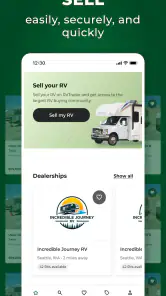
RV Trader mainly connects buyers with private sellers and dealerships rather than completing the entire purchase inside the app. You can review listings and contact sellers, but negotiations, inspections, financing, paperwork, payment, and delivery are usually handled separately. Before sending money or personal documents, verify the seller, inspect the RV, confirm ownership, and use a secure transaction process.
Are all RV Trader listings trustworthy and accurate?
Listings may come from both professional dealers and individual sellers, so the quality and accuracy of information can vary. Photos, descriptions, prices, and vehicle histories should be treated as starting points rather than guarantees. Check the vehicle identification number, title status, maintenance records, and any damage history. Be cautious of unusually low prices, pressure to pay quickly, or requests for unusual payment methods.
Pros
- Large selection of new and used RV listings across the United States.
- Detailed filters help narrow results by type
- price
- brand
- and location.
- Listing photos and specifications make remote comparison more convenient.
- Dealer and private-seller listings offer different buying options.
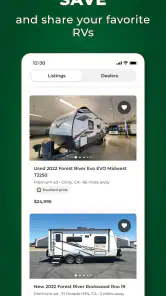
- Saved searches can help users track newly added matching RVs.
Cons
- Listing quality and accuracy can vary between different sellers.
- Some listings may have limited photos or incomplete vehicle details.
- Popular RVs can sell quickly before users arrange an inspection.
- The app depends on seller responses for questions and availability.
- Travel costs may be high when viewing distant RV listings in person.

- Category
- Auto & Vehicles
- Version
- 26.22.0