RotoGrinders Daily Fantasy
- 908.00
- 4.7
- Installs
- 50.00K
- Price
- Free

Screenshots
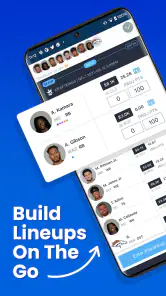
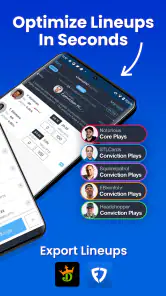
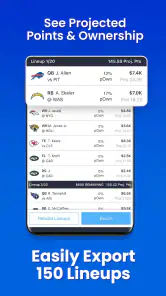
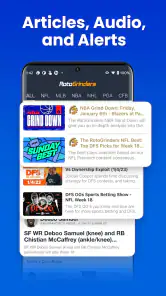
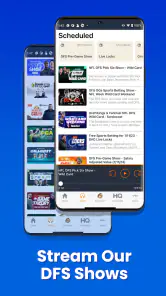
Analysis by Reviewed
I approached RotoGrinders Daily Fantasy as a practical sports companion rather than another place to build an entire fantasy strategy from scratch. Its job is narrower and, in the right situation, very useful: it helps me keep track of starting rosters before I commit to contests. That focus matters because daily fantasy decisions can change quickly when a player is scratched, moved to the bench, or confirmed in a lineup.
The app is made by RotoGrinders and sits in the Sports category. It is free to install, although in-app purchases range from around ten dollars to over one hundred dollars per item. It is intended for mature users, with a 17-plus content rating, so I would not treat it as a casual sports app for younger fans. The current release is version 3.0.3, and it works on devices running Android 5.0 or later.
What I like most is the clear purpose. Instead of asking me to search through team pages, social feeds, and general sports news, the app is built around the question that matters immediately before a contest: who is actually starting? That does not make it a complete daily fantasy toolkit, but it can reduce one of the most avoidable mistakes in lineup selection.
Why roster confirmation is the app’s real value
Daily fantasy players often spend more time comparing projections, salaries, matchups, and ownership ideas than checking whether every selected athlete is active. That last check can be easy to overlook, especially when several games begin close together. A player who looked attractive earlier in the day becomes a problem if the team later announces a change.
In my experience, a roster-focused app is most helpful during the short period between preparing a contest entry and its lock time. I can use the information as a final checkpoint instead of relying on memory or assuming that a projected starter will remain in the lineup. The distinction between projected and confirmed status is important, and this app’s purpose is centered on that distinction.
A realistic example would be a busy evening with several games starting within a narrow window. I might have already chosen most of my contest lineup during a lunch break. Before submitting it, I would open the app, review the relevant teams, and check whether the players I selected still appear among the starters. If one has changed, I can revisit the entry before the deadline rather than discovering the issue after the contest begins.
That workflow is more valuable than simply browsing sports headlines. News apps may mention injuries, trades, or coaching decisions, but they are not always organized around the final starting roster. Team accounts can also be useful, yet they require more searching and may present information in different formats. RotoGrinders Daily Fantasy is more focused: it is designed for the specific last-minute roster question.
More From Our News Desk

Clash of Clans Is Won Between the Battles

Android Auto Makes the Case for Quieter Car Software

MobiOffice: Transforming Mobile Productivity with Seamless Integration

EA SPORTS FC™ Mobile Soccer: Redefining Mobile Sports Gaming

How Microsoft OneDrive Became a Mobile Productivity Giant

How Google Translate Breaks Language Barriers Effortlessly
A useful companion, not a complete fantasy command center
I would not use this app as my only daily fantasy resource. Starting information answers one important question, but it does not tell me whether a player is good value, how a matchup affects a projection, or whether a contest’s scoring system changes the best strategy. I would still need a separate method for research and lineup construction if those decisions matter to me.
That limitation is not necessarily a weakness. Narrow tools can be easier to use when time is short. If I already have a preferred projection source or contest platform, the app can fill a specific gap instead of forcing me to replace my whole routine. The trade-off is that I need to move between tools, and that extra step may feel unnecessary to someone who wants an all-in-one fantasy experience.
The app is especially suitable for users who enter contests frequently enough to care about late roster changes. It is also useful for people who follow multiple sports or teams and find it difficult to remember every starting announcement. A casual fan who only checks a lineup once in a while may find a general sports app sufficient, particularly if they do not submit time-sensitive fantasy entries.
Its audience size suggests that it has found a real niche: the app has passed fifty thousand installs and holds a 4.7 average from around three thousand ratings. Those figures do not prove that it will fit every workflow, but they do indicate that the focused approach has attracted sustained interest. I would still judge it by how well it fits my own contest habits rather than by popularity alone.
How I would build it into a contest routine
I would use the app in three passes rather than leaving everything until the final minute. First, I would check it when I begin planning, mainly to identify obvious absences or uncertain starters. Second, I would revisit it as the first games approach. Third, I would perform a final check on players whose games have not started yet.
This staged approach has a practical advantage: it separates research from emergency repair. If I wait until the last possible moment, one unexpected change can force me to make a rushed replacement without reconsidering the rest of the lineup. Checking earlier gives me time to compare alternatives and avoid treating the first available substitute as automatically suitable.
A less obvious use is to keep the app open while handling several contest entries with different lock times. A player may be confirmed for one slate while another slate is still waiting on news. I would not assume that one successful check covers every entry. Instead, I would match each roster review to the contest and its relevant start times.
Another useful habit is to use the app as a verification layer after making changes elsewhere. If I adjust a lineup based on a projection update, I would return to the roster information before submitting. This catches a different kind of mistake: not only missing an inactive player, but accidentally replacing one confirmed player with someone whose role is still uncertain.
Trust, controls, and moments that deserve care
When I review a sports app connected to fantasy activity, I pay attention to more than convenience. I want to know what I am being asked to do, what choices are visible, and whether paid features are easy to distinguish from the basic experience. RotoGrinders Daily Fantasy can be installed for free, but its in-app purchase range means I would examine any upgrade screen carefully before confirming a purchase.
The price range is broad, from about ten dollars to more than one hundred dollars for an individual item. That makes it especially important not to treat “free” as the same thing as “everything is included at no cost.” I would look at the exact description of each purchase, check whether it is relevant to my needs, and avoid buying simply because I am trying to solve a last-minute lineup problem.
For me, the strongest user-control habit is simple: decide in advance whether the roster-checking function alone is enough. If it is, I can keep the app in that role and avoid turning a focused utility into an open-ended spending decision. If I want additional fantasy research tools, I would compare the cost and usefulness against the services I already use rather than assuming that more features automatically improve my results.
Account and privacy decisions deserve the same deliberate approach. I would read the permission prompts and any visible privacy explanations when setting up the app, especially if the app requests access that does not seem necessary for checking sports information. I would also review the account settings available on my device and in the app, using the controls that are actually shown rather than assuming that a particular option exists.
That is an important distinction. I can assess visible choices such as whether a permission request appears, whether purchase confirmation is clear, and whether account controls are understandable. I should not turn that limited observation into a broad claim about the developer’s entire data practice. My practical advice is to grant only permissions I understand, keep purchase authentication enabled on the device, and revisit settings if my use of the app changes.
The most data-sensitive moment is not necessarily opening a roster screen. It is usually the combination of account activity, paid content, notifications, and contest preparation. I would be cautious when signing in, entering payment details, or enabling alerts, and I would check what each prompt is asking before accepting it. Notifications can be useful for time-sensitive information, but I prefer to enable only the alerts that support my actual workflow.
Where the app can save time, and where it cannot
The app’s focused design may save time compared with manually checking every team site or scrolling through a general news feed. The benefit is strongest when I already know which contests and players I am considering. I can use it as a targeted confirmation step instead of searching broadly for information that may be buried among unrelated stories.
It will not remove the need for judgment. A confirmed starter can still be a poor fantasy choice because of salary, matchup, expected workload, or contest format. Conversely, a player who is not starting may still have a role in some scoring systems, depending on the sport and rules. I would treat the app’s roster information as one input, not as a recommendation to select or avoid someone.
That is also why I would be careful with late swaps. If a contest allows changes after some games begin, I would first confirm the relevant rules on the contest platform itself. Then I would use the app to check the remaining starters, while remembering that roster confirmation does not automatically reveal the best replacement. The app can help me avoid an ineligible or inactive choice, but it cannot make the strategic decision for me.
Compared with social media, the main advantage is focus. Social posts can arrive quickly, but they also bring rumors, commentary, and information from many sources. Compared with a league’s official app, the advantage may be convenience for fantasy users who want a roster-oriented view rather than a broad team experience. Compared with an all-in-one fantasy research subscription, the advantage is simplicity; the disadvantage is that I may need other tools for projections and analysis.
I would also avoid assuming that every sport or contest type will feel equally useful. The value depends on how often starting information changes, how close the contest lock is, and whether the app covers the particular roster information I need at that moment. If my fantasy activity is limited to one league with predictable lineups, a direct team source may be faster. If I manage several slates, the dedicated focus becomes more compelling.
Who should use it and who should skip it
I would recommend trying it if you regularly build daily fantasy entries and have ever submitted a lineup without checking the final starters. It is also a sensible fit for people who follow several teams, work on contests during busy days, or want a repeatable pre-lock checklist. The free installation makes it relatively easy to test whether the workflow feels faster than your current method.
I would be more cautious if you are looking for projections, detailed matchup analysis, bankroll guidance, or a full contest-management platform. Those needs go beyond roster confirmation. Paying for additional items may make sense for some users, but I would not purchase anything until I had identified the specific problem it solves and compared it with tools already in my routine.
Newcomers should also understand the mature rating. Daily fantasy involves contests and financial decisions, so I would not present this as a harmless game for children. Even for adults, I would set a spending limit, treat paid entries and app purchases separately, and avoid making decisions while rushed or chasing a loss.
For experienced players, the app’s best role is probably as a final safety check. It does not replace a spreadsheet, projection model, or research service, but it can sit beside them and answer the operational question those tools may not answer clearly: is this player actually in the starting lineup? That narrow function can prevent a surprisingly costly oversight.
My cautious verdict after using the roster-first approach
RotoGrinders Daily Fantasy earns its place when I use it for what it is designed to do: keep starting-roster information close at hand while I prepare time-sensitive fantasy contests. I like the focused purpose, the practical pre-lock workflow, and the way it complements rather than competes with deeper research tools.
My reservations are equally clear. It is not a complete fantasy strategy app, and the presence of in-app purchases means I would pay attention to every purchase screen instead of assuming the free install covers all useful functions. I would also make my own decisions about permissions, notifications, account access, and payment security based on the choices visible on my device.
The app’s 4.7 average and more than fifty thousand installs make it worth considering, but they are not a substitute for testing it against your own routine. I would install it if late lineup changes are a recurring concern, use it alongside my usual analysis, and judge its value by whether it prevents rushed checks and avoidable inactive-player mistakes.
My final recommendation is therefore cautious but positive: use it as a roster verification tool, not as a promise of better fantasy results. If that distinction matches your needs, this sports app can become a useful part of the minutes-before-lock routine. If you want one application to handle research, projections, contest strategy, and roster news together, a broader alternative may suit you better.
RotoGrinders Daily Fantasy Frequently Asked Questions
What devices and operating systems can run RotoGrinders Daily Fantasy?
RotoGrinders Daily Fantasy is an app for sports fans who follow daily fantasy lineups. On Android, it requires version 5.0 or later, so check your device’s software before downloading. The app is free to download, though some features may involve in-app purchases. If you use iOS, check the relevant app store for current compatibility before installing.
What is RotoGrinders Daily Fantasy, and what does the app offer?
RotoGrinders Daily Fantasy is designed for users who play daily fantasy sports and want access to analysis, projections, lineup advice, contest information, and strategy resources in one place. Its Lineups app helps users stay on top of starting rosters for their contests. It can help you compare players, review expert opinions, and make more informed decisions before entering contests on supported daily fantasy platforms. The available features may vary by sport, location, and account type.
Is RotoGrinders Daily Fantasy free to download and use?
The app is free to download, but some content, tools, or premium features may require a subscription, registration, or in-app purchase. In-app purchases range from $9.99 to $119.99 per item. Daily fantasy contests themselves can also involve entry fees, depending on the platform and contest selected. Before paying for any feature or contest, review the current pricing, renewal terms, and eligibility requirements shown in the app.
Which sports and daily fantasy platforms are supported?
RotoGrinders commonly focuses on popular daily fantasy sports such as NFL, NBA, MLB, NHL, PGA, and other major competitions, although coverage can change throughout the season. The app may also provide information for different fantasy operators and contest formats. Support is not necessarily identical in every country, so check the current app listing and in-app sections for the sports and platforms available to you.
Can RotoGrinders guarantee winning daily fantasy lineups?
No fantasy sports app can guarantee profits or winning lineups. RotoGrinders provides research, projections, tools, and expert analysis intended to support your decision-making, but player performance, injuries, contest selection, and unexpected game events always create risk. Treat the information as guidance rather than a promise, verify late-breaking news, and only enter contests with money you can afford to lose.
Pros
- Strong lineup research for major daily fantasy sports contests.
- Useful projections help compare players quickly before entering contests.
- Contest analysis can reveal valuable salary and ownership trends.
- Supports strategy development for both casual and experienced players.
- Covers multiple sports throughout their respective seasons.
Cons
- Some advanced tools may require a paid subscription.
- Information can feel overwhelming for beginners unfamiliar with DFS terms.
- Player news and projections may change rapidly before game time.
- Coverage quality may vary between sports and contest types.
- Using the app does not guarantee profitable fantasy results.
- Category
- Sports
- Version
- 3.0.3





