Koupon: Real Deals & Codes
- 675.00
- 4.7
- Installs
- 1.00M
- Price
- Free

Screenshots


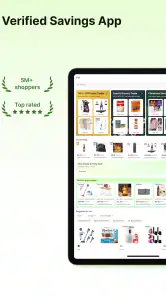

Analysis by Reviewed
I usually judge shopping apps by what happens after the first few exciting searches. Saving money once is easy; building a habit that remains useful month after month is much harder. After spending time with Koupon: Real Deals & Codes, I found an app aimed at that exact problem: helping shoppers look for current savings without turning every purchase into a hunt through questionable coupon pages.
It is a free shopping app from Koupon, with a Teen content rating and support for devices running Android 6.0 or later. The app reached version 2.13.7, and its public reception is encouraging: a 4.7 average from around 11 thousand ratings, alongside more than a million installs. Those figures suggest that the idea has found a sizeable audience, but they do not replace the practical question I care about most: does it deserve a permanent place on your phone?
What using Koupon feels like during the first week
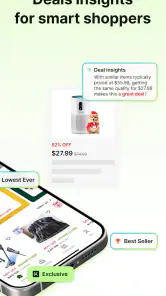
The first week is where the app makes its strongest impression. I could open it with a specific shopping intention, search for a product or retailer, and focus on whether an available deal looked usable rather than merely attractive in a headline. That distinction matters. Coupon websites often bury the important conditions behind an appealing percentage or a large discount claim. Here, the central appeal is a more restrained approach to savings: the app presents itself around real deals and codes instead of inflated promotions or invented-looking offers.
That positioning makes Koupon particularly useful when I already know what I want to buy. If I am preparing to place an order, the app gives me a separate checkpoint before checkout. I can compare the visible offer with the store’s own price, read the conditions, and decide whether the saving is worth the extra step. This is more practical than browsing deals for entertainment, because it connects the search to a purchase I was going to make anyway.
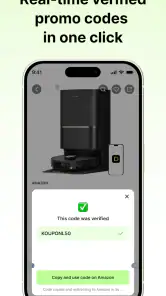
My best early workflow was simple. I searched before committing to a basket, checked whether the offer applied to the exact retailer or product category, and treated the displayed saving as something to verify rather than an automatic guarantee. That last habit is important with any coupon service. A code can have restrictions, minimum spending rules, exclusions, or timing limits, and a careful shopper should confirm the final total at checkout.
The app also works well for people who dislike the noisy side of bargain hunting. Instead of opening several search results, dismissing pop-ups, and testing codes copied from old pages, I could use one shopping-focused place as a starting point. It does not remove every bit of checking, but it makes the process feel less random. For a first-time user, that reduction in clutter is probably more valuable than a long list of theoretical offers.
There is a useful psychological advantage too. Because the app is free, trying it before a purchase costs little beyond time. I would not install it expecting every order to become dramatically cheaper. I would install it to create a pause between “I want this” and “I am paying now.” That pause is where the app can earn its keep, especially for online purchases that are easy to complete impulsively.
More From Our News Desk

Clash of Clans Is Won Between the Battles

Android Auto Makes the Case for Quieter Car Software

MobiOffice: Transforming Mobile Productivity with Seamless Integration

EA SPORTS FC™ Mobile Soccer: Redefining Mobile Sports Gaming

How Microsoft OneDrive Became a Mobile Productivity Giant

How Google Translate Breaks Language Barriers Effortlessly
Who gets the most from the early experience
Koupon is a better match for regular online shoppers than for someone who only buys occasionally. If you place orders across different retailers, the habit of checking for a deal can become worthwhile even when only some searches produce a useful result. It is also a sensible tool for anyone who has grown tired of unreliable coupon pages and wants a cleaner first stop.
Families and students may appreciate the same workflow for a different reason. When a purchase is planned, even a modest reduction can help stretch a fixed budget. The important point is to search before building the entire order around a promotion. If the offer changes what you buy or encourages unnecessary spending, the apparent discount can work against you.
On the other hand, I would skip it if you expect automatic savings with no reading or checking. Koupon is not a substitute for understanding a retailer’s terms. It is also less compelling for shoppers who rarely buy online, always use one retailer with its own loyalty system, or prefer to compare prices manually through a general search engine. In those cases, adding another step may not justify itself.
Whether the value survives from month to month
The long-term value depends less on novelty and more on repetition. During the first few uses, discovering a working offer feels rewarding. After that, the app has to become part of a reliable routine. I think it can, but only if you give it a specific job: check it before planned purchases, not browse it aimlessly every day.
That distinction protects the app from becoming another source of shopping fatigue. I would open it when replacing household items, ordering something already on my list, or comparing the final cost of a planned purchase. I would not use it as a reason to browse products simply because a deal appears. The strongest recurring value comes from reducing the cost of purchases you already intended to make.
A useful monthly routine is to keep a short shopping list outside the app, then search Koupon when an item is ready to buy. This prevents the deal feed from controlling your priorities. It also makes it easier to judge the result honestly: did the app lower the final cost, or did it merely make a new purchase feel urgent?
Another practical habit is to compare the coupon result with the retailer’s own promotion. A code is not automatically better than a sale already applied to the product. Sometimes the store’s direct discount is simpler or larger; sometimes the coupon adds to it, and sometimes the terms prevent combining both. Checking the final basket rather than celebrating the headline is where experienced use separates itself from casual browsing.
I also found that Koupon’s emphasis on genuine savings changes how I evaluate failed searches. A search that produces no suitable code is not necessarily a bad result. It can save time by preventing me from testing a string of expired or misleading offers elsewhere. The app’s value is partly in filtering the search process, not only in producing a discount every time.
Still, recurring usefulness has limits. Deals and codes naturally change, so the app’s benefit is tied to how often its available information matches your shopping needs. Someone who shops in a narrow niche may find the coverage inconsistent from month to month. Someone who buys from many mainstream retailers is more likely to encounter occasions where the app is worth opening.
The maintenance burden is small, but not zero
The app does not require a complicated personal system to be useful. I would keep the maintenance routine to three checks: search before ordering, read the conditions, and confirm the final price. That is manageable, but it means Koupon is an active shopping aid rather than a completely passive savings button.
Keeping expectations realistic is another form of maintenance. I would not save every offer, reorganize my life around promotions, or assume that a displayed code will work without testing. The less emotional investment I place in a particular deal, the easier it is to abandon it when the retailer rejects it or the terms are too restrictive.
There is also a time trade-off. For a small purchase, searching, copying a code, and checking the basket may take longer than the saving is worth. For a larger planned order, the same process makes much more sense. My rule would be to consider the value of the purchase and the likelihood of a meaningful discount before spending several minutes chasing a minor reduction.
This is one of the app’s less obvious trade-offs: its free price removes a financial barrier, but your attention still has a cost. Koupon is most efficient when used as a quick verification step. It becomes less attractive when it turns into prolonged browsing through offers that do not fit what you need.
Where coupon fatigue can appear
The main source of fatigue is repetition without payoff. If you search several times and repeatedly find that an offer is irrelevant, restricted, or no longer useful, you may stop opening the app. That is not a flaw unique to Koupon; it is a natural weakness of deal hunting. The solution is to tie searches to real purchases and leave when the result is not worthwhile.
Another frustration can come from the gap between an offer’s promise and the final checkout experience. Even a legitimate code may apply only to selected items, require a threshold, exclude sale products, or work for one retailer region but not another. I treat every result as a lead that needs confirmation. That mindset prevents disappointment, although it also means the experience is not as effortless as a simple “tap and save” message suggests.
There is a subtler kind of fatigue as well: the feeling that every purchase needs optimization. I do not think users should check Koupon for groceries bought in a hurry, emergency purchases, or low-cost items where the process becomes disproportionate. A savings app should support a budget, not make ordinary shopping feel like administrative work.
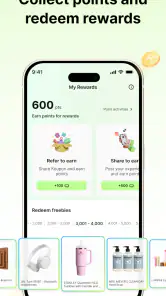
For shoppers who already use retailer loyalty programs, cashback services, browser extensions, and bank offers, Koupon may add useful comparison but also another layer to remember. I would use it as a first check, then compare the final benefit with the tools I already trust. The best option may be a store promotion, a loyalty reward, or a direct price reduction rather than a coupon code.
How it compares with familiar alternatives
Compared with a general web search, Koupon offers a more focused starting point. A search engine can expose a huge range of coupon pages, but that abundance often includes duplicated, outdated, or poorly explained results. Koupon’s appeal is not that it makes every saving certain; it is that it aims to reduce the amount of noise between the shopper and a usable offer.
Compared with retailer-specific loyalty apps, it has a broader purpose. A store’s own app may be better for member pricing, order history, and personalized promotions at that retailer. Koupon makes more sense when you shop across different stores and want one place to begin checking. I would not replace a retailer app that consistently gives me valuable benefits, but I would use Koupon alongside it when making a larger purchase.
Compared with cashback services, the timing is different. A coupon can reduce the checkout total immediately, while cashback usually depends on a separate reward process and its own conditions. Neither approach is automatically superior. I would compare the actual final benefit and the effort required, especially when a retailer allows only certain types of promotion.
Compared with browser-based coupon tools, a dedicated app can feel more intentional on a phone, particularly when I am shopping from a mobile device. The trade-off is that an app requires me to remember to open it before checkout. If I do most of my shopping on a computer and rely on automatic browser assistance, a mobile-first coupon routine may be less convenient.
Small habits that make the app more useful
My first tip is to search by the retailer or purchase destination before searching broadly. That keeps the results tied to an action and makes it easier to judge whether an offer is relevant. My second is to read the conditions before changing the basket. A discount that requires adding an unwanted item is not a saving, even if the percentage looks impressive.
My third tip is to compare the final total, not the advertised discount. This catches situations where shipping, exclusions, or a competing sale changes the result. It also helps you decide whether a failed code search is worth repeating. If the difference is tiny, I would complete the purchase and move on rather than spend more time pursuing it.
A fourth useful approach is to use the app for planned seasonal or household spending without letting the offer dictate the timing. Make the list first, check Koupon second, and buy only what still makes sense. This order of operations turns the app into a budgeting tool instead of a temptation engine.
Finally, I would judge Koupon over several real shopping occasions rather than one enthusiastic first session. The app’s lasting value is personal. It depends on the stores you use, the kind of products you buy, and whether the checking process fits naturally into your routine. A single successful code is pleasant, but a low-friction habit is the real test.
Who should install it, and who should pass
I recommend trying Koupon if you regularly shop online, care about avoiding misleading promotions, and are willing to spend a short moment verifying an offer. Its free access makes experimentation easy, and the strong 4.7 average indicates that many users find the overall experience worthwhile. The Teen rating also makes it broadly suitable for older teenagers and adults who shop with some independence.
I would be more cautious if you want guaranteed savings on every order, dislike reading restrictions, or already have a retailer-specific system that consistently meets your needs. It is also not the right tool for people who are easily encouraged to buy things merely because a deal is available. In that situation, the app’s best feature is the one you may need most: using it only after deciding what you actually need.
Because Koupon is developed by Koupon and has passed the million-install mark, it feels more established than a coupon tool that has just appeared. The current version, 2.13.7, shows that the product is being maintained as an active app rather than treated as a one-off directory. Even so, maintenance on the app’s side cannot guarantee that every retailer’s promotion remains suitable for your order, so the final checkout check remains essential.
My long-term verdict
After the novelty fades, I think Koupon earns space on the phone of a regular online shopper, but not as a constantly opened entertainment feed. Its lasting strength is the way it can fit into a short, repeatable pre-checkout routine. Search, inspect, compare, and continue only when the saving is real enough to justify the effort.
The app does not eliminate the compromises of coupon hunting. Offers can be too narrow, the checking process can feel unnecessary for small purchases, and users must resist letting promotions create demand. Those limitations matter, especially for people who expect automation. Yet the focus on credible savings gives Koupon a more useful role than a noisy collection of exaggerated claims.
My recommendation is practical: install it if you have a planned purchase coming up, use it before opening your wallet, and keep only the habit that genuinely saves you time or money. For me, that is enough to make it a worthwhile shopping companion. Koupon: Real Deals & Codes is not valuable because every search produces a bargain; it is valuable when it helps you make a better-informed purchase without making shopping more complicated than it needs to be.
Koupon: Real Deals & Codes Frequently Asked Questions
Is Koupon: Real Deals & Codes free to download?
Yes, Koupon is free to download, so you can install it and browse its shopping offers without paying for the app itself. Keep in mind that a coupon does not make a purchase free: you may still need to pay the retailer’s price, shipping, or taxes, and some deals have minimum-spend or product restrictions. Check the terms before placing an order.
Which devices can run Koupon: Real Deals & Codes?
Koupon is available for Android devices running Android 6.0 or later. Before downloading, check your device’s operating system version and make sure you have enough storage for the installation. The app is intended for shopping and deal discovery, so its usefulness also depends on whether the retailers and offers shown are relevant to where and how you shop.
What is Koupon: Real Deals & Codes, and how does it work?
Koupon: Real Deals & Codes is a shopping and savings app designed to help users discover discounts, promotional offers, and coupon codes from participating retailers. After installing it, you can browse deals by category or store, open an offer to view its conditions, and follow the instructions provided to redeem it online or in a physical shop. Availability and redemption methods may vary by retailer.
Are the coupons and promo codes on Koupon actually free to use?
Most offers listed in Koupon can be viewed without paying for access, but the underlying purchase may still require payment, shipping costs, taxes, or minimum-order requirements. Some promotions may also be restricted to new customers, selected products, or specific locations. Before using a deal, carefully read its expiration date, exclusions, and retailer terms to confirm that it applies to your intended purchase.
Does Koupon support online shopping, in-store purchases, or both?
Koupon may include both online coupon codes and offers intended for use in physical stores, depending on the retailer and promotion. Online deals generally redirect you to a merchant’s website or provide a code to enter at checkout. In-store offers may require showing a coupon, scanning a barcode, or meeting specific conditions. The instructions displayed with each deal explain the expected redemption process.
Pros
- Finds coupons and promo codes for many popular online stores.
- Personalized deals can help reduce shopping costs.
- Easy-to-browse categories make offers quick to discover.
- Useful alerts can notify you when relevant discounts appear.
- Savings can be compared before completing an online purchase.
Cons
- Some codes may be expired or fail at checkout.
- The app may include frequent promotional notifications.
- Deal availability can vary by location and retailer.
- Savings often require minimum purchases or specific conditions.
- Some offers redirect to external retailer websites or apps.

- Category
- Shopping
- Version
- 2.13.7