Imagine Golf: Score Better
- 91.00
- 4.8
- Installs
- 50.00K
- Price
- Free

Screenshots
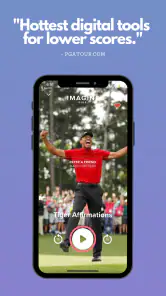
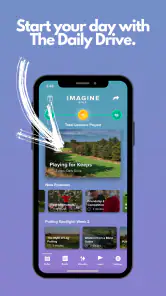
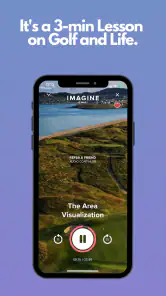

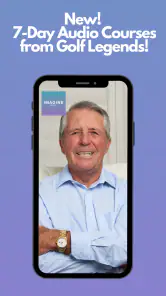
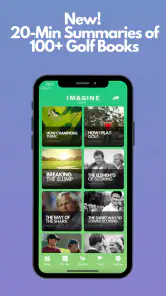

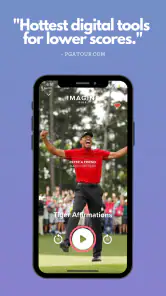
Analysis by Reviewed
Golfers often spend plenty of time working on swing mechanics, club selection, and course strategy, yet the mental side can be harder to practice deliberately. Imagine Golf: Score Better takes a different route. It is a free sports app from TLDR, Inc built around the mental game of golf, and I found its appeal strongest when I wanted a focused way to think about confidence, attention, and decision-making rather than another technical swing lesson.
The app is best understood as a mental training companion, not a replacement for a coach, launch monitor, scorecard, or full golf simulator. That distinction matters. It will not physically change your grip or show whether your clubface is open at impact. What it can do is give you a more deliberate way to prepare your mind before a round and reflect on the choices that affect your score.
After using it as a golfer would—during short breaks, before playing, and when thinking through difficult holes—I came away with a fairly clear view of where it fits. Its real value is in turning vague advice about “staying focused” into something you can revisit with intention. The experience is most useful for players who already understand that nerves, rushed decisions, and poor recovery after mistakes can quietly add strokes.
How quickly it gets you into a useful mental routine
The first thing I noticed is that a mental training app has a different speed profile from a conventional sports utility. You are not opening it to calculate a handicap, check a tee time, or record a score in a few taps. The benefit depends on giving the material enough attention to affect how you approach a shot. That means the app can feel quick to start, but the meaningful result is gradual.
For a short pre-round session, that is a good arrangement. I could use a few quiet minutes to shift away from work, traffic, or whatever had occupied my head before arriving at the course. The app’s subject makes it suitable for that transition because it asks me to think about the mental process behind a shot instead of immediately chasing technical corrections.
It also works well as a small habit rather than a long study session. I would not treat every opening as an invitation to consume a large amount of material. A better approach is to choose one mental theme, consider how it applies to the next round, and then leave the phone alone. That keeps the exercise from becoming another distraction before a game.
The store summary calls it “The Mental Game App,” while its short description is “Imagine Golf.” Those phrases point toward the central experience: using guided mental preparation and visualization to picture better decisions and calmer execution. I found that more useful before a round than in the middle of one. On the course, attention should remain on the shot, the target, and the playing group, not on repeatedly checking a phone.
More From Our News Desk

Clash of Clans Is Won Between the Battles

Android Auto Makes the Case for Quieter Car Software

MobiOffice: Transforming Mobile Productivity with Seamless Integration

EA SPORTS FC™ Mobile Soccer: Redefining Mobile Sports Gaming

How Microsoft OneDrive Became a Mobile Productivity Giant

How Google Translate Breaks Language Barriers Effortlessly
There is also an important difference between perceived speed and actual usefulness. An app can open promptly and still fail if the user has no clear reason to return. Imagine Golf has a stronger chance of becoming part of a routine when you connect it to a specific problem, such as losing concentration after a bad hole or becoming overly cautious after one poor drive. Without that personal connection, the material may feel pleasant but easy to forget.
What happens when you use it heavily
The most demanding use case is not technically demanding in the way a graphically intensive game is. This is a sports app centered on mental practice, so heavy use is more about repeated sessions, extended attention, and switching between preparation and real-world play. I would not choose it as a substitute for an active practice session at the range, but I can see a role for it between physical sessions.
A realistic example is a golfer preparing for a weekend competition. On Friday evening, the app can help establish a simple intention for the round. On Saturday morning, a shorter revisit can reinforce that intention. After playing, the golfer can think about whether the chosen approach survived the first mistake, a slow pace, or an uncomfortable lie. That workflow is more sensible than opening the app every few minutes during play.
One non-obvious benefit is that mental training can expose a mismatch between what a golfer says they want and what they actually do. Someone may claim to value aggressive play but repeatedly choose low-risk shots after one error. Someone else may believe they struggle with pressure when the real issue is rushing routine decisions. Using the app before and after rounds can help separate those patterns, provided the user writes down or remembers a concrete example rather than treating the session as inspiration.
The trade-off is that repeated use may become passive. Listening to or reading mental advice is not the same as applying it under pressure. I recommend pairing each session with one observable behavior: taking the same amount of time before a shot, committing to a target, or accepting a poor result without changing the next routine. That makes the app more than a motivational pause.
Resource demands should also be viewed in context. Nothing about this type of app suggests that it needs the same level of power as a modern 3D golf game. On a suitable device, the experience should be easier on the phone than a game that renders a course or tracks a swing through demanding sensors. Still, the quality of your session depends more on uninterrupted concentration than on raw hardware power. A bright screen, low battery, or noisy environment can undermine the purpose even if the app itself is running normally.
Reliability when the round does not go to plan
Reliability here has two meanings. The first is whether the app remains dependable as a regular tool. The second is whether its approach helps when golf becomes unpredictable. The current version is 1.10, and the app has attracted an average rating of 4.8 from over 600 ratings, with more than 90 written reviews. Those figures suggest that many users have found the experience worthwhile, although a rating cannot tell me whether it will match every golfer’s learning style.
In practical terms, I would judge the app by whether it supports a repeatable routine rather than expecting it to rescue a bad round. A mental exercise can prepare you to respond better, but it cannot guarantee that you will stay calm after a lost ball, a slow group, or a series of missed putts. The app is most reliable as preparation; it is less realistic to expect it to function as an instant reset button in the middle of frustration.
That limitation is actually useful to recognize. If I open a mental training app only after becoming angry, I am asking it to solve a problem that began several shots earlier. A better recovery workflow is to use the app away from the course, decide in advance what a reset looks like, and then apply that short routine during play. For example, after a poor hole, the goal should not be to feel perfect. It should be to stop carrying the previous hole into the next decision.
Another practical point is consistency. Golfers often try a new training tool once, feel encouraged, and then return to old habits. Imagine Golf is more likely to help someone who gives it a defined place in the week. A short session before practice, a review before competition, or a reflection after a round is easier to maintain than an ambitious daily plan that quickly becomes a chore.
Because the app is free to download, it is easy to test without committing money at the start. It does include in-app purchases ranging from $6.99 to $99.99 per item, so I would pay attention to what level of access fits your needs before treating it as a long-term training expense. The free entry point is helpful for deciding whether the style suits you, while the purchase range means serious users should consider the total value alongside lessons, books, or coaching.
Where it fits on different phones and for different golfers
Imagine Golf is available for devices running Android 5.0 or later, which covers a broad range of Android hardware. That makes it accessible to people who do not own a recent flagship phone. At the same time, older devices can create a less comfortable experience through slower app switching, limited storage, or a screen that is harder to use outdoors. Those are not reasons to reject it, but they are reasons to keep expectations realistic when using an older handset at the course.
The app is rated for Everyone, which makes its subject approachable for a wide audience. In my view, the more important question is golfing maturity rather than age. A complete beginner may benefit from learning that golf is partly a decision and attention challenge, but someone still learning basic rules and contact may gain more from hands-on instruction first. The strongest audience is the golfer who already plays enough to recognize recurring mental mistakes.
It is also not the ideal choice for every kind of learner. If you need slow-motion swing analysis, club data, GPS distances, live competition scoring, or a detailed practice log, you should choose a dedicated tool for that job. Imagine Golf does not replace those usual alternatives because its purpose is narrower and more reflective. That narrowness is a strength when you want mental preparation, but a weakness if you expect one app to manage your entire golf routine.
I would also skip it if you dislike guided reflection or find visualization unhelpful. Some golfers respond best to measurable feedback from a range session, a coach’s correction, or statistics from repeated rounds. Others benefit from imagining a shot and rehearsing a response before pressure arrives. Neither style is automatically superior. The app makes more sense when you are willing to test its ideas against your own play instead of accepting every exercise as universally effective.
One useful device-related habit is to keep the phone away once the session is complete. Mental preparation can be defeated by notifications, messages, or the temptation to browse. I would use the app somewhere quiet, finish the exercise, and then put the phone into golf mode—whether that means silence, airplane mode, or simply leaving it in the bag. The point is not to turn a concentration tool into another source of divided attention.
How I would use it alongside normal golf practice
I would not build my entire improvement plan around this app. Instead, I would place it before the physical work. Before visiting the range, I might use it to choose one mental objective, then judge the session by whether I followed that objective rather than by whether every shot was perfect. This changes practice from a search for one magical swing feeling into a chance to rehearse a process.
For a player who tends to overthink, the app can be paired with a simple limit: one mental cue per shot. The training session happens before the ball is addressed; once the routine begins, the golfer commits and plays. That is a specific trade-off worth understanding. More mental analysis is not always better, and an app about the mental game can ironically encourage too much thinking if the user carries every lesson onto the course at once.
For a player who loses confidence after a mistake, I would use the app to prepare a recovery script in advance. The script could be as simple as acknowledging the result, selecting the next target, and returning to the normal routine. The app cannot perform that reset for you, but it can make the idea familiar before you need it. Familiarity matters because a complicated response is difficult to remember when the scorecard starts to feel important.
For a golfer who plays casually with friends, the app may still be useful, especially when the goal is enjoyment and steadier decision-making rather than tournament performance. However, I would keep the practice light. Golf is also social, and spending too much time on a phone before a friendly round can make the experience feel more serious than intended.
For a competitive player, I see it as one layer in a broader plan. A coach can observe behavior, a scorecard can reveal patterns, and competition provides pressure that no quiet app session can fully reproduce. Imagine Golf can help prepare the mental language used in that plan, but it should not be treated as evidence that a problem has been solved simply because the exercise felt convincing.
My performance verdict after weighing speed, stability, and usefulness
Imagine Golf: Score Better is a focused sports app with a clear place in the golf ecosystem. It is not trying to be a swing analyzer or a digital scorecard. Its purpose is to help golfers spend more deliberate time on the mental side of playing, and that makes it more interesting than a generic collection of motivational reminders.
I like the low barrier to trying it: it is free, aimed at Everyone, and developed by TLDR, Inc. The broad Android compatibility is another practical advantage for golfers using older phones. The current version is 1.10, and its strong average rating indicates that the concept has connected with a substantial group of users. Still, those strengths do not remove the need for active participation. The app will not improve a golfer who only consumes advice without carrying one small behavior onto the course.
My main reservation is not about speed or device demands. It is about fit. Mental training is personal, and the app will feel more valuable to a golfer who already notices problems with pressure, focus, confidence, or recovery. If your immediate priority is correcting ball flight, measuring distances, or tracking statistics, another category of golf app will serve you better. If you want a quieter way to prepare your thinking before practice and play, this one deserves a fair trial.
I would recommend starting with a specific question rather than browsing without a plan: What usually costs me strokes when my technique is good enough? Use the app to explore that issue, connect the lesson to one behavior, and test it over several rounds. That approach gives you a meaningful way to judge the experience and avoids expecting instant transformation.
In my experience, the best reason to keep Imagine Golf installed is that it encourages a golfer to treat every shot as a decision process, not just a swing. Its performance is therefore measured less by how much phone power it uses or how quickly a screen appears and more by whether it helps you arrive at the next shot with a clearer plan. For golfers willing to practice that part of the game, this is a thoughtful companion for building a steadier pre-shot and recovery mindset.
Imagine Golf: Score Better Frequently Asked Questions
Is Imagine Golf: Score Better free to download, and what might I pay for inside the app?
Imagine Golf: Score Better is free to download, but it also offers in-app purchases. The listed purchase options range from $6.99 to $99.99 per item, so the cost can depend on what you choose to access. Before making a purchase, review the options and terms shown in the app so you understand what is included and whether a selection suits your needs.
What devices can run Imagine Golf: Score Better?
Imagine Golf: Score Better is available for Android and iOS users, making it an option for golfers who prefer to learn on a phone or tablet. On Android, the app requires version 5.0 or later. Checking that your device meets this requirement before downloading can help avoid installation problems, and keeping your operating system up to date is generally useful for a smoother app experience.
What is Imagine Golf: Score Better, and how does it help improve your game?
Imagine Golf: Score Better is a golf improvement app focused on the mental side of the game. It provides short audio lessons, mindset exercises, and practical guidance designed to help players manage pressure, improve concentration, build confidence, and make better decisions on the course. It is not a swing-analysis tool or a replacement for coaching, but it can complement technical practice by helping you develop a calmer and more consistent approach during rounds.
Is Imagine Golf: Score Better suitable for beginners as well as experienced golfers?
Yes. The app is designed to be useful for golfers at different skill levels because its lessons generally focus on mental habits rather than advanced technical knowledge. Beginners may benefit from learning pre-shot routines, focus, and confidence early, while experienced players can use the content to address frustration, nerves, poor decision-making, or inconsistency. The value depends on applying the ideas regularly rather than listening to a lesson only once.
Does Imagine Golf: Score Better require a subscription or include in-app purchases?
Before downloading, users should check the current App Store or Google Play listing because pricing, trial periods, and available content can change. Apps of this type commonly offer some introductory material while placing the complete lesson library or premium features behind a subscription or one-time purchase. Review the billing terms carefully, including automatic renewal, trial cancellation rules, and whether your preferred payment method will be charged after the trial ends.
Pros
- Simple scoring tools make it easy to track rounds on the course.
- Useful statistics help identify trends in your golf performance.
- Clean interface keeps key scoring features easy to find.
- Round history lets you review previous results over time.
- Helpful for golfers who want more structure during practice.
Cons
- Some advanced features may require a subscription or in-app purchase.
- Accurate GPS features can depend on phone signal and location access.
- Frequent tracking may reduce battery life during a full round.
- New users may need time to understand all available statistics.
- The app may feel unnecessary for golfers who only record basic scores.
- Category
- Sports
- Version
- 1.10





