Draft Sharks Fantasy Football
- 305.00
- 3.4
- Installs
- 50.00K
- Price
- Free

Screenshots
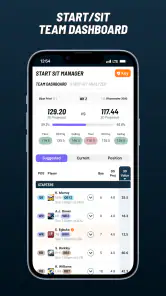
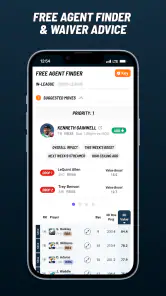
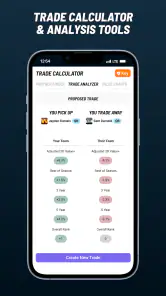
Analysis by Reviewed
I approached Draft Sharks Fantasy Football as a practical companion for draft preparation rather than as a complete fantasy league manager. That distinction matters. The app is built around helping me think through player rankings, draft decisions, tools, and advice, while the actual league experience may still depend on the platform where my league is hosted. For someone who enjoys preparing before draft night, that focused purpose can be useful; for someone expecting a full team-management replacement, it may feel limited.
Developed by Draft Sharks, this free sports app has been around since May 7, 2015, and it remains available in version 4.7 for devices running Android 7.0 or later. Its broad audience is reflected in an Everyone content rating, and its reach is respectable at over 50 thousand installs. The average sits at 3.4 from more than 500 ratings, which suggests a mixed experience rather than universal satisfaction. My impression is that the app is most valuable when I use it as one part of a deliberate draft routine instead of treating every recommendation as an automatic answer.
How Draft Sharks fits into a serious draft routine
A focused tool for decisions before and during the draft
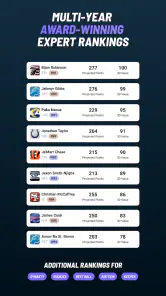
The strongest reason to install this app is simple: it gives fantasy football preparation a dedicated place on my phone. Instead of switching between scattered browser tabs, notes, and general sports coverage, I can use a fantasy-specific reference point while deciding how to approach a draft. Rankings and advice are more useful when they are connected to a plan, and that is where the Draft Sharks identity makes sense.
I would not use it as a substitute for understanding my league settings. A ranking that looks sensible in a standard format can become less useful in a superflex league, a keeper league, or a setup that rewards unusual scoring categories. Before relying on any player order, I would first check roster positions, scoring rules, bench size, and whether the league uses individual defensive players. The app can support a decision, but it cannot remove the need to understand the rules that create the decision.
That is an important everyday use case. Imagine I am commuting home before a draft and realize that my league’s scoring favors receptions more heavily than usual. I can use the app to review my preparation, but I should then compare its guidance with the league’s actual scoring and create a short list of players who fit my format. The useful workflow is not “open the app and draft the first name shown.” It is “use the app to form a view, then adjust that view to the room I am entering.”
Why the free price changes the decision
Because the app is free, the barrier to trying it is low. I can test whether its presentation and advice fit my habits without committing money first. That makes it especially reasonable for casual players who want more structure than a blank sheet of paper but do not want to build a detailed spreadsheet or pay for a large fantasy subscription.
Free access also changes what I expect from it. I would judge it by how quickly it helps me make a better draft plan, not by whether it replaces every specialized service. Players who already subscribe to an advanced fantasy platform may find overlapping information, while newcomers may appreciate having rankings and draft-oriented guidance in one sports app. The value depends less on the number of screens and more on whether I can turn the information into a decision without becoming distracted.
More From Our News Desk

Clash of Clans Is Won Between the Battles

Android Auto Makes the Case for Quieter Car Software

MobiOffice: Transforming Mobile Productivity with Seamless Integration

EA SPORTS FC™ Mobile Soccer: Redefining Mobile Sports Gaming

How Microsoft OneDrive Became a Mobile Productivity Giant

How Google Translate Breaks Language Barriers Effortlessly
The practical difference between rankings and a strategy
A ranking is a starting point, not a complete draft strategy. The app can help me identify how players are viewed, but I still need to decide when to address quarterback, how much depth I want at running back, and how aggressively I should react to positional runs. Those choices depend on league size, roster construction, draft position, and the behavior of the other managers.
One useful habit is to create tiers from the information I review. If several players appear close together, I treat them as a group rather than assuming the exact order is meaningful. When my preferred player disappears, I can select another player from the same tier instead of reaching for a name simply because it appears next on a list. This is a more resilient way to use a ranking tool, and it prevents the app from turning my draft into a rigid script.
What the app is like for different kinds of players
For a first-time fantasy manager, the main benefit is organization. Draft preparation can be intimidating because there are so many opinions, positions, and injury-related concerns competing for attention. A focused app can give a beginner a place to start and a reason to think about player value before the clock begins.
For an experienced manager, the benefit is more selective. I would use it to challenge my assumptions, compare my personal list with an outside viewpoint, and prepare fallback options. I would not expect it to replace my own league-specific research. Experienced players often gain more from identifying disagreements than from following consensus blindly: if my evaluation differs from the app, that difference becomes a prompt to investigate.
For a player who mainly wants live scoring, trade negotiations, waiver claims, and lineup changes, this may not be the best first choice. A league host’s official app is usually more appropriate for those tasks because it is connected to the league itself. Draft Sharks Fantasy Football makes more sense as a preparation and advice companion.
How I would use it on draft day
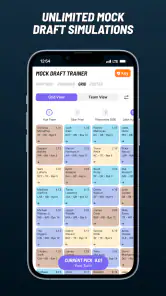
I would prepare before the draft rather than opening the app for the first time while everyone is waiting. First, I would note my league’s scoring and roster requirements. Next, I would review the available guidance and build a short list for each position. Then I would mark players I would be comfortable selecting at different stages, leaving room to react to what the rest of the league does.
During the draft, I would use the app as a quick reference, not as a command center. The most useful information is often the alternative: if my preferred running back is selected, which comparable options remain? If several managers suddenly target tight ends, should I join them or take value elsewhere? A tool is helpful when it reduces hesitation, but it becomes a problem if I spend so much time checking it that I lose track of roster balance.
After the draft, I would keep my expectations realistic. A draft aid cannot guarantee a strong season because injuries, roles, schedules, and unexpected performances change the picture. Its job is to improve the quality of my choices at the moment I make them. That is a narrower promise, but it is also a more believable one.
How it compares with common alternatives
The usual alternative is the fantasy platform that hosts the league. That option is better when I need transactions, lineup management, league messages, and live match information. Its draft tools may be convenient, but they are often tied closely to that platform’s own experience. Draft Sharks Fantasy Football is more appealing when I want a separate draft-focused perspective rather than another place to manage the league itself.
Another alternative is a browser search. Searching for rankings gives me more variety, but it can also create a messy mix of opinions with different scoring assumptions and update habits. The advantage of a dedicated app is concentration: I can return to one fantasy football resource instead of repeatedly sorting through unrelated pages. The trade-off is that a single source may not reflect every league format or every viewpoint.
Spreadsheets remain the best option for managers who enjoy building a highly customized model. A spreadsheet lets me add auction values, keeper costs, personal tiers, bye-week notes, and roster targets in exactly the format I want. Draft Sharks is easier to start with and less labor-intensive, but it will not offer the same level of personal control as a system I build myself.
Paid fantasy services may be better for users who want deeper customization, more extensive analysis, or a broader season-long workflow. The free app is easier to justify for a casual or moderately serious player who wants useful preparation without adding another subscription. In my view, the choice comes down to control versus convenience: a custom system gives me more control, while this app gives me a faster starting point.
What the version history means for current users
The current version is 4.7, and the app’s long availability shows that it is not a brand-new experiment. That history is relevant because fantasy football tools need to remain usable as mobile operating systems and draft habits change. A current version can make the app more practical for existing users than an abandoned application, especially when they return each season and want a familiar preparation tool.
At the same time, I would separate the fact of a current version from assumptions about what has changed inside it. A version number alone does not tell me that the app has gained a particular feature, redesigned a specific screen, or introduced a new analytical system. I would evaluate the present experience directly: how quickly information loads, how clearly rankings are presented, and whether the workflow feels comfortable on my device.
For someone who has used earlier versions, the main question is whether the app still fits the way they draft. Existing users should revisit their process rather than assuming old habits remain ideal. If the current layout makes it easier to move between rankings and advice, that can reduce draft-day friction. If the experience still requires too much manual interpretation, a veteran manager may prefer to keep using a spreadsheet or another service alongside it.
Where the experience can become frustrating
The biggest limitation is the gap between general guidance and league-specific strategy. No universal ranking can perfectly account for every scoring format, draft size, roster rule, or manager tendency. If I forget that, I may mistake a convenient list for a personalized recommendation. The app is more useful when I treat its material as informed input and less useful when I expect it to make every contextual judgment for me.
Another possible friction point is information overload. Fantasy football advice can encourage endless checking, especially when I am already nervous about a draft. More research does not always create better decisions. I would set a stopping point: prepare my tiers, identify a few late-round targets, and then stop changing the plan unless the league settings or draft room give me a real reason to do so.
The app may also be a poor fit for someone who wants everything connected to their league account. A dedicated advice tool and an official league app serve different purposes. If I have to copy information from one place to another, that extra step can outweigh the benefit for a user who values automation more than independent analysis.
Device compatibility is another practical consideration. The minimum requirement of Android 7.0 makes it accessible to many older Android phones, but anyone using a very old device should still judge the experience by actual performance, screen size, and responsiveness. A draft tool needs to be readable quickly, particularly when a selection clock is running. A cramped or slow interface can undermine otherwise useful advice.
Three smarter ways to get value from it
- Build tiers instead of memorizing a strict order. Use the app’s rankings to group players who appear close in value, then make selections based on roster needs and the remaining options. This protects me when the draft moves unpredictably.
- Separate preparation from live reaction. Review the app before draft night, write down a compact plan, and use the app during the draft only to resolve genuine uncertainty. This keeps research from becoming a distraction.
- Use disagreements as research prompts. When my personal evaluation differs from the app, I do not automatically change my mind. I check whether the difference comes from scoring format, risk tolerance, roster construction, or a player assumption I have overlooked.
These habits also clarify what the app can and cannot do. It can help me organize outside guidance and make decisions faster, but it cannot know my preferred risk level or the personalities in my league unless I add that judgment myself. That human layer is not a weakness unique to this app; it is part of fantasy football. The mistake is expecting a ranking screen to understand a draft room better than the person sitting in it.
Who should install it, and who should skip it
I would recommend trying it if I were advising a fantasy player who wants a free, dedicated draft reference, especially someone moving beyond casual guessing but not ready to maintain a complex spreadsheet. It is also a sensible second opinion for experienced managers who already have their own rankings and want another perspective before making selections.
I would be more cautious with a user who wants a complete league-management app, automatic lineup decisions, or a deeply customizable analytical workspace. That person may be happier with the official league platform, a spreadsheet, or a more advanced paid service. The app’s focused nature is useful for preparation, but that same focus means it should not be mistaken for an all-purpose fantasy football headquarters.
The rating of 3.4 from hundreds of ratings reinforces my balanced view: there is enough interest to make the app worth examining, but the experience clearly will not satisfy everyone. I would install it early in the preseason, test how naturally it fits my draft process, and keep a simple backup plan in notes or on paper. That small precaution matters because draft-day confidence should come from preparation, not from depending on one screen.
My final take after using it as a companion
Draft Sharks Fantasy Football works best when I give it a defined job. I use it to prepare, compare viewpoints, organize player priorities, and stay calmer when the draft starts moving quickly. I do not ask it to manage my league, understand every scoring nuance automatically, or guarantee that my roster will succeed.
Its free availability, broad device support, and established presence make it an easy tool to test. The mixed average rating tells me to keep expectations measured, while the current version suggests that the app remains an active option rather than a forgotten download. For me, the decision is straightforward: install it if you want a focused draft companion, but pair its guidance with your league rules and your own judgment.
That approach gives the app its best chance to help. I would not call it the only fantasy football resource worth having, and I would not recommend it as a replacement for a league-management platform. But for a free sports app centered on draft preparation, it can earn a place in my routine—particularly when I use its rankings and advice to build a flexible plan instead of following them mechanically.
Draft Sharks Fantasy Football Frequently Asked Questions
What devices and operating systems can run Draft Sharks Fantasy Football?
Draft Sharks Fantasy Football is a sports app for Android devices, and its listed minimum operating-system requirement is Android 7.0. Before installing, check the software version on your device and make sure it meets that requirement. The app is free to download, so you can try it without an upfront purchase and see whether its tools fit the way you prepare for fantasy football.
Who develops Draft Sharks Fantasy Football, and is it a widely used app?
Draft Sharks Fantasy Football is developed by Draft Sharks, the name behind its fantasy-football rankings, tools, and advice. It has more than 50,000 installs, giving prospective users a sense that it has reached a substantial audience of fantasy managers. Its average rating is 3.4 from over 500 ratings, while more than 300 written reviews offer additional perspectives to consider before downloading.
What is Draft Sharks Fantasy Football, and who is it designed for?
Draft Sharks Fantasy Football is a companion app and fantasy-football resource focused on helping users prepare for drafts, manage player rankings, compare projections, and make more informed roster decisions. It is mainly designed for fantasy managers who want analytical tools rather than a simple league scoreboard. Beginners can use the rankings and advice, while experienced players may appreciate the deeper projections and strategy features.
Does Draft Sharks Fantasy Football support my fantasy league platform?
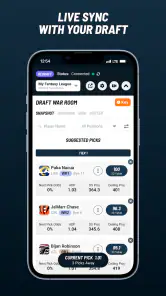
Draft Sharks primarily works as a research and draft-preparation tool, so its exact compatibility depends on the league platform and the feature you want to use. Before downloading or subscribing, check whether your league provider is supported for syncing, importing rosters, or receiving lineup recommendations. Even when direct integration is unavailable, you can generally use the rankings, projections, articles, and draft tools manually alongside your league.
Is Draft Sharks Fantasy Football free to use?
The app is free to download, but that does not necessarily mean every feature or service is included at no cost. Some advanced tools may require a paid subscription, premium package, or in-app purchase. Access may vary by season and plan, particularly for detailed projections, customizable rankings, draft assistance, trade analysis, and other expert tools. Review the current pricing, renewal terms, and included features in the app before committing.
Pros
- Expert rankings and projections help guide draft-day decisions.
- Useful player news keeps fantasy managers updated on key developments.
- Draft tools support multiple league formats and scoring settings.
- Clear matchup data makes weekly lineup planning easier.
- Helpful analysis suits both beginners and experienced fantasy players.
Cons
- Many premium tools require a paid subscription.
- The amount of data may feel overwhelming for new users.
- Some features are most useful only during draft season.
- Player projections can differ from your league’s scoring nuances.
- The app’s value depends heavily on regular roster updates.
- Category
- Sports
- Version
- 4.7





