Draft Dominator
- 141.00
- 4.0
- Installs
- 10.00K
- Price
- Free

Screenshots
Analysis by Reviewed
I came away from Draft Dominator with a clear impression: it is built for fantasy football managers who want more structure than a quick list of player rankings can provide. Rather than treating draft day as a guessing game, the Sports app from Footballguys gives me a way to prepare, react, and keep my decisions tied to the shape of my own league. That focus makes it more useful than a generic sports news app, although it also means casual players may find it more involved than they need.
The app is free to install and is rated for Everyone, so it is easy to try without committing money at the start. Its average rating is 4.0 from around 600 ratings, with more than 100 written reviews, and it has passed 10,000 installs. Those figures suggest a focused tool with a real user base rather than a broad mainstream sports companion. I would describe it as a draft workspace first and a general fantasy football app second.
How Draft Dominator changes the way I prepare
The biggest strength is the way it encourages me to think in terms of a complete roster instead of chasing isolated names. When I use a normal ranking page, it is tempting to select whichever player appears highest at the moment. A dedicated draft tool is more valuable because every selection changes what I need next. If I already have a strong option at one position, the sensible move may be to address another position or wait for a later round. That sounds obvious, but draft pressure makes simple decisions surprisingly easy to overlook.
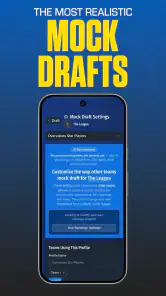
I find the app most useful before the draft, when I can turn vague preparation into a repeatable plan. I can review the player pool, consider likely priorities, and think through how I would respond if a preferred target disappears earlier than expected. This is more practical than reading endless articles because it pushes me to make decisions in the order they will happen. The result is not a promise of a perfect team; it is a better process for dealing with uncertainty.
That distinction matters. No draft assistant can know exactly how other managers will behave, and no projection can remove injuries, changing roles, unexpected trades, or a league mate reaching for a player. I would not use Draft Dominator as an automatic substitute for judgment. I use it as a framework that keeps me from drifting too far from my plan when the room becomes unpredictable.
Useful preparation before draft night
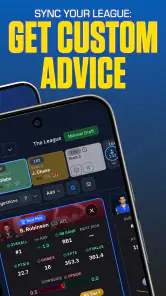
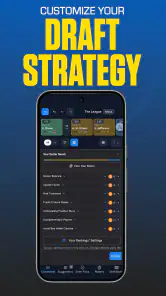
A good workflow starts with the league itself. Before relying on any recommendation, I would make sure the app is being used with the correct roster requirements and scoring assumptions for the competition. A player who looks attractive in one format can be much less valuable in another. This is one of the most important practical habits with any draft assistant: the quality of the advice depends heavily on whether the setup reflects the league I am actually joining.
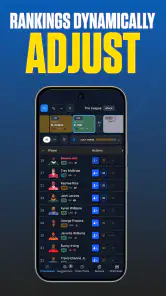
I also prefer to create tiers rather than a single rigid order. A long ranking can give a false sense of precision, especially when several players are close in expected value. Tiers help me recognize when a position is drying up and when I can safely wait. In practice, that means I am not simply asking, “Who is number one?” I am asking, “How many comparable choices will still be available if I pass now?” That is a much better draft question.
More From Our News Desk

Clash of Clans Is Won Between the Battles

Android Auto Makes the Case for Quieter Car Software

MobiOffice: Transforming Mobile Productivity with Seamless Integration

EA SPORTS FC™ Mobile Soccer: Redefining Mobile Sports Gaming

How Microsoft OneDrive Became a Mobile Productivity Giant

How Google Translate Breaks Language Barriers Effortlessly
Another useful habit is to prepare fallback routes. If I want a certain position early but the room takes the players I expected, I need a second plan that does not feel like a panic response. I might shift toward a different position, accept a player from the next tier, or wait and build depth later. Draft Dominator is at its best when I use it to rehearse those branches before the clock is running.
This is also where the app has an advantage over a static article. An article can explain strategy, but it usually cannot stay beside me as I work through the changing needs of my roster. The app’s purpose is more interactive: it helps connect the current pick with the decisions that follow. I still need to understand why a recommendation makes sense, but I spend less time rebuilding the whole plan in my head after every selection.
A realistic draft-day example
Imagine I enter a live draft expecting to address one position early, only to see several managers select from that group immediately. My first reaction might be to force a choice because I do not want to feel left behind. A calmer approach is to check whether the remaining options belong to the same useful tier. If they do, I can wait and improve another part of the roster. If the tier is nearly gone, taking the last suitable option may be reasonable even if it was not my original target.
That is the kind of moment where I see the value of a specialized assistant. It does not remove the tension, but it gives me a reference point. I can compare the needs of my roster with the choices still available instead of reacting only to the last pick. The app becomes especially helpful for managers who understand basic fantasy football but struggle to maintain a coherent plan once the draft moves faster than expected.
I would still keep a simple personal note beside the app. Recording why I passed on a player can prevent me from making the same decision again a few rounds later. It also helps me notice whether I am following the tool thoughtfully or merely clicking the most prominent suggestion. The best results come from combining the app’s structure with my own awareness of roster balance and league behavior.
Where it compares well with ordinary alternatives
The usual alternatives are a browser ranking page, a spreadsheet, a podcast, or a general fantasy football platform. Each has a place. Articles and podcasts are good for context, news, and explaining why a player’s outlook has changed. A spreadsheet offers total control and can be tailored to unusual league rules. A general fantasy platform is convenient because it handles the league itself. Draft Dominator appeals to me when I want the middle ground between raw information and a fully personal spreadsheet.
Compared with a static ranking page, it is more useful for decision flow. Compared with a spreadsheet, it should require less manual maintenance for someone who wants a ready-made drafting environment. Compared with a general league app, its identity is more specialized around preparation and selection strategy. The trade-off is that it may not be the single app I use for every part of the fantasy season. Its value is concentrated around the draft rather than broad social or league-management duties.
That narrower purpose is not automatically a weakness. I often prefer an app that does one important job clearly instead of one that tries to combine scores, news, chat, transactions, rankings, and drafting into a crowded interface. However, anyone looking for a complete fantasy football headquarters should approach it with the right expectations. I see it as a companion to the league platform, not necessarily a replacement for every tool already in my routine.
What requires patience and judgment
The main limitation is that a draft assistant can make the process look more certain than it really is. A recommendation may be mathematically sensible while still being wrong for my roster, my risk tolerance, or the way my league values particular positions. If I follow every suggestion without asking what problem the pick solves, I can end up with a technically attractive list of players but an awkward team.
There is also a learning curve for users who are unfamiliar with draft terminology or roster construction. The app is not aimed only at experts, but it makes more sense when I already understand concepts such as positional scarcity, tiers, value, and opportunity cost. A complete beginner may need outside explanations before the recommendations become meaningful. That is not a reason to avoid it, but it does make the first session less effortless than opening a basic ranking list.
Another point to consider is the paid layer. The app is free, but in-app purchases range from $12.99 to $89.99 per item. That creates a meaningful decision before I invest time in a particular workflow: I need to decide whether the free experience is enough for my league or whether advanced material justifies additional spending. I would not pay automatically simply because the app is specialized. I would first test how well it fits my draft format and whether its guidance improves decisions I already struggle with.
The price range also makes the app more suitable for committed fantasy players than for someone joining one casual office league. A serious manager may view extra tools as part of the season’s preparation. A casual manager may prefer free rankings, a league platform, or advice from friends. Neither choice is wrong; the value depends on how much attention I want to give the draft and how much uncertainty I am trying to reduce.
Because the current version is 2026.3, I would also make a habit of checking that the app is up to date before an important draft. Draft information changes quickly, and using an old version can undermine confidence even when the underlying strategy is sound. I do not treat an update number as proof that every recommendation will suit my league, but keeping the app current is a sensible part of preparation.
Small habits that make the tool more effective
My first tip is to avoid opening it for the first time when the draft clock is already running. I would install it several days beforehand, explore the main workflow, and identify where league settings and roster needs are represented. That short rehearsal prevents the app itself from becoming a source of stress.
My second tip is to use it to identify decision points, not to memorize a complete sequence. Drafts rarely follow the exact order I expect. Memorizing names is fragile, while understanding which positions are deep or thin gives me flexibility. I get more from the app when I treat its guidance as a map of trade-offs rather than a script.
My third tip is to compare its recommendation with the actual room. If several managers are selecting from one position earlier than expected, the market may be changing faster than my original plan. I should not blindly reject the app, but I should ask whether the remaining alternatives still offer comparable value. This is where human judgment adds something a tool cannot: I can observe the tendencies of people in my specific league.
A fourth useful habit is to set a stopping rule for research. Fantasy preparation can become endless, with one more ranking, one more opinion, and one more adjustment always available. I would use Draft Dominator to organize my final thinking, then stop changing my plan every time I read a new hot take. Too much information can be as damaging as too little when it causes hesitation.
Who should use it, and who should skip it?
I recommend it most to managers who enjoy preparation but want something more practical than scattered notes. It is a good fit if I regularly lose track of positional needs, panic when a target is taken, or spend draft night switching between several browser tabs. It is also useful for returning players who know the basics and want a more disciplined way to translate rankings into picks.
It may be less suitable for someone who plays only occasionally and wants a very simple experience. If my league is extremely casual, my roster rules are unusual, or I prefer making every calculation myself, a spreadsheet or a basic ranking page may feel more comfortable. Managers who want live league communication, transactions, scores, and social features in one place may also prefer their main fantasy platform.
The app is available for Android users running at least version 6.0, which keeps the technical entry point fairly accessible. I would still judge the experience by the device I plan to use on draft night. A larger screen can make comparisons and roster tracking easier, while a phone is more convenient when I am drafting away from a desk. The important question is not merely whether it installs, but whether I can read and act on its information quickly in the setting where my draft will happen.
Footballguys has made a focused Sports app rather than a generic football news feed. That specialization is its strongest argument. It gives me a place to prepare for the draft, test alternative approaches, and make roster decisions with more context than a single ranking can provide. Its weakness is the same specialization: it is not designed to replace every other fantasy tool, and its paid options deserve a careful look before purchase.
My final view is positive, with a condition. Draft Dominator is worth trying if your biggest draft problem is decision-making under pressure, not a lack of football headlines. I would use the free version first, configure it around my actual league, and judge whether it makes my preparation clearer. If it helps me understand when to wait, when to act, and how to recover from an unexpected run, it earns a place in my routine. If I only need a quick list of names or play in a very casual league, the simpler alternative will probably be enough.
Draft Dominator Frequently Asked Questions
Who develops Draft Dominator, and what kind of app is it?
Draft Dominator is a sports app developed by Footballguys, with the store summary inviting users to dominate their league. It is aimed at fantasy-draft preparation and decision support, rather than being a general sports news or live-score app. If you are choosing a draft tool, consider whether you want help organizing player selections and planning a roster, and whether that fits the way you prefer to manage your fantasy league.
What is Draft Dominator and what can I use it for?
Draft Dominator is a fantasy sports draft assistant designed to help users prepare for and manage player selections. It can provide rankings, projections, draft advice, and roster-planning tools, depending on the supported sport and league format. Before downloading, check whether its current features match your competition, scoring system, and preferred draft platform, since available tools may vary by season or subscription level.
Which fantasy sports and league formats does Draft Dominator support?
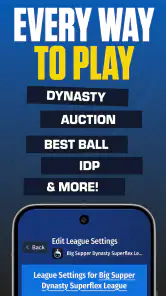
Support can depend on the version of Draft Dominator and the season for which it was released. The app is generally associated with fantasy draft preparation, but users should confirm whether it covers their sport, league provider, scoring rules, roster positions, and draft type. If your league uses customized settings, review the configuration options carefully to ensure rankings and recommendations are relevant rather than based on a standard format.
Does Draft Dominator work without an internet connection?
Draft preparation features may be available offline after the necessary data has been downloaded, which can be useful on draft day when Wi-Fi or mobile coverage is unreliable. However, current player news, projections, rankings, synchronization, account services, and updates may require an internet connection. It is best to open the app before the draft, refresh its data, and verify that your league settings and player information are stored locally.
Is Draft Dominator free to download, and are there in-app purchases?
Draft Dominator is free to download, though in-app purchases are available. Some versions may offer core draft tools for free while reserving advanced projections, expert advice, league synchronization, or premium content for a purchase or subscription. Review the available options in the app before purchasing, especially if you only need basic rankings and draft recommendations. In-app purchases range from around $13 to $90 per item.
Pros
- Helps organize draft priorities before making roster decisions.
- Useful for comparing player values across different draft scenarios.
- Supports more disciplined
- data-driven fantasy football planning.
- Can reveal undervalued players that are easy to overlook.
- Makes draft preparation faster than tracking everything manually.
Cons
- May feel overwhelming for beginners unfamiliar with draft terminology.
- Recommendations can become outdated when injuries or roles change quickly.
- Advanced features may require a paid subscription or in-app purchase.
- Results depend heavily on the accuracy of league settings entered.
- Primarily benefits serious fantasy players rather than casual users.
- Category
- Sports
- Version
- 2026.3





