WordWhizzle Pop
- 3.92K
- 4.6
- Installs
- 100.00K
- Price
- Free
Screenshots
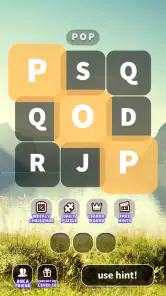
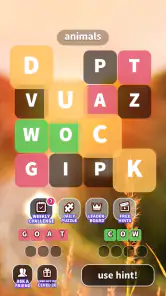
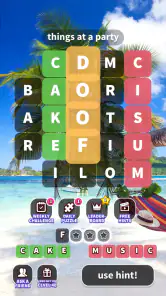
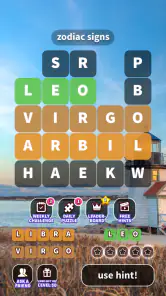
Analysis by Reviewed
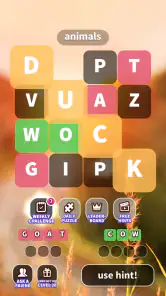
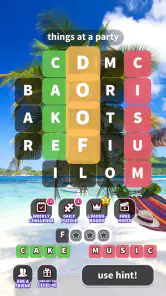
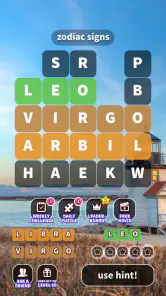
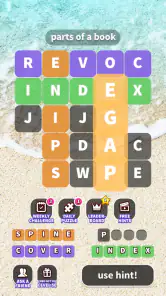
I went into WordWhizzle Pop expecting a familiar word-search game, but its presentation and challenge structure make it feel more active than simply scanning a fixed grid. The basic appeal is easy to understand: find words, solve the puzzle in front of you, and keep moving while the game continues to offer another small target. That simplicity is exactly why it works well in short sessions, although it also means the experience depends heavily on whether you enjoy repeating a focused word-finding loop.
This is a free word game from Apprope AB, rated for Everyone. It has reached over 100 thousand installs and holds a 4.6 average from around 15 thousand ratings, which suggests that its straightforward format has found a dependable audience. I think the most useful way to judge it is not as a deep vocabulary course or a large adventure, but as a compact mental break with enough progression to encourage one more puzzle.
How the first puzzles establish the goal
The opening experience is strongest when you treat each puzzle as a small, clearly defined task rather than as an endless word hunt. You are looking for the words the current challenge expects, and that gives every letter on the screen a purpose. Instead of wandering through a completely open board, I found myself checking likely combinations, confirming a word, and immediately reassessing the remaining letters.
That rhythm creates an early goal that is understandable without a long explanation. A player who already knows word searches can begin quickly, while someone less familiar with mobile word games can learn through the first few rounds. There is no need to build a complicated strategy before playing; attention, spelling knowledge, and a willingness to test possibilities are enough to get started.
The early objectives also benefit from being small. Completing one puzzle gives a clear sense of closure, which is important on a phone. I can play while waiting for an appointment or during a short commute without feeling that I have started something too large to finish. The trade-off is that the game does not offer the kind of broad narrative goal that would appeal to someone seeking characters, exploration, or a story-driven campaign.
For new players, my advice is to avoid rushing through the first boards. Use them to notice how the game expects you to inspect letter groupings and how much attention it rewards. Word-search games often tempt players to swipe randomly, but a slower first pass is more useful. I look for familiar endings and beginnings, then scan across the board again from a different direction. This simple habit reduces the feeling that a missed word is hidden by luck.
The early loop is also a good test of personal fit. If discovering a word from a crowded arrangement feels satisfying, the game gives you an inviting starting point. If you prefer anagrams, crossword clues, or word definitions, the central activity may seem too visual and not analytical enough. That distinction matters because the title belongs to the word category, but it does not try to serve every kind of word-game player at once.
Small wins and visible momentum
Progress feels most convincing when a completed puzzle is treated as more than a single isolated win. Each solved challenge becomes a reason to continue, and the sequence of short tasks gives the session a natural forward motion. I often found that the decision to play another round came from the unfinished feeling left by the current board rather than from a dramatic reward.
This is a subtle strength. The game does not need an elaborate plot to create momentum because the next puzzle supplies the immediate objective. For players who like measurable improvement, the useful signal is personal: you begin to recognize patterns faster, spend less time scanning aimlessly, and recover more confidently when a board initially looks confusing.
That kind of progress is more meaningful here than pretending the game is a full skill-training tool. It can exercise concentration and vocabulary recall in a light way, but I would not use it as a substitute for structured language study. The puzzles encourage recognition and search, not necessarily the deeper work of learning definitions, grammar, or pronunciation.
One practical approach is to treat difficult boards as observation exercises. Rather than immediately guessing, I pause after finding the obvious words and examine the unused letters. Sometimes the remaining arrangement becomes easier to read once the completed words are mentally removed. This is a useful tactic for preserving patience, especially when the board seems to stop offering obvious answers.
Where the difficulty starts to matter
The challenge curve is most enjoyable when it asks me to become more careful without making the result feel arbitrary. Early puzzles can build confidence, but a word-search game needs resistance or the loop becomes automatic. WordWhizzle Pop works best for me when I have to change my scanning method, consider less obvious word shapes, or spend a little longer checking the board.
There is an important difference between productive difficulty and frustration. Productive difficulty makes me think, “I should inspect this more carefully.” Frustration makes me think, “I have no idea what the game wants.” The experience is strongest in the first situation. When I reach the second, I stop swiping repeatedly and restart my visual search from one edge of the board, moving in a consistent direction. That turns a vague struggle into a repeatable method.
Players who are strong at spotting patterns may move through the easier material quickly. For them, the attraction depends on whether later challenges provide enough resistance to remain interesting. Players with a smaller vocabulary may have the opposite experience: familiar-looking letters can still produce hesitation when several possible words compete for attention. I appreciate that the game can accommodate both types of player for a while, but neither should expect a carefully calibrated educational curriculum.
The game is also better suited to calm concentration than to multitasking. Notifications, conversation, or a noisy environment can make a visual search feel more difficult than it really is. When I give the board a minute of uninterrupted attention, the challenge feels fairer. When I glance away repeatedly, I lose my place and may blame the puzzle for a problem caused by the playing conditions.
A useful everyday scenario is a short break between tasks. I can finish a puzzle, put the phone down, and return to work without needing to remember a complicated storyline or a long-term build. That makes it more convenient than many larger games. On the other hand, if I want a game that rewards a long uninterrupted session with rich strategic decisions, this is not where I would look.
What keeps the next round tempting
The retention pressure comes mainly from the compact puzzle-to-puzzle structure. A completed board creates a clean stopping point, but it also places the next challenge immediately within reach. I found that this balance can be pleasant: the game respects short sessions while still making continuation effortless.
There is a potential downside to that design. Because each round is self-contained, the motivation can become repetitive if the core search itself stops feeling fresh. The game does not magically transform into a different genre after several sessions. Its appeal depends on the steady satisfaction of locating words, so players who need changing mechanics or a strong story may lose interest sooner.
The free entry point makes it easy to test that question for yourself. You do not have to commit money before finding out whether the visual search loop suits you. There are in-app purchases ranging from under a dollar to amounts approaching fifty dollars per item, so I would recommend deciding early whether the free experience already provides enough enjoyment. For a casual player, spending is best treated as optional rather than as part of the basic reason to install it.
I also think the purchase range is a reason to keep expectations clear. If you are comfortable playing only what the free version offers, approach the game as a no-cost occasional pastime. If you dislike games that present optional purchases at all, that may affect your enjoyment even when you never buy anything. The right choice depends less on the existence of purchases than on how much pressure you personally feel from them while playing.
Another retention factor is the low mental setup. I do not need to remember a complicated inventory, plan a character build, or prepare for a long match. That makes it easy to reopen after a few days. The weakness is the same feature viewed from another angle: returning players may find that the game’s familiarity is comforting but not especially surprising.
Useful habits for getting more from each puzzle
My first tip is to scan systematically instead of jumping between promising letters. I begin near one corner, follow rows or columns, and then repeat the process from another direction. This does not guarantee an answer, but it prevents the common mistake of checking the same attractive cluster again and again.
My second tip is to use confirmed words as visual landmarks. Once I have found one, I mentally separate it from the unresolved area and inspect what remains. This is especially helpful when the board feels crowded. The goal is not to memorize every letter; it is to reduce the number of places that still deserve attention.
My third tip is to stop treating an unsolved puzzle as a test of speed. A slower, deliberate pass is often more productive than frantic swiping. If I am playing during a short break and my attention is poor, I would rather pause and return later than turn the session into a guessing contest. The game’s format supports that kind of flexible use because its challenges are naturally divided into small units.
For families, the Everyone rating makes the game approachable across age groups, but shared play still works best when one person explains the search approach rather than simply giving away every word. A younger player can focus on spotting familiar short words, while an older player can help with scanning technique. That turns a solitary puzzle into a light cooperative activity without requiring the app to add a separate multiplayer mode.
For language learners, I would set modest expectations. The game may help with recognizing familiar spellings and staying attentive to letter order, but it is not the same as studying vocabulary with definitions or examples. I would pair it with a dedicated learning tool if language improvement is the main goal. The game is more convincing as a supplement for mental warm-up than as a complete study method.
How it compares with familiar word-game alternatives
Compared with a crossword, this game asks less from clue interpretation and more from visual pattern recognition. That makes it easier to enter when I want a quick activity, but it offers less of the satisfying discovery that comes from solving an indirect clue. Someone who enjoys word meanings, trivia, and layered hints may prefer crosswords.
Compared with an anagram game, the emphasis is also different. Anagrams make me manipulate a known group of letters and search my vocabulary for combinations. Here, the challenge is locating words within the presented arrangement. I find this less mentally demanding in one sense and more visually demanding in another. If rearranging letters is your favorite part of word games, this may feel too dependent on scanning.
Compared with a daily word puzzle, the advantage is flexibility. I am not tied to a single moment or a single attempt; I can play when I have time and stop after a completed challenge. The drawback is that it may not create the same strong daily ritual or social conversation that a limited shared puzzle can create.
Compared with larger casual games, the benefit is restraint. There are fewer systems to learn and less preparation before the fun begins. The cost is variety. Players looking for collecting, exploration, narrative progression, or complex unlock decisions should choose a different type of game rather than expecting this word-search format to grow into one.
Device expectations and practical fit
The current version is 1.4.8, and the minimum operating system is Android 4.4. That makes the game accessible to people using older Android hardware, at least from a software-compatibility perspective. I would still judge the experience by the condition of the device: a small or dim screen can make letter scanning less comfortable, especially during longer sessions.
The free price is a genuine advantage for testing the format. I can install it, play enough to understand the loop, and decide whether the challenge holds my attention without paying upfront. The main practical question is not whether the game is easy to start, but whether its repeated search pattern continues to feel rewarding after the novelty fades.
Storage and battery concerns are not the reasons I would choose or reject it. My decision would be based on the type of concentration I want. This is a good fit for quiet pauses, waiting rooms, and brief mental resets. It is less suitable when I need a game that can absorb a long evening through changing objectives and deeper strategy.
Apprope AB has positioned the title clearly within casual word play, and the audience response supports that identity: it has around 3.9 thousand written reviews alongside its broader rating total. I read that as evidence of an active player conversation, but I would still rely on my own first session to judge the fit because word-game preferences are unusually personal.
My progression verdict
WordWhizzle Pop succeeds when its goals stay immediate, its puzzles provide just enough resistance, and its short rounds fit naturally into everyday gaps. I like the way it turns a simple search into a sequence of small decisions: scan, confirm, adjust, and finish. The strongest progress signal is not a dramatic unlock system but the feeling that my eyes and search habits are becoming more efficient.
Its limitations are equally clear. The central loop remains a word search, so anyone needing substantial variety may find the pacing repetitive. It is not the best choice for clue-based vocabulary, serious language learning, narrative adventure, or deep strategy. Optional purchases also mean that players should decide whether the free experience feels complete enough for their own habits before spending.
My recommendation is simple: try it if you want a focused, free word challenge that fits into short sessions. I would recommend it to casual puzzle fans, families looking for an approachable spelling activity, and players who enjoy improving through repeated visual practice. I would skip it in favor of crosswords, anagrams, or a broader puzzle game if the main appeal for you is variety, interpretation, or long-term strategic development.
After playing it, I see the game as a dependable pocket distraction rather than a revolutionary word experience. That is not a criticism. Its value is in making the next small challenge easy to begin and satisfying enough to finish. As long as you enjoy finding words more than collecting elaborate rewards, the pacing gives you a solid reason to keep coming back.
Pros
- Quick word puzzles are ideal for short breaks.
- Simple controls make it accessible for most players.
- Bright visuals and playful themes keep sessions engaging.
- Frequent level variety helps prevent repetitive gameplay.
- Works well for casual players without requiring long sessions.
Cons
- Some levels may feel too easy for experienced word-game fans.
- Hints and extra assistance can become limited as progress continues.
- Ads may interrupt play
- especially between puzzle rounds.
- The game offers less depth than larger crossword-style titles.
- Progress can feel slow when puzzles become more challenging.
- Category
- Word
- Version
- 1.4.8