Worde: Daily & Unlimited
- 743.00
- 4.3
- Installs
- 500.00K
- Price
- Free
Screenshots
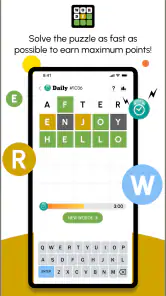
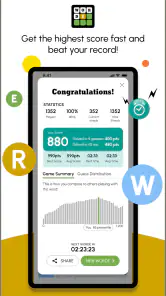
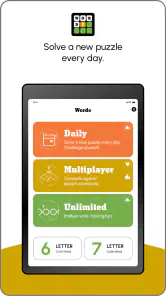
Analysis by Reviewed
I opened Worde: Daily & Unlimited expecting a familiar word puzzle, but its appeal became clearer after a few rounds: the game makes each guess feel like a small experiment. I enter a word, read the color feedback, narrow the possibilities, and decide whether to play cautiously or take a more revealing risk. That simple cycle is the entire attraction, yet it is flexible enough to support a quick daily challenge, a longer solo session, or a match against other players.
This is a free word game from ViralMedia-MLM, aimed at an Everyone audience. It has built a solid audience, with over 500 thousand installs and a 4.3 average from around 11 thousand ratings. Those figures suggest that the familiar format is working for many players, but they do not remove the important question: is this particular version the right fit for the way you like to play word puzzles?
How the first guess sets the whole session
The first useful decision happens before the puzzle becomes difficult. I need to choose a word that tests several letters rather than simply chasing a possible answer. A good opening word gives me information about vowels, common consonants, and letter placement. A poor one can leave me with too little to work with, even if it happens to contain a correct letter.
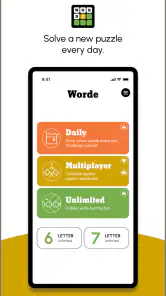
That makes the opening move more interesting than it looks. I am not merely trying to be right immediately; I am buying information for the next attempt. The game’s six- and seven-letter word options make this especially noticeable. A six-letter puzzle is easier to scan mentally, while seven letters create more room for repeated letters, unfamiliar combinations, and misleading partial matches.
I found the longer format better when I wanted a deliberate challenge rather than a quick break. It rewards keeping track of what has already been ruled out. If I play while distracted, I can easily reuse a rejected letter or overlook a possible arrangement. For a short commute or a coffee break, the shorter option feels more approachable. For a focused session, seven letters provide more satisfying deduction.
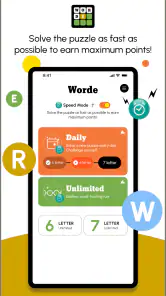
The daily mode gives the game a natural starting point. I can make one puzzle the day’s small mental exercise instead of endlessly browsing for something to do. The unlimited mode changes the mood completely: once I finish one round, I can immediately test another opening strategy, recover from a careless mistake, or keep playing simply because I am enjoying the reasoning.
That distinction matters because daily and unlimited play serve different habits. The daily format is easier to fit into a routine, while unlimited play is better for practice. I used repeat rounds to compare opening words and to notice which mistakes came from vocabulary gaps and which came from rushing. Someone looking for a single calm puzzle may prefer the daily structure; someone who wants repetition should start with unlimited play.
The first action is therefore not just typing a word. It is deciding what kind of information I want. I can probe vowels, test common consonants, or gamble on a likely answer. That choice gives the opening a little personality, even though the underlying controls remain straightforward.
Reading feedback instead of chasing lucky guesses
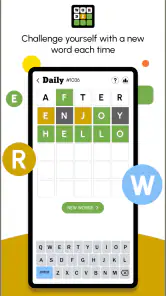
The feedback rhythm is where the game earns its place among word puzzles. Each attempt leaves me with a smaller field of possibilities, provided I actually use the result. I usually pause after a guess and separate three kinds of information: letters that belong in the answer, letters that belong but need moving, and letters that should disappear from my thinking.
The most useful habit is to treat feedback as a record, not just a reaction. When I see a correct letter in the wrong position, I avoid moving it randomly. I look for positions that make grammatical and familiar word patterns possible. When several letters are confirmed, the puzzle often shifts from broad searching to careful arrangement. That change in mental pace is one of the game’s strongest qualities.
Repeated letters are where the experience becomes less forgiving. A letter appearing once does not always tell me whether it appears again, so I have to avoid assuming that a familiar pattern is complete. This is a practical reason to use the longer mode for training: it exposes how quickly intuition can become overconfidence when the word contains an awkward repetition or an uncommon ending.
I also learned not to treat every valid-looking word as a good guess. A guess can be technically plausible while revealing very little. If I already know several vowels and a few consonants, another word using the same letters may waste an attempt. A better move can be an exploratory word that tests unused letters, even when I do not expect it to be the answer.
That is a non-obvious strength of this version: unlimited play can become a practice laboratory rather than simple replay. I can intentionally use one round to improve opening choices, another to study placement, and a third to work on repeated-letter situations. The game does not need a complicated tutorial for this to work; the feedback itself teaches the method.
There is also a limitation. Players who dislike uncertainty around vocabulary may find the feedback loop frustrating, particularly with seven-letter words. The challenge is not always pure logic, because knowing possible words matters. If you prefer puzzles with a clearly defined rule set and no dependence on English word familiarity, a number puzzle or a more structured logic game may feel fairer.
For language learners, the trade-off is more interesting. The game can strengthen pattern recognition and make unfamiliar word shapes memorable, but it may also expose gaps without explaining them. I would use it alongside a dictionary or vocabulary notebook, not as a complete language-learning course. When I meet a word I do not know, recording it after the round turns a lost guess into something useful.
Why a solved board feels rewarding
The reward is not elaborate; it comes from seeing uncertainty collapse. At the beginning, many words may fit. After a few well-chosen guesses, the possibilities narrow until one answer feels inevitable. When that final entry works, I get the satisfaction of having converted scattered clues into a complete word.
I prefer solving through deduction rather than guessing the answer early. A lucky first or second attempt can be pleasing, but a careful solve gives the session more value. The best rounds are the ones where my first idea fails, the feedback forces a new direction, and the final answer makes the earlier clues click into place.
The game’s free entry helps that reward feel accessible. I can try it without paying upfront, which makes it easy to recommend to someone who wants a lightweight word activity. There are in-app purchases ranging from $0.49 to $45.44 per item, so I would still advise checking the purchase prompts carefully if you are handing the device to a child or trying to keep the experience strictly cost-free.
Because the age rating is Everyone, the game is suitable for a broad audience in principle, but suitability also depends on the player’s patience. Younger players who enjoy spelling and deduction may like the immediate feedback. A child who expects every attempt to produce obvious progress could become frustrated by longer words or by an answer that depends on vocabulary they have not encountered.
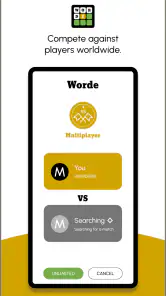
The multiplayer mode adds a different kind of reward. In solo play, my goal is to improve my own reasoning. In multiplayer, the presence of another player changes the emotional balance: speed and confidence matter more, and a conservative approach may not feel as satisfying. I would choose multiplayer when I want competition, but daily mode when I want a quiet personal routine.
One useful tactic is to decide in advance what counts as a successful round. If I measure success only by solving quickly, a difficult word can make the game feel punishing. If I measure it by learning a better opening, identifying a repeated-letter pattern, or avoiding a familiar error, even an unsuccessful attempt can improve the next session. That mindset makes unlimited mode much more rewarding over time.
The reset that brings me back
Every completed board creates a natural reset. I either return tomorrow for the daily puzzle or start another unlimited round immediately. That reset is important because the game does not ask me to maintain a large campaign, manage a character, or remember a complicated progression system. The next session begins with a clean problem and one clear objective: find the word.
The daily reset is best for people who want boundaries. It gives the habit a stopping point, which is useful when I want a small break without falling into a long gaming session. I can make a few thoughtful guesses, finish the puzzle, and put the phone away. The format feels closer to a daily mental ritual than to a conventional game with levels and a long-term story.
Unlimited mode removes that boundary, and that is both its advantage and its weakness. It is excellent when I want to practice or when a difficult round has made me determined to try again. It is less helpful if I am looking for a game that naturally tells me when to stop. After several rounds, the basic loop can begin to feel repetitive, especially if I am not setting myself a personal challenge.
My preferred routine is to use daily mode first, then play unlimited only when I have a specific reason. For example, I might spend one session testing a new opening approach, then stop after three rounds rather than continuing without purpose. This keeps the reset meaningful and prevents the game from turning into automatic guessing.
The reset also makes the app easy to share with friends. Someone can begin without learning a large ruleset, and the conversation naturally centers on strategies, difficult word shapes, and the satisfaction of a close solve. Multiplayer is the better choice for direct competition, while comparing approaches after separate daily attempts preserves the slower, more thoughtful side of the game.
Compared with a standard crossword, this game asks for less sustained reading and more rapid hypothesis testing. Compared with a conventional word-search game, it offers more deduction and less visual scanning. Compared with a single daily word puzzle, its unlimited and multiplayer options make it more flexible, although that flexibility can reduce the sense of occasion that makes a once-a-day challenge special.
Who should play it and who should skip it
I would recommend it to people who enjoy compact reasoning tasks, spelling patterns, and games that can be played in short bursts. It works particularly well for someone who wants a daily routine but also appreciates the option to continue. The six- and seven-letter choices are useful for adjusting the difficulty without forcing the player into a completely different game.
It is also a good match for players who like improving through repetition. Unlimited mode gives enough room to experiment with opening words, information-rich guesses, and strategies for repeated letters. If you enjoy analyzing why a solve worked, rather than only celebrating the result, you will probably find more depth here than the brief store summary suggests.
I would skip it if you want a large progression system, a story, elaborate visuals, or a broad collection of unrelated mini-games. The pleasure is concentrated in the word-solving loop. Players who need constant novelty may find the repeated board structure too narrow, while people who dislike vocabulary-based uncertainty may prefer a game where every answer can be derived without knowing many words.
It is also not my first choice when I want a completely relaxed game with no pressure from limited attempts or competitive comparison. The feedback is clear, but each guess still matters. For me, that tension is the point; for someone who wants to play without consequences, it may feel unnecessarily demanding.
My verdict on the complete loop
Worde: Daily & Unlimited succeeds because its loop is easy to understand but rewarding to refine: make a guess, read the feedback, adjust the plan, solve the word, and begin again with a cleaner strategy. The daily mode gives the experience structure, unlimited mode supplies practice, and multiplayer adds a competitive reason to care about speed and accuracy.
It is not a revolutionary word game, and its focused format will not satisfy everyone. The longer puzzles can expose vocabulary limits, repeated rounds can become repetitive, and in-app purchase prompts deserve attention for anyone trying to avoid spending. Still, those drawbacks do not undermine the central design. The game gives each guess a purpose, and that makes even a short session feel mentally active.
The current version is 2.1.13 and runs on Android 7.0 or later, so it remains accessible on a wide range of devices. I would install it for a daily word habit, casual practice, or occasional multiplayer competition. My strongest recommendation is to avoid rushing: use the first guess to gather information, treat every color change as evidence, and let the reset begin only after you understand what the previous board taught you.
For me, that is the reason another session begins. I am not simply chasing another win. I want to see whether a better opening, a calmer reading of the clues, or a more careful approach to seven-letter words will change the result. When a word game makes that question feel inviting rather than like homework, it has found its purpose.
Pros
- Quick daily rounds make it easy to fit into short breaks.
- Unlimited mode offers extra practice after completing the daily puzzle.
- Simple interface keeps the focus on guessing and solving.
- Helpful color feedback makes letter placement easy to understand.
- Suitable for casual players and word-game enthusiasts alike.
Cons
- Some puzzles may feel repetitive after extended daily play.
- Unlimited rounds can become less challenging for experienced players.
- A missed guess may feel frustrating when the word is unfamiliar.
- Requires a reliable internet connection for some app features.
- Players seeking detailed statistics may find the tracking options limited.
- Category
- Word
- Version
- 2.1.13