Mini Golf Game - Putt Putt 3D
- 446.00
- 4.2
- Installs
- 100.00K
- Price
- Free
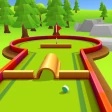
Screenshots
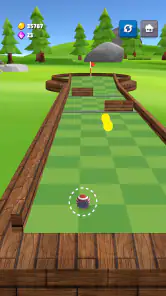
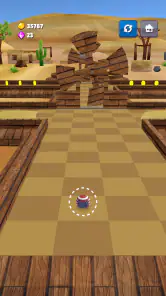
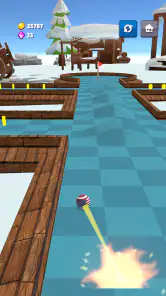
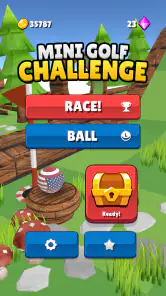
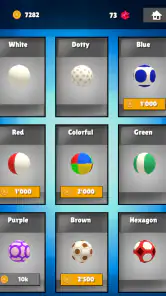
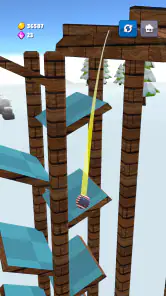
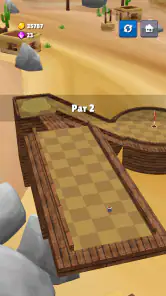
Analysis by Reviewed
I spent time with Mini Golf Game - Putt Putt 3D as a quick sports game rather than a serious golf simulator, and that distinction matters. It is built around short mini-golf rounds, simple controls, and the kind of physics that make a good putt satisfying while still leaving room for an occasional awkward bounce. I found it easiest to enjoy when I treated each hole as a small puzzle instead of rushing to the cup.
The game is free to play, aimed at Everyone, and comes from ViralMedia-MLM. It has reached over 100 thousand installs and holds a 4.2 average from around 2.1 thousand ratings, which gives a useful picture of its appeal: this is a compact, accessible game that many people can pick up without learning a complicated control system. It is currently listed as version 4.0 and runs on Android 7.1 or newer.
How a normal round feels in practice
The basic workflow is pleasantly direct. I launch the game, get into a hole, line up a shot, choose the strength, and watch the ball react to the course. There is no need to study a long rulebook before playing. That makes it suitable for a few spare minutes while waiting for a bus, taking a break, or sharing a phone with someone who wants a quick competitive game.
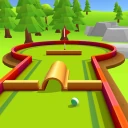
The important change in mindset is to stop treating every shot like a straight putt. The three-dimensional presentation gives the course more character than a flat arcade board, but it also means that angles and rebound behavior deserve attention. A shot that looks powerful enough can pass the cup, hit a wall, or leave the ball in a worse position. I had better results when I planned the landing area first and the hole second.
That habit is especially useful on unfamiliar layouts. Instead of immediately using maximum force, I start with a controlled attempt to understand how the ball responds. If the course offers a wall or a narrow route, the first shot becomes a test of the surface and angle. This is one of the more practical ways to improve without needing a formal tutorial: use the early attempt to collect information, then make the next stroke more deliberate.
The multiplayer focus gives the game a social reason to exist beyond solo practice. A short match works well when two people want something casual rather than a lengthy sports title. I would use it with a friend who enjoys friendly competition but does not want to install a large golf game or spend time learning complex swing mechanics.
At the same time, I would not confuse the multiplayer format with a full online golf experience. The appeal here is immediacy. It is about taking turns or comparing shots in a lightweight setting, not building a detailed golfer, managing a season, or recreating a professional tournament. Players looking for those deeper systems will probably find this too narrow.
The small routine that improves consistency
My most reliable routine was simple: pause before aiming, identify the safest route, choose moderate power, and watch where the ball settles. When the first shot was not ideal, I avoided trying to repair everything with a dramatic follow-up. A safer recovery usually produced a better final result than a risky attempt to reach the cup immediately.
This approach also makes the game less frustrating. Mini-golf physics can be entertaining precisely because the ball does not always behave like a perfectly predictable line. If I expected every shot to be exact, a bounce felt unfair. If I expected the course to reward careful positioning rather than raw force, the same bounce became useful feedback.
For a quick everyday scenario, imagine playing during a short break with only enough time for a few holes. I would not chase a perfect score. I would focus on learning one repeatable pattern: use a gentle opening shot, avoid the edge of the course when possible, and leave a clear angle for the next attempt. That gives the session a purpose even when there is no time for a complete match.
Settings and practical checks before playing
I recommend checking the available in-game options before settling into longer sessions. In a physics-based game, comfort settings can affect how easy it is to judge direction and power, even when the underlying controls remain simple. I pay attention to whether the visual presentation is easy to read on my phone, whether sound is helpful or distracting, and whether the control response feels comfortable at the device’s normal touch sensitivity.
There is no advantage in forcing a high-volume setup for a game that works well as a casual activity. I prefer keeping audio at a level where a bounce or successful putt adds atmosphere without becoming irritating after repeated holes. If I am playing around other people, muting or reducing sound makes the game less intrusive and lets the visual feedback do most of the work.
Screen size also changes the experience. On a smaller phone, I take extra care with alignment because the target and the edges of the course occupy less physical space. On a larger display, judging the route is more comfortable, but I still avoid assuming that a bigger screen removes the need for precision. The touch gesture remains the key part of the shot, so a clean, steady movement matters more than the phone’s size alone.
Because the game supports Android 7.1 and later, it is accessible to people using older compatible devices rather than only the newest phones. That can be useful if you want a simple game for a spare handset. I would still close demanding background apps before playing if the device is older, not because the game is presented as a heavy simulation, but because any touch-based title benefits from a responsive screen and stable performance.
The game is free, which makes trying it straightforward. There are in-app purchases priced at $3.99 per item, so I would check the purchase prompts carefully if a child is using the device. The Everyone age rating makes the game approachable for a broad audience, but the presence of optional purchases is still a practical reason to use the device’s normal purchase protections.
Faster patterns for repeat players
Once the basic controls feel familiar, I found that speed comes less from moving quickly and more from reducing wasted decisions. I use the same pre-shot checklist every time: locate the cup, identify the nearest obstacle, choose a landing zone, and then set power. Repeating that order prevents me from changing direction and strength at the same moment without thinking.
One useful pattern is to favor a clean second shot over an ambitious first shot. If the cup is near a wall or obstacle, I aim to leave the ball in an open position rather than trying to finish immediately. This is not always the lowest-score route, but it is more dependable when I am still learning a course. The trade-off is clear: caution reduces spectacular successes, but it also reduces the number of recoveries caused by an overpowered shot.
Another habit is to study the result of a missed shot instead of simply counting it as a failure. Did the ball travel farther than expected? Did it rebound at a sharper angle? Did the chosen path leave too little room near the cup? I use those answers on the next attempt. This turns repeated play into a small practice loop, which is more rewarding than randomly changing power each time.
For multiplayer sessions, I like agreeing on a relaxed pace before starting. Friends often have different ideas about whether a match should be competitive or silly. If one player wants to experiment with bank shots while another wants to play safely, the game is more enjoyable when nobody treats every mistake as a serious defeat. The straightforward design supports that casual atmosphere better than a highly structured sports title would.
Experienced players can also create their own mini-challenges without needing extra systems. I might play a round using conservative power, attempt to avoid wall rebounds, or focus on reaching a good finishing position rather than chasing a risky direct line. These self-imposed rules make familiar holes feel less repetitive and provide a way to practice specific skills.
Where the physics help and where they become a limit
The physics are the main source of personality. A successful shot feels earned when the ball follows the intended route, clips a boundary, and settles near the cup. The same system can also create uncertainty. Small differences in angle or strength may produce a result that feels less precise than what a competitive player expects from a dedicated simulator.
That trade-off is acceptable for the intended style, but it affects who should choose the game. If you want an easygoing mini-golf activity with room for lucky rebounds and friendly rivalry, the physics add charm. If you want frame-by-frame control, tournament-level consistency, or a detailed model of real putting, a more specialized golf game would be a better fit.
I also found that the simple format can become repetitive if I play for too long without changing my goal. The game is strongest in short sessions, where each hole has a clear purpose and the controls stay fresh. It is less convincing as an all-day progression game because the core pleasure comes from aiming and reacting, not from managing a large collection of long-term systems.
That limitation is worth considering before downloading. People who enjoy board-game-like physics and quick matches will likely appreciate the compact design. Players seeking character customization, extensive courses, career progression, or a broad competitive ladder should look elsewhere. The fact that the game is free makes it easy to test, but free access does not change its deliberately modest scope.
Another practical question is whether it works for children. The Everyone rating and simple premise make it approachable, and the controls are easier to understand than a full golf swing system. I would still explain the optional purchases before handing over the device. For younger players, short supervised sessions are a sensible way to keep the focus on play rather than accidental spending.
How it compares with other ways to play mini-golf
Compared with a physical mini-golf outing, this game is cheaper, faster, and available whenever a compatible phone is nearby. It cannot reproduce the social atmosphere of standing beside a real course, and it does not provide the same sense of movement or shared environment. Its strength is convenience: I can practice angles or play a short match without arranging a trip.
Compared with large golf simulators, it is much easier to start. There are fewer concepts to learn, and the focus stays on the immediate shot. That simplicity is a benefit for casual players, but it also means fewer reasons to keep returning once the basic novelty fades. A larger game may be preferable if you want a long-term hobby with more progression and variety.
Compared with other small arcade sports games, the three-dimensional mini-golf presentation gives each attempt a little more physical character. The game is not just about tapping a target; positioning and rebound judgment matter. Still, players who prefer instant reactions and almost no planning may find an even simpler arcade title more satisfying.
Who I would recommend it to
I would recommend it to someone who wants a free sports game for short breaks, casual multiplayer sessions, or light practice with angles and power. It is especially suitable for players who enjoy games where a mistake can teach them something and where a lucky bounce can turn into a memorable moment.
I would be more cautious about recommending it to someone who dislikes uncertain physics. If you need every shot to behave with exact competitive precision, the same feature that makes this game entertaining may become a source of annoyance. I would also direct serious golf fans toward a deeper simulator, particularly if they expect realistic courses, player development, or a substantial career structure.
The developer, ViralMedia-MLM, has positioned the game around accessibility rather than complexity, and that is how I think it should be judged. Its current version is 4.0, but I would not choose it because of the version number alone. I would choose it because the core loop is easy to understand and works well when I want a small, self-contained sports distraction.
My final take after building a repeatable play style
The best way to enjoy this game is to play it as a compact physics puzzle with a social side, not as a full golf simulator. Once I stopped rushing shots and began using the same planning routine, the rounds felt more consistent and the occasional strange bounce became part of the fun rather than a reason to quit.
Its free entry, Everyone rating, broad Android compatibility, and accessible controls make it easy to try. The optional $3.99 purchases deserve attention, especially on a shared family device, and the limited scope means long sessions may not suit everyone. Those are real considerations, but they do not undermine the game’s central appeal.
My verdict is positive for the right audience. I would keep Mini Golf Game - Putt Putt 3D installed for quick matches, casual challenges, and short practice sessions where I want something more thoughtful than a reflex game. I would skip it only if I were looking for a deep golf career, highly realistic simulation, or a large amount of progression. For everyone else, it is a friendly little sports game that rewards patience, sensible power, and a willingness to learn from the bounce.
Pros
- Simple controls make it easy for beginners to start playing.
- Short holes are ideal for quick games during spare moments.
- 3D courses provide a more engaging view than flat mini-golf games.
- Offline play is useful when you have no internet connection.
- Different obstacles add variety and require more careful aiming.
Cons
- Physics can occasionally feel inconsistent around walls and ramps.
- The game may become repetitive after completing the available courses.
- Ads can interrupt play
- especially between rounds or level attempts.
- Limited customization reduces long-term appeal for dedicated players.
- Some levels rely more on trial and error than precise skill.
- Category
- Sports
- Version
- 4.0