Tic Tac Toe - 2 Player XO
- 766.00
- 4.3
- Installs
- 100.00M
- Price
- Free
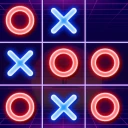
Screenshots


Analysis by Reviewed
My first impression of Tic Tac Toe - 2 Player XO is that it knows exactly what kind of moment it is for: a few spare minutes, a nearby opponent, and no need to learn a complicated set of rules. Its familiar grid puts the focus straight on the next move. I like that directness, though a simple game also gives every choice around it—how to play, what to look at, and whether to keep going—more weight than it might in a larger puzzle game.
Gameplay, presentation, and everyday fit
At its core, the game keeps the classic three-by-three grid, with X and O taking turns and each player aiming to make a line of three. That tiny board is easy to explain to a child or someone who has never played, but a good round still depends on watching the whole grid rather than chasing one tempting square. I find it works best as a brief contest, not as a deep strategy game: once both players spot the obvious blocks, many rounds resolve quickly.
The app is a free puzzle game from CDT Puzzle Studio. It has a 4.3 average from around 61,000 ratings, and has passed 100 million installs, which suggests it has found a broad audience for a very familiar idea. It is rated for Everyone, and its current version is 1.0.65. The game was released on May 15, 2023, and it offers in-app purchases at $6.99 per item. I would treat those purchases as an optional consideration rather than a reason to choose it: the basic appeal is the quick round of Tic Tac Toe, so decide whether you want anything beyond that before spending.
Reads About Tic Tac Toe - 2 Player XO
A compact visual language
The interface is clean and minimal, and that is a sensible fit for a game where the board itself needs to stay legible. Bright colors and smooth animations give the familiar X-and-O format a little more personality without changing how it plays. The themes and board-color choices are a welcome way to make repeated sessions feel less plain. My practical tip is to choose a high-contrast look if you are passing the phone between players; clear symbols matter more than a decorative palette when turns are quick.
That restrained presentation also sets a limit. Players looking for a vivid world, characters, or a changing visual setting will not find that kind of atmosphere here. The board is the setting, and the appeal comes from reading the other person’s intentions. For me, the strongest art direction is the kind that gets out of the way, but it will not satisfy someone who wants a puzzle game to feel like an unfolding adventure.
Sound, pace, and the shape of a session
The game’s brisk format makes it easy to fit between other activities: a short wait, a quiet break, or a few minutes before heading out. The animations add a sense of response to moves, while the overall experience remains centered on taking turns and scanning the grid. I would not pick it for a long, absorbing session; its rhythm is deliberately stop-and-start, and the same board can feel repetitive if you keep playing without a real opponent or a personal challenge.
A useful way to keep a match interesting is to set a small goal before starting, such as trying not to overlook a defensive move or seeing how long you can avoid a draw. That changes what you pay attention to without needing extra rules. It also makes the game more engaging for a child learning to anticipate an opponent: ask them to name the square they are protecting before they tap. The simplicity becomes a teaching tool rather than just a way to pass time.
More From Our News Desk

Clash of Clans Is Won Between the Battles

Android Auto Makes the Case for Quieter Car Software

MobiOffice: Transforming Mobile Productivity with Seamless Integration

EA SPORTS FC™ Mobile Soccer: Redefining Mobile Sports Gaming

How Microsoft OneDrive Became a Mobile Productivity Giant

How Google Translate Breaks Language Barriers Effortlessly
Choosing an opponent and setting expectations
The available play options make the game flexible for different situations. Local play is the most convenient choice when a friend or family member is beside you: one device can become a tiny shared game, with no setup beyond taking turns. Single-player mode is useful when nobody is available, and the AI’s difficulty choices let a new player start gently while someone more experienced can seek a tougher contest. I found the Expert level challenging, though the appeal of any AI match depends on whether you enjoy testing your decisions against a computer rather than reading another person.
Online multiplayer can suit someone who wants an opponent when no one is nearby, while local play is better for a spontaneous face-to-face round. I would not assume those options feel interchangeable. The social pleasure of passing a phone around is immediate; remote play is more useful when distance is the obstacle. If your main goal is a deep online ladder, a wide variety of board-game rules, or a long-term competitive system, this small game may not be the best fit. Its strength is access to a familiar contest, not a large competitive ecosystem.
Where it fits among puzzle games
Compared with many mobile puzzle games that rely on steadily harder levels, collections of stages, or elaborate mechanics, this one asks for almost no learning time. That is a real advantage when you want to start playing at once, and a real trade-off if you expect a steady stream of new challenges. Tic Tac Toe is easy to understand but can end in a draw when both players defend carefully, so I would choose a broader board-game collection if variety is the priority. I would choose this instead when the point is a quick, shared match with rules everyone already understands.
It is also a reasonable choice for families because the age rating is Everyone and the basic rules are easy to teach. For a waiting room or a trip, I would use local play to make the phone a shared activity rather than handing it over as a solo distraction. If you need something that can hold a player’s attention for a long stretch, though, a more varied puzzle game is likely to serve better. The small scale is both the convenience and the main limitation.
How it feels in regular use
In my sessions, the game ran smoothly on Android and iOS, without lag or crashes. Its lightweight feel is appropriate for a title built around a simple board, and it is easy to return to for another round. Android users should note that the minimum operating-system requirement is 7.0. The developer has also issued updates, but I would not treat that alone as a promise that every future change will add features; the useful question is whether the current version already does what you want.
For a realistic everyday use, imagine two people waiting for a meal with only one phone between them. A quick local match gives them something to do without needing to create accounts or explain a new game. If one person is much stronger, switching turns as X and O can help keep the contest fair, while choosing a tougher AI later gives that player a solo challenge. These are small adjustments, but they make a basic board feel more useful across different skill levels.
My verdict on the mood and mechanics
As a fan of classic games, I was thrilled to try out Tic Tac Toe - 2 Player XO, a digital take on the timeless pencil-and-paper game that we all know and love. Available for both Android and iOS platforms, this app promises to bring the same fun and competitive spirit right to your smartphone. But does it live up to the nostalgia? Let's dive in and find out!
At its core, the game retains the classic 3x3 grid, where two players take turns to place their respective symbols—X or O—with the aim of getting three in a row, either horizontally, vertically, or diagonally. This simplicity is what makes it a perfect game for players of all ages.
One of the standout features of this app is its multiplayer mode. You can easily challenge your friends or family members for a quick match. The app supports both local multiplayer, allowing two players to use the same device, as well as online multiplayer, where you can compete against opponents from across the globe. This flexibility in playing modes is definitely a plus.
For those moments when you can't find a human opponent, the app also offers a single-player mode where you can test your skills against the AI. The AI comes with different difficulty levels, so whether you're a newbie or a seasoned pro, there's always a challenge waiting for you. I personally found the "Expert" level quite challenging, and it took me several attempts to outsmart the AI.
Design and User Interface
The design of the app is clean and minimalistic, which is exactly what you'd want for a game like Tic Tac Toe. The developers have kept the interface intuitive, ensuring that even the youngest players can navigate through it without any hassle. The colors are vibrant, and the animations are smooth, adding a touch of modernity to this classic game.
Another nifty feature is the option to customize the look of your game. You can choose from different themes and board colors to suit your mood or style. It's a small touch, but it adds a layer of personalization that I really appreciated.
Performance and User Experience
In terms of performance, the app runs seamlessly on both Android and iOS devices. I didn't experience any lag or crashes during my play sessions, which is always a good sign. The app is lightweight and doesn't drain your battery, meaning you can indulge in multiple rounds without worrying about your phone's performance.
The developers have also ensured that the app is regularly updated with new features and bug fixes. It's comforting to know that the app is well-maintained and that any issues you encounter will likely be addressed in future updates.
Small choices that make a round work
For a fair head-to-head match, I would alternate who starts rather than letting one person take the first turn every time. The opening move can shape the whole board, especially when one player is still learning to notice forks and threats. Swapping X and O as well as the starting turn gives both people a clearer sense of whether a win came from their decisions or simply from an uneven setup.
When playing with a child, I would resist correcting every move. Let them finish the round, then ask which square they think mattered most. That keeps the game friendly while turning a quick match into a simple lesson in planning ahead. It also avoids making the AI’s difficulty settings the only way to adjust challenge: a patient human opponent can make the game welcoming without deliberately losing.
Who will enjoy this, and who should pass
I would recommend it most to people who want a familiar game ready at hand, families introducing turn-taking, and friends who sometimes have a spare minute but not enough time to learn something new. It is particularly handy when there is one phone and two people, since local play turns the device into a shared board instead of a solitary screen. The quick rules also make it easy to return after a break without remembering a campaign, a score system, or a long chain of instructions.
I would skip it if I were looking for a puzzle with evolving rules, a long progression, or a strong sense of place. Its limited board is the whole point, but it also means the game can run out of surprise once both players know how to block. Someone seeking a broad collection of distinct board games may be happier with a dedicated collection; someone who wants one no-fuss classic will likely prefer this focused format.
One practical question is whether it still works for a solo player. The AI gives you an opponent when nobody is around, and its difficulty choices make that useful for practice, but playing alone does not create the same social tension as a person reacting to your moves. I would use solo rounds to sharpen attention or fill a short pause, not as a substitute for a varied single-player puzzle game.
Another consideration is spending. The game is free to play, while optional in-app purchases are priced at $6.99 per item. I would start with the core game and only consider a purchase if the extra content on offer genuinely matters to you; the basic appeal does not depend on paying to understand or enjoy the rules. On Android, it supports devices running version 7.0 or later, which is worth checking before installing on an older phone.
For a commute or a short queue, I would keep the goal modest: play a few rounds, switch who starts, and stop when the match becomes predictable. That simple routine makes the app easier to enjoy than trying to stretch it into a long session. If the other person is new, begin with open, unhurried play; if both players are experienced, set a small tactical challenge, such as spotting a fork before making a move. These choices add variety through attention rather than pretending the game has a changing ruleset.
In conclusion, Tic Tac Toe - 2 Player XO successfully brings the classic game to the digital age. With its range of multiplayer options, customizable themes, and reliable performance, it offers a fun and engaging experience for players of all ages. Whether you're looking to relive some childhood memories or introduce the game to a new generation, this app is definitely worth checking out. So, grab a friend, download the app, and let the Tic Tac Toe battles begin!
Tic Tac Toe - 2 Player XO Frequently Asked Questions
Can I play Tic Tac Toe - 2 Player XO without an internet connection?
The game supports local play, so two people can take turns on the same device without needing online multiplayer for that kind of match. This makes it a handy choice for a shared-device game at home or while spending time together. Online play is also available when you want to challenge someone remotely, but the local option is the straightforward choice for offline sessions.
Who developed Tic Tac Toe - 2 Player XO, and when was it released?
Tic Tac Toe - 2 Player XO was developed by CDT Puzzle Studio and released on May 15, 2023. It is a puzzle game built around the familiar XO board format, with short matches that are easy to start and understand. If you are comparing it with other casual games, its simple premise makes it suitable for a quick break as well as a game shared with another person.
Does Tic Tac Toe - 2 Player XO include games besides tic-tac-toe?
The game is presented as a tic-tac-toe and all-in-one board games collection, so its concept goes beyond the name’s familiar XO match. That may appeal if you want a board-game-style app rather than a single traditional board encounter. The central appeal remains accessible, short-form play, making it approachable for players who want to open a game and begin without learning complicated rules.
Is Tic Tac Toe - 2 Player XO free to download?
Yes. Tic Tac Toe - 2 Player XO is free to download, so you can try its puzzle-style board game without paying upfront. Optional in-app purchases are available at $6.99 per item, so check purchase choices carefully if you share your device with children. The game is rated for Everyone, making it suitable for a broad range of players.
What devices and operating systems can run Tic Tac Toe - 2 Player XO?
Tic Tac Toe - 2 Player XO is available for Android and iOS. On Android, it requires version 7.0 or later, so check your device’s software version before installing. The game is developed by CDT Puzzle Studio, and its current version is 1.0.65. The straightforward board-game format makes it a compact option for quick play on a compatible device.
Pros
- Simple and intuitive interface
- No internet connection required
- Quick and easy game setup
- Suitable for all ages
- Free to download and play
Cons
- Limited to basic 3x3 grid
- No single-player mode
- Lacks advanced features
- Ads may interrupt gameplay
- No online multiplayer option
- Category
- Puzzle
- Version
- 1.0.65