The Secret Society: Mystery
- 83.91K
- 4.5
- Installs
- 5.00M
- Price
- Free

Screenshots


Analysis by Reviewed
I approached The Secret Society: Mystery as a relaxed hidden-object adventure rather than a game built around fast reflexes or complicated controls. That distinction matters. Its appeal comes from examining scenes carefully, collecting clues, and working through mystery-themed puzzles at your own pace. If you enjoy searching an image for one last overlooked object, the basic idea is immediately inviting. If you prefer constant action, direct competition, or a story that moves quickly, the experience may feel slower than expected.
Developed by G5 Entertainment, this free adventure game has been available since June 6, 2013. It is suitable for Everyone, runs on Android 6.0 and later, and the current version is 1.45.12300. Its broad reach is easy to understand: the game combines a familiar seek-and-find format with collectible pictures and puzzle solving, making it approachable for short sessions as well as longer evenings.
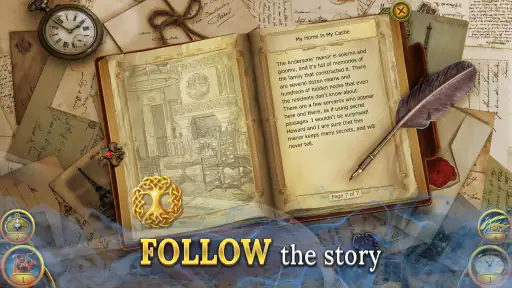
What I like most is that it gives the hidden-object format a little more purpose than simply tapping items in a picture. The scenes are connected to a mystery, so each search feels like part of a larger investigation. The presentation encourages patience, observation, and memory. I would recommend trying it when you want something calm but still mentally active, especially during a commute, a quiet break, or a night when a more demanding game sounds exhausting.
How the mystery loop works in everyday play
Searching is the main skill, not speed
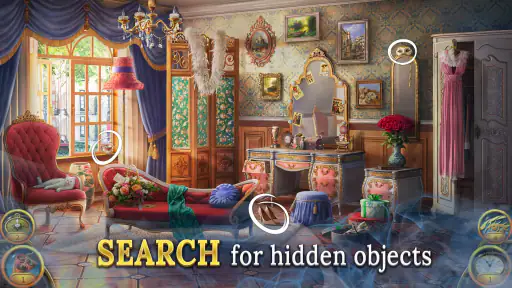
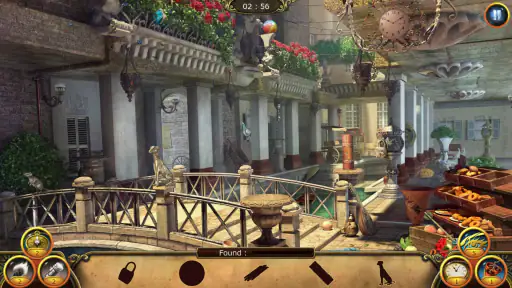
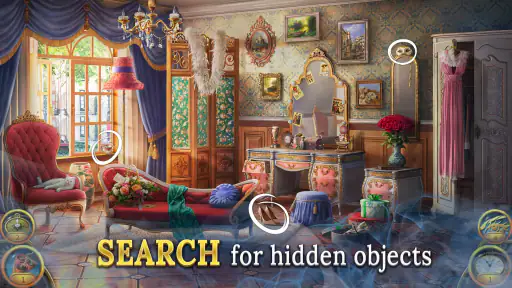
The core activity is straightforward: inspect a detailed scene, locate requested objects, and use what you find to continue through the investigation. That simplicity is a strength because I could start playing without learning a long list of controls. The challenge comes from visual attention. Objects may blend into the background, overlap with other details, or become difficult to notice once I have stared at the same area for too long.
A useful habit is to scan the scene in sections instead of moving randomly. I usually work from the top left toward the bottom right, then make a second pass for unusually shaped or partially hidden items. This is more reliable than tapping everywhere and helps preserve the feeling that I am solving the picture rather than guessing. It also makes the game a better fit for players who enjoy methodical puzzles.
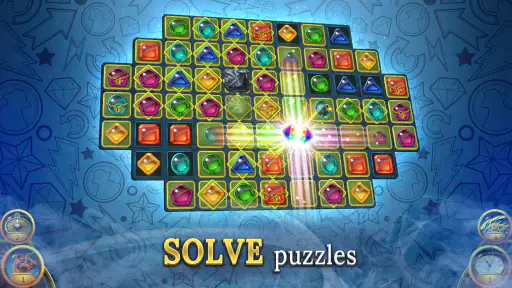
The game’s collectible-picture element adds another reason to return to completed or familiar activities. Rather than treating every scene as disposable, I found myself paying attention to what I had already gathered and what still seemed unfinished. That creates a gentle sense of completion without requiring the player to master an intricate combat system or memorize complex rules.
Why the format works for short sessions
One of the most practical qualities is its suitability for uneven playtime. I can open it for a brief search when I have only a few minutes, then come back later when I want to follow the mystery further. The hidden-object structure naturally breaks progress into manageable pieces, which is useful for people who do not want a game that demands a long uninterrupted session.
There is also a nice difference between playing while alert and playing when tired. When I am focused, I enjoy looking for small visual details and trying to complete a scene efficiently. When I am winding down, the same activity becomes a quiet concentration exercise. That flexibility is one of the strongest reasons to choose this title over a faster adventure game.
Still, the relaxed pace can become repetitive. The basic action remains searching through images, so players who need constant mechanical variety may eventually want a different kind of adventure. The mystery framing helps, but it does not transform the game into an action title or a large exploration world.
Progress feels connected to attention
I appreciate that success depends more on observation than on reflexes. A player who takes time to inspect the entire scene has a better chance of progressing than someone who simply taps quickly. That makes the game accessible to a wide range of ages and abilities, while still leaving room for improvement. Over time, I became better at recognizing visual patterns, checking likely hiding places, and avoiding wasted taps.
My best practical tip is to pause before searching. I first read the requested-object list carefully, then look for broad shapes and colors before focusing on tiny details. If an item is described in a way that could match several objects, I check the context of the scene rather than selecting the first vaguely similar shape. This small change makes the experience less frustrating and reduces the temptation to use assistance immediately.
Where pressure can enter the experience
Although the game feels peaceful at first, progress can still create pressure. A difficult scene may take longer than expected, and repeated searching can make the screen feel visually noisy. The natural response is to want a shortcut, especially when I am close to finishing but cannot locate one final object. That is the point where a free game can start testing patience rather than observation.
I think it is important to decide in advance how I want to play. If I treat every scene as a puzzle worth solving slowly, the experience stays relaxing. If I focus on moving forward as quickly as possible, the same design can feel more demanding. The game rewards persistence, but players who dislike revisiting difficult searches should be aware that the central challenge is not something they can simply avoid.
Spending and the free starting point
The game is free to download and play, with in-app purchases ranging from $0.99 to $99.99 per item. That wide range makes it sensible to approach spending cautiously. I would begin without buying anything, learn how the search and progression rhythm feels, and only then decide whether an optional purchase genuinely improves my enjoyment.
I cannot call the system unfair simply because purchases exist, but I also would not describe the game as a purely no-cost experience. The presence of optional items means that a player’s relationship with the game may change when progress slows or a difficult scene becomes tempting to bypass. My advice is to treat purchases as a firm personal boundary rather than as a normal part of every session.
For families, the Everyone age rating makes the game broadly approachable, but that does not remove the need for sensible device and payment controls. The most useful safeguard is to make sure purchases require deliberate confirmation. That keeps a child’s curiosity from turning into an accidental transaction and lets the game remain what it should be: a puzzle activity first.
Is progress fair to players who do not spend?
From my perspective, the fairest way to evaluate it is to separate access from convenience. The free entry point lets players try the central hidden-object experience before committing money. However, players who want uninterrupted progress may feel more pressure than those who are happy to wait, search again, or accept a slower rhythm.
That trade-off will not bother everyone. I am comfortable with a game that asks for patience, particularly when the main activity remains playable without an upfront charge. Someone else may reasonably prefer a premium puzzle game with a single purchase and fewer decisions about spending. The better choice depends on whether you value a free trial-like entry and ongoing content or prefer a clearly defined cost from the beginning.
I would not choose this title for competitive fairness in the usual multiplayer sense because its appeal is not based on ranking against other people. There is no reason for me to compare my search speed with another player while deciding whether the game is worthwhile. The meaningful question is whether the progression feels satisfying at my own pace and whether I can resist spending when I am impatient.
What the rating and popularity suggest
The game holds a 4.5 average from around 893 thousand ratings, with roughly 84 thousand written reviews and over 5 million installs. Those figures show that the format has attracted a substantial audience, but they do not guarantee that every player will enjoy the same pace. Hidden-object games are naturally specific: people who like visual searching may find the loop soothing, while others may find it repetitive within a few sessions.
I see the large audience as a reason to try it, not as a substitute for personal judgment. The best test is whether I enjoy the first several searches without feeling the need to rush. If the basic act of inspecting a scene already feels like work, later mystery elements are unlikely to change my mind.
Questions I would consider before installing
For a younger player or an older relative, the controls should be approachable because the main task is visual selection rather than complicated movement. I would still consider screen size and eyesight: a small display can make detailed objects harder to distinguish, especially in busy scenes. A larger phone or tablet may make the search more comfortable, even though the game itself remains simple to operate.
For someone asking whether it is suitable offline, I would avoid making a promise without checking the current behavior on the intended device. The safer practical approach is to install it and test the exact scenes and progression features before relying on it during travel. That is especially important if the game is being chosen for a place where connectivity is unreliable.
Players also often wonder whether the game is mainly for children. I would say no. The Everyone rating makes it broadly accessible, but the slow visual challenge can appeal just as much to adults who enjoy mysteries and picture puzzles. Its tone is more about concentration and discovery than about age-specific humor or action.
Another sensible question is whether it replaces a traditional puzzle book. It can fill a similar role when I want a portable activity, but it feels different because the game organizes the searches into an ongoing adventure and includes collectible pictures. A printed puzzle book gives me a fixed, purchase-once format, while this title offers a more continuously structured digital experience with optional spending in the background.
Who should choose another kind of game
I would skip this one if I need fast combat, free movement through a large world, or a strong competitive component. The game’s identity is built around examining scenes and solving mystery-flavored searches. Players who become bored by repeating a familiar visual task should look toward an adventure with more varied mechanics.
I would also be cautious if I know that progress limits or optional purchases make me impatient. Even without assuming how often a player will encounter them, the purchase range means the game is not ideal for someone who wants absolutely no spending prompts or monetization decisions. A paid puzzle game may be a better match when financial simplicity matters more than free access.
My trust verdict after weighing the trade-offs
My overall impression is positive, with a clear condition: play it as a patient hidden-object mystery, not as a race. The search scenes are approachable, the collectible-picture angle gives the activity a reason to continue, and the format works well when I want a quiet game that still asks me to think. The long-running release and large player base also make it an easy title to consider for this particular genre.
At the same time, I would keep expectations realistic. It cannot provide the variety of an action adventure, and its free structure includes in-app purchases from $0.99 to $99.99 per item. I would start with the free experience, avoid treating purchases as necessary, and judge the game by how satisfying the searches feel on their own.
For me, the strongest use case is an evening or short break when I want to focus on something gentle: inspect a scene, find a few objects, collect another picture, and leave without needing to remember a complicated control scheme. The weakest use case is a player looking for nonstop novelty or a completely purchase-free environment.
In the end, I would recommend it to friends who genuinely enjoy visual puzzles and mystery themes. I would tell them to play slowly, use a consistent search pattern, and set spending limits before starting. If that sounds enjoyable rather than restrictive, this adventure is worth trying. If it sounds like a chore, a more direct puzzle or premium adventure will probably be the better choice.
Pros
- Hundreds of hidden-object scenes offer plenty of content to explore.
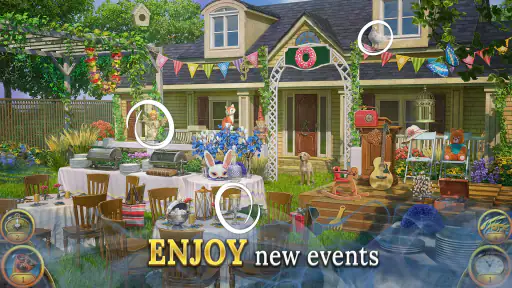
- Regular events and seasonal challenges add variety beyond the main storyline.
- Clue and hint systems help reduce frustration during difficult searches.
- Distinct locations and artwork make each investigation visually engaging.
- Works well in short sessions
- making it convenient for casual play.
Cons
- Energy limits can interrupt investigations when you play for longer periods.
- Some scenes become repetitive after extended gameplay.
- Finding small objects may be difficult on phones with smaller screens.
- Progress can feel slow without spending currency on upgrades or hints.
- A stable internet connection may be required for certain features.

- Category
- Adventure
- Version
- 1.45.12300