Stack Sort: Color Puzzle
- 124.00
- 4.6
- Installs
- 500.00K
- Price
- Free
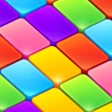
Screenshots
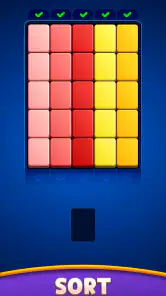
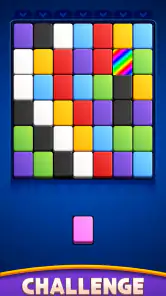
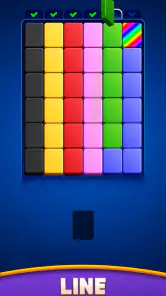
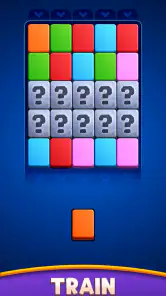
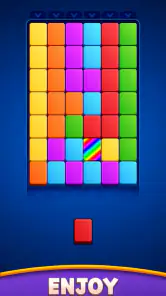
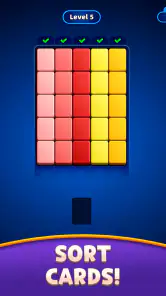
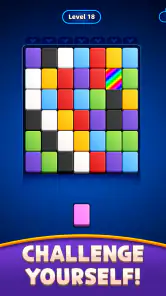
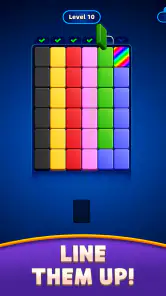
Analysis by Reviewed
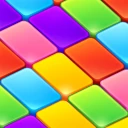
Stack Sort: Color Puzzle caught my attention because it turns a familiar sorting idea into a compact puzzle routine. I spent time with it as the kind of game I would open between errands, during a short break, or when I wanted something quiet that still required a little thought. The basic appeal is immediate: colored cards need to be arranged, hidden tiles gradually become part of the problem, and each board asks me to clear the puzzle without making careless moves.
That simplicity is both its strength and its main test. A puzzle game like this does not have to compete with a large story or complicated controls; it has to make individual rounds satisfying enough that I want to return after the first burst of curiosity fades. In my experience, this one succeeds best when I treat it as a short mental reset rather than a game I need to play for long sessions.
How the first week feels, and what keeps it interesting
The first few sessions are easy to understand without a tutorial-heavy learning curve. I quickly grasped the relationship between visible colors, available spaces, and the tiles that are not immediately exposed. That hidden-tile element gives the sorting task more tension than simply grouping matching cards on an open board. I cannot always plan the entire solution from the start, so I have to make a useful move while keeping enough flexibility for what may appear later.
That makes the opening rounds feel approachable, but not completely automatic. The early satisfaction comes from recognizing a pattern, committing to a sequence, and watching the board become less cluttered. When a solution works, the reward is not just visual clearing; it is the feeling that I avoided a trap that was visible only in hindsight.
The game works particularly well for people who enjoy color-based organization but do not want a complicated match-three system, a narrative campaign, or a time-sensitive arcade challenge. Its puzzle category is clear in practice: the focus is on order, prediction, and careful placement. I would recommend trying it with sound muted if I am looking for a calm break, since the core interaction does not depend on a dramatic presentation.
A realistic everyday use case is a short wait at a pharmacy or a commute where I have only a few uninterrupted minutes. I can play one small stretch, stop, and return later without needing to remember a plot or rebuild a character setup. That makes the game easier to fit into an ordinary routine than many larger mobile titles.
The first-week appeal also comes from the balance between recognition and uncertainty. Color sorting is familiar enough that I know what I am trying to accomplish, while hidden tiles prevent every board from feeling like a simple visual filing task. I found myself checking not only where a card belonged, but also whether placing it now would block a more useful move later.
More From Our News Desk

Clash of Clans Is Won Between the Battles

Android Auto Makes the Case for Quieter Car Software

MobiOffice: Transforming Mobile Productivity with Seamless Integration

EA SPORTS FC™ Mobile Soccer: Redefining Mobile Sports Gaming

How Microsoft OneDrive Became a Mobile Productivity Giant

How Google Translate Breaks Language Barriers Effortlessly
A practical tip is to avoid treating every available move as equally good. When I rushed to complete an obvious color group, I sometimes reduced the room needed for the next sequence. It is usually better to consider which spaces will remain open after a move. That small habit changes the game from casual tapping into a more deliberate puzzle exercise.
The free entry point matters here. I can try the game without paying first, which is important for a title built around a narrow central idea. Its age rating of Everyone also makes the concept accessible to a broad audience, although younger players may still need help with the logic of planning ahead rather than simply matching the most visible colors.
The developer is Panteon, and the game has already attracted over 500,000 installs. Its average rating is 4.6 from around 5,000 ratings, with 124 written reviews. Those figures suggest that the straightforward design connects with many players, but they do not change my own conclusion: the real question is whether the puzzle remains mentally useful once the novelty of uncovering tiles has passed.
What I would learn before spending anything
Stack Sort: Color Puzzle is free to start, but it includes optional in-app purchases ranging from $0.99 to $119.99 per item. I would approach that range carefully. A free puzzle is easy to sample, yet optional purchases can change how comfortable it feels to continue, especially for players who dislike spending money inside a game that appears intentionally simple.
My advice is to play long enough to decide whether the sorting loop itself is enjoyable before considering any purchase. If the appeal depends mainly on the first discovery of hidden tiles, paying will not solve the problem of repetition. If the basic decisions remain satisfying, then the free version gives enough opportunity to judge that honestly.
The current version is 1.037, and the minimum operating system requirement is Android 7.1. That makes it approachable for people using older Android devices, although compatibility alone does not guarantee that the experience will feel equally comfortable on every screen. On a smaller display, the distinction between neighboring colors may deserve more attention, particularly when several cards are close in tone.
I also would not choose this game when I want a social competition, a deep progression system, or a puzzle with a strong narrative payoff. Its pleasure is private and immediate. Players who need constant novelty may prefer a broader puzzle collection with several mechanics, while someone looking for a focused sorting challenge will probably appreciate the restraint.
What remains after the first month
After the initial week, the important change is that I stop playing to discover what the game is and start playing to see whether its decisions still feel worthwhile. The hidden tiles remain the most useful source of variation because they make planning provisional. I may have a neat arrangement in front of me, but the next reveal can force me to reconsider whether I used a space wisely.
That uncertainty gives the game recurring value when I play in short bursts. I do not need a long session to feel that I have exercised concentration. A few careful boards can be enough, especially on a day when I want a low-pressure activity rather than a demanding strategic game.
There is also a quiet benefit in the way the game rewards restraint. I found that I became less likely to make the first available move and more likely to preserve options. That is not a grand life-changing feature, but it is a concrete reason to return: the game gives me a small, repeatable practice in visual planning and sequencing.
One of the less obvious ways to use it is as a transition between tasks. Instead of opening a fast action game that leaves me more stimulated, I can play a puzzle board and then put the phone down. The sorting loop has a defined endpoint, so it can work better than an endless feed when I need a brief pause without losing an entire evening.
Still, the month-to-month value depends heavily on personal tolerance for repetition. The central action does not suddenly become a different genre. If I already know that I lose interest when a game keeps one mechanic for a long time, I would not expect this title to overcome that preference. It is better understood as a dependable small tool than as a constantly expanding hobby.
My strongest long-term tip is to change the way I approach each session rather than forcing longer sessions. I might focus on avoiding blocked spaces one day, then concentrate on revealing tiles efficiently another day. This does not add new content, but it makes the existing decisions more visible and helps prevent mindless tapping.
The game is also suitable for players who want something they can hand to a family member without explaining a complicated control scheme. The Everyone rating supports that broad accessibility, while the visual premise is easy to demonstrate. However, color-based play is not equally comfortable for every person, so anyone who struggles to distinguish similar shades should test the presentation before deciding whether it is a good fit.
The maintenance cost is low, but not zero
By maintenance, I mean the effort required to keep the game enjoyable rather than the effort of managing a large account or collection. Here the burden is modest. I do not need to remember a storyline, maintain a team, or follow a daily schedule to understand what I am doing. I can leave it alone and return without feeling punished for taking a break.
That independence is a real advantage over many mobile alternatives. Games built around streaks, energy, or frequent events can turn relaxation into another obligation. Stack Sort: Color Puzzle feels more self-contained in my routine: I open it when I want a puzzle, not because I am worried about missing a task.
The trade-off is that a self-contained game has fewer reasons to call me back. Without relying on invented claims about special systems or ongoing content, I can say plainly that its maintenance advantage is also its limitation. It asks little from me, but it may give me little reason to form a strong long-term attachment.
For that reason, I would keep it installed if I wanted a reliable filler activity, not because I expected it to become my main game. It earns space more easily on a phone used for occasional breaks than on a device where every installed app must justify frequent use.
The purchase structure is another part of the maintenance question. Because individual items can cost from $0.99 up to $119.99, I would keep spending decisions separate from the habit of playing. A game that is pleasant for five minutes does not automatically deserve a large purchase. I would use the free access period to decide whether it has recurring value for me, and I would avoid paying simply to extend a novelty phase.
Where fatigue begins
The first source of fatigue is mechanical familiarity. Sorting colors is satisfying when I am still learning how the board behaves, but repeated exposure can make the interaction feel procedural. Once I begin seeing the same type of decision too quickly, the mental reward becomes smaller. That does not make the game poor; it shows that its audience is likely to be people who enjoy refinement within a narrow rule set.
The second source is visual attention. Hidden tiles are useful because they create uncertainty, yet they can also make a mistake feel harder to diagnose. If I make a poor move, I may not immediately know whether the problem was my planning or the information revealed afterward. Players who prefer puzzles with fully visible logic may find this less satisfying than a clean grid where every possibility is available from the beginning.
There is a subtle trade-off between relaxing play and serious solving. When I play casually, an unexpected tile can be part of the fun. When I am trying to solve a board carefully, that same uncertainty can feel like friction. The game sits between a soothing sorting activity and a planning puzzle, and different players may prefer one side more than the other.
I also would not recommend it as the best choice for someone who wants substantial progression. A broader puzzle app may offer word challenges, number problems, physics stages, or several distinct modes, giving the player a reason to switch mental gears. This title is more focused, so its value depends on whether color arrangement and hidden information are enough to sustain interest.
Another practical limitation is session length. I found the game easier to appreciate in short visits than in a long uninterrupted stretch. Extended play can expose the narrowness of the loop, while brief play preserves its clean, low-commitment character. If I wanted a game for a long flight or an evening of continuous play, I would probably choose something with more variety.
That said, fatigue is not inevitable. I can reduce it by stopping after a satisfying puzzle instead of continuing until the decisions feel automatic. This is one of those games where quitting at the right moment improves the next session. The absence of a heavy commitment makes that easy, provided I do not expect it to provide endless stimulation.
Who should install it, and who should skip it
I would point this toward a person who likes tidy visual tasks, short logic problems, and games that can be understood almost immediately. It is especially suitable for someone who wants a quiet phone activity with enough uncertainty to discourage completely thoughtless matching. The free price makes that recommendation easy to test, and the Everyone rating keeps the concept broadly approachable.
I would be more cautious with a player who needs a story, competitive rankings, rich customization, or a large variety of mechanics. I would also suggest skipping it if color distinctions are uncomfortable or if hidden information tends to feel unfair rather than interesting. In those cases, a fully visible logic puzzle or a multi-mode puzzle collection would likely be a better match.
For families, the simple premise can make it an easy shared choice, but I would still encourage each person to try it directly rather than assuming the rating guarantees universal comfort. The most important question is whether the combination of sorting and reveals feels calming or frustrating to that individual.
My long-term verdict
Stack Sort: Color Puzzle earns a place on my phone when I want a compact puzzle that asks for attention without demanding a large time investment. Its best qualities are clear rules, approachable color organization, and hidden tiles that make planning more thoughtful than ordinary matching. I like that I can return after a gap without relearning a system or maintaining a complicated routine.
Its lasting value is more modest than its first-week appeal. The core loop can become repetitive, and the same focused design that makes it easy to pick up may eventually limit how long I want to stay. I would not call it an essential long-term game for everyone, and I would not spend heavily on it without first proving to myself that the decisions remain enjoyable.
For me, the right role is a small, dependable mental break. I would keep it installed if I regularly wanted a few minutes of visual planning between tasks, especially because the free starting point lowers the risk of trying it. I would remove it if I found myself opening it only from habit and solving boards without thinking.
The final judgment is therefore positive but specific: this is a good fit for focused, low-pressure puzzle sessions, not a substitute for a deep puzzle library. Panteon has built a game whose appeal comes from doing one thing clearly. If you value a calm sorting challenge more than constant novelty, it can earn lasting space; if you need variety to stay engaged, its maintenance-free simplicity may eventually feel too narrow.
Stack Sort: Color Puzzle Frequently Asked Questions
What does Stack Sort: Color Puzzle offer beyond basic color sorting?
Stack Sort: Color Puzzle is a puzzle game built around sorting colored cards and uncovering hidden tiles as you work through levels. Its store description highlights clearing clever puzzles, so the challenge is not limited to placing visible pieces into matching stacks. This mix gives players a reason to think ahead and look for a useful order of moves rather than sorting each color without a plan.
Who developed Stack Sort: Color Puzzle, and what should I know about its release and version?
Stack Sort: Color Puzzle is developed by Panteon. It was released on January 12, 2026, and its current version is 1.037. The game is listed for Android with a minimum operating system requirement of 7.1. Checking your device’s software compatibility before downloading is a sensible first step, especially if you use an older phone or tablet.
What is Stack Sort: Color Puzzle, and how do you play it?
Stack Sort: Color Puzzle is a relaxing sorting game based on organizing colored pieces into matching stacks. You move items between available containers, usually following rules about color, space, or placement order, until every stack contains the correct pieces. The early levels are simple, but later puzzles require careful planning because one incorrect move can limit your available options.
Is Stack Sort: Color Puzzle free to download and play?
The game is free to download, although it offers in-app purchases priced from $0.99 to $119.99 per item. Players should check purchase details and device settings before playing, particularly if a child will use the device. The listed price for downloading is free, but optional purchases can still affect what someone spends while playing.
Does Stack Sort: Color Puzzle work offline?
Many of the core sorting puzzles can usually be played without a continuous internet connection, which makes the game suitable for short sessions while traveling or when mobile data is unavailable. However, advertisements, cloud synchronization, rewards, updates, and certain online features may require internet access. Offline behavior can differ between Android and iOS versions, so testing the game after installation is recommended.
Pros
- Simple sorting mechanics are easy to understand from the first level.
- Bright colors and clean visuals make the board easy to read.
- Short levels are convenient for quick breaks or casual play.
- Gradual challenges help introduce more complex sorting patterns.
- Offline play makes it useful when no internet connection is available.
Cons
- Later puzzles can feel repetitive if you play for long sessions.
- Some levels may be too easy for experienced puzzle players.
- Mistakes can become frustrating when several colors look similar.
- Progression may feel slow without enough variety between stages.
- Ads may interrupt the experience
- depending on the version and device.
- Category
- Puzzle
- Version
- 1.037