Raid Rush: Tower Defense TD
- 2.51K
- 4.1
- Installs
- 1.00M
- Price
- Free

Screenshots
Analysis by Reviewed
I judge a tower-defense game by whether it makes me think about placement and timing rather than simply tapping through waves. Raid Rush: Tower Defense TD gives me that familiar strategic puzzle: enemies advance along a route, and my job is to protect the base by choosing towers and improving them as pressure builds. It is a free strategy game from Panteon, rated for Everyone, and its current version is 1.427. The basic idea is easy to grasp, but getting through a difficult stretch asks for more than dropping towers wherever there is room.
How the battles reward planning
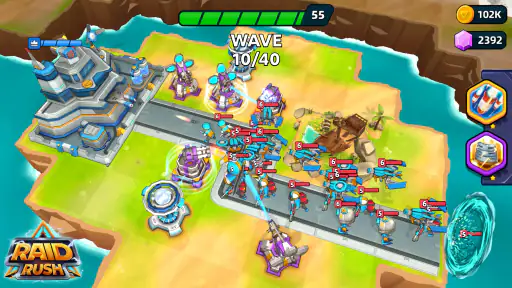
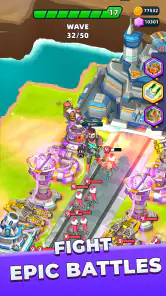
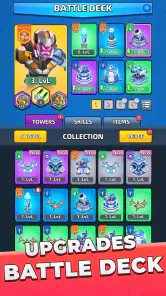
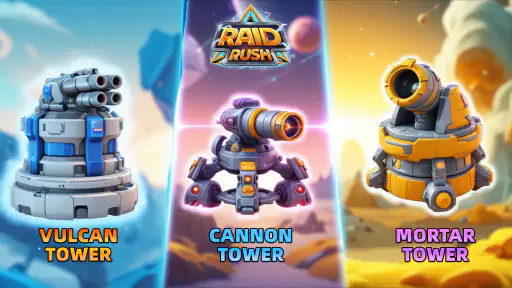
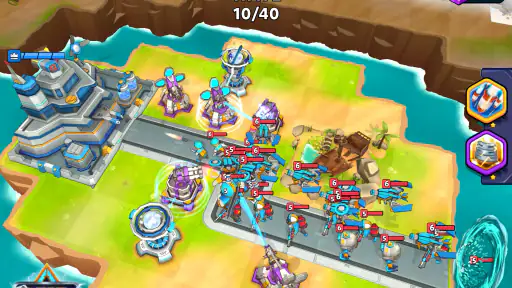
First things first, let's talk about the gameplay. In Raid Rush: Tower Defense TD, the main objective is to protect your base from waves of enemies by strategically placing various types of towers along their path. The game offers a plethora of towers, each with unique abilities and upgrade paths. You'll find yourself constantly adapting your strategy to counter different enemy types and wave patterns.
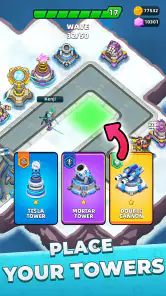
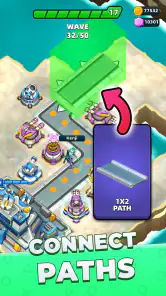
One of the things I appreciated was the intuitive interface. It's super easy to place and upgrade towers with just a few taps. The game does a fantastic job of introducing you to its mechanics gradually, so you won't feel overwhelmed if you're new to the tower defense scene.
What keeps me coming back is the variety of levels and challenges. Each level presents a new landscape and unique enemy types that require different strategies to conquer. Plus, the difficulty scales nicely, ensuring that you're always engaged without being frustrated.
For me, the useful habit is to pause mentally between waves and ask what actually caused trouble: a fast enemy slipping through, a tougher target absorbing damage, or a section of the route with too little coverage. That quick diagnosis gives tower upgrades a purpose. Rather than spending resources on whichever option looks strongest, I can focus on fixing the weakness I just saw. If a stage is going badly, I would retry with one deliberate change instead of rebuilding the whole approach at once; that makes it easier to tell whether the adjustment helped.
Reading a route before committing
That deliberate approach matters most when a level seems to punish a setup that worked a moment earlier. I try to look at the route as a series of coverage problems, not as a row of empty spots to fill. A tower placed early may get more chances to attack passing enemies, while a later position can help shore up the stretch where leaks are most likely. The right choice depends on what is actually getting through, so I would resist copying one arrangement across every stage.
A practical retry rule is to change one thing at a time. If I move a tower and also spend on several upgrades, a better result does not tell me which decision mattered. Keeping the adjustment narrow makes a loss more informative and can save resources over repeated attempts. It is a small discipline, but it turns trial and error into strategy instead of a frustrating cycle of tapping whatever is available.
More From Our News Desk

Clash of Clans Is Won Between the Battles

Android Auto Makes the Case for Quieter Car Software

MobiOffice: Transforming Mobile Productivity with Seamless Integration

EA SPORTS FC™ Mobile Soccer: Redefining Mobile Sports Gaming

How Microsoft OneDrive Became a Mobile Productivity Giant

How Google Translate Breaks Language Barriers Effortlessly
Presentation and the pace of play
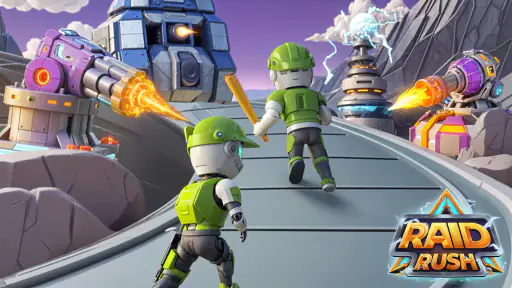
Now, let's dive into the aesthetics. The graphics in Raid Rush: Tower Defense TD are vibrant and detailed, creating an immersive world that draws you in. From lush forests to arid deserts, each environment is beautifully crafted. The animations are smooth, and the attention to detail is commendable.
Sound-wise, the game features an epic soundtrack that perfectly complements the action-packed gameplay. The sound effects for the towers and enemies add an extra layer of excitement, making each wave feel dynamic and intense.
This kind of structure suits short breaks better than a game that demands a long uninterrupted session: I can focus on one stage, make a tactical decision, and put the phone away afterward. Still, tower defense is not automatically relaxing. When a run is close, I want to watch the route and respond rather than split my attention between the game and a conversation or another task. I would save a new or challenging level for a moment when I can concentrate, and use easier, familiar stages when I only want a quick bit of play.
Who will enjoy its focused sessions
I can see this fitting someone who likes tactical decisions but does not want to learn a huge strategy system before the first battle makes sense. The clear placement-and-upgrade loop gives newcomers a readable starting point, while changing routes and enemy patterns give experienced tower-defense players a reason to adjust. It is also a sensible choice for someone who prefers individual stages to a sprawling world map or a long match against other players.
For an ordinary day, imagine having a few minutes between errands. I would choose a familiar stage, focus on one specific improvement, and stop after the run rather than begin a difficult level just before I need to leave. That makes the game easier to fit into a routine without pretending every battle is a casual distraction. If I have more time, a new challenge is a better use of attention because I can watch where the defense struggles and learn from the result.
The trade-off is that the same focused structure will not suit everyone. Players who want a broad sandbox, extensive planning across many systems, or a social competitive focus may be happier with a different kind of strategy game. And if repeating a stage to test a refined layout feels like a chore, the core appeal here may wear thin. I would choose it for compact tactical problem-solving, not for an endless stream of unrelated modes.
Spending, progress, and choosing the right fit
As with many mobile games, Raid Rush does offer in-app purchases, but I found them to be quite balanced. You can enjoy a rich gaming experience without spending a dime, which is always a plus in my book. Of course, if you're looking to speed up your progress or unlock special items, there are options available to do so.
The game also rewards you with daily bonuses and achievements, providing plenty of opportunities to earn in-game currency without having to reach for your wallet.
The purchase range runs from $0.49 to $99.99 per item, so I would treat optional spending as a personal limit to decide in advance, not as a way to solve every hard level. The game is free to start, and its average rating is 4.1 from around 109,000 ratings; it has passed 1 million installs. Those figures suggest a substantial audience, but they cannot tell me whether its pacing will suit you. If you like planning small defenses and refining a setup after a failed attempt, the core appeal is clear without buying anything. If you mainly want an open-ended strategy sandbox, a slower campaign, or a game with no purchase prompts, I would compare other options before settling in.
Compared with the usual tower-defense alternatives, this is the kind of game I would pick when I want clear, compact battles built around defending a route, rather than a sprawling strategy experience with many systems to manage at once. That focus is a strength for newcomers and for players who want a tactical mobile session without a steep learning curve. The trade-off is that anyone who needs deep long-term planning or a very different pace may find a more complex strategy game more satisfying. I would also avoid assuming that every stage can be solved by repeating one favorite tower arrangement: the changing enemies and layouts are the reason to adapt.
Before installing, I would also think about how I feel about optional spending in free games. Purchases are not the same thing as a required entry fee, but seeing them can still be distracting if I prefer an entirely purchase-free experience. Setting a budget—or deciding to spend nothing—keeps that choice separate from the tactical question of how to handle a difficult wave. If progress starts to feel slow, I would first revisit placement and upgrades rather than assume a purchase is the solution.
Its release on December 16, 2022, and the move to version 1.427 give existing players a useful sense of its timeline, but version numbers alone do not tell me what changed between builds. I would not read them as proof of a particular new feature or balance adjustment. For someone returning after time away, the practical check is whether the current levels still feel fair and whether the gradual introduction of mechanics remains comfortable. For a new player, the same gradual onboarding is the more relevant point: there is room to learn before the strategy becomes demanding.
For existing players, the useful question is not simply whether the version number has advanced, but whether the battles still reward adapting rather than relying on a single routine. A returning player can test that by treating an early familiar level as a refresher: check how the current setup handles the route, then make a measured change if it does not. That gives a clearer sense of how the game feels now than trying to infer its evolution from a version label alone.
One small but useful way to approach progression is to keep track of what a level is asking from you, not just whether you won. If you barely clear a wave, note which part of the route was under pressure; if you lose, decide whether the issue was placement or an upgrade choice before spending again. This keeps retries purposeful and helps avoid treating purchases as the default shortcut. The downside is that players who dislike repeating a stage to test a different plan may find this trial-and-adjust rhythm tiresome.
There are practical questions worth considering before you install it. Can you enjoy it without paying? Yes: the game is free, and its progression includes daily bonuses and achievements, though optional purchases are available. Is it suitable for a younger audience? Its Everyone rating makes it broadly accessible, while parents can still decide what is appropriate for their household. Is it a good fit for a brief commute? It can work for a focused stage, but I would not start a demanding run if I expect to be interrupted. The minimum operating system is Android 7.0, so check that your device meets it before downloading.
The minimum system requirement is another easy decision point: I would check that an Android device is running version 7.0 or later before trying to install it. And if a younger player will use the game, the Everyone age rating is a helpful starting point, not a substitute for a parent’s own judgment about spending and screen time. Those checks are quick, but they prevent avoidable frustration after deciding the gameplay sounds appealing.
As an ongoing game, what I would watch is whether the current version keeps its balance between accessible controls and stages that require fresh thinking. I would also pay attention to whether the challenge feels satisfying without making optional spending feel necessary; that is the point where a free strategy game either earns my trust or starts to feel like work. The version number is a snapshot, not a promise about future changes, so I would judge any later build by the actual battles and progression I encounter rather than by expectations.
That is also the fairest way to judge the game’s evolution: look for how it plays in your own hands, not for assumptions about what a later release ought to contain. I would watch whether the introductory pace leaves room to learn and whether later challenges still encourage distinct choices. For someone deciding whether to return, the experience of a few battles is more meaningful than expecting an update to have changed a particular system.
In conclusion, Raid Rush: Tower Defense TD is a must-try for any tower defense enthusiast. With its engaging gameplay, stunning visuals, and fair monetization model, it's a game that promises hours of strategic fun. So, why not give it a shot and see if you have what it takes to defend your base against the relentless hordes? Happy gaming!
Raid Rush: Tower Defense TD Frequently Asked Questions
Does Raid Rush: Tower Defense TD include chapters and tactical battles?
Yes. Raid Rush: Tower Defense TD is presented as a tower defense strategy game built around chapters and tactical battles. Its focus on planning defenses gives you decisions to make as enemy waves approach, rather than relying only on quick reactions. If you enjoy adjusting a strategy as a challenge unfolds, this chapter-based format may be a good fit.
Is Raid Rush: Tower Defense TD suitable for younger players?
Raid Rush: Tower Defense TD is rated Everyone, so it is presented as suitable for a broad audience. Its strategy gameplay focuses on placing and upgrading towers to stop enemy waves, making it approachable for players who enjoy planning and tactical challenges. Parents may still want to review the game themselves and consider its optional in-app purchases before a child downloads it.
What type of game is Raid Rush: Tower Defense TD, and who developed it?
Raid Rush: Tower Defense TD is a strategy game developed by Panteon. It centers on tower defense, asking players to make tactical choices as enemies advance along a path. The game’s store description highlights exciting chapters and tactical battles, which may appeal to people who enjoy planning defenses and adapting their approach as challenges progress.
What is Raid Rush: Tower Defense TD?
Raid Rush: Tower Defense TD is an engaging tower defense game available for both Android and iOS platforms. It blends strategic planning with fast-paced action, where players must build and upgrade towers to fend off waves of enemies. Each level presents unique challenges, requiring players to adapt their strategies to emerge victorious.
How do I play Raid Rush: Tower Defense TD?
To play Raid Rush: Tower Defense TD, you need to strategically place various types of towers along the path to stop incoming waves of enemies. Each tower has unique abilities and upgrade options. As you progress, you'll earn resources to enhance your defenses, making it crucial to plan your layout and upgrades carefully to prevent enemies from breaching your defenses.
Pros
- Engaging tower defense gameplay.
- Vibrant graphics and animations.
- Regular updates and new challenges.
- Strategic depth and variety of tactics.
- Free to play with optional purchases.
Cons
- Can be challenging for beginners.
- Requires internet connection.
- Occasional in-app ads.
- Limited offline gameplay.
- Some levels feel repetitive.

- Category
- Strategy
- Version
- 1.427