Spades Masters - Card Game
- 9.25K
- 4.6
- Installs
- 1.00M
- Price
- Free

Screenshots
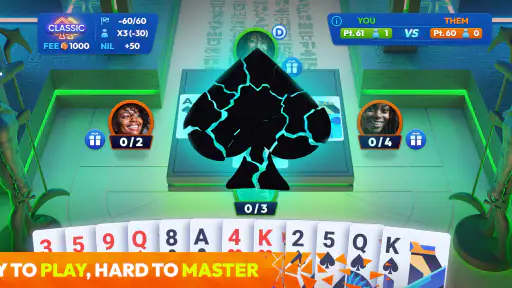

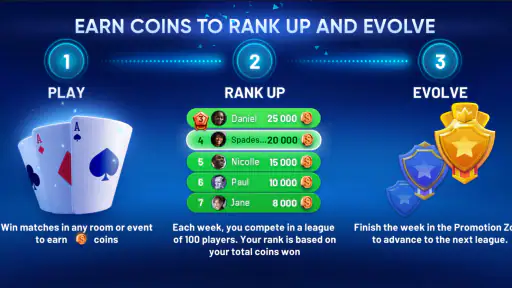



Analysis by Reviewed
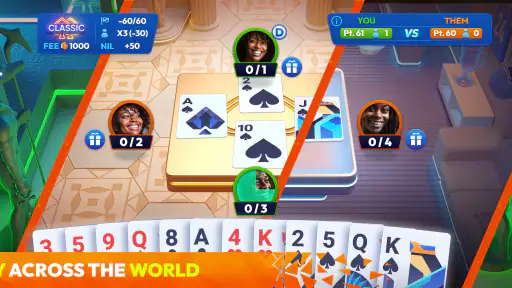
I approached Spades Masters - Card Game as the kind of app I would open when I wanted a familiar card game without setting up a table, finding a deck, or waiting for everyone to be in the same room. It is a free online multiplayer Spades game from YallaPlay, aimed at people who enjoy short competitive sessions and the social side of playing against real opponents.
My main question was not whether Spades itself is enjoyable. It is whether this particular version makes it easy to play regularly, whether the online format adds something worthwhile, and whether the free model gets in the way. After spending time with it, I think the answer depends heavily on what you want from a card game. If you already like bidding, tracking suits, and trying to read the table, this is a convenient mobile home for that hobby. If you want a quiet solo game with no social pressure, a simpler offline alternative may suit you better.
What I considered before recommending it
For me, the first decision point is familiarity. Spades is not a game I would recommend because it teaches every rule from scratch in the most relaxed way possible; it works best when you already understand the basic rhythm or are willing to learn through practice. The appeal comes from making a bid, managing your hand, and deciding when to spend a strong card rather than simply playing the highest card available.
The second point is the online setting. This is built around multiplayer play, so the experience feels more active than a traditional offline card app. That can be a strength when I want a real opponent and a reason to stay focused. It can also be a drawback when I only have a few quiet minutes and do not want to commit attention to a complete hand.
I also looked at how practical it is as an everyday download. The game is free, carries an Everyone age rating, and runs on Android 7.0 or later. That makes it accessible on a wide range of devices. Its current version is 2.50.3, which is useful to know when checking compatibility before installing.
The audience around it is already substantial: the game has passed one million installs, with an average rating of 4.6 from roughly eighty-eight thousand ratings. I do not treat popularity as proof that every player will enjoy it, but it does suggest that the format has found a dependable audience rather than being a niche experiment.
The kind of player who will get the most from it
I would put this near the top of the list for someone who enjoys card games that reward memory and restraint. Spades is more interesting when I pay attention to which suits have already been played, estimate what other players may still hold, and adjust my plan after the first few tricks. The game gives those decisions a mobile setting without changing the basic identity of the pastime.
It is also a good fit for people who like repeatable sessions. A single hand can provide a compact challenge, while several hands create a longer competitive run. That flexibility matters on a phone because I may have time for one game while waiting somewhere, then return later when I want a more involved session.
Social players should be comfortable here as well. The multiplayer focus means the fun comes partly from the unpredictability of other people. A computer opponent can be useful for practice, but human players make bidding mistakes, take unexpected risks, and sometimes force me to abandon a plan. That uncertainty is one of the reasons I keep coming back to online Spades rather than staying with a purely offline version.
How the card play rewards careful decisions
The most useful habit I developed was treating the bid as a promise instead of a guess. It is tempting to count obvious high cards and bid aggressively, especially after receiving a hand that looks strong. In practice, I get better results when I consider whether those cards can actually win tricks in the order I need them to. A hand with several promising cards can still become awkward if the suits do not cooperate.
Another practical tip is to avoid spending a powerful card merely to prove that it can win. Holding strength for the right moment can protect a later bid or stop an opponent from taking control. This is the sort of small decision that separates a thoughtful match from random card throwing, and it gives the game more depth than its simple rules might suggest.
I also found it helpful to watch the table rather than focusing only on my own hand. If a suit has been played several times, the remaining distribution changes the value of what I hold. When I notice that an opponent may be short in a suit, I become more cautious about leading it. This kind of observation is especially valuable for new players because it turns each round into information rather than a series of isolated moves.
The strongest reason to keep playing is that every hand gives me something to evaluate afterward. Even when I lose, I can usually identify a decision that deserves another look: an optimistic bid, a badly timed trump, or a failure to account for what had already left the table. That makes the game feel more skill-based over time, provided I am willing to learn instead of blaming every result on luck.
Where this version wins over familiar alternatives
Compared with a physical deck, the obvious advantage is convenience. I do not need to find three other people, shuffle cards, or remember the score manually. The app handles the digital table while I concentrate on bidding and play. For someone who enjoys the rules but rarely has a regular group available, that removes the biggest barrier to playing.
Compared with a basic solo card game, the multiplayer format brings more tension. A scripted opponent may be predictable once I understand its habits, while human players can change the pace of a match. That makes the game more suitable for players who want competition rather than a purely calming pastime.
It also has an advantage over very simple casual card apps because Spades offers a clear long-term skill curve. I can start by learning when to follow suit and gradually move toward counting likely winners, protecting a partner, and recognizing when a safe-looking bid is actually dangerous. The rules remain approachable, but the decisions do not become empty after a few sessions.
There is a useful social scenario here. Imagine I am commuting, have a short break, and want something more engaging than scrolling. I can use one session to practice conservative bidding, then play another later with a different approach. That is more satisfying than a game where the outcome is almost entirely determined by tapping quickly, because the time spent can improve how I think about the next hand.
Where another card game may be the better choice
I would not choose this first for someone who wants a completely offline experience. The central appeal is the online multiplayer table, so a traditional single-player card app may be less distracting and more dependable for travel, weak connections, or moments when I do not want to interact with other players.
It may also be a poor match for people who dislike games with a learning curve. Spades has straightforward rules, but playing well requires attention. A player who prefers instant rewards, very short rounds, or a game that never punishes a risky decision could find the bidding and trick management more demanding than expected.
People looking for a different type of social card game should compare the underlying activity, not just the graphics or download size. A game based on collecting combinations, bluffing, or rapid matching creates a different kind of tension. Spades is best when I want partnership-style strategy and careful card timing; it is not a universal replacement for every card game on a phone.
The free label also deserves a realistic look. I can download and play without paying, but in-app purchases range from forty-nine cents to three hundred fifty-nine dollars and ninety-nine cents per item. That does not automatically make the game unsuitable, yet it means I would keep spending controls in mind, especially on a shared device. My advice is simple: treat purchases as optional, decide on a personal limit before playing, and do not assume that enjoying the core game requires buying anything.
Small habits that make the experience better
New players often improve faster by choosing consistency over dramatic plays. I would begin by making bids that reflect the hand I actually have, not the hand I hope to draw into. A modestly accurate bid teaches more than a bold failure because it helps reveal how cards move around the table.
I would also avoid judging a partner from one mistake. In a multiplayer game, an unusual move may reflect information I cannot see from my seat. Instead of reacting emotionally, I try to identify what the play changed: which suit is now dangerous, whether a possible trump has been exposed, or whether the opponents are likely to chase extra tricks.
One less obvious trade-off is the balance between speed and thought. Fast play keeps a match lively, but rushing makes it harder to remember played cards. If I care about improving, I use the early part of a hand to slow down and establish what has happened. Once the remaining possibilities are clearer, decisions become quicker without becoming careless.
Another useful workflow is to give each session a single focus. I might concentrate on avoiding overbids, then on preserving control of a suit, rather than trying to fix every weakness at once. This turns casual matches into manageable practice and makes progress easier to notice.
What the free download means in daily use
The absence of an upfront price makes trying it straightforward. I can see why someone would install it after remembering Spades from family gatherings or wanting a multiplayer card game that does not require a large commitment at the start. The Everyone rating also makes it broadly approachable for households, although I would still supervise spending settings when children use a device.
The purchase range is the main point where I would be deliberate. A free game can be perfectly enjoyable when I focus on the card play, but optional spending can change how I think about progression or customization if I let it. I prefer to decide in advance that the app is entertainment rather than a reason to chase every available extra.
Device compatibility is another practical advantage. Support for Android 7.0 or later means owners of older Android phones may still be able to run it, which is helpful if a newer card game is unavailable on their device. I would still keep the app updated when possible, particularly because online games depend on a current version for a smooth connection to the service.
Who should switch, and who should stay with an alternative
If I were moving from a physical deck, the switch would be easy in terms of rules but different in terms of atmosphere. The app gives me availability and opponents on demand, while a real table gives me conversation, visible reactions, and complete control over the pace. I would use the app when arranging a group is difficult, not as a total replacement for playing with friends in person.
If I were moving from a solo card app, I would expect a more demanding experience. The reward is the unpredictability of multiplayer play, but the cost is that I need to remain engaged for the hand. Someone who uses card games mainly to relax before sleep may prefer the quiet control of a solo alternative.
If I were moving from another online card game, I would base the decision on whether I enjoy trick-taking strategy. The transition is worthwhile when I want bidding and suit management. It is less convincing if my favorite part of card games is collecting sets, bluffing, or making rapid matches. The app’s value comes from its particular structure, not from being an online game in the abstract.
There is also a social cost to switching. I may already have habits, friends, or progress in another title, and a new app has to earn its place in my routine. I would start with short sessions, learn how the table feels, and decide whether the multiplayer format keeps me interested before spending anything. Because the game is free to install, that trial does not need to become a financial commitment.
My recommendation after playing
I recommend Spades Masters - Card Game to players who want a recognizable Spades experience with online competition and enough strategic detail to reward attention. It works especially well for filling short breaks, practicing bidding, or finding a table when friends are unavailable. The large installed audience and strong average rating support its appeal, but my recommendation rests more on the way the game turns familiar rules into repeatable decisions.
I would skip it if I need offline reliability, dislike multiplayer pressure, or want a very simple card game that asks almost nothing from me. I would also approach the free-to-play model with a clear spending boundary because the available in-app items extend from small purchases to much larger ones.
For everyone else, the best way to judge it is to focus on the first several hands rather than one lucky result. Pay attention to your bids, watch which suits disappear, and notice whether the uncertainty of human opponents makes the game more enjoyable. My clear verdict is that this is a strong choice for thoughtful Spades players, but a specialized choice rather than an all-purpose card app.
Pros
- Clear rules and tutorials make it approachable for new players.
- Quick matches fit well into short breaks or casual sessions.
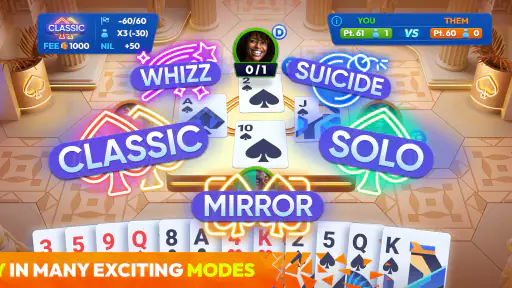
- Multiple game modes offer variety beyond standard Spades rounds.
- Smooth card controls make bidding and playing cards feel responsive.
- Offline play is useful when you have limited or no internet access.
Cons
- Difficulty may feel uneven when playing against computer opponents.
- Ads can interrupt the experience
- especially between completed matches.
- Some advanced options may be limited compared with dedicated Spades apps.
- Online matchmaking can depend heavily on the size of the active player base.
- Progression rewards may feel repetitive after extended play.

- Category
- Card
- Version
- 2.50.3