Gin Rummy Masters: Card Game
- 251.00
- 4.6
- Installs
- 50.00K
- Price
- Free

Screenshots




Analysis by Reviewed
I approached Gin Rummy Masters: Card Game as a quick, competitive card game rather than a long-form pastime, and that distinction matters. Its appeal comes from sitting down for a real-time Gin Rummy match, making decisions under pressure, and then trying again when one poorly timed draw or discard changes the whole hand. The game is free to start, made by YallaPlay, and aimed at Everyone, so it is easy to understand why it has attracted a growing audience without demanding a large commitment from new players.
My first impression was that this is best suited to people who already enjoy the rhythm of Gin Rummy or who want a more active alternative to a purely casual solitaire game. The live format gives every turn more weight. You are not simply arranging cards at your own speed; you are reading the developing hand, watching what the other player takes, and deciding whether to protect a likely meld or chase a better one. That creates a satisfying tension, although it also means the experience can feel less forgiving than offline card games.
How the current version feels in everyday play
The current release is version 2.32.8, and it runs on Android 7.0 or later. That makes it practical for people using older compatible phones, not only recent devices. I would still recommend closing other demanding apps before a serious match, because real-time card play is much more enjoyable when the interface responds immediately and the connection is stable. A delayed action is especially frustrating when the opponent is waiting and the correct move depends on a narrow window of information.
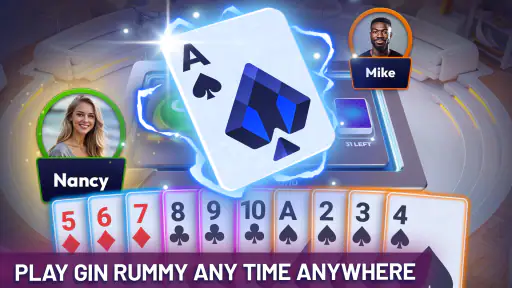
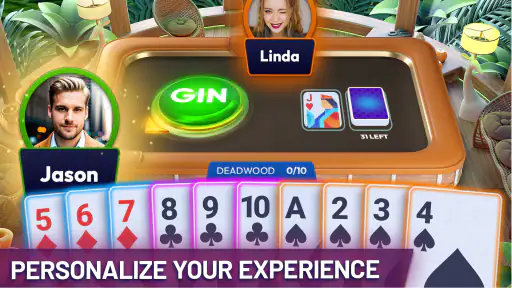
The central loop is straightforward: enter a match, draw and discard, build combinations, and try to finish with a stronger hand than the opponent. The simplicity is a strength because the rules remain readable, but Gin Rummy is not a mindless game once both players understand the basics. The important choices are often defensive. Holding a card because it might complete a set can also give the opponent a useful discard, while throwing away a card that looks harmless may reveal too much about your hand.
I found the real-time format most enjoyable in short sessions. It works well when I have a few minutes before an appointment or want a focused break without starting a large campaign. A typical everyday use case is a commuter playing one match while waiting for a train, then stopping immediately after the result instead of being pulled into a long sequence. That convenience is more convincing than the promise of endless play, because each round has a clear beginning and end.
The social and competitive framing also gives the game a stronger sense of purpose than a basic offline Gin Rummy app. Friends can use it as a quick head-to-head activity, while more competitive players can aim for rewards and a higher leaderboard position. I would not treat the leaderboard as the only reason to play, though. Rankings can make wins feel meaningful, but they can also turn a relaxing card game into a source of pressure if you keep chasing a position after the session has stopped being fun.
Learning the game without wasting early matches
New players should resist the temptation to discard quickly just to keep the hand moving. I get better results by first checking which cards have multiple possible uses. A middle card can connect to sequences in more than one direction, while a high isolated card may become expensive to keep. This is not a special feature of the app, but the live setting makes the habit especially useful because there is less time to reconsider an impulsive discard.
Another practical tip is to watch the opponent’s pickups, not only the cards they throw away. If a player repeatedly takes cards from the discard pile, that gives clues about the kind of meld they are building. I use that information defensively: when I suspect a sequence, I avoid offering nearby cards unless the discard improves my own hand enough to justify the risk. This small adjustment makes the matches feel more strategic than simply waiting for lucky draws.
I also recommend treating the first few games as observation sessions. Instead of measuring success only by whether I win, I pay attention to how quickly the opponent commits to a pattern, how often I hold deadwood too long, and whether my discards are helping them. That approach is particularly useful for people who know card games generally but have not played much Gin Rummy. The rules may be familiar, yet the timing of a knock or a defensive discard takes practice.
What makes the live format different from ordinary card apps
Compared with a traditional offline Gin Rummy game, this version has a more immediate competitive feel. An offline opponent, especially a computer opponent, lets me pause and think without social pressure. Here, the other player’s presence makes each decision feel more consequential. That is a genuine advantage for someone who wants to sharpen judgment, but it is a drawback for anyone looking for a quiet game that can be played entirely at their own pace.
It also differs from solitaire-style card apps because the goal is not simply to clear a layout or beat a personal best. The information is incomplete and shared. Every discard becomes part of the opponent’s decision-making environment, so the game rewards memory and restraint. I particularly like that the best move is not always the move that reduces my own deadwood immediately. Sometimes denying a useful card is more valuable than making my hand look cleaner.
Against a physical deck with friends, the app is more convenient but less personal. There is no need to set up a table or keep score manually, and the competitive structure is easier to follow. On the other hand, a real deck offers a slower social experience, where conversation matters as much as the cards. I would choose the app for quick matches and a physical game for an evening with people in the same room.
Compared with other online card games, the focused design is appealing. There is less need to learn a large collection of modes before understanding what to do. That clarity makes it a good entry point for someone who wants one recognizable game rather than a broad card-game hub. The trade-off is variety: players who need constant changes of rules or many different formats may find Gin Rummy Masters narrower than a larger multiplayer card platform.
Rewards, competition, and spending decisions
The game presents rewards and leaderboard progress as part of its motivation. I think that works best when treated as a secondary layer around the card play. A reward can encourage me to return after a close match, but it should not replace the satisfaction of making a smart discard or recovering from a weak opening hand. If the ranking becomes the main objective, unlucky draws and losing streaks can feel more important than they deserve.
The game is free to download and play, while optional in-app purchases range from $0.99 to $359.99 per item. That is the point where I would advise extra care, especially for anyone sharing a device or payment method with family members. The broad price range makes it sensible to decide on a personal spending limit before buying anything. I would also avoid treating purchases as a solution to a losing streak; better observation and hand management are more valuable than trying to spend my way through frustration.
For a casual player, the free starting point is enough to test whether the real-time pace feels comfortable. I would play several matches before considering any purchase, because the important question is not whether the rewards look attractive but whether the core Gin Rummy loop remains enjoyable after the novelty fades. Players who dislike competitive pressure or monetized progression may prefer a paid offline alternative, even if it has fewer social elements.
How the recent release fits into the experience
The release date is September 15, 2025, and the current version is 2.32.8. Those details indicate a product that has moved beyond its initial launch build, so I see the present version as the one that should define a new user’s decision. At the same time, a version number alone does not tell me which individual systems changed or how every earlier issue was handled. I would judge the game by its current responsiveness, match flow, and clarity rather than assuming that every update transformed the experience.
For existing users, a newer release can be valuable simply because a live card game depends on continued maintenance. Matchmaking, stability, and the small details around a competitive session matter more here than flashy presentation. My advice to returning players is to reassess the practical experience after updating: check whether matches begin smoothly, whether turns feel responsive, and whether the balance between quick play and leaderboard pressure still suits the way they want to play.
New players should not feel that they are joining too late. The game has an average rating of 4.6 from around 2.9 thousand ratings, with over 250 written reviews, and it has passed 50 thousand installs. Those figures suggest a visible player base and generally positive reception, but they are not a promise that every match will be equally competitive or that every player will enjoy the same pace. I would use them as reassurance that the app is worth trying, not as a substitute for deciding whether live Gin Rummy fits my habits.
Small habits that improve the experience
One useful workflow is to separate learning from ranking. When I am testing a new approach, I focus on recognizing patterns rather than forcing a win. For example, I might deliberately track which cards become dangerous after the opponent takes a discard. This creates a clearer lesson from each hand than simply remembering the final score. Once that habit feels natural, leaderboard play becomes less stressful because I am making decisions from information rather than reacting to the result.
I also find it helpful to pause mentally before every discard, even when the correct move appears obvious. I ask myself three quick questions: does this card complete anything for me, what nearby cards might it reveal, and what could the opponent reasonably be collecting? That routine is more valuable than memorizing a rigid opening strategy. Gin Rummy hands change too quickly for one fixed formula to work every time.
Another trade-off involves speed. Fast decisions keep a match lively, but rushing can cause me to throw away a card that has defensive value. Slowing down slightly is worthwhile when the discard pile contains connected cards or when the opponent’s choices suggest a clear sequence. Conversely, overthinking every ordinary turn can make a short game feel tiring. The best rhythm is deliberate on important turns and automatic on low-risk ones.
Where the game still has limits
The biggest limitation is inherent in its real-time design: it is not ideal for interruptions. If I need to answer messages, walk into a meeting, or play with an unreliable connection, a live match can become inconvenient. An offline game is better for fragmented attention because I can stop without affecting another person. This app is strongest when I can give a match a few uninterrupted minutes.
Its competitive structure may also divide players. Some people will enjoy the clear sense of progress that comes from rewards and leaderboard movement, while others may find those elements distracting from the card game itself. If I want a purely relaxing experience with no performance anxiety, a simpler solo card app is likely a better choice. Gin Rummy Masters is more appropriate when I actively want an opponent and accept that losing is part of the session.
The purchase range is another reason to approach the game thoughtfully. Free access lowers the barrier to entry, but optional spending can become uncomfortable if a player connects rewards with personal progress. I would recommend using the free experience as the baseline and viewing purchases as entirely optional. Anyone who prefers a single upfront payment and no competitive economy may be happier with a conventional premium card game.
Who should try it, and what to watch next
I would recommend this game to Gin Rummy fans who want live opponents, short sessions, and a reason to keep improving. It is also a good fit for friends who want a quick competitive activity without organizing a physical deck. Players who enjoy reading an opponent’s choices, managing risk, and learning from close hands will get more from it than players who only want luck-driven entertainment.
I would skip it if I need a fully offline experience, dislike timed or real-time decision-making, or want a large selection of unrelated card modes. It is also not my first recommendation for someone who finds leaderboards motivating only in theory but stressful in practice. In those cases, an offline Gin Rummy app or a slower multiplayer alternative would better match the desired mood.
Looking ahead, I would pay attention to how the current version continues to handle the essentials: smooth match entry, readable turn feedback, fair-feeling competition, and a healthy relationship between rewards and spending. Those areas will affect long-term enjoyment more than cosmetic changes. For current users, they are the signs that continued play is worthwhile; for newcomers, they are the practical reasons to test the game before committing to regular sessions.
My overall view is positive but specific. This is not simply a deck of cards placed on a phone; it is a focused, real-time Gin Rummy experience built around quick decisions and competitive momentum. The free entry makes trying it easy, the Everyone rating keeps it approachable, and the current release gives both new and returning players a sensible starting point. I would install it when I want a short match that rewards attention, but I would keep spending controlled and choose a slower offline option whenever I need a game that waits for me.
Pros
- Quick matches are ideal for short breaks or casual play.
- Simple rules make it approachable for beginners.
- Smooth card controls make arranging melds feel natural.
- Different opponents provide variety across repeated games.
- Offline play is useful when you have no internet connection.
Cons
- Ads may interrupt the experience
- especially between matches.
- Advanced players may find the challenge limited over time.
- Some features or content may require in-app purchases.
- Random card deals can make certain rounds feel frustrating.
- Small cards or text may be harder to read on compact screens.

- Category
- Card
- Version
- 2.32.8