Spades - Classic Cards
- 3.70K
- 4.9
- Installs
- 1.00M
- Price
- Free

Screenshots
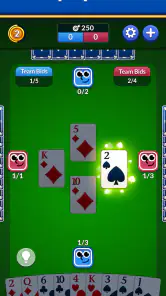
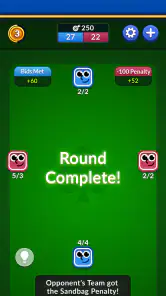
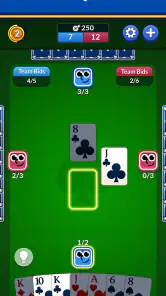


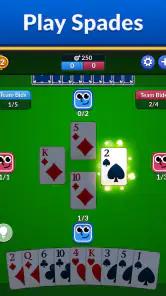
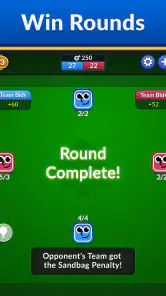
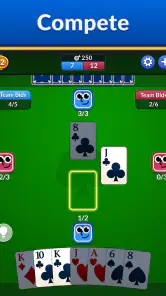
Analysis by Reviewed
The first thing I enjoy about Spades - Classic Cards is how little ceremony stands between me and a hand of cards. I can settle in for a focused game or use a spare moment to play a single round, then decide whether I want another. It is a mobile take on a familiar trick-taking card game, and its appeal comes from the decisions inside each hand rather than a complicated setup.
From the first bid to the final trick
Spades starts with a simple but consequential choice: estimate how many tricks you and your partner can take, then try to make that prediction hold. The cards you play matter, but so does your sense of what other players may be holding. That gives even a brief round a satisfying shape: make a plan, watch it tested, and adjust when the table does something unexpected.
In my experience, the best way to approach a new session is not to chase bold bids immediately. Pay attention to which suits have been played and whether a high card is still likely to win. A conservative estimate can be the smarter move when your hand is uneven; a strong sequence in one suit may justify more confidence. The game’s core challenge is judging those trade-offs, not merely playing the biggest card available.
That makes this a good fit for players who already know Spades and want an uncomplicated way to return to it, as well as newcomers willing to learn through repeated hands. The rules are familiar to many card players, but good play takes more than memorizing them. You need to track what has left the table and think about how your bid fits with your partner’s.
Why each turn has a useful rhythm
The feedback arrives trick by trick. A card wins or loses, the likely shape of the remaining hands changes, and your original plan becomes easier—or harder—to fulfill. That steady rhythm is the game’s strongest quality for short mobile play: there is enough information to make each decision meaningful, but a hand does not require the kind of extended attention demanded by a long strategy game.
One practical habit I recommend is to treat the early tricks as information, not just progress. Notice which players follow suit, which cards have already appeared, and when a spade is used to take a trick. That helps you make a more grounded decision later instead of relying on a vague feeling about what might remain. It also makes a second hand more interesting than simply repeating the same choices.
The partnership element adds a useful complication. Your target is not just a personal tally of tricks; your bid has to make sense alongside your partner’s. If your hand looks strong in one suit but weak elsewhere, consider how that could affect the combined plan. The game rewards reading the table and staying flexible, though it cannot make a partner’s cards predictable before they are played.
Small wins, mistakes, and the urge to deal again
A successful hand feels rewarding because the result follows from a series of choices: your estimate, your timing, and how well you adapted to the cards played around you. When a plan falls short, the next deal offers a clean chance to try a different approach. I find that reset especially useful after a close hand; the disappointment is brief, while the question of what to change gives the next round a purpose.
That loop—bid, play, see the outcome, and begin again—is also where the game can become repetitive. Spades has a naturally repeatable structure, so players looking for a campaign, a story, or a constantly changing objective may find that the hands blur together. I would choose it for the pleasure of card decisions, not because I expect each session to unlock a new kind of activity.
A realistic use case is a short break when I want something more engaging than idle scrolling but do not want to commit to a long session. One hand gives me a clear endpoint, and I can stop there without losing the thread of a larger story. On a quieter evening, I can keep going and use the repeated deals to sharpen my bidding judgment. That flexibility is a better reason to return than any promise of a dramatic progression system.
How it fits beside other card games
Compared with solitaire, this is less about arranging a puzzle alone and more about responding to opponents and coordinating with a partner. Compared with casual matching or collecting card games, it asks for more attention to suit order, likely holdings, and the number of tricks a team needs. If you want a quiet solo puzzle with no bidding pressure, solitaire is probably the more comfortable choice. If you like the social logic of partnership card play, this is the more relevant option.
There is a trade-off to that focus. Spades can be easy to pick up for a hand, but its decisions are not always easy to judge when you are learning. A missed bid may come from a poor estimate, a badly timed card, or simply the way the unseen cards fall. I would not treat one result as proof that a strategy is good or bad; look for patterns across several hands and change one habit at a time.
For a more deliberate practice session, I would concentrate on one skill rather than trying to master everything at once. For example, keep a mental note of high cards already played, or review whether your bid was realistic before the first trick began. That makes the game more instructive without turning a casual round into homework. It is also a useful way to tell whether you enjoy Spades itself or are only chasing a win.
What to know before installing
Tripledot Studios Limited is the developer, and the game is free to download. It has a 4.9 average from around 50 thousand ratings, with more than a million installs. Those figures suggest that it has found a large audience, but they do not tell me whether its particular pace or style will suit you; the best test is whether you enjoy the bidding and trick-taking loop.
The game is rated Everyone, and in-app purchases range from $0.99 to $99.99 per item. The free entry point is appealing if you want to try a few hands before deciding whether the game belongs on your phone. I would keep purchases separate from the basic question of whether you like Spades: the core card decisions are the reason to play, and spending is not a substitute for learning to read a hand.
It was released on August 23, 2024, and version 1.16.00 requires Android 7.1 or later. Those details matter if you are checking whether it fits an older Android device. For iPhone or iPad users, I would check the relevant device’s store requirements before installing rather than assuming Android compatibility applies across platforms.
Who should keep it—and who should move on
I would recommend Spades - Classic Cards to anyone who likes estimating a hand, tracking cards, and adjusting a plan as tricks unfold. It also suits people who want a game with natural stopping points: finish a hand, put the phone away, or deal again because a close result has left you curious about what you would do differently.
I would skip it if you want a fast reflex challenge, a rich narrative, or a solo card puzzle without partnership decisions. It may also be a poor match if you find repeated rounds tiring rather than calming. The game’s central loop stays recognizable from hand to hand, and that consistency is both its comfort and its main limitation.
My verdict is that this is a focused way to play a classic card game on mobile. The most satisfying moments come from making a realistic bid, watching the table reveal new information, and seeing whether your choices were enough. If that small cycle of prediction, feedback, and a fresh deal sounds appealing, it is easy to understand why another session starts. If you need each round to introduce a new goal, another kind of card game will serve you better.
Spades - Classic Cards Frequently Asked Questions
What is Spades - Classic Cards?
Spades - Classic Cards is a digital version of the familiar trick-taking card game, where players bid how many tricks they expect to win and then try to meet that bid. The app is intended for people who want to play Spades on a phone or tablet, whether they are learning the rules or returning for a quick card-game session. Available modes and features can vary by version.
How do you play Spades in the app?
A typical round begins with players bidding the number of tricks they think they can take. Players then play one card each in turn, following the suit led when possible; Spades are generally the trump suit and can beat cards from other suits. Your team’s score depends on its bid and the tricks it wins. If you are new to Spades, check the in-game instructions, since house rules and scoring options may differ.
Can I play Spades - Classic Cards offline or against the computer?
Many mobile Spades games offer a way to play against computer-controlled opponents, which can be useful when you are offline or simply want to practice. However, offline access and available opponent modes depend on the specific app version and its connection requirements. Before downloading, review the store listing and permissions, and check whether the mode you want works without an internet connection.
Does Spades - Classic Cards support multiplayer with friends?
Some versions of Spades - Classic Cards may include online multiplayer, private rooms, or other ways to play with friends, while others focus mainly on solo play against computer opponents. The exact options can change with updates and may require an internet connection or an account. Check the current app-store description for supported multiplayer features before downloading, especially if playing with friends is your main reason for installing it.
Is Spades - Classic Cards free, and does it include ads or in-app purchases?
The app may be free to download, but that does not necessarily mean every feature is free or that play is ad-free. Mobile card games can include advertisements, optional purchases, or other monetization features, and these details may vary by platform or release. Review the Google Play or App Store listing for current pricing, in-app purchase information, and age or privacy details before installing.
Articles Related to Spades - Classic Cards
Clash of Clans Is Won Between the Battles
Its raids are quick; its community is a long-term project of coordination, teaching, rivalry, and shared responsibility—with all the friction that entails.
Android Auto Makes the Case for Quieter Car Software
The car interface is no longer judged by how much it can do, but by how quietly it helps. Android Auto shows what drivers now expect—and what still gets in the way.
MobiOffice: Transforming Mobile Productivity with Seamless Integration
MobiOffice: Word, Sheets, PDF is redefining mobile productivity with a surprising blend of functionality and innovation.
EA SPORTS FC™ Mobile Soccer: Redefining Mobile Sports Gaming
Dive into EA SPORTS FC™ Mobile Soccer, where immersive gameplay and strategic depth transform mobile sports gaming.
Pros
- Familiar trick-taking rules make it easy for experienced Spades players to start.
- Short rounds suit quick sessions and casual play.
- A digital scorekeeper removes the need to track points manually.
- Playable without arranging a physical deck or finding a full group.
- Useful for practicing bids and card-play decisions at your own pace.
Cons
- Computer opponents may not match the unpredictability of human players.
- A weak internet connection can disrupt online matches.
- Ads or in-app purchases may interrupt play
- depending on the version.
- New players may need time to learn bidding and partnership strategy.
- Game modes and features can vary between app versions and devices.

- Category
- Card
- Version
- 1.16.00