Soliword: Solitaire Link Word
- 76.00
- 4.8
- Installs
- 10.00K
- Price
- Free
Screenshots

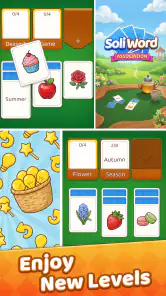
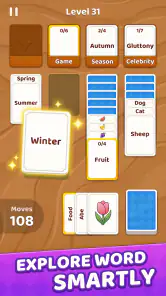
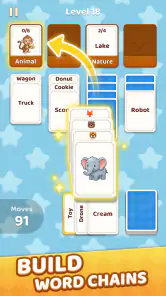
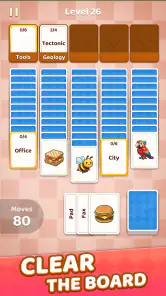

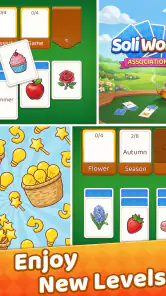
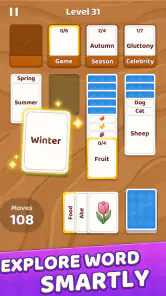
Analysis by Reviewed
I spent time with Soliword: Solitaire Link Word, a free word game from LifePulse Puzzle Game Studio that combines two familiar ideas: arranging cards and connecting related words. That combination sounds simple, but it changes the way I approached each round. I was not only searching for a possible word; I was also thinking about order, timing, and whether a tempting move would leave me with a difficult board later.
That central link between solitaire-style play and word association is the game’s most important quality. It gives short vocabulary puzzles a little more structure than a standard word scramble, while keeping the relaxed rhythm that makes card games easy to pick up. I found it most appealing when I wanted something mentally active but not as demanding as a long strategy game.
The game is listed for Everyone, so it is suitable for a broad audience, including players who prefer gentle puzzle sessions. It is free to install, with optional purchases ranging from $1.99 to $99.99 per item. The current version is 1.1.1, and it runs on Android 8.0 or later. Those details matter because this is the kind of title many people will try casually rather than research deeply before downloading.
Why the word-and-card combination matters
The strongest idea here is not simply that words appear on cards. It is that the card layout gives word association a practical consequence. In a typical association puzzle, I can think of connections in any direction and change my answer without worrying much about the surrounding board. In a solitaire-inspired format, each choice feels more committed. Removing or matching one option can expose a better possibility, or leave a less useful word in the way.
That extra layer makes familiar vocabulary feel different. A word may be easy to recognize but still be the wrong choice at that moment. Conversely, a less obvious connection can become valuable if it opens a cleaner route through the cards. This is where the game earns its identity instead of feeling like two unrelated mini-games placed beside each other.
I also like that the concept naturally supports short sessions. The basic mental loop is easy to understand: inspect the available cards, look for a meaningful connection, and decide whether to act now or wait for a better arrangement. I could play for a few minutes without needing a long explanation, but I still had a reason to pay attention rather than tapping through automatically.
The word element should appeal to players who enjoy language without necessarily wanting a traditional crossword. Crosswords usually depend on clues, fixed spaces, and a more deliberate solving process. Word searches focus on spotting letters in a grid. Soliword sits somewhere else: it asks me to recognize relationships while also managing a changing card situation. That makes it a better fit for someone who enjoys vocabulary games but wants more movement than a static puzzle provides.
More From Our News Desk

Clash of Clans Is Won Between the Battles

Android Auto Makes the Case for Quieter Car Software

MobiOffice: Transforming Mobile Productivity with Seamless Integration

EA SPORTS FC™ Mobile Soccer: Redefining Mobile Sports Gaming

How Microsoft OneDrive Became a Mobile Productivity Giant

How Google Translate Breaks Language Barriers Effortlessly
How the core loop feels in practice
When I begin a round, I first scan the visible words instead of immediately choosing the most obvious pair. This small habit makes a noticeable difference. The first connection I see is not always the most useful one, because another card may create a stronger chain or a more convenient opening. Treating the board as a group of possibilities, rather than a list of isolated matches, is the first practical adjustment I would recommend.
My second habit is to separate recognition from action. I mentally note several possible relationships, then choose the one that seems to preserve the most options. That approach is more reliable than reacting to every familiar word. It also gives the game a light planning element, even when the individual associations are straightforward.
This is one of the game’s less obvious strengths: it rewards restraint. Players who normally rush through casual word puzzles may find that slowing down improves their results. I did not need a complicated strategy guide, but I did need to stop assuming that the fastest valid-looking move was automatically the best one.
Another useful way to play is to use the game as a vocabulary warm-up. I can start with a relaxed session and pay attention to categories, synonyms, and related ideas that come to mind. The card structure keeps that exercise from becoming a dry memorization task. It feels more like sorting thoughts under a little pressure.
At the same time, I would not describe every round as equally deep. Some word links are likely to feel immediate, and those moments can become more about clearing the board than solving a difficult language problem. That is not a serious flaw for a casual game, but it does set expectations. This is better viewed as a flexible, approachable puzzle than as a rigorous word-training tool.
The everyday situation where it fits best
The best use case for me is a short break when I want to stay engaged without committing to a full game. Imagine waiting for an appointment, taking a quiet pause between tasks, or winding down before bed. A round gives me something to focus on, but the word-and-card format does not require the long concentration of a campaign-based game or a competitive match.
It also works well for players who share a device with family members of different ages. Because the content rating is Everyone and the basic idea is easy to explain, one person can play casually while another tries to find better connections. Younger players may focus on spotting familiar relationships, while adults can make the challenge more strategic by planning several moves ahead.
I would especially suggest it to someone who alternates between solitaire and word games but finds each category repetitive on its own. The combination refreshes both. Solitaire players get a reason to examine the meaning of the cards, while word-game fans get a board that makes the order of their choices matter.
There is also a practical benefit for people who dislike noisy, high-pressure entertainment. The appeal here comes from attention and recognition rather than reflexes. I do not need fast fingers or a willingness to manage a complicated interface. The game’s value is concentrated in the small decisions made during a round.
Where the tradeoffs become noticeable
The same simplicity that makes the game accessible may limit its appeal for experienced puzzle players. If I am looking for elaborate clue systems, a large story, deep progression, or a demanding competitive ladder, this is probably not the right destination. Its pleasure comes from repeating a compact idea, not from constantly introducing new genres or systems.
There is also a difference between enjoying word association and enjoying precise wordplay. Players who prefer cryptic clues, strict spelling challenges, or highly technical vocabulary puzzles may find the experience too gentle. The game’s approach is more about recognizing links between words within a card-based flow than proving expertise in language.
The free entry point is convenient, but optional purchases are part of the experience’s commercial structure. The listed purchase range runs from $1.99 to $99.99 per item, which is a wide spread. I would advise deciding in advance whether you are happy to play without spending or whether optional extras are worth considering. That simple boundary can prevent a casual puzzle from becoming an impulse purchase.
Another tradeoff is that the card format can make a round feel less predictable than a conventional word puzzle. I enjoy that uncertainty because it creates room for planning, but players who want complete control may prefer a crossword or a fixed word grid. Here, the satisfaction comes partly from adapting to what is available rather than solving a perfectly stable layout.
Device compatibility is reasonably broad for an Android game because the minimum requirement is Android 8.0. Still, anyone using an older phone or tablet should check compatibility before planning to play. For supported devices, the current release is 1.1.1, so keeping the app updated is the sensible way to get the intended version of the experience.
Small habits that improve the experience
My first tip is to scan by meaning instead of by position. Looking from left to right encourages automatic choices, while grouping words mentally by topic, action, object, or similarity reveals more possibilities. This is particularly useful when the obvious pair is not the most efficient route through the cards.
My second tip is to protect flexibility. When two moves appear equally good, I prefer the one that leaves a wider range of recognizable words available. This is a simple rule, but it turns the game from a sequence of guesses into a series of manageable decisions.
A third tip is to use a failed or awkward round as information rather than frustration. If a board becomes difficult after an early move, I can think about what that move removed or blocked. That reflection is more useful than memorizing one answer, because the real skill is understanding how the card arrangement affects later choices.
I also found it helpful to play in two different modes of attention. During a quick break, I can accept obvious matches and enjoy the relaxing pace. When I want more challenge, I deliberately delay the first move and search for a broader plan. The same basic game then serves both a low-effort and a more thoughtful session without requiring separate settings.
Who gets the most from it
The ideal player is someone who likes language-based puzzles but wants a little more structure than a free-form association exercise. It is also a good match for solitaire fans who want their card habits to involve meaning, not only sequence or suits. I can recommend it to casual players, families, commuters, and anyone who enjoys short mental breaks.
Its audience is helped by the approachable format and the Everyone rating. A player does not need specialist vocabulary to understand the premise, and the game can be enjoyed in small portions. The average rating is 4.8 from around 933 ratings, while the listing includes 76 written reviews, suggesting that the concept has connected with a meaningful early audience. The game has also passed 10K+ installs, which places it beyond a purely experimental release while still leaving it feeling like a focused, relatively compact title.
I would be more cautious about recommending it to players who need constant novelty. If you expect a large collection of radically different modes, an extensive narrative, or a highly competitive endgame, the central word-card loop may feel narrow. Likewise, people who dislike optional purchase systems should approach the free version with a clear spending limit.
Compared with ordinary solitaire, this game gives each card more semantic importance. Compared with a standard word association app, it adds ordering and board awareness. Compared with crossword-style games, it is less clue-driven and usually more immediate. None of those comparisons makes it universally better; they simply show where its particular appeal lies.
My final recommendation
After playing it, I see Soliword as a focused hybrid rather than an attempt to replace every other word or card game. Its verified capability is the connection between solitaire-like card handling and word association, and that feature genuinely changes the feel of each decision. I found myself thinking not only about whether two words belonged together, but about when that connection was worth making.
That makes it an easy recommendation for relaxed puzzle sessions, especially if you enjoy vocabulary, casual solitaire, or games that reward a little patience. I would skip it if your priority is deep progression, intense competition, or highly demanding clue construction. For everyone else, the free starting point makes it simple to test the rhythm and decide whether the compact format suits you.
LifePulse Puzzle Game Studio has chosen a clear idea and built the review experience around it. The result is not flawless or endlessly complex, but it has a distinct reason to exist. If you want a word game where the timing of a connection matters as much as the connection itself, this is one I would keep installed for those in-between moments when I want something light, thoughtful, and easy to return to.
Soliword: Solitaire Link Word Frequently Asked Questions
What age rating does Soliword: Solitaire Link Word have?
Soliword: Solitaire Link Word is rated Everyone, making it suitable for a broad audience. Its word-focused solitaire format can appeal to people who enjoy casual puzzles, whether they are new to mobile games or already familiar with card and word games. Parents should still review the game’s in-app purchase settings if children use the device, as optional purchases are available.
Which devices can run Soliword: Solitaire Link Word?
Soliword: Solitaire Link Word requires Android 8.0 or later, so it is worth checking your device’s operating system before downloading. The game is a mobile word title built around solitaire-style card play and letter puzzles. If your device meets the minimum requirement, you can try its core puzzle experience; keeping the operating system up to date can also help with general compatibility.
What is Soliword: Solitaire Link Word?
Soliword: Solitaire Link Word combines classic solitaire-style card play with word puzzles. Instead of simply clearing cards, you connect or arrange available letter cards to form words and progress through levels. The game is designed for short, relaxing sessions, while gradually introducing more challenging puzzles that test vocabulary, planning, and the ability to recognize useful letter combinations.
How do you play Soliword: Solitaire Link Word?
Gameplay generally involves selecting accessible cards and linking letters to create valid words, while following the layout and movement rules presented in each puzzle. Players need to think ahead because using one card can reveal or block another. Completing words and clearing the board allows you to advance, and the difficulty increases as layouts become more complex and the available moves require better planning.
Can Soliword: Solitaire Link Word be played offline?
Soliword: Solitaire Link Word may support offline play for its core puzzles, which is convenient when traveling or when you do not have a stable internet connection. However, some features—such as advertisements, cloud synchronization, daily challenges, purchases, leaderboards, or promotional content—can require an online connection. It is best to launch the game once while connected and check which features remain available offline.
Pros
- Combines solitaire and word puzzles for varied
- relaxing gameplay.
- Short rounds make it easy to play during quick breaks.
- Word challenges can help improve vocabulary and spelling skills.
- Simple controls are suitable for both casual and experienced players.
- Progressive difficulty keeps the gameplay engaging over time.
Cons
- Some levels may feel repetitive after extended play sessions.
- Challenging words can make progress frustrating without hints.
- Frequent rewards or prompts may interrupt the playing rhythm.
- The game may require an internet connection for certain features.
- Players seeking traditional solitaire may find the word mechanics distracting.
- Category
- Word
- Version
- 1.1.1